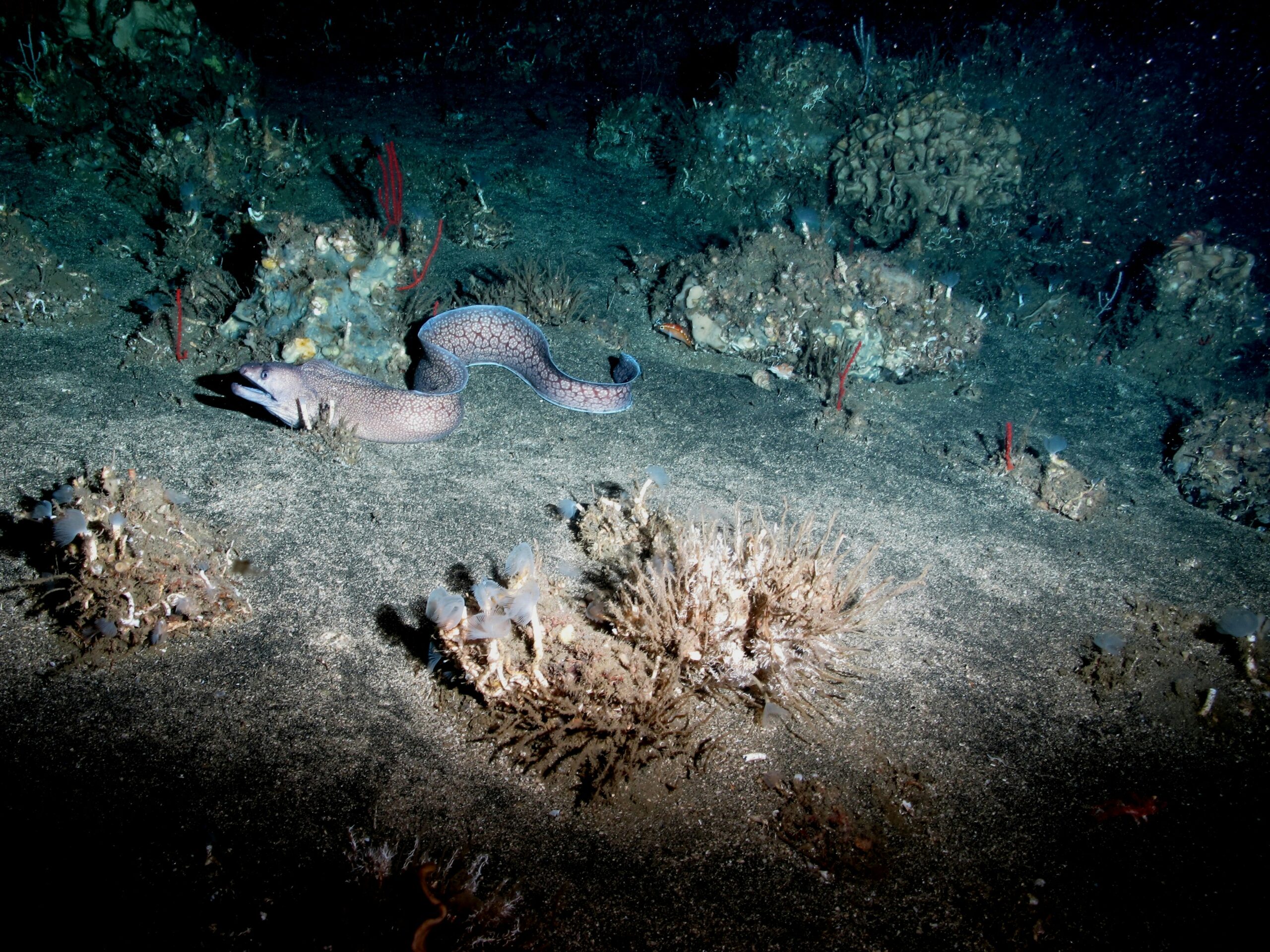
The ocean’s surface, a familiar and sunlit world, belies the vast, alien landscapes that lie miles below. In these crushing depths, where sunlight has never penetrated and pressures are immense, a breathtaking array of life has evolved, adapting to one of the planet’s most extreme environments. Deep-sea fish, with their bizarre forms, bioluminescent displays, and incredible survival strategies, represent a frontier of biological exploration, continuously challenging our understanding of life’s resilience and diversity. This article delves into the profound mysteries of the abyssal realm, seeking to unveil the secrets held within the silent, perpetual darkness inhabited by these remarkable creatures.
The Abyss: A World of Extremes
The term “deep sea” encompasses a significant portion of our planet’s biosphere, typically defined as oceanic waters below 200 meters, extending down to the ocean floor. This vast expanse is characterized by a confluence of environmental pressures that would render most surface-dwelling organisms instantly extinct. Understanding these conditions is crucial to appreciating the extraordinary adaptations of deep-sea fish.
Extreme Pressure: The Crushing Reality
The sheer weight of water above creates a formidable force in the deep sea. For every 10 meters of depth, the pressure increases by approximately one atmosphere. At the bottom of the deepest trenches, such as the Mariana Trench, pressures can exceed 1,000 atmospheres, equivalent to a human being carrying dozens of elephants on their back.
Cellular and Physiological Adaptations
To withstand these immense pressures, deep-sea fish have evolved remarkable physiological and biochemical mechanisms. Their cellular membranes are more fluid, containing a higher proportion of unsaturated fatty acids, which prevents them from solidifying under pressure. Proteins are also adapted to maintain their functional three-dimensional structure, a feat that would be impossible for their shallow-water counterparts. Many deep-sea fish have minimal or no swim bladders, as these gas-filled organs would collapse under the extreme pressure. Instead, they often have fatty tissues or reduced skeletal structures to maintain buoyancy.
Perpetual Darkness: The Absence of Light
Below the photic zone (approximately 200 meters), sunlight effectively ceases to penetrate. This absence of light has profound implications for vision, hunting, and communication. Life in the deep sea has adapted to this perpetual night in a multitude of ways, often relying on senses other than sight.
Sensory Adaptations Beyond Vision
While some deep-sea fish possess specialized eyes capable of detecting faint bioluminescent signals, many have reduced or entirely lost their vision. In its place, other sensory systems are highly developed. The lateral line system, a series of pores along the body of fish that detects vibrations and pressure changes in the water, is often enlarged and more sensitive in deep-sea species. This allows them to detect the movements of prey or predators from a distance. Chemical senses, such as olfaction and taste, are also highly refined, enabling them to locate food and mates in the darkness.
Low Temperatures: The Chill of the Deep
The deep sea is characterized by consistently low temperatures, typically ranging from 2 to 4 degrees Celsius. This frigid environment, while seemingly inhospitable, has also shaped the metabolic rates and life cycles of deep-sea organisms.
Metabolic Strategies in the Cold
Organisms living in cold environments often have slower metabolic rates to conserve energy. Deep-sea fish, while not necessarily sluggish, exhibit metabolic adaptations that allow them to survive on scarce food resources. Their growth rates can be slower, and their reproductive cycles may be less frequent. The limited energy availability also influences their foraging strategies, often favoring ambush predation or opportunistic scavenging.
Scarcity of Food: A Constant Challenge
The deep sea is a realm of limited resources. Sunlight, the primary energy source for most of Earth’s ecosystems, is absent, meaning primary productivity is extremely low. The food that reaches the deep sea primarily consists of organic matter that sinks from the surface, known as “marine snow.” This sparse and inconsistent food supply has led to some of the most fascinating adaptations seen in deep-sea fish.
Strategies for Finding and Consuming Food
To cope with the scarcity of food, many deep-sea fish have evolved specialized hunting strategies. Some are sit-and-wait predators, conserving energy until an unsuspecting meal comes within striking distance. Others are highly mobile hunters, actively searching for prey. Their mouths are often disproportionately large, equipped with formidable teeth, allowing them to engulf prey that may be larger than themselves. Some species have also developed the ability to digest bone and other hard materials, maximizing the nutritional yield from their meals.
Deep sea fish are known to inhabit some of the most extreme environments on Earth, with many species thriving at incredible depths. A fascinating article that explores the depth limits of these elusive creatures can be found at Freaky Science. This article delves into the adaptations that allow deep sea fish to survive in high-pressure environments and the ongoing research aimed at understanding the mysteries of the deep ocean.
The Luminous Depths: Bioluminescence as a Lifeline
Perhaps the most iconic adaptation of deep-sea fish is their ability to produce light, a phenomenon known as bioluminescence. In the perpetual darkness, this biological light serves a multitude of purposes, from attracting prey and mates to evading predators and communication.
The Chemistry of Light Production
Bioluminescence is a chemical process involving the oxidation of a light-emitting molecule called luciferin, catalyzed by an enzyme called luciferase. This reaction, occurring within specialized cells called photophores, can produce light of varying colors, most commonly blue and green, as these wavelengths travel furthest in seawater.
Functions of Bioluminescence
The diverse functions of bioluminescence in the deep sea are a testament to its evolutionary significance:
Attracting Prey: The Anglerfish’s Lure
One of the most famous examples is the anglerfish, which possesses a modified dorsal fin spine that dangles a bioluminescent lure in front of its gaping maw. This pulsating light mimics small prey, enticing unsuspecting victims into its trap.
Communication and Mating: Signaling in the Dark
Many deep-sea fish use bioluminescent patterns for communication, especially during mating rituals. Males and females may have distinct flashing patterns, allowing them to recognize and attract their own species in the vastness of the ocean. Some species also use bioluminescence to signal their presence to potential mates over considerable distances.
Camouflage and Defense: Counterillumination and Startling Predators
Bioluminescence can also serve as a defense mechanism. Counterillumination, where fish emit light from their undersides to match the faint ambient light filtering down from above, helps them blend in with their surroundings, making them less visible to predators hunting from below. Other species can emit a sudden burst of light to startle or disorient predators, providing an opportunity to escape. Some deep-sea squid and fish release clouds of bioluminescent particles, acting as a decoy while they flee.
Illumination and Vision: Navigating and Hunting
In some cases, bioluminescence is used to illuminate the surroundings. Deep-sea fish with large eyes may use their own light-producing organs to briefly illuminate their environment, helping them to detect prey or navigate through the darkness.
The Diversity of Deep-Sea Fish: A Gallery of the Bizarre
The sheer diversity of life in the deep sea is astounding, with countless species exhibiting unique and often bizarre adaptations. These creatures have evolved to fill a wide range of ecological niches, from the abyssal plains to the hydrothermal vents.
Adaptations for Hunting and Predation
The challenges of finding food have led to a remarkable array of predatory adaptations:
The Gulper Eel (Eurypharynx pelecanoides): A Living Bag
The gulper eel, with its enormously distensible jaws and throat, is a prime example of an extreme adaptation for capturing large prey in a food-scarce environment. It can swallow prey almost as large as itself, making it a formidable predator despite its seemingly fragile appearance.
The Viperfish (Chauliodus sloani): Teeth for Every Occasion
The viperfish is renowned for its incredibly long, needle-like teeth, which are so large they do not fit inside its mouth and are permanently extended forward. These teeth are crucial for impaling and holding onto slippery prey in the dark.
The Fangtooth (Anoplogaster cornuta): The Ultimate Predator
Despite its small size, the fangtooth is one of the deepest-living fish known and possesses the largest teeth relative to its body size of any fish. Its formidable dentition is a clear indicator of its predatory prowess.
Adaptations for Life on the Seafloor
Many deep-sea fish have adapted to life on or near the ocean floor, developing specialized features for navigating and foraging in this environment:
The Grenadiers (Macrouridae): Masters of the Benthic Zone
Grenadiers, also known as rattails, are a dominant group of deep-sea fish found on the continental slopes and abyssal plains. They have elongated, tapering bodies and often possess barbels around their mouths, which they use to detect and locate food buried in the sediment.
The Tripod Fish (Bathypterois grallator): Standing on Stilts
The tripod fish is aptly named for its three elongated fin rays, which it uses to stand on the seafloor. This allows it to remain still while waiting for prey to come within range, while also keeping its body elevated above the sediment.
The Enigmatic World of Hydrothermal Vents
Hydrothermal vents, fissures on the seafloor that release superheated, mineral-rich water, support unique ecosystems independent of sunlight. Deep-sea fish found around these vents have evolved remarkable adaptations to survive in these chemically extreme and often toxic environments.
Vent Fish and Their Symbiotic Relationships
Some species of vent fish have developed symbiotic relationships with chemosynthetic bacteria, which form the base of the food web around these vents. These bacteria convert chemicals from the vents into energy, and the fish either graze on the bacteria or host them internally.
Exploring the Unseen: Challenges and Discoveries
The exploration of the deep sea is a challenging endeavor, requiring specialized technology and immense dedication. The extreme pressures, low temperatures, and vast distances make direct observation difficult, but technological advancements are slowly peeling back the layers of mystery.
The Role of Submersibles and ROVs
Remotely Operated Vehicles (ROVs) and Autonomous Underwater Vehicles (AUVs) have revolutionized deep-sea exploration. These robotic explorers can descend to incredible depths, equipped with high-definition cameras, sonar, and sampling equipment, allowing scientists to observe and collect data from previously inaccessible environments. Human-occupied submersibles, while more limited in depth and duration, offer invaluable direct observation and the ability to conduct complex experiments.
The Promise of New Discoveries
Every expedition into the deep sea has the potential for groundbreaking discoveries. New species are regularly identified, revealing novel adaptations and evolutionary pathways. Studying these organisms provides insights into the limits of life, the potential for life on other planets, and the intricate interconnectedness of Earth’s ecosystems.
Understanding Deep-Sea Ecosystems
Beyond individual species, researchers are striving to understand the complex interactions within deep-sea ecosystems. The role of these environments in global nutrient cycles, carbon sequestration, and the overall health of the ocean is becoming increasingly apparent.
Conservation Concerns in the Deep
Despite their remoteness, deep-sea ecosystems are not immune to human impact. Threats such as deep-sea mining, pollution, and climate change are increasingly impacting these fragile environments.
The Importance of Protecting Deep-Sea Biodiversity
The unique biodiversity of the deep sea, much of which remains undiscovered, holds immense potential for scientific and medicinal advancements. Protecting these environments from destructive practices is crucial to safeguarding this invaluable natural heritage for future generations.
Deep sea fish have long fascinated scientists, particularly when it comes to understanding their depth limits and the adaptations that allow them to thrive in such extreme environments. A related article discusses the remarkable physiological traits of these creatures and how they cope with the immense pressure found in the ocean’s depths. For more insights on this topic, you can read the full article here. This exploration not only highlights the challenges these fish face but also sheds light on the broader implications for marine biology and ecology.
Conclusion: A Glimpse into the Unknown
The journey into the depths of deep-sea fish is a continuous unveiling, a process of slowly revealing the astonishing adaptations and diverse life forms that inhabit our planet’s final frontier. From the crushing pressures of the abyss to the luminescent displays that pierce the eternal darkness, these creatures are a testament to the extraordinary power of evolution. As technology advances, so too will our understanding of these enigmatic inhabitants, offering us a profound appreciation for the resilience, ingenuity, and sheer wonder of life in the deep. The ocean’s depths remain a vast reservoir of mystery, inviting us to continue our exploration and to marvel at the wonders that lie beneath the waves.

The Deeper You Go, the Less Life Looks Like Life
FAQs

What is the depth limit for deep sea fish?
The depth limit for deep sea fish varies depending on the species, but generally, deep sea fish are found at depths ranging from 200 meters (656 feet) to 5,000 meters (16,404 feet) below the ocean’s surface.
How do deep sea fish survive in such extreme depths?
Deep sea fish have adapted to survive in extreme depths by possessing unique physiological and behavioral adaptations. These include the ability to withstand high pressure, low temperatures, and darkness, as well as specialized sensory organs to detect prey in the absence of light.
What are some examples of deep sea fish species and their depth ranges?
Examples of deep sea fish species and their depth ranges include the anglerfish, which can be found at depths of 200 to 2,000 meters (656 to 6,562 feet), the gulper eel, which can be found at depths of 500 to 3,000 meters (1,640 to 9,842 feet), and the fangtooth fish, which can be found at depths of 200 to 5,000 meters (656 to 16,404 feet).
What are the main challenges deep sea fish face at such extreme depths?
The main challenges deep sea fish face at extreme depths include high pressure, low temperatures, scarcity of food, and lack of light for photosynthesis. These factors make survival and reproduction difficult for deep sea fish.
Why is it important to study deep sea fish and their depth limits?
Studying deep sea fish and their depth limits is important for understanding the biodiversity and ecological dynamics of the deep sea, as well as for potential biotechnological and medical applications. Additionally, deep sea fish can serve as indicators of environmental changes and the health of deep sea ecosystems.