The vast expanse of the cosmos, a tapestry woven with galaxies and stars, is not merely a collection of luminous objects. It is a dynamic entity, shaped by forces both seen and unseen. For decades, astronomers have grappled with the enigmatic nature of dark energy, a mysterious pressure that permeates spacetime and drives the accelerated expansion of the universe. It is a force that makes up approximately 70% of the universe’s total energy density, yet its fundamental properties remain elusive. To unravel this cosmic puzzle, scientists embarked on ambitious observational projects, meticulously charting the distribution of matter and the expansion history of the universe. Among these monumental endeavors, the Dark Energy Survey (DES) stands as a beacon of our collective pursuit of knowledge, a testament to human ingenuity in peering into the deepest recesses of the cosmos.
The Dark Energy Survey, a collaboration of hundreds of scientists from institutions across the globe, utilized the powerful Dark Energy Camera (DECam) mounted on the Victor M. Blanco 4-meter Telescope at the Cerro Tololo Inter-American Observatory in Chile. For six years, from 2013 to 2019, DECam scanned an unprecedented area of the southern sky, capturing images of over 100 million galaxies and thousands of supernovae. The sheer volume of data collected by DES has provided cosmologists with an unparalleled dataset to probe the nature of dark energy through various observational probes, including galaxy clustering, weak gravitational lensing, and Type Ia supernovae. These methods, each sensitive to different aspects of cosmic expansion and structure formation, collectively offer a multifaceted view of the universe’s evolution. The quest to understand dark energy is not a singular pursuit; it is a grand symphony of scientific inquiry, with each instrument and technique playing a vital role in harmonizing our comprehension of the universe.
The Eridanus Supervoid: A Cosmic Anomaly
One of the most intriguing discoveries to emerge from the DES data is the identification and detailed characterization of the Eridanus Supervoid. Located in the constellation Eridanus, this colossal region of space is remarkably devoid of galaxies. While cosmic voids, vast, underdense regions of space, are a known feature of the large-scale structure of the universe, the Eridanus Supervoid is an anomaly in its sheer scale and emptiness. It is estimated to be roughly a billion light-years in diameter, a gaping maw in the cosmic web. Its existence challenges our current understanding of how large-scale structures form in the universe and has sparked considerable debate and further investigation within the cosmological community. The sheer emptiness of this region suggests that the distribution of matter in the universe is not as uniform as some models might predict, hinting at subtle deviations or a more complex underlying cosmic architecture.
Understanding Cosmic Voids
Cosmic voids are not merely empty spaces; they are integral components of the cosmic web, the filamentary structure of galaxies and dark matter that spans the universe. These voids are formed by the gravitational pull of denser regions, which effectively push matter outwards, leaving behind these vast underdense bubbles. The distribution and size of these voids provide crucial insights into the history of structure formation and the nature of dark matter and dark energy. The standard model of cosmology, known as the Lambda-CDM model, predicts the existence and general properties of these voids, but the Eridanus Supervoid’s exceptional characteristics demand a closer examination of these predictions.
The Eridanus Supervoid’s Distinctive Features
The Eridanus Supervoid is characterized by a significantly lower than average density of galaxies and galaxy clusters. This deficiency is not uniform; there are subtle variations in density within the void, suggesting a complex formation history. Initial observations and theoretical models have attempted to explain its formation through various mechanisms, including large-scale fluctuations in the early universe or the peculiar gravitational influence of surrounding superclusters. The remarkable emptiness of this region suggests that the primordial density fluctuations in the early universe might have been larger than anticipated by standard inflationary models, or that some exotic physical processes might have contributed to its formation.
The Dark Energy Survey has provided significant insights into the vast Eridanus Void, a massive cosmic structure that challenges our understanding of the universe’s expansion. For a deeper exploration of the implications of such voids and their relationship to dark energy, you can read a related article on this topic at Freaky Science. This resource delves into the mysteries of cosmic voids and their impact on the overall structure of the universe, making it a valuable read for anyone interested in astrophysics and cosmology.
Probing Dark Energy with Galaxy Surveys
The primary objective of the Dark Energy Survey was to constrain the properties of dark energy, and galaxy surveys were one of its most powerful tools. By meticulously mapping the positions and properties of millions of galaxies, DES scientists could infer the distribution of matter in the universe. This distribution is a direct consequence of the interplay between gravity, which pulls matter together, and dark energy, which pushes spacetime apart. The rate at which galaxies cluster and the patterns they form over vast cosmic distances are sensitive indicators of the strength and evolution of dark energy.
Galaxy Clustering as a Cosmic Ruler
Galaxy clustering refers to the tendency of galaxies to clump together in the universe. The statistical properties of these clusters, such as their size, shape, and the distances between them, act as a “cosmic ruler.” By comparing the observed clustering patterns with theoretical predictions derived from cosmological models, scientists can infer the parameters that govern the universe’s expansion, including the equation of state of dark energy. The DES data allowed for the most precise measurements of galaxy clustering at large scales ever achieved, providing stringent tests for different dark energy models.
Baryon Acoustic Oscillations (BAO)
A key signature imprinted within the distribution of galaxies is the Baryon Acoustic Oscillation (BAO) scale. These are relics of sound waves that propagated through the early universe plasma before it cooled enough for atoms to form. These waves left a characteristic imprint on the distribution of matter, creating a preferred separation distance between galaxies. Measuring this distance at different cosmic epochs allows astronomers to track the expansion history of the universe. The DES, with its vast galaxy catalog, has provided some of the most precise BAO measurements to date, significantly improving our constraints on dark energy.
Weak Gravitational Lensing: A Cosmic Distortion Map
Another pivotal technique employed by the Dark Energy Survey was weak gravitational lensing. This phenomenon occurs when the gravity of massive objects, such as galaxies and galaxy clusters, bends the light from more distant objects. While strong lensing can create dramatic arcs and multiple images, weak lensing causes subtle, statistical distortions in the shapes of background galaxies. By analyzing these tiny distortions across millions of galaxies, cosmologists can reconstruct a map of the distribution of mass in the universe, including the invisible dark matter.
The Invisible Hand of Dark Matter
Dark matter, like dark energy, is a mysterious component of the universe, accounting for about 25% of its total mass-energy. It does not interact with light, making it invisible to traditional telescopes. Gravitational lensing is one of the primary methods for detecting and mapping dark matter. The DES’s extensive imaging allowed for a detailed study of the subtle gravitational lensing effects across vast regions of the sky, providing crucial information about the distribution and evolution of dark matter halos, which are the scaffolding upon which galaxies form.
Mapping Cosmic Structure and Expansion
The distortions in the shapes of background galaxies are directly proportional to the amount of mass located between the observer and the distant galaxy. By measuring these subtle distortions for a vast number of galaxy pairs, the DES team could create three-dimensional maps of the matter distribution in the universe. These maps are incredibly sensitive to the effects of dark energy. As dark energy drives the accelerated expansion of the universe, it affects the growth of cosmic structures. Analyzing how these structures have evolved over time, as revealed by lensing maps, provides powerful constraints on the nature of dark energy. The interplay between galaxy clustering and weak lensing is particularly powerful, as these two probes are sensitive to slightly different aspects of cosmic evolution.
Type Ia Supernovae: Cosmic Distance Markers
Supernovae, the cataclysmic explosions of stars, have proven to be invaluable tools in cosmology. Specifically, Type Ia supernovae are particularly important because they are thought to have a remarkably uniform intrinsic brightness. This uniformity makes them “standard candles,” allowing astronomers to accurately determine their distances from Earth based on their observed brightness. By measuring the distances to many Type Ia supernovae at various redshifts (a measure of how much the universe has expanded since the light left the supernova), scientists can chart the expansion history of the universe.
The Accelerating Expansion Revealed
The study of Type Ia supernovae in the late 1990s provided the first direct evidence for the accelerating expansion of the universe, a discovery that led to the concept of dark energy. The Dark Energy Survey continued this legacy by observing a large number of Type Ia supernovae, further refining these measurements and providing crucial data to test different dark energy models. The precise distance measurements from these supernovae, combined with their redshifts, allow for a direct probe of the expansion rate of the universe at different epochs.
Constraining Dark Energy Models
The precise measurements of the Hubble constant (the current rate of expansion) and the deceleration parameter (which describes how the expansion rate is changing) derived from the DES supernovae data have placed significant constraints on the possible properties of dark energy. By comparing the observed expansion history with theoretical predictions from various dark energy models, scientists can rule out certain scenarios and favor others, bringing us closer to understanding the fundamental physics behind this cosmic enigma. The combination of Type Ia supernova data with other DES probes, such as galaxy clustering and weak lensing, provides a more robust and comprehensive picture of cosmic evolution.
The Dark Energy Survey has provided fascinating insights into the Eridanus Void, a vast region of space that challenges our understanding of cosmic structure. Researchers have been exploring the implications of this discovery, particularly in relation to the distribution of dark matter and the expansion of the universe. For more in-depth information on this topic, you can read a related article that delves into the mysteries of cosmic voids and their significance in modern astrophysics. Check it out here.
The Eridanus Void in the Context of Dark Energy Research
| Metric | Value | Unit | Description |
|---|---|---|---|
| Void Diameter | 300 | Million light years | Approximate diameter of the Eridanus Void |
| Redshift Range | 0.05 – 0.15 | z | Redshift range covered by DES observations in the Eridanus Void region |
| Galaxy Density Contrast | -0.8 | Dimensionless | Relative underdensity of galaxies compared to average cosmic density |
| Survey Area | 500 | Square degrees | Area of the sky covered by DES in the Eridanus Void region |
| Dark Energy Equation of State Parameter (w) | -1.03 ± 0.04 | Dimensionless | Constraint on dark energy from DES data including void analysis |
| Void Volume | 1.4 × 10^7 | Cubic megaparsecs | Estimated volume of the Eridanus Void |
| Mean Galaxy Redshift | 0.1 | z | Average redshift of galaxies surrounding the Eridanus Void |
The discovery and detailed analysis of the Eridanus Supervoid, while not directly measuring dark energy itself, contribute significantly to our understanding of the universe’s large-scale structure and the processes that govern its evolution. The existence of such a massive underdense region poses questions about the homogeneity of the universe on very large scales and the initial conditions that led to its formation. Cosmological models are continuously refined to accommodate such observations. If the Eridanus Supervoid arose from primordial density fluctuations that were significantly larger than predicted by standard models, it could imply subtle modifications to our understanding of inflation or the very early universe. Furthermore, understanding the formation and dynamics of voids can shed light on the distribution of dark matter, which plays a crucial role in the cosmic web and influences the large-scale distribution of galaxies. The interaction between dark matter and dark energy is a key area of research, and deviations from expected void formation could indirectly point towards the influence of dark energy on structure formation over cosmic time.
Implications for Cosmic Structure Formation
The Eridanus Supervoid, as an extreme example of a cosmic void, provides a crucial test case for simulations of structure formation. These simulations, which model the evolution of the universe from the Big Bang to the present day, must be able to reproduce the observed distribution of galaxies and voids. The presence of the Eridanus Supervoid challenges these simulations to accurately account for the formation of such vast underdense regions. Understanding how this void formed might require adjustments to our models of initial conditions, the growth of structure under gravity, or potentially even the properties of dark matter.
Refining Cosmological Models
The Dark Energy Survey’s comprehensive dataset, including the characterization of the Eridanus Supervoid, pushes the boundaries of our cosmological models. As scientists gather more precise data on the distribution of matter and the expansion history, theoretical frameworks must adapt. The insights gained from DES, particularly concerning anomalies like the Eridanus Supervoid, encourage the development of more sophisticated models that can explain a wider range of observational phenomena. This iterative process of observation, analysis, and theoretical refinement is at the heart of scientific progress, steadily illuminating the fundamental nature of our universe. The ongoing analysis of the DES data continues to yield profound insights, promising to deepen our comprehension of dark energy and the cosmos as a whole.
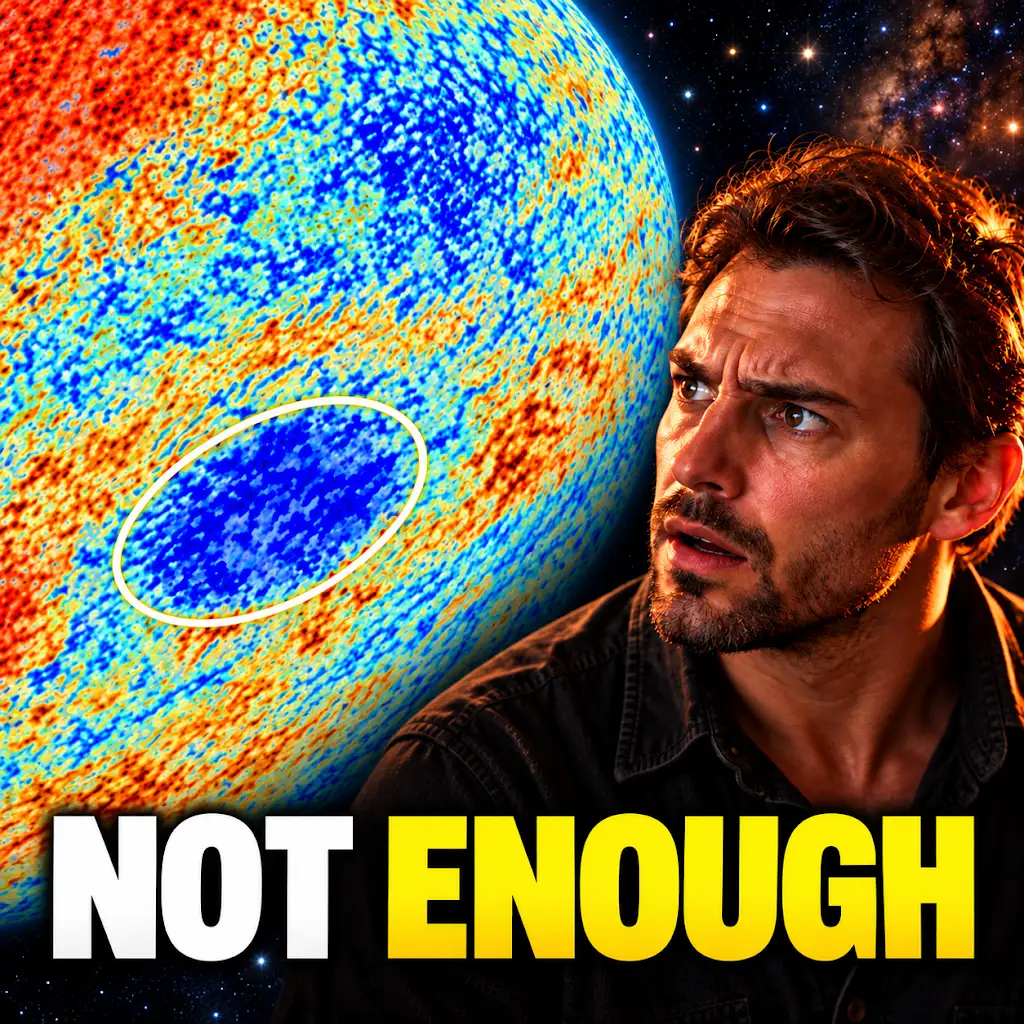
The Universe’s Cold Spot Has an Explanation. It’s Not Enough.
FAQs
What is the Dark Energy Survey Eridanus Void?
The Dark Energy Survey Eridanus Void is a vast region of space that is largely devoid of galaxies, located in the Eridanus constellation.
How was the Dark Energy Survey Eridanus Void discovered?
The void was discovered by the Dark Energy Survey (DES) collaboration, which is an international effort to map the distribution of galaxies and dark matter in the universe.
What are the implications of the Eridanus Void for our understanding of the universe?
The presence of such a large void challenges current models of cosmology and raises questions about the nature of dark energy and the large-scale structure of the universe.
How big is the Dark Energy Survey Eridanus Void?
The void is estimated to be about 1.8 billion light-years across, making it one of the largest voids ever discovered.
What further research is planned for the Dark Energy Survey Eridanus Void?
Scientists are planning to conduct more detailed studies of the void to better understand its properties and how it fits into our current understanding of the universe’s structure and evolution.