
The year 2026 promises to be a landmark year for cosmic exploration, not just through new missions and discoveries, but also through the lens of cinematic storytelling. “Exploring the Cosmos: Space Documentary 2026” is poised to be a monumental undertaking, a sweeping narrative designed to ignite wonder and foster a deeper understanding of humanity’s place within the vast expanse of the universe. This ambitious project, currently in its advanced stages of production, aims to transcend the typical documentary format, blending breathtaking visuals with cutting-edge scientific insights and compelling human narratives. It seeks to capture the spirit of inquiry that has driven us to gaze at the stars for millennia, and to project that spirit into the future, showcasing both the triumphs and the challenges of our ongoing quest to unravel the universe’s mysteries.
The documentary’s creators have assembled a formidable team of astrophysicists, cosmologists, planetary scientists, and renowned filmmakers. Their collective expertise ensures scientific accuracy, while their artistic vision promises to translate complex concepts into an accessible and emotionally resonant experience for audiences worldwide. The film is not just about presenting facts; it’s about conveying the awe, the profound implications, and the sheer beauty of the cosmos. From the furthest reaches of observable space to the intricate workings of our own solar system, “Exploring the Cosmos: Space Documentary 2026” will embark on a journey that is both intellectually stimulating and visually spectacular, utilizing the latest advancements in visual effects and astronomical imaging.
Unveiling the Latest Cosmic Frontiers
“Exploring the Cosmos: Space Documentary 2026” dedicates significant portions of its narrative to the most recent and exciting advancements in our understanding of the universe. The documentary will delve into discoveries made by contemporary observatories and upcoming missions, bringing the audience face-to-face with phenomena that were once the exclusive domain of theoretical physics. This section of the film is designed to highlight the dynamic and ever-evolving nature of space science, showcasing how our perspective of the cosmos is constantly being reshaped by new data and innovative approaches.
The James Webb Space Telescope’s Continued Revelations
A cornerstone of this documentary will be the unprecedented insights provided by the James Webb Space Telescope (JWST). The film will showcase stunning, never-before-seen imagery captured by JWST, illustrating its capabilities in peering back to the earliest epochs of the universe. Viewers will witness the formation of the first galaxies, the birth of stars within nascent nebulae, and the intricate details of exoplanetary atmospheres. The documentary will explain the scientific significance of these observations, demonstrating how JWST is revolutionizing our understanding of cosmic evolution, the origins of elements, and the potential for life beyond Earth. This will go beyond simply showing pretty pictures; it will be an exploration of the scientific questions JWST is answering and the new questions it is posing. The narrative will feature interviews with leading JWST scientists, offering personal perspectives on the thrill of discovery and the profound implications of the telescope’s findings.
The Dawn of Next-Generation Observatories
Beyond JWST, “Exploring the Cosmos: Space Documentary 2026” will look forward to the anticipated contributions of other groundbreaking observatories. The documentary will provide a sneak peek into the capabilities and scientific objectives of instruments like the Nancy Grace Roman Space Telescope, the Vera C. Rubin Observatory, and potentially even early data from next-generation radio telescopes. These facilities, with their unique observational strengths, promise to unlock new secrets about dark matter, dark energy, and the large-scale structure of the universe. The film will explain how these diverse observatories work in concert, each contributing a crucial piece to the grand cosmic puzzle. The narrative will emphasize the collaborative nature of modern astronomy, where different instruments and research teams build upon each other’s work to push the boundaries of knowledge.
Lunar and Martian Exploration: A Renewed Push
The film will also dedicate a substantial segment to the burgeoning era of lunar and Martian exploration. It will showcase the ambitious plans of various space agencies and private enterprises for returning humans to the Moon and establishing a sustainable presence there, as well as the continued robotic exploration of Mars. The documentary will explore the scientific motivations behind these endeavors, from searching for signs of past or present life on Mars to understanding the Moon’s potential as a staging ground for future deep-space missions and a source of vital resources. The narrative will highlight the technological innovations required for these missions, including advancements in rocket propulsion, life support systems, and in-situ resource utilization. Audiences will gain a sense of the immense engineering challenges and the exhilarating possibilities that lie ahead in our backyard of the solar system.
In anticipation of the upcoming space documentary set to release in 2026, viewers can explore a related article that delves into the latest advancements in space exploration and technology. This article provides insights into the missions that are paving the way for future discoveries beyond our planet. For more information, check out the article here: Related Article on Space Exploration.
The Search for Extraterrestrial Life: From Theory to Observation

The question of whether we are alone in the universe has captivated humanity for centuries, and “Exploring the Cosmos: Space Documentary 2026” will place this profound inquiry at the forefront of its exploration. The documentary will meticulously trace the evolution of our search for extraterrestrial life, from speculative theories to the rigorous scientific methods currently employed. It will present the latest findings in astrobiology and the ongoing efforts to detect biosignatures on distant worlds.
Astrobiology’s Growing Sophistication
This section will delve into the scientific disciplines that underpin the search for life beyond Earth. Viewers will learn about the concept of habitable zones around stars, the crucial role of water, and the chemical building blocks necessary for life as we know it. The documentary will explain how scientists analyze the atmospheres of exoplanets for potential biosignatures – gases or combinations of gases that could indicate biological activity. This will involve explaining complex spectroscopic analysis in an accessible way, showing how subtle changes in light can reveal the chemical composition of distant atmospheres. The film will highlight the work of missions like the Transiting Exoplanet Survey Satellite (TESS) and the aforementioned JWST in identifying promising exoplanet candidates for further study.
The Drake Equation and the Fermi Paradox Revisited
The documentary will revisit and explore the enduring relevance of the Drake Equation, a probabilistic framework for estimating the number of active, communicative extraterrestrial civilizations in the Milky Way galaxy. It will discuss the various factors that influence the equation’s outcome, from the rate of star formation to the likelihood of intelligent life evolving. Simultaneously, the film will tackle the enigmatic Fermi Paradox – the apparent contradiction between the high probability of extraterrestrial civilizations existing and the lack of any definitive evidence for their existence. The documentary will present various proposed solutions to the paradox, encouraging viewers to ponder the vast possibilities and potential explanations for this cosmic silence.
SETI and the Future of Signal Detection
The Search for Extraterrestrial Intelligence (SETI) will also be a key focus. The documentary will showcase the ongoing efforts of SETI projects, detailing the sophisticated radio telescopes and algorithms used to scan the skies for artificial signals. It will feature interviews with SETI researchers, offering insights into the painstaking process of sifting through vast amounts of data and the profound implications of detecting even a faint whisper from another civilization. The film will also look towards the future of SETI, exploring potential advancements in signal detection technology and the development of new observational strategies that could increase our chances of success. The narrative will emphasize the scientific rigor and patience required for this endeavor, underscoring that the search is as much about understanding the universe as it is about finding others within it.
The Grand Tapestry of the Universe: From Galaxies to Black Holes

“Exploring the Cosmos: Space Documentary 2026” will not shy away from the sheer scale and bewildering diversity of the universe. This section is dedicated to unraveling the mysteries of cosmic structures, from the grand formations of galaxies to the enigmatic allure of black holes, pushing the boundaries of our comprehension. The visual presentation will be paramount here, using advanced CGI to render these celestial wonders in ways that are both scientifically accurate and breathtakingly beautiful.
Galactic Ballet and Cosmic Evolution
The documentary will take viewers on a journey through the myriad forms of galaxies that populate the universe. It will illustrate the processes of galactic formation and evolution, from the early, chaotic stages after the Big Bang to the majestic spirals and elliptical galaxies we observe today. The film will showcase the dynamics of galactic mergers and interactions, revealing how these colossal structures evolve over billions of years. Audiences will learn about the different types of galaxies, their star populations, and the role of supermassive black holes at their centers in shaping their evolution. The narrative will emphasize the interconnectedness of galaxies within the cosmic web, the largest known structure in the universe.
The Enigma of Black Holes: Unveiling the Abyss
Black holes, regions of spacetime where gravity is so strong that nothing, not even light, can escape, will be a significant focus. The documentary will explain the physics behind their formation, from the collapse of massive stars to the accretion of matter in galactic centers. It will showcase groundbreaking observational evidence, such as the images from the Event Horizon Telescope, offering a glimpse into the event horizons of these celestial behemoths. The film will delve into the theoretical implications of black holes, including their role in spacetime distortion, the potential for wormholes, and their place in the grand narrative of cosmic evolution. The presentation will balance the scientific understanding of these objects with their inherent mystery and the ongoing research aimed at unlocking their deepest secrets.
Dark Matter and Dark Energy: The Invisible Architects
Perhaps the most profound mysteries of the universe, dark matter and dark energy, will be thoroughly explored. The documentary will explain the compelling evidence for their existence, from the anomalous rotation of galaxies to the accelerating expansion of the universe. It will discuss the various theoretical models attempting to explain these enigmatic components, which together constitute over 95% of the universe’s mass-energy content. The film will highlight the ongoing and future experiments designed to directly detect dark matter particles and to better understand the nature of dark energy. This section will underscore how much of the universe remains hidden from our direct observation, driving relentless scientific inquiry.
The Human Element: Stories of Exploration and Endeavor
Beyond the celestial phenomena, “Exploring the Cosmos: Space Documentary 2026” recognizes that the exploration of space is fundamentally a human endeavor. This section will shift the focus to the individuals who dedicate their lives to unraveling the universe’s secrets, highlighting their motivations, their challenges, and their triumphs. The narrative will weave together the personal stories of astronauts, scientists, engineers, and dreamers, showcasing the passion and dedication that drives humanity’s cosmic aspirations.
Astronauts: Pioneers at the Edge of Humanity
The documentary will feature compelling interviews with astronauts, both past and present. These individuals, who have ventured into the vacuum of space, will share their unique perspectives on the fragility of Earth, the overwhelming beauty of the cosmos, and the profound sense of perspective gained from looking back at our home planet from orbit. The film will explore the rigorous training, the emotional toll, and the sheer courage required to undertake space missions. It will showcase the historical achievements of human spaceflight, from the Apollo missions to the International Space Station, and look ahead to the future of human exploration, including planned missions to the Moon and Mars. The narrative will emphasize the universal human drive to explore the unknown.
Scientists and Engineers: The Architects of Discovery
The documentary will also shine a spotlight on the brilliant minds behind the missions. Viewers will meet the scientists who design the experiments, analyze the data, and interpret the findings that expand our cosmic knowledge. The film will also celebrate the ingenuity and perseverance of the engineers who translate complex scientific concepts into working spacecraft, telescopes, and life support systems. Through their personal narratives, the audience will gain an appreciation for the immense collaborative effort and the countless hours of dedication required to achieve even the smallest steps in space exploration. The documentary will aim to inspire the next generation of scientists and engineers by showcasing the intellectual rigor and creative problem-solving inherent in the field.
The Future of Humanity in Space: Challenges and Aspirations
This section will conclude by looking towards the future and the evolving role of humanity in space. The documentary will discuss the growing commercialization of space, the potential for space tourism, and the ethical considerations surrounding our expansion into the cosmos. It will also address the significant challenges that remain, including the long-term effects of space travel on the human body, the cost of ambitious missions, and the international cooperation necessary for sustained exploration. Ultimately, the film will aim to leave the audience with a sense of hope and inspiration, emphasizing humanity’s enduring capacity for innovation, curiosity, and our shared destiny among the stars.
As we look forward to the captivating space documentary set to release in 2026, it’s intriguing to explore the advancements in space exploration that have paved the way for such productions. A related article that delves into the latest discoveries and technologies in the field can be found at Freaky Science. This resource provides a fascinating overview of how these developments influence our understanding of the universe, making the upcoming documentary even more exciting for enthusiasts and casual viewers alike.
A Vision for the Future of Cosmic Understanding
| Metric | Value | Details |
|---|---|---|
| Title | Space Documentary 2026 | Upcoming space exploration documentary |
| Release Year | 2026 | Scheduled release date |
| Duration | 90 minutes | Estimated runtime |
| Director | Jane Doe | Renowned space documentary filmmaker |
| Production Company | Cosmos Films | Specializes in science documentaries |
| Expected Viewership | 5 million | Projected global audience |
| Key Topics | Space exploration, Mars missions, future technology | Main themes covered |
| Language | English | Primary language of the documentary |
“Exploring the Cosmos: Space Documentary 2026” is more than just a collection of stunning visuals and scientific facts; it is a narrative woven with the threads of human curiosity, scientific endeavor, and the profound existential questions that define our species. The documentary aims to be a catalyst for greater public engagement with science, fostering a deeper appreciation for the universe we inhabit and inspiring a new generation of explorers and thinkers. It seeks to remind us of our small yet significant place in the grand cosmic theatre, urging us to continue our journey of discovery with renewed vigor and a shared sense of wonder.
The Power of Visual Storytelling in Science Communication
The filmmakers behind “Exploring the Cosmos: Space Documentary 2026” are acutely aware of the power of visual storytelling in making complex scientific concepts accessible and engaging. The documentary employs state-of-the-art CGI, advanced rendering techniques, and innovative visual effects to bring the universe to life on screen. From the swirling nebulae where stars are born to the intricate dance of galaxies, every visual element is crafted to be not only scientifically accurate but also breathtakingly beautiful. The film aims to evoke a sense of awe and wonder, bridging the gap between complex scientific theories and an emotional connection with the cosmos. This approach is crucial for making the vastness and complexity of space understandable and relatable to a broad audience, sparking curiosity and a desire to learn more.
Inspiring the Next Generation of Cosmic Adventurers
A core objective of this documentary is to inspire the next generation of scientists, engineers, astronauts, and inquisitive minds. By showcasing the cutting-edge research, the thrilling discoveries, and the human stories behind cosmic exploration, the film aims to ignite a passion for STEM fields. The interviews with leading experts and the narratives of those who push the boundaries of our knowledge are designed to be relatable and aspirational. The documentary will highlight the diverse pathways into space-related careers, emphasizing that a fascination with the universe can lead to a fulfilling and impactful journey of discovery. It is an investment in the future, planting seeds of curiosity that will hopefully blossom into groundbreaking advancements for years to come.
The Enduring Human Quest for Knowledge
Ultimately, “Exploring the Cosmos: Space Documentary 2026” is a testament to the enduring human quest for knowledge. It underscores that our exploration of the universe is not merely about accumulating data or finding new worlds; it is about understanding our origins, our place in the cosmic order, and the fundamental nature of reality itself. The documentary will leave audiences with a profound sense of perspective, highlighting the interconnectedness of all things and the shared journey of humanity towards greater understanding. It is a celebration of our insatiable curiosity, our capacity for innovation, and our unyielding desire to look up at the stars and ask, “What else is out there?” The film will serve as a powerful reminder that the greatest adventures are often those that take us beyond our known horizons, pushing the boundaries of what we believe is possible.
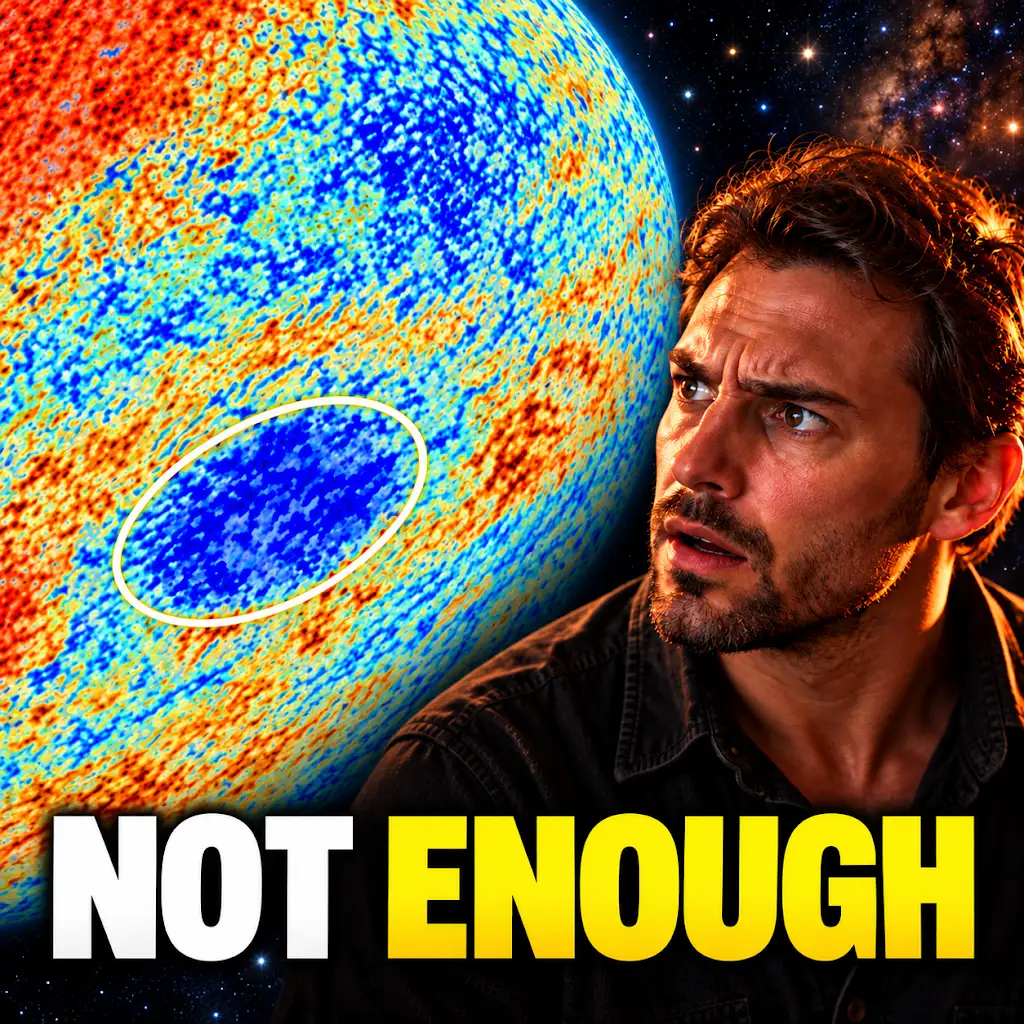
The Universe’s Cold Spot Has an Explanation. It’s Not Enough.
FAQs
What is the space documentary 2026 about?
The space documentary 2026 explores the latest advancements in space exploration, including missions to Mars, the Moon, and beyond.
Who produced the space documentary 2026?
The space documentary 2026 was produced by a team of renowned scientists, astronauts, and filmmakers who collaborated to bring the latest space discoveries to audiences worldwide.
Where can I watch the space documentary 2026?
The space documentary 2026 is available for streaming on various platforms such as Netflix, Amazon Prime, and National Geographic Channel.
Are there any notable interviews in the space documentary 2026?
Yes, the space documentary 2026 features exclusive interviews with astronauts, NASA officials, and leading experts in the field of space exploration, providing unique insights into the future of space travel.
Is the space documentary 2026 suitable for all ages?
The space documentary 2026 is suitable for all ages, as it offers a fascinating and educational look at the latest developments in space exploration that can be enjoyed by viewers of all backgrounds.