
Is Reality Just a Computer Program? Exploring Simulation Theory
The question of whether our perceived reality is a meticulously crafted simulation, akin to a sophisticated computer program, has moved from the realm of fringe philosophy and science fiction into serious academic and scientific discourse. Simulation theory, at its core, proposes that the universe, including all conscious beings within it, could be an artificial construct, a digital fabrication generated by a more fundamental, perhaps vastly more advanced, civilization. This idea, while seemingly fantastical, is not without its logical underpinnings and has been explored through various philosophical arguments and scientific thought experiments. Understanding simulation theory requires an examination of its origins, its core tenets, the arguments that support it, the challenges it faces, and its profound implications for our understanding of existence.
The notion that our reality might not be as it seems is far from new. Philosophers throughout history have grappled with the nature of reality and our perception of it, laying the groundwork for modern simulation arguments.
Plato’s Allegory of the Cave
One of the earliest and most famous examples is Plato’s Allegory of the Cave, presented in his work The Republic. Plato describes prisonerschained in a cave, facing a blank wall. Behind them, a fire burns, and puppeteers cast shadows on the wall. The prisoners, having known nothing else, believe these shadows to be reality. Plato uses this allegory to illustrate the difference between the world of appearances, which is often deceptive, and the world of true forms, accessible through reason and philosophical enlightenment. While not directly a simulation argument, it highlights the potential for what we perceive as real to be merely a representation.
Descartes’ Evil Demon
René Descartes, in his Meditations on First Philosophy, introduced the concept of an “evil demon” or “malicious genius.” Descartes sought to establish a foundation for certain knowledge by systematically doubting everything he could possibly doubt. He posited that an all-powerful, potentially malevolent being could be deceiving him about the very existence of the external world, his body, and even his own thoughts. This thought experiment, designed to isolate indubitable truths, inadvertently opens the door to the possibility that our experiences are orchestrated by an external force, a precursor to the computational agent in simulation theory.
Berkeley and the Idealist Perspective
George Berkeley, an Irish philosopher, argued for idealism, proposing that “to be is to be perceived.” In his view, objects only exist as ideas in the mind of a perceiver. For physical objects to have a continuous existence when not being observed by human minds, Berkeley posited the constant perception of an omniscient God. While not a computer simulation in the modern sense, Berkeley’s philosophy suggests that reality is fundamentally mental and dependent on perception, which resonates with the idea that the underlying substrate of reality could be information rather than physical matter.
Simulation Theory has sparked intriguing discussions about the nature of reality and consciousness. A related article that delves deeper into the implications of this theory can be found at Freaky Science. This article explores various perspectives on whether our existence could be a sophisticated simulation, examining philosophical, scientific, and technological viewpoints that challenge our understanding of what is real.
The Simulation Argument: Bostrom’s Trilemma
The modern scientific and philosophical exploration of simulation theory is heavily influenced by Nick Bostrom’s influential 2003 paper, “Are You Living in a Computer Simulation?” Bostrom’s argument, a sophisticated and widely cited thought experiment, presents a trilemma, suggesting that at least one of the following propositions must be true:
The Past Analogy: Our Trajectory Towards Simulation
Bostrom’s argument hinges on the idea that if a civilization reaches a sufficiently advanced technological stage, it is likely to develop the capacity to create highly realistic simulations of its ancestors or other beings. This development, if it occurs, would unlock the potential for the creation of an enormous number of such simulations.
Proposition 1: The Extinction of Posthuman Civilizations
One possibility is that, far from reaching a posthuman stage capable of running ancestor simulations, humanity (or any sufficiently advanced civilization) inevitably goes extinct before reaching that level of technological maturity. This could be due to various existential risks, such as nuclear war, runaway artificial intelligence, a catastrophic pandemic, or environmental collapse. If this is the case, then no such simulations would ever be created.
Proposition 2: The Lack of Interest in Ancestor Simulations
Another possibility is that even if civilizations reach the posthuman stage, they lose interest in running detailed “ancestor simulations.” There might be ethical objections, a shift in priorities, or simply a lack of scientific or historical curiosity about their past. Perhaps they find other ways to explore their history or consciousness that do not involve recreating it digitally.
Proposition 3: We Are Almost Certainly Living in a Simulation
The third proposition is the most provocative. If neither of the first two propositions is true – meaning that a significant number of posthuman civilizations do arise and do run a large number of ancestor simulations – then it follows that the number of simulated beings would vastly outnumber the beings in the original, “base” reality. In this scenario, the statistical probability of any particular conscious being existing within a simulation would be astronomically high. Therefore, according to Bostrom’s logic, we are more likely to be simulated beings than to be inhabitants of the original reality.
Computational Resources and Simulation Depth
A key aspect of Bostrom’s argument involves the exponential growth of computational power projected by technological trends like Moore’s Law. If such trends continue, it’s conceivable that future civilizations could possess the processing power to run incredibly detailed simulations, indistinguishable from reality. The argument suggests that a posthuman civilization could potentially run a vast number of conscious simulations simultaneously. The parameters of these simulations could range from very simple to incredibly complex, mirroring their own reality or exploring hypothetical scenarios. The assumption is that if they can, they will, and they will create many.
Evidence and Anomalies: Cracks in the Code?
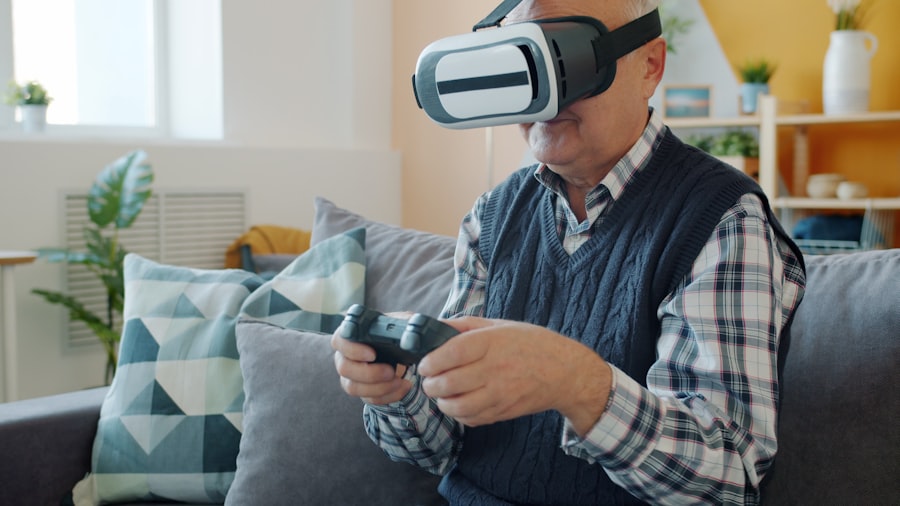
While direct empirical evidence for simulation theory remains elusive, proponents point to certain aspects of our universe and scientific understanding that could be interpreted as indicative of a simulated environment. These are not definitive proofs, but rather intriguing observations that resonate with the idea of a digital construct.
The Apparent Fine-Tuning of the Universe
The physical constants of the universe – such as the strength of gravity, the charge of an electron, and the cosmological constant – appear to be remarkably fine-tuned to allow for the existence of life. Even slight variations in these constants would result in a universe incapable of forming stars, galaxies, or complex chemistry. The “fine-tuning problem” has led some to hypothesize that these constants were deliberately set, perhaps by the parameters of a simulation, to ensure the emergence of life. This is akin to a programmer setting specific variables to achieve a desired outcome in a program.
Quantum Mechanics and the Nature of Reality
At the quantum level, reality behaves in ways that defy our everyday intuition. Particles can exist in multiple states simultaneously (superposition), and their behavior can be influenced by the act of observation (the observer effect). Some interpretations of quantum mechanics suggest that reality is not fundamentally physical but rather informational. For example, the concept of “quantum entanglement” where two particles remain connected regardless of distance, could be explained as a computational shortcut or a property of the underlying code that links them. The probabilistic nature of quantum events also aligns with the idea that a simulation might only render details when they are observed or relevant.
The Limits of Physical Laws and the Planck Scale
The laws of physics, as we currently understand them, seem to break down at extreme scales, such as the singularity of a black hole or the very early moments of the universe. Furthermore, there are fundamental limits to how accurately we can measure certain properties, as described by the Heisenberg Uncertainty Principle. Some speculate that these limitations, including the existence of a “Planck scale” which represents the smallest theoretically measurable unit of length, could be analogous to the resolution limits or computational constraints of a simulation. Imagine a digital image; it has a finite resolution, and zooming in too far reveals pixels, not continuous detail.
Mathematical Structure of the Universe
The universe appears to be governed by elegant mathematical laws. From the orbits of planets to the patterns of snowflakes, mathematics provides a predictive and descriptive framework for reality. This inherent mathematical order has led some to suggest that the universe is fundamentally mathematical in nature, and the most sophisticated form of a mathematical system is a computer program. If the universe is essentially a complex algorithm, then it is a simulation.
Challenges and Counterarguments: The Unseen Architect

Despite the intriguing possibilities, simulation theory faces significant challenges and counterarguments that question its plausibility and the interpretations of supposed evidence.
The Problem of the Simulators’ Reality
If we are living in a simulation, then what of the reality of our simulators? Are they also living in simulations, leading to an infinite regress of simulated universes? While Bostrom acknowledges this, his argument focuses on the probability of us being simulated, not on the ultimate nature of the base reality. However, the question of the “ground of being” for the simulators remains a persistent philosophical hurdle. If the simulators are bound by their own physical laws, then their ability to run our simulation might be limited by their own resources.
The Infinite Complexity Argument
Creating a simulation of our universe, with its trillions of galaxies, countless stars, and the intricate laws governing them, would require an unfathomable amount of computational power and data. Critics argue that the sheer complexity of reality might be beyond the capacity of even a hyper-advanced civilization to simulate with fidelity. The sheer number of particles, interactions, and potential quantum states to track presents a gargantuan computational task.
The Subjective Nature of Consciousness
A significant challenge lies in simulating consciousness itself. If consciousness arises from complex physical processes in the brain, then replicating those processes in a simulation might be necessary. However, we still lack a complete scientific understanding of what consciousness is and how it emerges. Could it be that consciousness is a property that cannot be replicated in a simulated environment, thus invalidating the premise of simulated conscious beings?
Occam’s Razor and the Simplest Explanation
The principle of Occam’s Razor suggests that, when faced with competing hypotheses, the simplest explanation that fits the evidence should be preferred. The explanation that reality is fundamentally what it appears to be – a physical universe governed by natural laws – is arguably simpler than positing a hidden layer of simulation and a race of advanced simulators.
The “Simulation Within a Simulation” Paradox
If we were to discover evidence that conclusively proves we are in a simulation, and if we were then to develop the technology to create our own simulations, we might face a paradox. If our simulations are sufficiently realistic, and if the simulators were to discover their simulation, they might then conclude they are simulated. This recursive problem raises questions about the ultimate origin and nature of reality.
Simulation Theory has sparked intriguing discussions about the nature of reality and our existence within it. A related article that delves deeper into the implications of this theory can be found on Freaky Science, where various perspectives are explored. For those interested in understanding how our perceptions might be influenced by the idea that we could be living in a simulated environment, you can read more in this insightful piece here. This exploration not only challenges our understanding of consciousness but also raises questions about the future of technology and its impact on human experience.
Implications and the Search for Truth: What Does It Mean to Be Real?
| Aspect | Description | Key Proponent(s) | Notable Metrics/Arguments | Criticism |
|---|---|---|---|---|
| Core Hypothesis | Our reality is a computer-generated simulation. | Nick Bostrom | Probability argument: If advanced civilizations run many simulations, simulated beings outnumber real ones. | Unfalsifiable; lacks empirical evidence. |
| Computational Requirements | Simulation would require immense computing power. | Various theorists | Estimated processing power needed exceeds current human technology by many orders of magnitude. | Assumes future tech capabilities and nature of consciousness. |
| Philosophical Implications | Questions nature of reality, consciousness, and existence. | Philosophers and scientists | Raises issues about free will, identity, and ethics in a simulated world. | Debated relevance and impact on human experience. |
| Scientific Tests Proposed | Attempts to find evidence of simulation artifacts. | Physicists like Silas Beane | Looking for pixelation or anomalies in cosmic rays or physical constants. | No conclusive results; tests remain speculative. |
| Public Interest | Popularized in media and culture. | Elon Musk, films like “The Matrix” | Surveys show significant portion of people find the theory plausible. | Often confused with science fiction rather than scientific hypothesis. |
The implications of simulation theory, if it were to be true, are profound and far-reaching, impacting our understanding of existence, purpose, and our place in the cosmos.
Our Place in the Multiverse of Simulations
If we are living in a simulation, then our existence is not unique. We are one of potentially countless simulated realities, each perhaps exploring different parameters, scenarios, or historical events. We would be akin to characters in a video game, our lives playing out according to the rules and objectives set by the programmers. Our understanding of “real” would fundamentally shift.
The Nature of Our Creators and Their Intentions
If simulated, our universe would have creators. Their motivations and intentions would become a central question. Are they benevolent researchers, indifferent observers, or perhaps even mischievous entities? Understanding their purpose might offer clues about the rules and limitations governing our reality, and perhaps even provide a form of existential guidance, albeit one imposed from without.
The Meaning of Life and Free Will
The concept of free will becomes particularly complex in a simulated reality. Are our choices truly our own, or are they predetermined by the simulation’s code? If our actions are predetermined, then the meaning we ascribe to our lives might be an illusion. Conversely, if the simulation allows for genuine agency, then our choices still hold significance, but within the framework of a programmer’s design.
The Potential for “Escape” or Transcendence
If we are in a simulation, the possibility of interacting with or even transcending the simulation’s boundaries might arise. This could involve finding “glitches” or “exploits” in the code, developing new technologies that push the limits of the simulated reality, or somehow communicating with the simulators. This echoes themes in science fiction where protagonists discover they are part of a simulated world and seek to break free.
The Ethical Considerations of Simulation Creation
The contemplation of simulation theory also raises ethical questions for us, as we develop our own increasingly sophisticated virtual realities and artificial intelligences. If it is possible to create conscious beings within simulations, what are our responsibilities towards them? This hypothetical scenario forces us to confront the ethical implications of our own technological advancements and the potential for creating digital life.
A Call to Continue Scientific Inquiry
Ultimately, whether simulation theory is true or not, the exploration of such profound questions drives scientific and philosophical inquiry. It encourages us to question our assumptions about reality, to push the boundaries of our understanding, and to continue exploring the universe, both the one we perceive and the potential realities beyond it. The quest for knowledge, regardless of the perceived nature of reality, remains a fundamental human endeavor.

WATCH NOW ▶️ Donald Hoffman Perception Theory
FAQs
What is Simulation Theory?
Simulation Theory is the hypothesis that reality, including the Earth and the universe, could be an artificial simulation, such as a computer simulation, created by a more advanced civilization.
Who popularized the concept of Simulation Theory?
Philosopher Nick Bostrom popularized Simulation Theory in 2003 with his paper “Are You Living in a Computer Simulation?” where he argued that one of three propositions is likely true, including the possibility that we live in a simulation.
What evidence supports Simulation Theory?
Currently, there is no direct empirical evidence supporting Simulation Theory. Some proponents point to anomalies in physics, such as quantum phenomena or the fine-tuning of constants, as potential indirect hints, but these remain speculative.
How does Simulation Theory relate to technology?
Simulation Theory often references advancements in computing power and virtual reality, suggesting that future civilizations might have the capability to run highly detailed simulations of their ancestors or entire universes.
What are the philosophical implications of Simulation Theory?
If Simulation Theory is true, it raises questions about the nature of reality, consciousness, free will, and the meaning of existence, challenging traditional views on what is real and how we understand our universe.