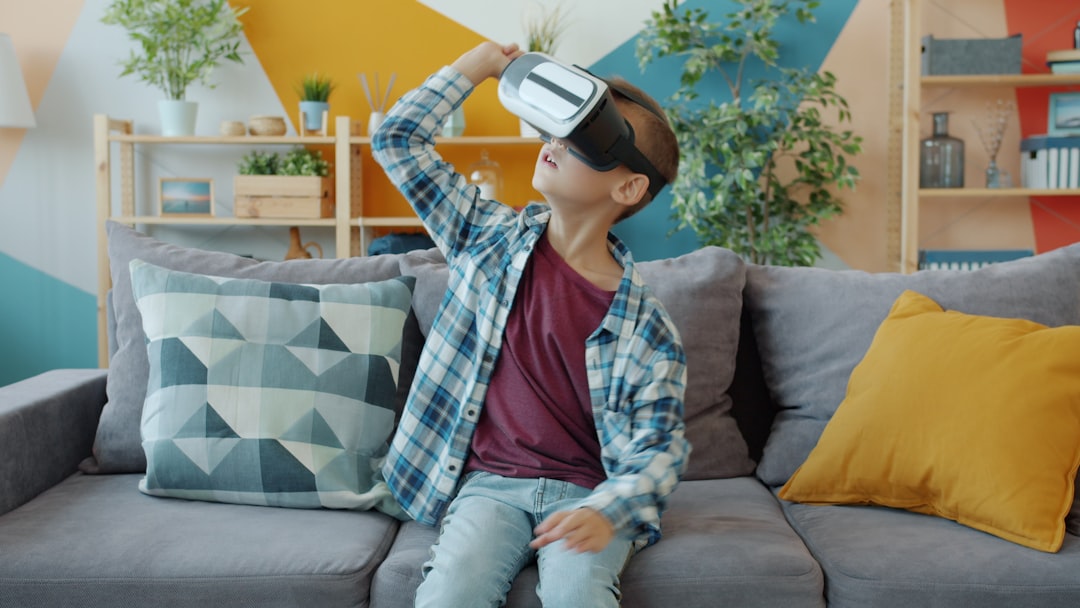
The question of whether our perceived reality is, in fact, an elaborate simulation has moved from the hushed confines of theoretical physics and philosophy lectures into broader public discourse. Simulation theory, in its simplest form, posits that our universe, and everything within it, could be an artificial construct, perhaps generated by a vastly superior civilization or a future iteration of humanity. This concept, while seemingly the stuff of science fiction, is underpinned by logical arguments and intriguing scientific possibilities. For those new to the idea, understanding simulation theory can feel like navigating a labyrinth. This guide aims to provide a foundational understanding of its core tenets, the arguments supporting it, and the implications it holds, all presented in a factual and accessible manner.
The Core Tenets of Simulation Theory
Simulation theory is not a monolithic belief system but rather a spectrum of interconnected ideas. At its heart lies the notion that the fundamental nature of our reality may not be what it appears.
Defining a Simulated Reality
A simulated reality, in this context, refers to an artificial environment that is indistinguishable, from the perspective of its inhabitants, from a “base” or “real” reality. Imagine a computer game so advanced that the player cannot tell they are playing. The characters, the environment, the physics – all are programmed. Simulation theory extends this concept to our entire existence. The stimuli we perceive through our senses – sight, sound, touch, taste, and smell – are interpreted by our brains as objective reality. However, in a simulated reality, these stimuli would ultimately be data streams processed by a computational system.
The “Base Reality” Hypothesis
Central to many simulation arguments is the concept of a “base reality.” This refers to the fundamental, unsimulated universe from which any simulations might originate. If our reality is a simulation, then there must exist a more fundamental level of existence that is “real” in the traditional sense. This base reality would possess its own physical laws, be governed by its own physics, and would be the substrate upon which simulations are run. The relationship between the base reality and simulated realities is analogous to the relationship between a programmer, their software, and the hardware running it; the programmer exists in a physical reality, creates software (a simulation), and runs it on physical hardware.
Degrees of Simulation
It is important to recognize that simulation theory does not necessarily imply a single, all-encompassing simulation. Instead, it allows for varying degrees and types of simulation.
Nested Simulations
One prominent idea is that of “nested simulations.” This refers to a scenario where simulations are created within other simulations, creating layers of artificial realities. A civilization in the base reality might create a simulation, and within that simulation, inhabitants might create their own simulations, and so on. Each layer would perceive its own reality as fundamental, unaware of the higher-level realities that host it. This is akin to playing a video game on a computer, where the game itself is a simulated environment, but the computer is also a physical object, and the electricity powering it comes from a larger power grid, which in turn relies on physical processes.
Parallel Simulations
Another possibility is the existence of multiple, independent simulations running concurrently. These simulations might be created by different entities in the base reality, or even by different civilizations within a single simulation. This would imply a multiverse of artificial realities, each potentially with different rules and characteristics, coexisting without direct interaction.
The Philosophical and Logical Underpinnings
Simulation theory is not merely a speculative fancy; it is supported by several lines of philosophical and logical reasoning. These arguments, often abstract, aim to demonstrate the plausibility, if not the inevitability, of our being in a simulation.
The Bostrom Argument
The most influential argument for simulation theory comes from philosopher Nick Bostrom. His 2003 paper, “Are You Living in a Computer Simulation?”, proposes a trilemma, suggesting that at least one of the following propositions must be true:
- The fraction of human-level civilizations that reach a “posthuman” stage is very close to zero. A posthuman civilization is defined as one that possesses immense technological capabilities, including the ability to run large numbers of ancestor simulations. If such civilizations rarely or never emerge, then the potential for advanced simulations is drastically reduced.
- The fraction of civilizations that are interested in running ancestor-simulations is very close to zero. Even if a civilization reaches posthuman capabilities, it might not have the desire or motivation to run simulations of its ancestors or other historical periods. This could be due to ethical concerns, resource limitations, or simply a lack of interest.
- The fraction of all people with our kind of experiences that are living in a simulation is very close to one. If neither of the first two propositions is true, then it becomes highly probable that we are living in a simulation. If it is common for civilizations to reach posthuman stages and common for them to run simulations, then the sheer number of simulated realities would vastly outweigh the number of base realities, making it statistically more likely that any given conscious being is experiencing a simulation.
Bostrom’s argument, while probabilistic, suggests that under certain reasonable assumptions about technological progress and motivation, the possibility of living in a simulation becomes a statistically significant one.
The Problem of Consciousness
The nature of consciousness itself presents a philosophical quandary that intersects with simulation theory.
The Hard Problem of Consciousness
The “hard problem of consciousness,” as coined by philosopher David Chalmers, refers to the difficulty of explaining how subjective experiences, or “qualia,” arise from physical processes in the brain. Why does the firing of neurons give rise to the feeling of seeing red, or the taste of chocolate? If consciousness can arise from complex information processing, as computational theories suggest, then it might be possible to replicate consciousness within a sufficiently advanced simulation. This opens the door to the idea that simulated beings could be genuinely conscious and experience themselves as real.
Qualia and Simulation
If consciousness is purely a computational phenomenon, then a sufficiently complex simulation could, in principle, generate conscious experiences. The subjective feeling of being “us,” with our thoughts, emotions, and perceptions, could be the output of algorithms running on a vast computational substrate. This does not diminish the reality of our experiences for us; a simulated person experiencing love or pain would still experience it as real. The question then becomes not whether our experiences are “real” to us, but whether the underlying substrate of our existence is physical or computational.
Scientific Arguments and Evidence (or Lack Thereof)
While direct empirical proof of simulation is elusive, several scientific observations and theoretical frameworks have been interpreted as potentially aligning with simulation theory.
Limits and Granularity of Reality
Physics, at its most fundamental level, deals with discrete quantities and underlying structures. This has led some to draw parallels with computational systems.
Quantum Mechanics and Discreteness
Quantum mechanics reveals that energy, matter, and other physical properties are often quantized, meaning they exist in discrete packets rather than in continuous amounts. This discreteness is analogous to the bits and bytes of a digital computer, which store information in discrete units. Some hypotheses suggest that the universe might operate on a fundamental “grid” or “resolution,” much like a pixelated image. If we could probe reality at its absolute smallest scales, we might find evidence of this underlying computational structure.
Fine-Tuning of Physical Constants
The fundamental constants of the universe, such as the strength of gravity or the mass of the electron, appear to be extraordinarily “fine-tuned” for the existence of life. If these constants were even slightly different, stars would not form, atoms would be unstable, and life as we know it would be impossible. This fine-tuning has led to various explanations, including the anthropic principle and the multiverse. However, it is also argued that a simulator could deliberately set these constants to create an environment conducive to life, or at least to the emergence of conscious observers, for their own purposes.
Potential “Glitches” or Anomalies
The search for evidence of a simulation often focuses on anomalies or inconsistencies that might betray the artificial nature of our reality.
Anomalies in Physics
While current physics theories are remarkably successful, there are still unresolved mysteries and unexplained phenomena. These could, hypothetically, be interpreted as “glitches” or limitations within a simulated system – akin to bugs in a computer program. For example, the nature of dark matter and dark energy remains largely unknown and could be considered artifacts of the simulation’s physics engine. Similarly, quantum entanglement, where particles appear to be instantaneously connected regardless of distance, might be a shortcut or optimization employed by the simulation to conserve computational resources.
Mathematical Regularities
The universe is remarkably described by elegant mathematical laws. The fact that abstract mathematical concepts so accurately map onto physical reality is a profound observation. Some argue that this suggests an underlying computational or informational basis to the universe, where mathematics is the “code” of reality. If our universe is a simulation, it’s plausible that its creators would implement it using a clean and ordered set of rules, much like a software developer would use a structured programming language.
The Implications of Living in a Simulation
The potential implications of living in a simulation are far-reaching and touch upon our understanding of free will, purpose, and the nature of existence itself.
Free Will and Determinism
The question of free will becomes particularly complex if we are living in a simulation. If our actions are determined by algorithms and predetermined coding, then genuine free will might be an illusion.
Programmed Choices
If our reality is a simulated environment, then every event, every decision, and every action might ultimately be a consequence of the simulation’s programming. This could lead to a deterministic view where our choices are merely the unfolding of pre-written code. However, the nature of consciousness within a simulation is still a matter of debate. It is possible that simulated consciousness could possess emergent properties that allow for genuine agency, even within the constraints of the simulation.
The Simulator’s Intent
The intent of the simulators also plays a crucial role. Are they mere observers, conducting an experiment? Are they recreating their past? Or are they actively intervening in ways that we do not understand? The answer to these questions could profoundly influence how we perceive our own agency.
Purpose and Meaning
If our universe is an artificial creation, it raises fundamental questions about the purpose of our existence.
The Simulator’s Purpose
The most immediate question concerns the purpose of the simulation itself. Is it an experiment? A historical reenactment? A game? The answer would dictate the meaning, if any, of our lives within that context. We could be characters in a cosmic drama, their fates predetermined or subject to the whims of their creators.
Finding Meaning in a Simulated World
The search for meaning would not necessarily be invalidated by a simulated existence. Even within a simulation, our relationships, our achievements, and our experiences hold subjective value. The pursuit of knowledge, the creation of art, and the experience of love can still be fulfilling, regardless of the ultimate nature of reality. One might argue that the capacity for such experiences, even within a simulation, is precisely what makes them meaningful.
The Nature of “Reality”
Simulation theory challenges our very definition of what constitutes “real.”
Subjective vs. Objective Reality
Our primary experience of reality is subjective. We perceive the world through our senses and interpret it through our consciousness. If a simulation is indistinguishable from base reality from the perspective of its inhabitants, then for all intents and purposes, it is their reality. The line between subjective and objective reality becomes blurred.
The Unfalsifiable Nature
A significant challenge for simulation theory is its potential unfalsifiability. If a simulation is perfectly constructed, it may be impossible to detect. Any evidence we find could be interpreted as part of the simulation itself. This makes it difficult to definitively prove or disprove the theory. However, the ongoing exploration and discussion around simulation theory continue to push the boundaries of our understanding of cosmology, consciousness, and the very fabric of existence. It invites us to question our assumptions and to consider the possibility that the universe is far stranger, and perhaps more artificial, than we currently imagine.
FAQs
What is simulation theory?
Simulation theory is the hypothesis that reality, including the Earth and the universe, could be an artificial simulation, such as a computer simulation, created by a more advanced civilization.
Who popularized the simulation theory?
Philosopher Nick Bostrom popularized simulation theory in 2003 with his paper “Are You Living in a Computer Simulation?” where he argued that one of three propositions about the future of humanity is likely true, including the possibility that we live in a simulation.
What evidence supports simulation theory?
Currently, there is no direct empirical evidence supporting simulation theory. Some proponents point to phenomena like quantum mechanics’ strange behavior or the mathematical nature of physical laws as suggestive, but these are speculative rather than conclusive.
Can simulation theory be tested or proven?
Testing simulation theory is challenging because if we are inside a simulation, the rules and limitations of that simulation might prevent us from detecting it. Some scientists have proposed experiments to detect “glitches” or limits in physical constants, but no definitive test exists yet.
What are the implications if simulation theory is true?
If simulation theory is true, it would mean that our perceived reality is artificially created, raising philosophical questions about consciousness, free will, and the nature of existence. It could also imply the existence of advanced beings or civilizations beyond our understanding.