
You’re standing in your kitchen, perhaps reaching for a snack or reheating leftovers. You slide your plate into the microwave, close the door, and press start. A low hum fills the air, followed by the familiar whirring of the turntable. Then, you see it: a bright, crackling flash of light within the oven cavity. Not the steady glow of the heating elements in your toaster, but something more energetic, more… alive. These are microwave sparks, and they are a gateway to understanding a fascinating phenomenon: air plasma.
You might have encountered these sparks before, perhaps unintentionally by placing metal in the microwave, or maybe you’re just curious about the science behind that fleeting, brilliant display. Whatever your reason, exploring how microwave sparks create air plasma is an engaging journey into the fundamental physics of matter and energy. It’s a topic that bridges everyday experiences with cutting-edge scientific research, and understanding it can offer a new appreciation for the invisible forces at play in our world.
This exploration will guide you through the process, demystifying the science behind those electrifying flashes. We’ll delve into the specific conditions required for plasma formation, the role of microwaves in initiating and sustaining it, and the various ways this phenomenon can be observed and utilized. By the end, you’ll have a solid grasp of how those ordinary kitchen appliances can, under the right circumstances, become miniature plasma generators.
Before you can understand how microwave sparks create plasma, you need to grasp a fundamental concept: dielectric breakdown. Think of air, the gas that fills your microwave oven, as a good insulator. This means that under normal circumstances, it resists the flow of electricity. It’s like a wall that prevents charges from easily moving through. However, this insulating property isn’t absolute. If you apply enough electrical pressure, you can force charges to overcome that resistance.
What is a Dielectric Material?
Insulation vs. Conduction
The Concept of Dielectric Strength
When you think about electrical circuits, you’re usually dealing with conductors like copper wires, where electrons are free to move and carry current. Dielectric materials, on the other hand, are designed to prevent this free flow of charge. They are essential components in many electrical devices, acting as barriers to separate conductive parts and prevent short circuits. Air is a prime example of a dielectric material. In your home, insulation around electrical wires is typically made of dielectric materials like rubber or plastic. The goal is to keep the electricity where it belongs, flowing through the wires and not escaping into the surrounding environment.
However, every dielectric material has a limit to how much electrical stress it can withstand before it breaks down. This limit is called its dielectric strength, and it’s typically measured in volts per unit of distance (e.g., volts per meter or volts per centimeter). Imagine this as the maximum “push” of electricity that the insulating material can resist before it starts to give way. Once this threshold is crossed, the material ceases to be an insulator and begins to conduct electricity.
Factors Affecting Dielectric Strength
The Role of Electric Field Strength
The dielectric strength of a material is not a fixed number; it can be influenced by several factors. The most crucial of these is the strength of the electric field applied. A stronger electric field exerts a greater force on the charged particles within the dielectric. In the case of air, this means if you can create a sufficiently intense electric field, you can overcome the natural resistance of the air molecules. This is precisely what happens inside a microwave oven. The magnetron, the heart of the microwave, generates powerful electromagnetic waves that, under certain conditions, can create localized, extremely strong electric fields.
Pressure and Temperature
Other environmental factors also play a role. For instance, the dielectric strength of air is affected by atmospheric pressure. At lower pressures, air is a better insulator because there are fewer molecules to interact with the electric field. Conversely, at higher pressures, the dielectric strength can be lower. Temperature can also have an effect, though its influence is generally less pronounced than that of the electric field strength and pressure.
Microwave sparks can create fascinating phenomena by turning air into plasma, a state of matter where gas becomes ionized and conductive. This process occurs when the intense electromagnetic fields generated by microwaves excite the air molecules, leading to the formation of plasma. For a deeper understanding of this intriguing topic, you can explore a related article that delves into the science behind microwave-induced plasma and its various applications. Check it out here: Freaky Science.
Microwaves: The Spark Igniters
Now, let’s bring the microwave oven into the picture. The magnetron is the component responsible for generating the high-frequency electromagnetic waves (microwaves) that heat your food. These waves are essentially oscillating electric and magnetic fields propagating through space. When these waves are confined within the metallic cavity of the microwave, they can interact with conductive materials and, importantly, with the air itself.
The Magnetron and Wave Generation
How Microwaves Heat Food: A Brief Detour
To understand how microwaves create sparks, it’s helpful to briefly touch on how they heat food. Microwaves primarily interact with polar molecules, such as water. These molecules have a positive and a negative end. The oscillating electric field of the microwaves causes these polar molecules to rapidly rotate, trying to align themselves with the changing field. This rapid rotation generates friction between the molecules, which translates into heat. This is why foods with high water content cook faster in a microwave.
Creating Intense Electric Fields Within the Cavity
However, when microwaves interact with certain objects or under specific conditions, the energy distribution can become uneven, leading to the creation of extremely localized and intense electric fields. This is where the concept of dielectric breakdown becomes directly relevant. If the electric field strength within a particular region of the air inside the microwave exceeds the dielectric strength of the air, a spark will occur.
Resonance and Field Enhancement
One of the key mechanisms for creating these intense electric fields involves resonance. The metallic walls of the microwave cavity reflect the microwaves, causing them to bounce around and interfere with each other. Under specific conditions, these reflections can lead to constructive interference, where the electromagnetic waves reinforce each other, creating areas of significantly higher electric field strength. This is akin to how sound waves can resonate in a room, making certain areas louder than others. If these enhanced electric fields become strong enough, they can ionize the air, leading to a spark.
The Birth of Plasma: Ionization of Air
When the electric field within a region of air becomes strong enough to overcome the attractive forces holding electrons to their atoms, the magic happens. This process is called ionization. You’re essentially tearing electrons away from the air molecules. This is the crucial step in the creation of plasma.
Free Electrons and Accelerating Particles
Electron-Molecule Collisions: The Chain Reaction
When an electron is freed, it’s no longer bound to a molecule. In the presence of the strong electric field, this free electron is accelerated to very high speeds. As this energetic electron zips through the air, it’s bound to collide with other air molecules. If this electron has gained enough kinetic energy from the electric field, its collision with another molecule can be energetic enough to knock out another electron from that molecule. This, in turn, creates another free electron, which is also accelerated by the electric field and can go on to ionize further molecules. This process creates a cascade, a runaway chain reaction where the number of free electrons and ionized molecules rapidly increases.
From Insulator to Conductor
This rapid increase in the number of charged particles—free electrons and positively charged ions—transforms the air from a poor conductor into a surprisingly good conductor. The air is no longer an insulator; it has become a plasma. This is why you see a bright flash of light. The intense energy released during these collisions and recombinations of charged particles excites the atoms and molecules, causing them to emit photons of light.
The Plasma State of Matter
You’re now witnessing the birth of plasma, often referred to as the fourth state of matter (the other three being solid, liquid, and gas). Plasma is a highly energetic, ionized gas where a significant fraction of the atoms or molecules have been stripped of their electrons. It’s characterized by its conductivity and its emission of light and heat. You’ve essentially created a miniature lightning bolt inside your microwave.
Observing and Harnessing Microwave Plasma
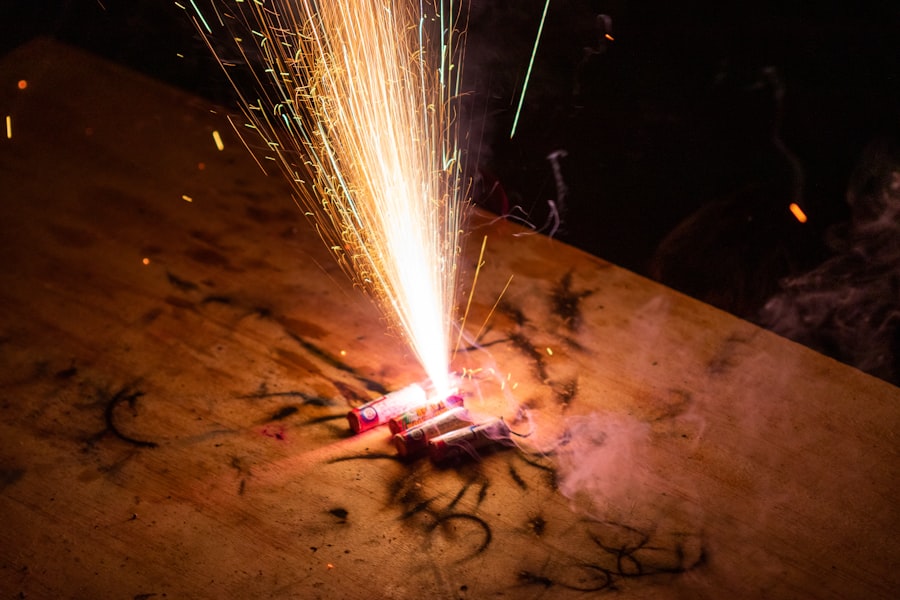
The sparks you see in your microwave are a manifestation of this plasma formation. While often a fleeting event, it’s a clear indicator of the intense energy being channeled within the oven cavity. You can often induce these sparks yourself, though it’s important to do so with caution.
Unintentional Sparks: The Metal Menace
Intentional Plasma Generation: The Ball of Fire
To intentionally create a more sustained and observable plasma, you can use a small piece of material, often a metal foil or a specific type of food like grapes, placed inside the microwave. The metal, being a conductor, can concentrate the electric fields. As the microwaves interact with the metal, they can induce currents and create very strong localized electric fields in the air surrounding the metal. These fields can become intense enough to ionize the air, creating a small, glowing ball of plasma that can hover near the metal. This is a more visually striking demonstration of the principles at play.
The “Microwave Plasma Ball” Experiment
Safety Precautions and Limitations
It’s crucial to emphasize that experimenting with microwave sparks and plasma requires caution. While a small spark is generally harmless, prolonged or uncontrolled generation of plasma can damage your microwave oven. Never place large amounts of metal or unapproved materials in the microwave. The specific experiments often demonstrated online, involving small pieces of foil or specially prepared food items, are usually conducted for short durations and with an understanding of the potential risks. It’s always best to follow established safety guidelines and consult reliable sources before attempting any such experiments.
Microwave sparks can create fascinating phenomena by turning air into plasma, a state of matter that consists of charged particles. This process occurs when the intense energy from microwaves ionizes the air, leading to the formation of glowing plasma arcs. For a deeper understanding of this intriguing subject, you can explore a related article that delves into the science behind these sparks and their implications in various fields. Check out the article on Freaky Science for more insights into this captivating topic.
Applications and Future of Microwave Plasma
| Aspect | Details |
|---|---|
| Process | Microwaves excite the electrons in the air, turning it into plasma |
| Temperature | The air reaches temperatures of about 10,000 degrees Fahrenheit |
| Color | The plasma appears as a glowing, colorful light |
| Duration | The plasma lasts only for a fraction of a second |
The ability to generate and control plasma using microwaves has opened up a wide range of scientific and technological applications, extending far beyond your kitchen. From industrial processes to scientific research, microwave plasma is a versatile tool.
Industrial Applications: Surface Treatment and Sterilization
Scientific Research: Fusion Energy and Space Propulsion
In the realm of scientific research, microwave plasma plays a crucial role in areas like fusion energy. Scientists use powerful microwave systems to heat and confine plasma in experimental fusion reactors, aiming to replicate the energy-generating processes of the sun. Furthermore, microwave plasma thrusters are being explored for spacecraft propulsion, offering a potentially more efficient way to travel through space. The ability to generate high-energy particles and control their interactions makes microwave plasma an invaluable tool for pushing the boundaries of scientific understanding and technological innovation.
The Future of Plasma Technology
The ongoing research and development in microwave plasma technology promise even more exciting advancements. As we gain a deeper understanding of how to precisely control plasma properties, we can expect to see new applications emerge in fields like advanced materials manufacturing, environmental remediation, and even medical treatments. The humble microwave oven, in its ability to create these miniature plasma phenomena, serves as a tangible reminder of the powerful forces that science can harness and the exciting possibilities that lie ahead. You’ve just scratched the surface of a fascinating area of physics, and the sparks you see might just be the beginning of a deeper curiosity.
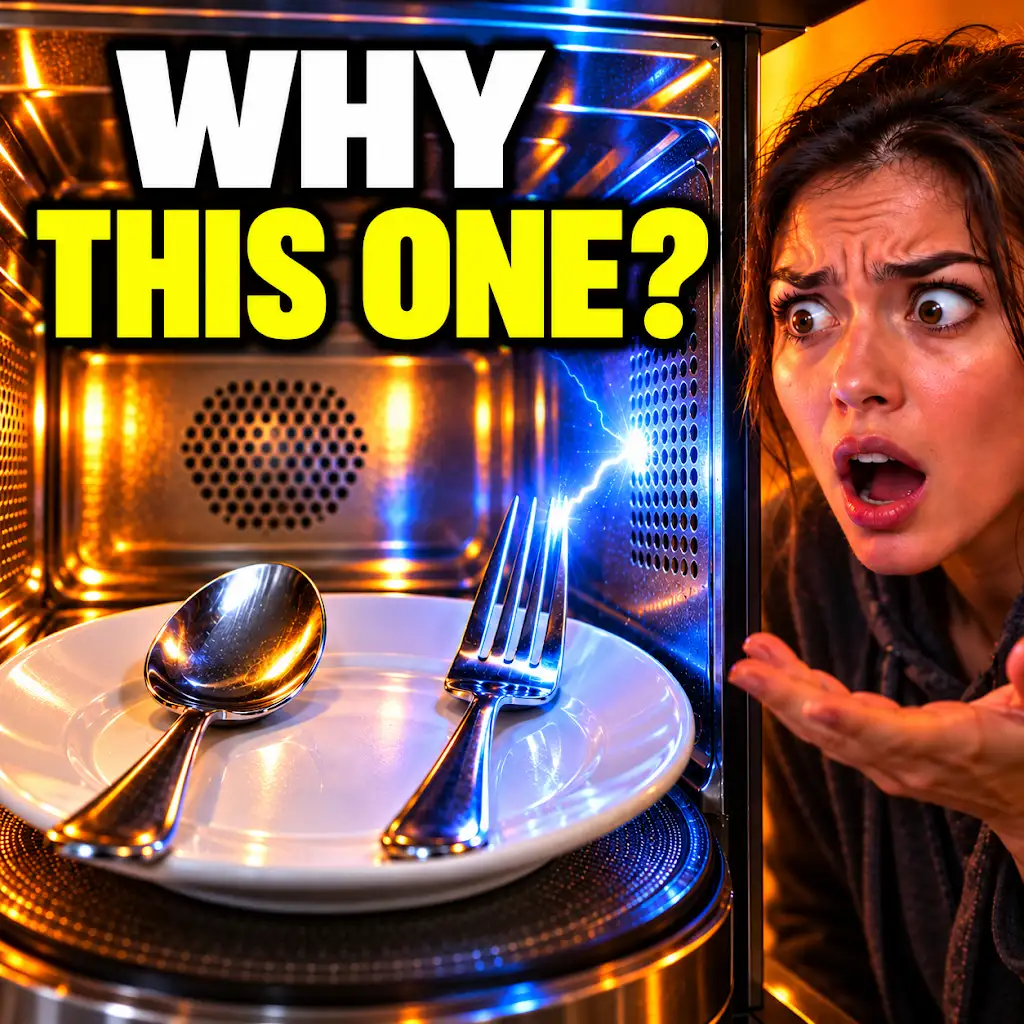
A Fork and a Spoon React Differently in a Microwave. Why?
FAQs
What is plasma?
Plasma is the fourth state of matter, consisting of a gas-like mixture of positively and negatively charged particles. It is often referred to as the “ionized gas” and is found in stars, lightning, and neon lights.
How do microwave sparks turn air into plasma?
When a microwave oven generates sparks, it creates a high-energy environment that can ionize the air molecules, turning them into plasma. The intense electromagnetic field of the microwave causes the air molecules to break apart and form a plasma state.
Is plasma dangerous when created in a microwave?
While the plasma created in a microwave is not inherently dangerous, the sparks themselves can pose a fire hazard if they come into contact with flammable materials. It is important to address any sparking issues in a microwave to prevent potential safety hazards.
What are the applications of plasma generated by microwave sparks?
Plasma generated by microwave sparks has various applications, including sterilization of medical equipment, surface cleaning, and even in some advanced propulsion systems for spacecraft. It is also used in the manufacturing of semiconductors and other electronic components.
Can microwave sparks damage the microwave oven?
Yes, microwave sparks can potentially damage the interior of the microwave oven if they occur frequently. The sparks can cause pitting and damage to the interior walls and the waveguide cover, which can affect the performance and safety of the microwave. It is important to address any sparking issues promptly to prevent damage to the appliance.