
The Chilling World of Freezing: A Gateway to Science Exploration
Freezing, a ubiquitous phenomenon that transforms water into ice and solidifies liquids, offers a surprisingly rich landscape for scientific inquiry. For aspiring young scientists, it presents a readily accessible and visually engaging topic, ripe with opportunities for fascinating fair projects and hands-on experiments. From observing the subtle changes in ice crystal formation to understanding the impact of freezing on different materials, the science behind this phase transition can be explored in myriad ways. This article delves into the exciting world of freezing, providing a comprehensive guide to science fair project ideas and experiments that will ignite curiosity and foster a deeper understanding of this fundamental scientific process. It’s a journey that begins with simple observation and can lead to complex investigations into thermodynamics, molecular behavior, and material science. The beauty of exploring freezing lies in its relatability; everyone has experienced the chill of winter, the solidification of a drink, or the transformation of rain into snow. This inherent familiarity provides a perfect starting point for engaging young minds in scientific exploration, making abstract concepts tangible and exciting.
If you’re looking for inspiration for your science fair project on freezing, you might find the article on the science of freezing fascinating. It explores various aspects of how freezing affects different materials and organisms, providing insights that could enhance your project. You can read more about it here: Freaky Science. This resource can help you understand the principles behind freezing and how to apply them in your experiments.
Investigating the Factors Affecting Freezing Point
The temperature at which a liquid transforms into a solid is not a fixed constant for all substances. Numerous factors can influence this critical point, creating a fertile ground for experimentation. Understanding these influences not only deepens knowledge of freezing itself but also touches upon principles of chemistry and physics.
The Role of Impurities and Solutes
Perhaps the most common and easily observable effect on freezing point is the addition of solutes. Salt is the quintessential example, and its ability to lower the freezing point of water is a cornerstone of winter road maintenance. This phenomenon can be explored by investigating how different concentrations of salt affect the temperature at which water freezes.
Experiment 1: Salting the Ice
Objective: To determine how varying concentrations of salt affect the freezing point of water.
Materials:
- Several identical clear containers (e.g., small plastic cups or beakers)
- Water
- Table salt (sodium chloride)
- Measuring spoons (teaspoon, tablespoon)
- A thermometer that can measure temperatures below 0°C (or a digital thermometer with a probe)
- A freezer or a very cold environment
- Stirring rods
- Labels
Procedure:
- Label the containers: “Control,” “1 tsp Salt,” “2 tsp Salt,” “3 tsp Salt,” and so on, depending on the desired range of concentrations.
- Fill each container with the same amount of water (e.g., 100 ml).
- In the “Control” container, stir the water thoroughly. This will serve as the baseline.
- In the “1 tsp Salt” container, add 1 teaspoon of salt to the water and stir until it is completely dissolved.
- Repeat step 4 for the other labeled containers, adding progressively more salt.
- Carefully place all containers into the freezer.
- Periodically check the temperature of the water in each container using the thermometer. Record the temperature at which each sample begins to freeze (formation of ice crystals).
- Observe the time it takes for each sample to freeze completely.
Analysis and Discussion:
- Compare the freezing points of the different salt solutions. Did the salt lower the freezing point?
- How did the amount of salt affect the freezing point? Is there a trend?
- Discuss the concept of freezing point depression. Explain that when salt dissolves in water, the salt ions interfere with the formation of the ice crystal lattice, requiring a lower temperature for freezing to occur.
- Relate this to real-world applications, such as using salt on icy roads.
Experiment 2: Beyond Salt – Other Solutes
Objective: To investigate whether other common substances also lower the freezing point of water and compare their effectiveness.
Materials:
- Similar materials as Experiment 1, but instead of just salt, use other solutes such as sugar, baking soda, and rubbing alcohol.
- Ensure the solutes are readily dissolvable in water.
Procedure:
- Follow the same procedure as Experiment 1, but instead of salt, add equal amounts (by volume or weight) of sugar, baking soda, and rubbing alcohol to separate samples of water.
- Prepare a “Control” sample with just water.
- Measure and record the freezing points of each solution as they are placed in the freezer.
Analysis and Discussion:
- Which solutes effectively lowered the freezing point?
- Were some solutes more effective than others? If so, why might that be? (Hint: Consider the type of particles formed when each substance dissolves – ions vs. molecules).
- Discuss the differences in chemical structure and how they influence interactions with water molecules. For instance, sugar molecules don’t dissociate into ions like salt does, leading to a less pronounced effect on freezing point depression. Rubbing alcohol (isopropyl alcohol) is a molecule that dissolves in water and can significantly lower its freezing point due to its polarity and ability to form hydrogen bonds.
The Impact of Pressure
While less intuitive than solute effects, pressure also plays a role in the freezing of water. This phenomenon, known as the compressibility of ice, is a bit more advanced but can be explored conceptually or through more complex setups.
Conceptual Exploration: Pressure and Ice
Objective: To understand the theoretical impact of pressure on the freezing point of water.
Explanation:
Unlike most substances, ice is less dense than liquid water. This means that when water freezes, it expands. For ice, increasing pressure tends to favor the more compact phase, which is liquid water. Therefore, increased pressure actually lowers the freezing point of water. This is a counter-intuitive concept that can be a great discussion point.
Real-world Example: This effect is responsible for how ice skates glide. The pressure exerted by the skate blade on the ice causes it to melt slightly, creating a thin layer of water that reduces friction.
Possible Extension (Advanced): For older students, a more complex experiment could involve trying to create a pressure chamber, but this is often beyond the scope of a typical science fair project due to safety and equipment limitations. A demonstration involving ice and a thin wire under tension can illustrate this principle, where the wire slowly cuts through the ice as the pressure melts it, and then refreezes above the wire, eventually falling off.
The Influence of Surface Area and Nucleation Sites
The way ice crystals begin to form, a process called nucleation, can be influenced by the surface area of the container and the presence of impurities that act as nucleation sites.
Experiment 3: Surface Tension and Freezing
Objective: To observe how surface area might affect the freezing process.
Materials:
- Two identical shallow dishes
- Two identical deeper containers
- Water
- Freezer
Procedure:
- Fill the shallow dishes with the same amount of water.
- Fill the deeper containers with the same amount of water.
- Place all containers in the freezer.
- Observe which samples freeze faster.
Analysis and Discussion:
- Did the shape of the container or the resulting surface area of the water influence the freezing time?
- Discuss how a larger surface area exposed to the cold air might lead to faster heat loss and thus quicker freezing.
- Consider the concept of nucleation sites. While this experiment is more about heat transfer, it can lead into a discussion about how imperfections on surfaces can sometimes encourage ice crystal formation.
Observing Ice Crystal Formation: The Art of Science
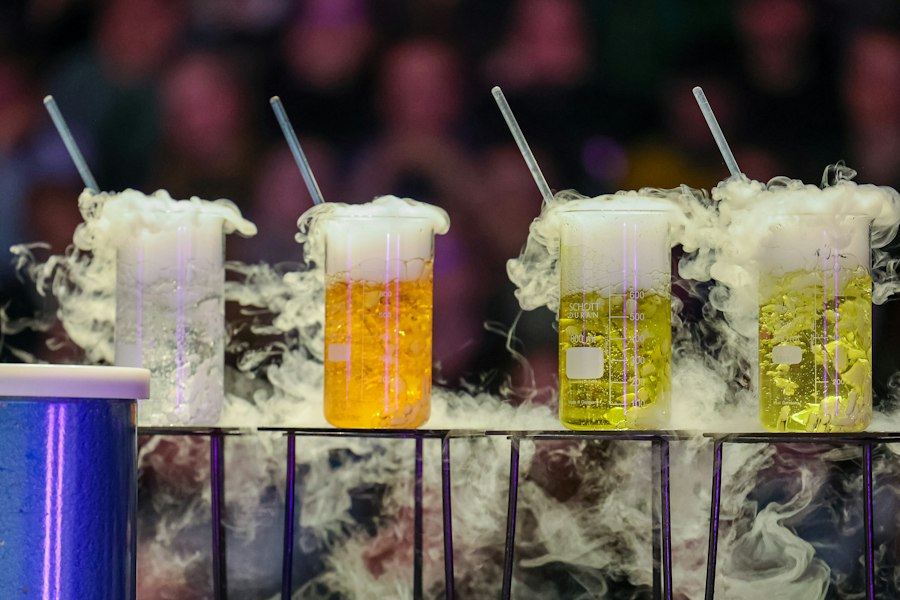
The intricate and often beautiful patterns of ice crystals are a testament to the precise molecular arrangement that occurs during freezing. Exploring these structures can be a visually stunning and scientifically rewarding endeavor.
Factors Influencing Crystal Shape
The shape of an ice crystal is not random. It is influenced by the temperature, humidity, and the presence of specific impurities in the water. Primarily, water molecules arrange themselves into hexagonal structures due to the hydrogen bonding between them.
Experiment 4: Frosty Patterns
Objective: To observe and compare the patterns of frost formed under different conditions.
Materials:
- A clean glass pane or mirror
- A tray or shallow pan
- Ice cubes
- A spray bottle with water
- A dark cloth or background to help visualize the frost
Procedure:
- Place the glass pane or mirror in the freezer for at least 30 minutes to cool it down significantly.
- Remove the glass and place it on the tray.
- Gently spray the surface of the cooled glass with a fine mist of water.
- Observe the formation of frost patterns. You can try this in different areas of the freezer or at different temperatures if possible.
- For comparison, you could also try placing a small amount of very cold water on a surface and observing the ice that forms.
Analysis and Discussion:
- Describe the patterns of frost you observe. Are they dendritic (tree-like), plate-like, or column-like?
- If you conducted the experiment in different locations or under slightly varied conditions, did the patterns change?
- Discuss the hexagonal structure of water molecules and how it dictates the fundamental symmetry of ice crystals.
- Explain that temperature and the rate of water vapor deposition (from the air) are key factors in determining the specific type of crystal that forms. Cold, humid conditions often favor more elaborate dendritic growth.
Experiment 5: Controlled Crystal Growth
Objective: To attempt to influence ice crystal shape by controlling temperature and the presence of seeds.
Materials:
- Several small, identical petri dishes or shallow containers
- Distilled water
- A freezer
- A very cold environment (e.g., an ice bath)
- A magnifying glass or microscope (optional, but highly recommended)
- Small particles of different materials (e.g., a grain of sand, a tiny piece of cotton)
Procedure:
- Fill each petri dish with a small amount of distilled water.
- In one dish, place a single grain of sand at the bottom.
- In another dish, place a tiny piece of cotton.
- Leave one dish with just pure water as a control.
- Place all dishes in the freezer simultaneously.
- Observe the ice crystals as they form, ideally using a magnifying glass. Try to identify where the crystals start to grow and what their initial shapes are.
- Alternatively, you can try cooling the water very carefully in a controlled environment (like an ice bath) and try to induce crystal formation by gently introducing a tiny “seed” crystal or by agitating the water slightly.
Analysis and Discussion:
- Did the presence of the sand or cotton seed affect the initial formation of ice crystals?
- Did the crystals appear to grow differently around these nucleation sites?
- Discuss how impurities or imperfections on a surface can provide points for ice crystals to begin forming. This relates back to the concept of nucleation sites.
Freezing and Materials: Exploring the Effects of Cold
Freezing doesn’t just affect liquids; it has a profound impact on the properties of various solid materials. Investigating these effects can lead to experiments exploring strength, brittleness, and expansion.
Expansion and Contraction
One of the most significant effects of freezing on materials is thermal expansion and contraction. Water famously expands when it freezes, which can have destructive consequences.
Experiment 6: The Power of Expansion
Objective: To demonstrate the expansive force of freezing water.
Materials:
- A metal tin can with a lid (like a soup can)
- Water
- A freezer
- A hammer and a nail (for adults to use for puncturing, if needed)
- Safety goggles
Procedure:
- Fill the tin can almost completely with water, leaving a small space at the top.
- Securely fasten the lid.
- Place the can in the freezer.
- Observe the can after it has frozen solid.
Analysis and Discussion:
- What happened to the can? Did it deform, bulge, or burst?
- Explain why this happened. When water freezes, its volume increases by about 9%. This expansion creates significant outward pressure on the container.
- Discuss real-world implications, such as burst pipes in cold weather or the weathering of rocks due to water freezing in cracks.
Experiment 7: Freezing Different Liquids
Objective: To compare the expansion of different liquids when frozen.
Materials:
- Several identical small, sturdy plastic or glass bottles (ensure they are strong enough to withstand expansion, or use them with the tops off for observation only)
- Water
- Rubbing alcohol
- Vegetable oil
- Milk
- A freezer
- Permanent marker
Procedure:
- Label each bottle with the liquid it contains.
- Fill each bottle with the same amount of liquid, leaving a consistent amount of headspace (e.g., 1-2 cm) at the top. This headspace is crucial for accommodating expansion.
- Place all bottles in the freezer.
- Observe the bottles after they have frozen. Note any changes in the liquid level or the shape of the bottles.
Analysis and Discussion:
- Did all liquids expand equally? Which liquid showed the most expansion? Which showed the least?
- Why might different liquids expand differently? Discuss the molecular structure and intermolecular forces of each liquid and how they affect their density and expansion upon freezing. For instance, alcohol doesn’t form the same rigid lattice structure as water.
- Consider what happens when these liquids thaw.
Brittleness and Strength
The cold can dramatically alter the physical properties of materials, often making them more brittle.
Experiment 8: The Brittle Balloon
Objective: To observe how temperature affects the flexibility of rubber.
Materials:
- Several balloons
- Water
- A freezer
- A warm room or a bowl of warm water (for thawing)
Procedure:
- Inflate each balloon slightly, so they are firm but not overly stretched.
- Fill one balloon with water.
- Place the water-filled balloon in the freezer until the water is frozen solid.
- Place an uninflated or air-inflated balloon in the freezer for comparison.
- After a few hours, carefully remove the frozen water balloon and the cold air balloon.
- Try gently pressing on them. What is their texture and flexibility?
- Allow the water balloon to thaw and observe its properties again.
Analysis and Discussion:
- How did the frozen water balloon feel compared to the cold air balloon or a normal balloon?
- Why did the rubber become more brittle when exposed to extreme cold, especially when holding frozen water?
- Discuss the effect of temperature on polymer chains within the rubber. At low temperatures, these chains become less mobile, leading to increased stiffness and brittleness.
If you’re looking for inspiration for your science fair project on freezing, you might find it helpful to explore the fascinating principles behind the process. One related article that delves into various experiments and ideas is available at Freaky Science. This resource provides a wealth of information that can spark your creativity and help you understand the science of freezing in a fun and engaging way.
Supercooling and the Suddenness of Freezing
| Project Name | Objective | Freezing Method | Duration (minutes) | Temperature (°C) | Result |
|---|---|---|---|---|---|
| Effect of Salt on Freezing Point | To observe how salt affects the freezing point of water | Freezer | 60 | -18 | Saltwater froze slower than pure water |
| Freezing Rate of Different Liquids | Compare freezing times of various liquids | Ice Bath | Variable | -5 | Water froze fastest, juice slower |
| Effect of Container Material on Freezing | Test how container type affects freezing speed | Freezer | 45 | -18 | Metal container froze liquid faster than plastic |
| Freezing Point Depression with Sugar | Measure freezing point changes with sugar concentration | Freezer | 70 | -18 | Higher sugar concentration lowered freezing point |
Supercooling is a fascinating phenomenon where a liquid cools below its freezing point without solidifying. The subsequent sudden freezing, often triggered by a disturbance, is a dramatic demonstration of this principle.
The Science of Supercooling
Supercooling occurs when a liquid is cooled below its freezing point without the presence of nucleation sites. In the absence of these initial points of ice crystal formation, the molecules of the liquid remain in a disordered state, even at temperatures below their normal freezing point. A slight disturbance, such as a jolt or the introduction of a tiny ice crystal, can trigger rapid crystallization.
Experiment 9: Instant Ice!
Objective: To demonstrate the phenomenon of supercooling and induced crystallization.
Materials:
- Several bottles of pure, distilled water (store-bought is best as it’s often very pure)
- A freezer
- A clean, flat surface
- Ice cubes (optional, for triggering)
Procedure:
- Place the unopened bottles of distilled water in the freezer.
- Allow them to cool for approximately 1 hour and 45 minutes to 2 hours. The exact time will depend on your freezer’s temperature and the size of the bottles. The goal is to get the water very cold, below 0°C, but not yet frozen.
- Carefully remove one bottle from the freezer.
- Gently place the bottle on a flat surface. Observe closely for any signs of freezing.
- Now, carefully open the bottle. Do you see anything happen?
- To induce freezing, you can try:
- Pouring the supercooled water into a pre-chilled bowl containing a few ice cubes.
- Dropping a single ice cube into the bottle.
- Shaking the bottle vigorously.
- Tapping the bottle sharply on the surface.
Analysis and Discussion:
- What did you observe when you first took the water out of the freezer? Did it look like water or ice?
- What happened when you performed the trigger action? Describe the rapid crystallization.
- Explain the concept of supercooling. Why did the water remain liquid below its freezing point?
- Discuss how nucleation sites are necessary for ice crystals to form. In pure water, these sites are scarce. The disturbance provides the necessary trigger for molecules to arrange into a crystal lattice.
- Relate this to weather phenomena, such as how hail can form in supercooled clouds.
Freezing in Everyday Life: Applications and Implications
The science of freezing is not confined to the laboratory; it plays a critical role in numerous aspects of our daily lives, from preserving food to understanding geological processes.
Food Preservation and Storage
Freezing is a primary method for preserving food, extending its shelf life by slowing down the enzymatic and microbial activity that causes spoilage.
Experiment 10: The Freeze Test
Objective: To observe the effect of freezing on the texture and quality of different food items.
Materials:
- Several identical samples of common food items:
- A slice of bread
- A banana (peeled and sliced)
- A few strawberries
- A piece of cooked chicken or fish
- A small amount of milk
- A freezer
- Containers or resealable bags for freezing
Procedure:
- Prepare each food sample and place it in a labeled container or bag.
- Place all samples in the freezer.
- After 24-48 hours, remove the samples and observe their appearance and texture while still frozen.
- Allow the samples to thaw completely at room temperature.
- Observe the appearance and texture again after thawing.
- Optionally, taste small portions of the thawed samples (if safe to do so) and describe any changes in flavor or texture.
Analysis and Discussion:
- How did freezing affect the texture of each food item? For example, did the bread become harder? Did the fruit become mushy?
- Did the appearance of the food change after thawing?
- Explain why these changes occur. Freezing causes water within the food cells to form ice crystals. These crystals can damage cell walls, leading to a softer or mushier texture upon thawing.
- Discuss the importance of freezing for preventing spoilage by inhibiting bacterial growth.
Weather and Climate Impacts
Freezing phenomena are central to many weather patterns and have significant implications for climate.
Research Project: Winter Weather Patterns
Objective: To research and present information on various freezing-related weather phenomena.
Procedure:
- Choose a specific freezing-related weather phenomenon to research, such as:
- Snow formation and types of snowflakes
- Hail formation and its impact
- Frost and its formation
- Ice storms and their dangers
- Glaciers and ice caps
- Use reliable sources such as encyclopedias, science websites, books, and meteorological resources.
- Gather information on how the phenomenon forms, the conditions required for it, and its impact on the environment and human life.
- Create a visual aid, such as a poster, a presentation, or a model, to showcase your findings.
Analysis and Discussion:
- This is a research-based project, so the “analysis” would be in the quality and depth of the research presented and the clarity of the explanation.
- The “discussion” would involve students presenting their findings to their peers or a judge, explaining the scientific processes behind their chosen phenomenon.
Conclusion: Embracing the Chill for Scientific Discovery
The science of freezing offers a vast and engaging playground for young scientists. From the fundamental principles of phase transitions to the intricate beauty of ice crystals and the practical applications in our daily lives, exploring freezing provides a rich tapestry of learning opportunities. The experiments outlined in this article, ranging from simple demonstrations to more involved investigations, are designed to spark curiosity, encourage critical thinking, and foster a lasting appreciation for the scientific world around us. By embracing the chill, students can embark on a journey of discovery, uncovering the fascinating science hidden within the seemingly simple act of freezing. The key to a successful science fair project lies not just in the experiment itself, but in the student’s ability to ask questions, form hypotheses, meticulously record observations, and thoughtfully analyze their results. The world of freezing is waiting to be explored, offering endless possibilities for those brave enough to dive into the cold.
Why Hot Water Freezes Faster Than Cold (The Mpemba Effect)
FAQs
What is a science fair project about freezing?
A science fair project about freezing typically involves conducting experiments to explore how different factors affect the freezing process, such as temperature, additives, or the type of liquid being frozen.
How can I choose a topic for a science fair project about freezing?
You can choose a topic for your science fair project about freezing by brainstorming ideas related to freezing, such as investigating the freezing point of different liquids, exploring the effects of salt on freezing, or studying the formation of ice crystals.
What materials do I need for a science fair project about freezing?
The materials you need for a science fair project about freezing may include a thermometer, various liquids to freeze, containers, a freezer, labels, measuring tools, and any additional materials specific to your chosen experiment.
How can I conduct a successful science fair project about freezing?
To conduct a successful science fair project about freezing, you should carefully plan your experiment, follow the scientific method, record your observations accurately, analyze your data, and present your findings in a clear and organized manner.
What are some potential outcomes of a science fair project about freezing?
Some potential outcomes of a science fair project about freezing include discovering how different factors affect the freezing process, gaining a better understanding of the science behind freezing, and potentially contributing new knowledge to the field of cryogenics or food science.