The Grand Tapestry: Unraveling the Mysteries of the Cosmos
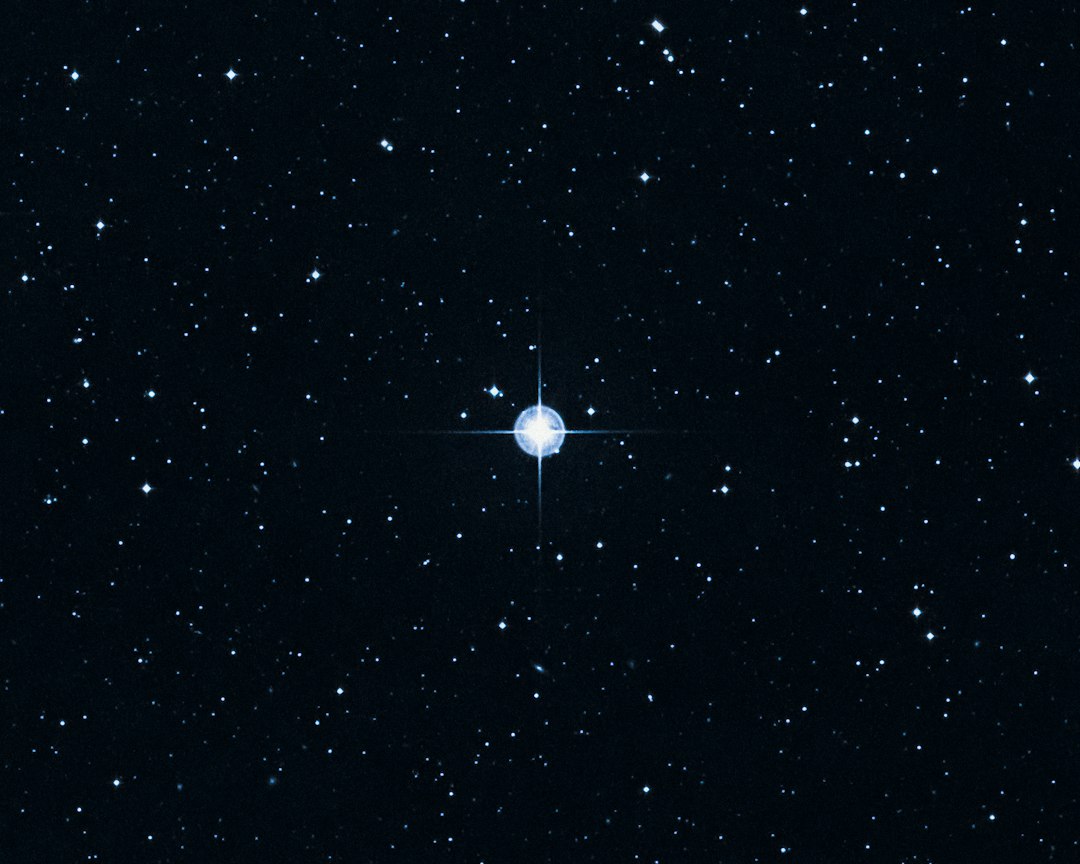
The night sky, a canvas of twinkling lights stretching into an unfathomable darkness, has captivated humanity since time immemorial. From the earliest civilizations charting constellations to the sophisticated telescopes peering into the universe’s infancy, the human desire to understand our place within this vast expanse has been a constant. Cosmology, the scientific study of the origin, evolution, and ultimate fate of the universe, is the field that seeks to answer these profound questions. For the uninitiated, it can seem like a daunting subject, filled with complex theories and mind-boggling scales. However, at its heart, cosmology is a journey of exploration, a grand narrative woven from observation, mathematics, and imagination. This guide aims to demystify this fascinating field, offering a beginner-friendly exploration of its fundamental concepts and the incredible discoveries that have shaped our current understanding of the cosmos.
For those interested in delving deeper into the fascinating world of cosmology, a great resource is the article available at Freaky Science. This beginner-friendly guide provides a comprehensive overview of key concepts in cosmology, including the Big Bang theory, the expansion of the universe, and the nature of dark matter and dark energy. It’s an excellent starting point for anyone looking to understand the fundamental principles that govern our universe.
The Building Blocks: What is the Universe Made Of?
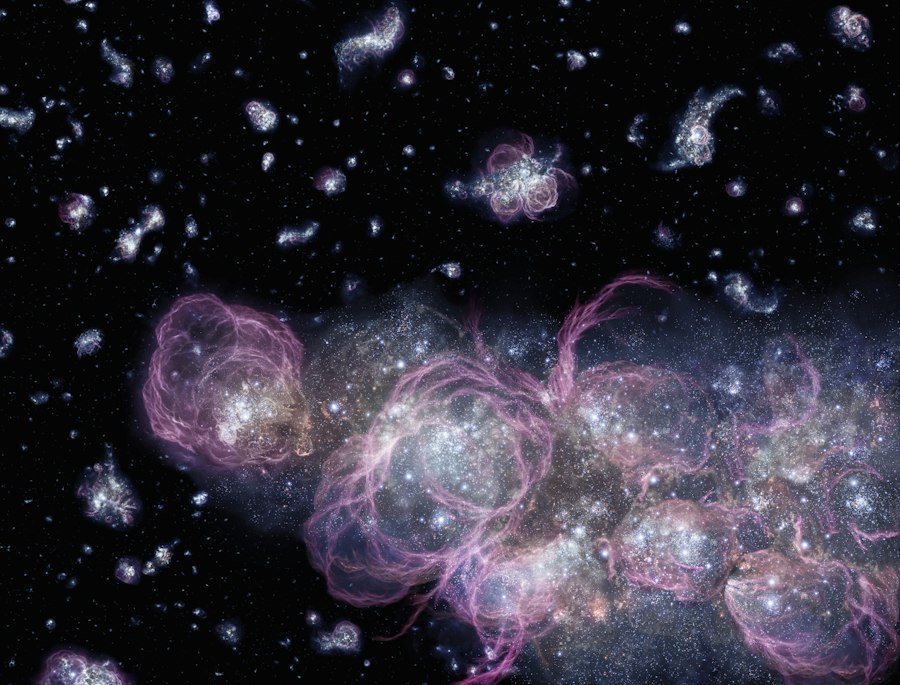
Before delving into the grand narrative of the universe, it is crucial to understand its fundamental constituents. For centuries, our understanding was limited to the visible matter – the stars, planets, and galaxies we could observe. However, modern cosmology has revealed that this visible portion is merely a fraction of what truly constitutes the universe. The vast majority of the cosmos is composed of entities that are largely invisible to our direct detection, leading to a surprising and ongoing revolution in our understanding of reality.
The Familiar Realm: Ordinary Matter
Ordinary matter, also known as baryonic matter, is the stuff we are most familiar with. It comprises atoms, the fundamental building blocks of everything we can see and touch: stars, planets, nebulae, and ourselves. These atoms are made up of protons, neutrons, and electrons. The intricate dance of these particles, governed by electromagnetic and nuclear forces, gives rise to the diversity of elements and the complex structures we observe in the universe. Stars are born from vast clouds of hydrogen and helium gas, fusing these elements into heavier ones in their fiery cores. These heavier elements are then dispersed into space through stellar explosions, seeding the next generation of stars and planets. Our own planet, Earth, and indeed all life on it, is a testament to this cosmic alchemy.
The Elusive Dominators: Dark Matter and Dark Energy
The true surprises in cosmology lie in the unseen. The concept of dark matter emerged from observations that indicated the presence of more gravitational pull than could be accounted for by visible matter alone. Galaxies rotate much faster than they should, and galaxy clusters hold together with more force than visible mass suggests. This discrepancy led to the hypothesis of dark matter – a substance that interacts gravitationally but does not emit, absorb, or reflect light, making it invisible to our telescopes. Its composition remains one of the biggest mysteries in physics, with various candidates being proposed, from exotic particles like WIMPs (Weakly Interacting Massive Particles) to modifications of gravity itself.
Even more enigmatic is dark energy. Observations of distant supernovae in the late 1990s revealed a shocking truth: the expansion of the universe is not slowing down as expected due to gravity; instead, it is accelerating. This acceleration is attributed to dark energy, a mysterious force or property of space itself that acts as a repulsive gravitational agent. It appears to permeate the entire universe and is thought to constitute about 70% of the total mass-energy content of the cosmos. Unlike dark matter, which clumps together, dark energy seems to be smoothly distributed. Understanding its nature is paramount to comprehending the universe’s ultimate destiny.
The Cosmic Genesis: How Did It All Begin?
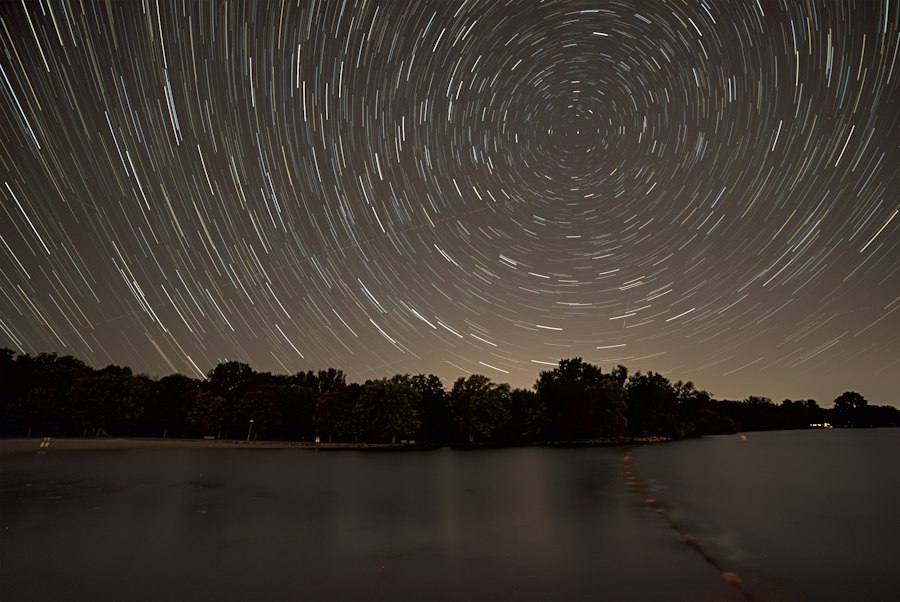
The prevailing scientific model for the origin of the universe is the Big Bang theory. Far from being an explosion in pre-existing space, the Big Bang describes the rapid expansion of spacetime itself from an extremely hot and dense initial state. This theory is not merely a speculative idea; it is supported by a wealth of observational evidence that has been painstakingly gathered over decades.
The Echoes of Creation: Cosmic Microwave Background Radiation
One of the most compelling pieces of evidence for the Big Bang is the Cosmic Microwave Background (CMB) radiation. Discovered accidentally in 1964 by Arno Penzias and Robert Wilson, the CMB is a faint glow of microwave radiation that permeates the entire universe. It is interpreted as the afterglow of the Big Bang, a snapshot of the universe when it was only about 380,000 years old and had cooled enough for photons to travel freely. The CMB is remarkably uniform, but subtle temperature fluctuations, observed with incredible precision by missions like COBE, WMAP, and Planck, provide crucial information about the early universe, including its composition and the seeds of future structure formation. These tiny variations in temperature correspond to slight density differences in the primordial plasma, which eventually grew into the galaxies and clusters of galaxies we see today.
The Expanding Universe: Hubble’s Revolutionary Discovery
The observation that the universe is expanding is another cornerstone of the Big Bang theory. In the 1920s, Edwin Hubble, building on the work of others like Vesto Slipher, observed that distant galaxies are moving away from us, and the farther away a galaxy is, the faster it is receding. This relationship, known as Hubble’s Law, strongly suggests that the universe is not static but is undergoing a continuous expansion. If we rewind the clock, this expansion implies that all matter and energy in the universe were once concentrated in a single point. The ongoing expansion is a direct consequence of the initial inflationary event and the subsequent momentum imparted to spacetime.
The First Light: Nucleosynthesis and Early Elements
The Big Bang theory also accurately predicts the abundance of light elements in the universe, such as hydrogen, helium, and lithium. In the first few minutes after the Big Bang, the universe was hot and dense enough for nuclear fusion to occur. This process, known as Big Bang nucleosynthesis, created specific ratios of these light elements. The observed abundances of these elements in the oldest stars and gas clouds align remarkably well with the predictions of the theory, providing strong corroboration for the Big Bang model. The creation of heavier elements, however, primarily occurred much later within the cores of stars.
The Cosmic Architecture: How is the Universe Structured?
The universe is not a uniform expanse of stars and galaxies. Instead, it exhibits a remarkable hierarchical structure, from the intimate dance of stars within galaxies to the colossal filaments and voids that define the cosmic web. Understanding this structure requires looking at different scales and the forces that shape them.
Galactic Neighborhoods: Stars, Planets, and Nebulae
On smaller scales, we find stars, the incandescent furnaces of the cosmos. Stars are born, evolve, and eventually die, often in spectacular supernova explosions, enriching the interstellar medium with heavier elements. Planets orbit stars, formed from the leftover dust and gas from star formation. Our own solar system is a prime example of this process. Nebulae, vast interstellar clouds of gas and dust, are the birthplaces of stars and the remnants of stellar death. These vibrant structures, often illuminated by nearby stars or the glow of their own internal processes, are essential components of galactic landscapes. Within galaxies, stars are not randomly distributed but are clustered together, forming spiral arms, elliptical bulges, and diffuse halos.
The Cosmic Web: Filaments, Walls, and Voids
As we zoom out, galaxies are not scattered haphazardly but are organized into a vast, interconnected structure known as the cosmic web. This web consists of immense filaments and walls of galaxies, separated by enormous, nearly empty regions called voids. The structure is reminiscent of a sponge or a three-dimensional spiderweb, with galaxies and galaxy clusters congregating along the filaments. This large-scale structure is a direct consequence of the initial density fluctuations in the early universe, amplified by gravity over billions of years. Dark matter plays a crucial role in forming this cosmic scaffolding, its gravitational pull acting as the invisible framework upon which visible matter accumulates.
Black Holes: Gravity’s Ultimate Powerhouses
At the heart of most large galaxies, including our own Milky Way, lie supermassive black holes. These objects possess gravitational forces so immense that nothing, not even light, can escape their pull once it crosses the event horizon. While they are themselves invisible, their presence is inferred from the behavior of stars and gas orbiting them, as well as the powerful jets of radiation they can emit when actively accreting matter. Supermassive black holes are thought to play a significant role in galaxy evolution, influencing star formation and the overall dynamics of their host galaxies. They represent some of the most extreme environments in the universe, pushing the boundaries of our understanding of gravity and spacetime.
For those just starting their journey into the fascinating world of cosmology, understanding the fundamental concepts can be quite overwhelming. A great resource to help ease into this complex field is an article that breaks down the basics in a clear and engaging manner. You can explore this informative piece further by visiting this link, which provides insights into the universe’s structure, the Big Bang theory, and the mysteries of dark matter. This article serves as an excellent introduction for beginners eager to learn more about the cosmos.
The Cosmic Journey: The Evolution and Future of the Universe
| Topic | Description | Key Metric/Value | Unit |
|---|---|---|---|
| Age of the Universe | Estimated time since the Big Bang | 13.8 | billion years |
| Hubble Constant | Rate of expansion of the universe | 70 | km/s/Mpc |
| Cosmic Microwave Background (CMB) Temperature | Temperature of the residual radiation from the Big Bang | 2.725 | Kelvin |
| Dark Matter Percentage | Proportion of total matter that is dark matter | 27 | Percent |
| Dark Energy Percentage | Proportion of total energy density attributed to dark energy | 68 | Percent |
| Ordinary Matter Percentage | Proportion of matter made up of atoms | 5 | Percent |
| Observable Universe Diameter | Estimated size of the observable universe | 93 | billion light years |
The universe is not a static entity; it is a dynamic system constantly undergoing change and evolution. From its fiery birth to its potential ultimate fate, cosmology seeks to trace this grand journey, charting the transformations that have occurred and predicting what lies ahead.
A Timeline of Cosmic Events: From Inflation to Galaxies
The story of the universe is a chronological sequence of remarkable events. Immediately after the Big Bang, a period of incredibly rapid expansion known as cosmic inflation is thought to have occurred, smoothing out initial irregularities. As the universe expanded and cooled, fundamental forces separated, and elementary particles formed. Within the first few minutes, light elements were forged. For hundreds of thousands of years, the universe was an opaque plasma. When it cooled sufficiently, the CMB was released, and the first atoms formed. Over millions of years, gravity began to pull together regions of slightly higher density, leading to the formation of the first stars and, eventually, the first galaxies. These galaxies then merged and interacted, shaping the cosmic structures we observe today.
The Accelerating Expansion: A Universe Growing Apart
As mentioned earlier, the discovery of the accelerating expansion of the universe has profound implications for its future. If dark energy continues to dominate, the universe will not only continue to expand but will do so at an ever-increasing rate. This has led to several theoretical scenarios for the universe’s ultimate fate.
Possible Endings: The Fate of the Cosmos
One leading scenario is the “Big Freeze” or “Heat Death.” In this scenario, the universe continues to expand and cool indefinitely. Stars will eventually exhaust their fuel and burn out. Black holes will evaporate through Hawking radiation over unimaginably long timescales. Eventually, the universe will become a cold, dark, and empty place, with all matter and energy spread so thinly that no further processes can occur. Another, more speculative, possibility is the “Big Rip,” where the acceleration of dark energy becomes so strong that it eventually tears apart galaxies, stars, planets, and even atoms themselves. Conversely, if dark energy were to change its properties or if gravity were to eventually overcome the expansion, a “Big Crunch” might occur, where the universe collapses back in on itself, potentially leading to a new Big Bang in a cyclic universe model. Current observations strongly favor the Big Freeze, but the nature of dark energy remains a key factor in determining the ultimate destiny.
The Human Quest: Our Place in the Cosmic Tapestry
Cosmology is not just about distant stars and abstract theories; it is ultimately a story about us. It explores our origins, our place in the grand scheme of things, and the very nature of existence. The endeavor to understand the cosmos is a testament to human curiosity and our insatiable drive to explore the unknown.
The Search for Extraterrestrial Life: Are We Alone?
The vastness of the universe, with its billions of galaxies, each containing billions of stars, naturally leads to the question of whether life exists beyond Earth. This is the realm of astrobiology and the search for extraterrestrial intelligence (SETI). While we have yet to find definitive evidence of alien life, the sheer number of potentially habitable planets discovered so far, and the ongoing exploration of our own solar system for signs of past or present life, fuels this enduring fascination. The discovery of life elsewhere would undoubtedly have profound philosophical and scientific implications, reshaping our understanding of biology and our uniqueness in the universe.
The Frontiers of Knowledge: Unanswered Questions and Future Discoveries
Despite the remarkable progress in cosmology, many fundamental questions remain. The nature of dark matter and dark energy is still largely unknown. The very first moments of the Big Bang, and the processes that led to inflation, are still subjects of intense research. The question of whether the universe is infinite or finite, and whether there are other universes beyond our own (the multiverse hypothesis), are also active areas of theoretical investigation. Future missions and advancements in observational techniques, such as next-generation gravitational wave detectors and more powerful telescopes, promise to shed light on these enduring mysteries. Cosmology is a constantly evolving field, driven by new discoveries and the relentless pursuit of knowledge.
The Philosophical Impact: Meaning and Wonder
Beyond the scientific pursuit, cosmology has a profound philosophical impact. Contemplating the immense scales of space and time, the incredible diversity of cosmic phenomena, and our own infinitesimal yet significant existence can inspire awe and wonder. It encourages us to consider our responsibilities towards our planet and to each other, recognizing our shared cosmic heritage. The journey of exploring cosmology is a journey of self-discovery, a continuous quest to understand our origins, our present, and our future within the grand and ever-unfolding tapestry of the universe.
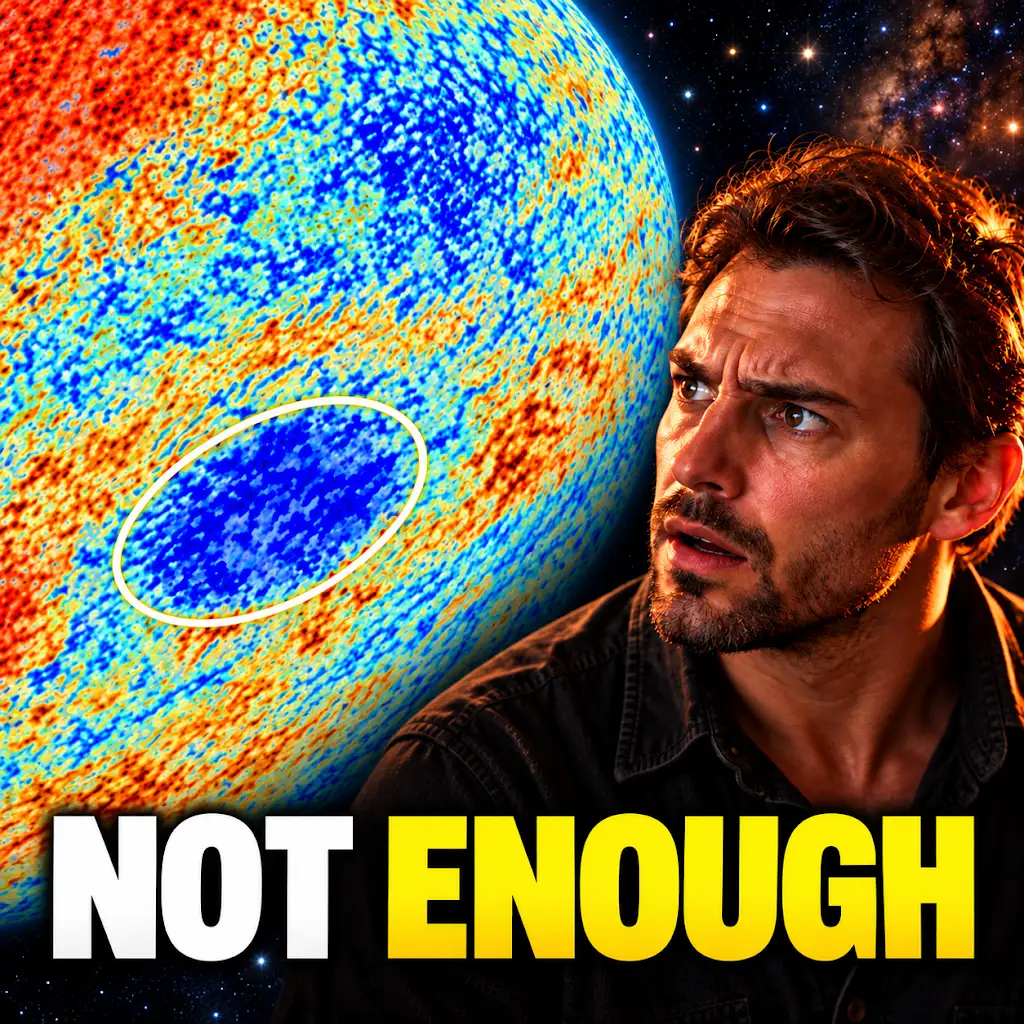
The Universe’s Cold Spot Has an Explanation. It’s Not Enough.
FAQs
What is cosmology?
Cosmology is the scientific study of the origin, evolution, and eventual fate of the universe as a whole.
What are the key components of cosmology?
Key components of cosmology include the Big Bang theory, dark matter, dark energy, and the expansion of the universe.
How do scientists study cosmology?
Scientists study cosmology through observations made with telescopes, satellites, and other instruments, as well as through theoretical models and simulations.
What is the Big Bang theory?
The Big Bang theory is the prevailing cosmological model that describes the early development of the universe as a rapid expansion from a hot, dense state.
What is dark matter and dark energy in cosmology?
Dark matter is a form of matter that does not emit, absorb, or reflect light, but exerts gravitational forces on visible matter. Dark energy is a mysterious force that is causing the universe to expand at an accelerating rate.