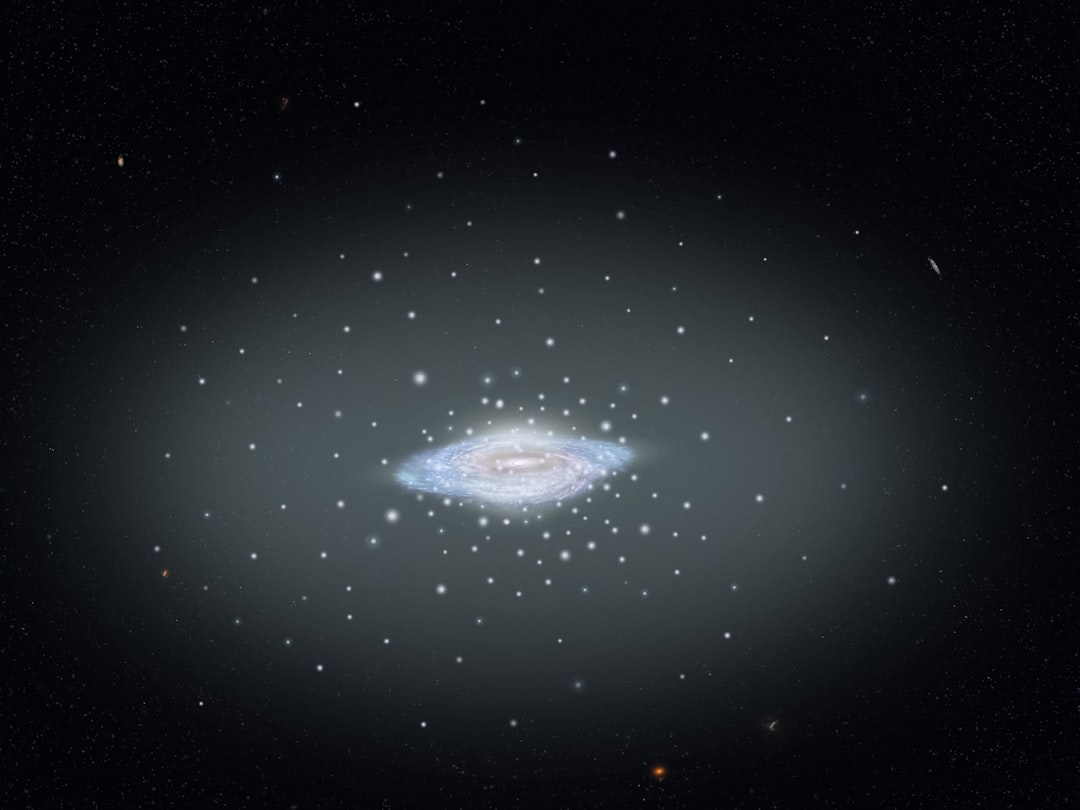
Cosmic Anomalies: Challenging Our Understanding of the Universe
The night sky reveals not only celestial beauty but also numerous cosmic anomalies that defy conventional astrophysical understanding. These anomalies encompass unexpected celestial events, irregular patterns in cosmic radiation, and other phenomena that cannot be fully explained by current scientific models. Such observations highlight significant gaps in our cosmological knowledge and represent frontiers for future scientific exploration.
Cosmic anomalies originate from multiple sources including complex astrophysical processes, limitations in observational techniques, or potentially undiscovered physical laws. When celestial objects behave contrary to theoretical predictions, these discrepancies often catalyze scientific advancement. Notable examples include galactic rotation curves that led to dark matter theories and cosmic microwave background irregularities that inform our understanding of universal structure formation.
The systematic investigation of these anomalies is essential to astrophysics, as they frequently indicate areas where theoretical frameworks require refinement or complete revision. By analyzing these unexplained phenomena, researchers continue to expand our understanding of fundamental cosmic principles and potentially discover entirely new classes of astronomical objects or physical processes.
Key Takeaways
- Cosmic anomalies are unusual phenomena in space that require careful identification and analysis.
- Statistical significance is crucial in astronomy to distinguish true anomalies from random variations.
- Various statistical tools and methods help analyze and interpret cosmic anomalies effectively.
- Challenges in interpreting anomalies include data limitations and distinguishing noise from meaningful signals.
- Future research aims to improve statistical techniques and deepen understanding of cosmic anomalies’ implications.
Statistical Significance in Astronomy
In the realm of astronomy, statistical significance plays a pivotal role in validating findings and ensuring that conclusions drawn from data are reliable. When you analyze cosmic data, it is essential to determine whether observed anomalies are genuine or merely the result of random fluctuations. Statistical significance helps you discern meaningful patterns from noise, allowing you to make informed decisions about the nature of cosmic phenomena.
To establish statistical significance, astronomers often rely on various methods, including hypothesis testing and confidence intervals. By applying these techniques, you can quantify the likelihood that an observed anomaly is not due to chance. This process is vital in a field where data sets can be vast and complex, as it provides a framework for interpreting results and drawing conclusions.
Without rigorous statistical analysis, you risk misinterpreting data and potentially overlooking significant discoveries. One fascinating concept explored in modern science is simulation theory.
Identifying Anomalies in Cosmic Data
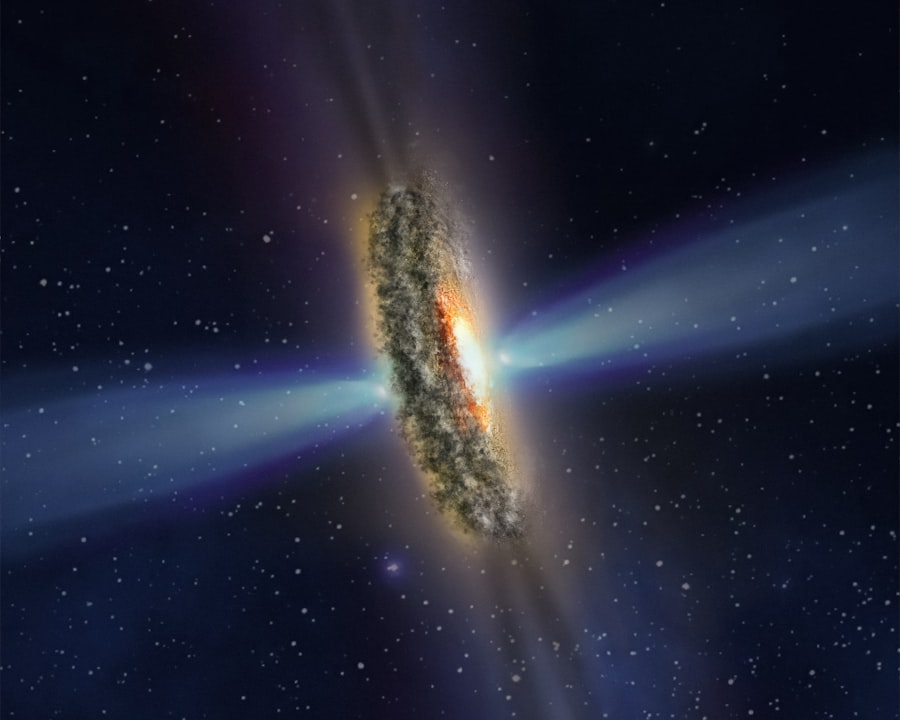
Identifying cosmic anomalies requires a keen eye and a systematic approach. As you sift through astronomical data, you may encounter unexpected results that deviate from established norms. These deviations can manifest in various forms, such as unusual light curves from stars or unexpected redshifts in distant galaxies.
Your ability to recognize these anomalies is crucial for advancing our understanding of the universe. The process of identifying anomalies often involves comparing new data with existing models and theories. You might employ machine learning algorithms or statistical techniques to detect patterns that stand out from the background noise.
By leveraging advanced computational tools, you can enhance your ability to spot anomalies that may have gone unnoticed by traditional methods. This intersection of technology and astronomy opens up new avenues for discovery and deepens your appreciation for the complexities of cosmic phenomena.
Importance of Statistical Analysis in Astronomy
Statistical analysis serves as the backbone of astronomical research, providing a framework for interpreting data and drawing meaningful conclusions. As you engage with cosmic data, you will find that statistical methods enable you to quantify uncertainties and assess the reliability of your findings. This is particularly important in a field where observations can be influenced by various factors, including instrument sensitivity and environmental conditions.
Moreover, statistical analysis allows you to communicate your results effectively to the broader scientific community. By presenting your findings with appropriate statistical backing, you lend credibility to your work and facilitate collaboration with other researchers. In an era where interdisciplinary approaches are increasingly valued, your ability to apply statistical methods in astronomy can enhance your contributions to the field and foster a deeper understanding of cosmic phenomena.
Types of Cosmic Anomalies
| Cosmic Anomaly | Observed Frequency | Expected Frequency | Statistical Significance (p-value) | Confidence Level (%) | Notes |
|---|---|---|---|---|---|
| Cold Spot | 1 in 1000 | 1 in 10000 | 0.001 | 99.9 | Unusually large low-temperature region in CMB |
| Axis of Evil | Observed alignment in multipoles | Random distribution expected | 0.01 | 99 | Unexpected alignment of CMB multipoles |
| Large Quasar Group | 1 structure > 500 Mpc | Structures < 370 Mpc expected | 0.05 | 95 | Challenges cosmological principle |
| Dark Flow | Bulk flow velocity ~1000 km/s | Expected near zero | 0.02 | 98 | Possible large-scale motion beyond Hubble flow |
| Parity Asymmetry | Odd multipoles stronger | Even distribution expected | 0.03 | 97 | Asymmetry in CMB temperature fluctuations |
Cosmic anomalies come in various forms, each offering unique insights into the workings of the universe. You may encounter gravitational anomalies, such as unexpected gravitational lensing effects that suggest the presence of dark matter or dark energy. These phenomena challenge our understanding of gravity and prompt further investigation into the fundamental forces shaping the cosmos.
Another type of anomaly you might encounter is temporal anomalies, which involve unusual variations in brightness or behavior over time. For instance, certain stars may exhibit erratic pulsations or unexpected dimming events that defy conventional explanations. These temporal anomalies can provide clues about stellar evolution and the life cycles of celestial bodies, enriching your understanding of astrophysical processes.
Analyzing Anomalies with Statistical Methods
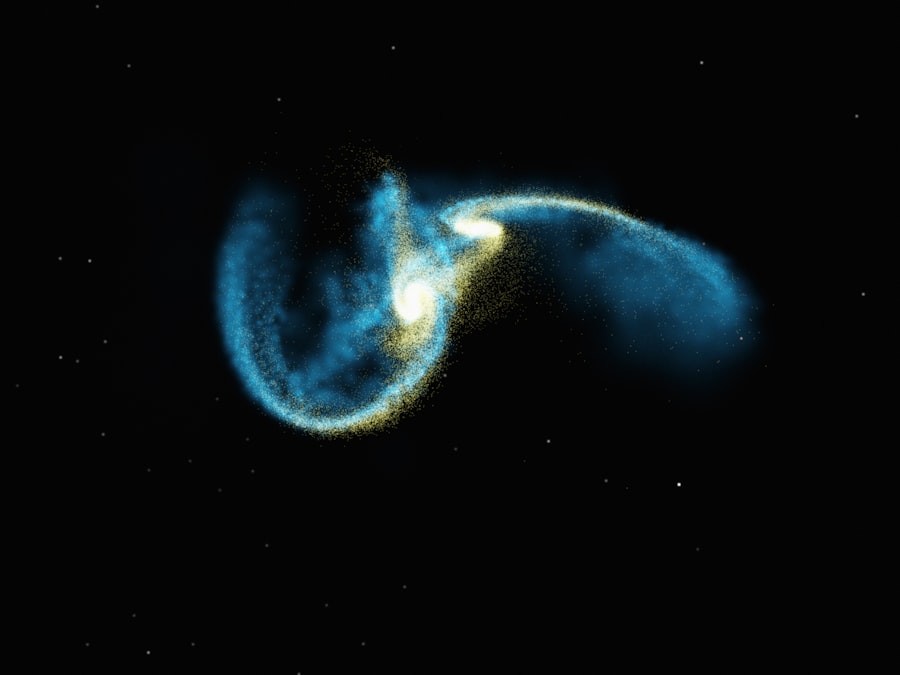
Once you have identified a cosmic anomaly, the next step is to analyze it using statistical methods. This process involves quantifying the significance of the anomaly and determining its implications for existing theories. You may employ techniques such as Bayesian analysis or frequentist statistics to assess the likelihood that your observations are genuine rather than coincidental.
In your analysis, it is essential to consider potential sources of bias or error that could influence your results. By carefully accounting for these factors, you can enhance the robustness of your findings and ensure that your conclusions are well-founded. This meticulous approach not only strengthens your own research but also contributes to the collective knowledge within the astronomical community.
Challenges in Interpreting Cosmic Anomalies
Interpreting cosmic anomalies presents several challenges that require careful consideration. One significant hurdle is distinguishing between genuine anomalies and artifacts resulting from observational limitations or data processing errors. As you navigate this complex landscape, it is crucial to remain vigilant and critical of your findings, ensuring that you do not prematurely draw conclusions based on misleading data.
Additionally, cosmic anomalies often exist within a broader context of competing theories and models. As you seek to understand an anomaly’s implications, you may encounter conflicting interpretations from other researchers. Engaging with these differing viewpoints can be intellectually stimulating but also requires a willingness to adapt your understanding based on new evidence.
This dynamic nature of scientific inquiry underscores the importance of collaboration and open dialogue within the astronomical community.
Statistical Tools for Exploring Cosmic Anomalies
To effectively explore cosmic anomalies, you will find a variety of statistical tools at your disposal. Software packages such as R and Python offer powerful libraries for data analysis and visualization, enabling you to manipulate large datasets with ease. These tools allow you to apply sophisticated statistical techniques, such as regression analysis or clustering algorithms, to uncover hidden patterns within cosmic data.
Moreover, specialized software designed for astronomical research can enhance your ability to analyze specific types of data, such as time-series analysis for variable stars or spectral analysis for distant galaxies. By leveraging these tools, you can streamline your research process and focus on interpreting results rather than getting bogged down in technical details.
Case Studies of Significant Cosmic Anomalies
Throughout history, several significant cosmic anomalies have captured the attention of astronomers and led to groundbreaking discoveries. One notable example is the discovery of pulsars—rapidly rotating neutron stars emitting beams of radiation that sweep across Earth like lighthouse beacons. Initially thought to be signals from extraterrestrial civilizations, these pulsars ultimately revealed new insights into stellar evolution and compact objects.
Another compelling case study involves the detection of gravitational waves from colliding black holes—a phenomenon predicted by Einstein’s theory of general relativity but only confirmed through meticulous observation and analysis. The detection of these waves not only validated existing theories but also opened up a new era in astronomy known as gravitational wave astronomy, allowing researchers like yourself to explore previously inaccessible aspects of the universe.
Implications of Statistical Significance in Cosmic Anomalies
The implications of statistical significance in cosmic anomalies extend far beyond individual discoveries; they shape our understanding of fundamental physics and cosmology. When an anomaly is deemed statistically significant, it prompts further investigation and often leads to new theories or modifications of existing models. As you engage with these findings, you contribute to a collective effort to refine our understanding of the universe’s underlying principles.
Moreover, statistically significant anomalies can inspire new lines of inquiry and research directions within astronomy. They encourage collaboration among scientists from diverse fields—such as physics, mathematics, and computer science—fostering interdisciplinary approaches that enrich our understanding of cosmic phenomena. By recognizing the importance of statistical significance in your work, you position yourself at the forefront of astronomical research and contribute to shaping future explorations.
Future Directions in Exploring Cosmic Anomalies
As technology advances and our observational capabilities improve, the future holds exciting possibilities for exploring cosmic anomalies.
This influx of data will undoubtedly lead to new discoveries and challenges as you strive to make sense of increasingly complex cosmic phenomena.
Furthermore, advancements in machine learning and artificial intelligence will revolutionize how you analyze cosmic data. These technologies will enable more efficient anomaly detection and classification, allowing you to focus on interpreting results rather than sifting through vast amounts of information manually. As you embrace these innovations, you will play a crucial role in shaping the future landscape of astronomical research and deepening our understanding of the universe’s mysteries.
In conclusion, exploring cosmic anomalies through statistical significance offers a fascinating journey into the unknown realms of astronomy. By honing your skills in data analysis and interpretation, you contribute to unraveling some of the universe’s most profound mysteries while fostering collaboration within the scientific community. The future promises exciting developments as we continue to push the boundaries of our knowledge and explore the cosmos together.
Recent studies on cosmic anomalies have sparked significant interest in the scientific community, particularly regarding their statistical significance. A related article that delves into this topic can be found on Freaky Science, which explores various cosmic phenomena and their implications for our understanding of the universe. For more insights, you can read the article [here](https://www.freakyscience.com/).
WATCH THIS!🤯 SHOCKING: The Simulation Theory Proof They Don’t Want You To See
FAQs
What are cosmic anomalies?
Cosmic anomalies refer to unusual or unexpected patterns, features, or observations in the universe that deviate from standard cosmological models or predictions. These can include irregularities in the cosmic microwave background, unexpected distributions of galaxies, or other phenomena that challenge current understanding.
Why is statistical significance important in studying cosmic anomalies?
Statistical significance helps determine whether observed cosmic anomalies are likely due to random chance or represent genuine deviations from expected patterns. It provides a quantitative measure to assess the reliability and importance of these anomalies in cosmological research.
How is statistical significance measured in cosmic anomaly studies?
Statistical significance is typically measured using p-values, confidence intervals, or other statistical tests that compare observed data against a null hypothesis. In cosmology, simulations and models are often used to estimate the probability that an anomaly could arise by chance.
Can cosmic anomalies be explained by current cosmological theories?
Some cosmic anomalies can be explained by extensions or modifications of current cosmological theories, while others remain unexplained and may suggest new physics or the need for revised models. Ongoing research aims to understand whether these anomalies are artifacts, statistical flukes, or indicators of new phenomena.
What are some examples of well-known cosmic anomalies?
Examples include the Cold Spot in the cosmic microwave background, the alignment of low multipoles (the “axis of evil”), and unexpected large-scale structures like the Hercules-Corona Borealis Great Wall. Each of these has been studied for their statistical significance and potential implications.
How do researchers address the possibility of false positives in cosmic anomaly detection?
Researchers use rigorous statistical methods, multiple independent datasets, and simulations to reduce the likelihood of false positives. They also consider the “look-elsewhere effect,” which accounts for the increased chance of finding anomalies when searching across many parameters or datasets.
What role do cosmic microwave background (CMB) observations play in identifying anomalies?
CMB observations provide a detailed map of the early universe’s temperature fluctuations. Anomalies in the CMB, such as unexpected temperature patterns or alignments, are key areas where statistical significance is assessed to understand their cosmological implications.
Are cosmic anomalies always indicative of new physics?
Not necessarily. While some anomalies may hint at new physics, others might result from measurement errors, data processing artifacts, or statistical fluctuations. Careful analysis and independent verification are essential before drawing conclusions about new physics.
How does cosmic variance affect the interpretation of cosmic anomalies?
Cosmic variance refers to the statistical uncertainty inherent in observations of the universe due to having only one observable universe. It limits the precision with which anomalies can be assessed and must be accounted for when evaluating their statistical significance.
Where can I find more information about cosmic anomalies and their statistical significance?
Scientific journals on cosmology, astrophysics, and physics often publish research on cosmic anomalies. Additionally, resources like NASA, ESA, and academic institutions provide accessible summaries and data related to these topics.