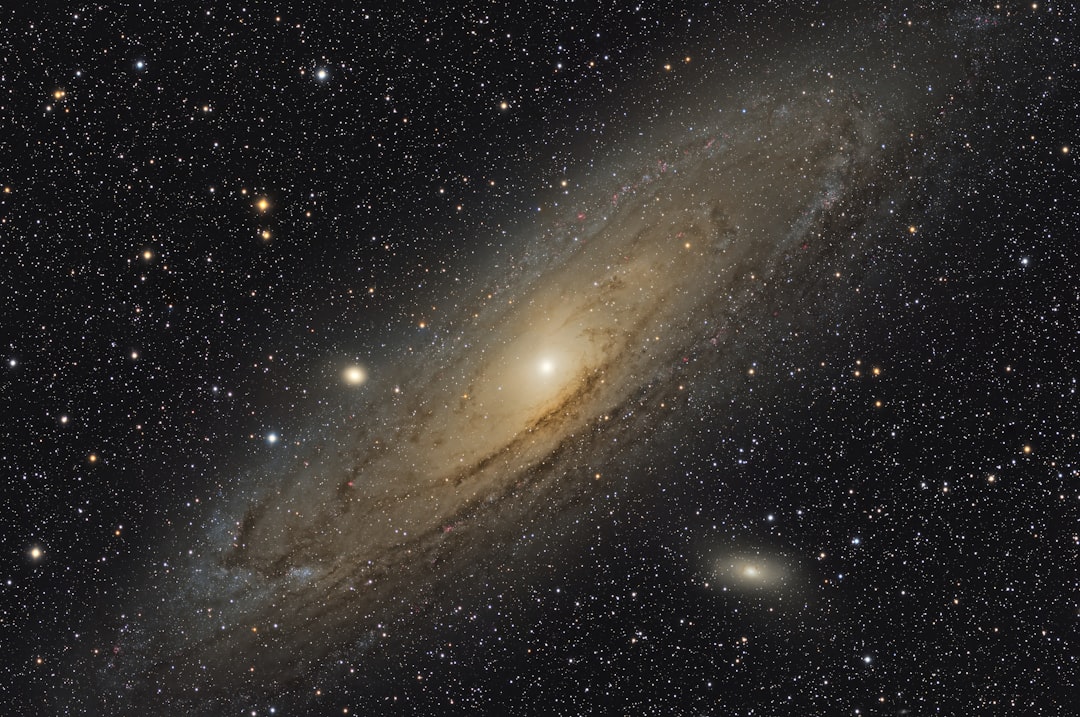
The cosmic tapestry of the night sky, a seemingly immutable canvas of distant stars, holds within its depths wonders that defy terrestrial imagination. Among these celestial marvels, the Andromeda Galaxy, also known as M31, stands as a beacon, a colossal spiral island of stars so vast and luminous that it is visible to the naked eye. For centuries, it has captivated astronomers and stargazers alike, a tantalizing glimpse into the grand architecture of the universe. Now, with the advent of increasingly sophisticated observational tools and the relentless pursuit of cosmic knowledge, humanity is gaining an unprecedented “close-up view” of this magnificent galaxy, peering into its stellar nurseries, its dark secrets, and its intricate dance with its galactic neighbors. This exploration is not merely an academic exercise; it is a journey into our own cosmic ancestry, a revelation of the vast, interconnected web of existence that binds us to even the most distant reaches of space.
Andromeda’s presence in our night sky is a testament to its sheer scale. It resides approximately 2.5 million light-years away, a staggering distance that places it as our closest major galactic neighbor. This proximity, in astronomical terms, is a mere stone’s throw, allowing us to resolve individual stars, nebulae, and star clusters within its sprawling spiral arms. While the faint, fuzzy patch of light observed by early astronomers was the initial invitation to explore, modern telescopes have transformed that invitation into an intimate encounter. The Andromeda Galaxy is not just another point of light; it is a swirling, dynamic entity, a universe unto itself, brimming with billions of stars, planets, and the raw materials of cosmic creation. Its sheer mass is estimated to be around 1.5 trillion solar masses, dwarfing our own Milky Way in terms of stellar population and overall size. This colossal nature makes it a prime target for understanding galactic evolution, stellar lifecycles, and the fundamental forces that shape the cosmos.
A Glimpse of the Immense: Scale and Distance
The concept of 2.5 million light-years is almost unfathomable. It represents the distance light, the fastest thing in the universe, travels in 2.5 million years. This means that the light we observe from Andromeda today began its journey when early hominids were just beginning to walk the Earth. This vast distance underscores the immense scale of the universe and the profound patience required for cosmic observation. Telescopes like the Hubble Space Telescope and the James Webb Space Telescope, with their unparalleled resolution, have been instrumental in bridging this gap, allowing us to see details that were once mere theoretical possibilities. They have revealed the intricate structure of Andromeda’s spiral arms, the bright, energetic core, and the surrounding halo, painting a picture of a galaxy far more complex and nuanced than previously imagined.
The Naked Eye and Beyond: Early Observations
Historically, Andromeda was recognized as a “nebula,” a term used for any fuzzy, extended celestial object. Its discovery is often attributed to Persian astronomer Abd al-Rahman al-Sufi in 964 AD, who described it as a “small cloud.” Later, in the 18th century, Charles Messier cataloged it as M31, further solidifying its place in astronomical records. However, the true nature of Andromeda remained a mystery for centuries. It was not until the early 20th century, through the groundbreaking work of Edwin Hubble, that it was definitively identified as an extragalactic object – another galaxy entirely, separate from our own Milky Way. This realization revolutionized our understanding of the universe, transforming it from a single, vast galaxy into a cosmos populated by countless galaxies, each a universe in its own right.
Andromeda’s Stellar Census: Billions of Suns
The sheer number of stars within Andromeda is mind-boggling. Estimates suggest it contains over a trillion stars, a number that dwarfs the Milky Way’s estimated 200-400 billion. This immense stellar population is not uniformly distributed; it is organized into intricate structures, including dense star clusters and sprawling spiral arms, each containing its own unique population of stars, from the brilliant, short-lived blue giants to the ancient, dim red dwarfs. Studying these stellar populations allows astronomers to understand the processes of star formation and evolution across vast cosmic timescales and within different galactic environments.
If you’re curious about what the Andromeda Galaxy would look like up close, you might find the article on Freaky Science particularly intriguing. It delves into the stunning visuals and intricate details of this neighboring galaxy, providing insights into its structure and the fascinating phenomena that occur within it. To explore this captivating topic further, check out the article here: What Andromeda Would Look Like Up Close.
Delving into the Core: Andromeda’s Energetic Heart
At the very center of Andromeda lies a region of intense activity, a supermassive black hole that dictates the gravitational ballet of its surrounding stars. This galactic nucleus is a focal point for energy, a cosmic engine that fuels the galaxy’s luminosity and influences its structure. Peering into this core is like looking into the furnace of creation, a place where gravity reigns supreme and the very fabric of spacetime is stretched and distorted. The intense radiation emanating from this region provides invaluable clues about the processes occurring in the hearts of galaxies, including our own.
The Supermassive Black Hole: A Gravitational Maestro
The most compelling feature of Andromeda’s core is its supermassive black hole, estimated to have a mass of around 100 million solar masses. Unlike the stellar-mass black holes, which form from the collapse of individual stars, supermassive black holes are thought to reside at the center of most large galaxies. In Andromeda, this colossal object exerts immense gravitational pull, drawing in surrounding gas and dust, which then heats up and emits powerful radiation across the electromagnetic spectrum, including X-rays and radio waves. Studying this phenomenon allows astronomers to refine models of black hole growth and their role in galaxy evolution.
Accretion Disks and Jets: Cosmic Powerhouses
As matter falls towards the supermassive black hole in Andromeda, it forms a rapidly rotating disk known as an accretion disk. Friction within this disk heats the material to incredibly high temperatures, causing it to glow brightly. In some cases, powerful jets of plasma are also launched from the poles of the black hole, extending far into space. While Andromeda’s central black hole is currently not as actively feeding as some other galactic nuclei, its observed activity provides a crucial benchmark for understanding these powerful astrophysical phenomena. Analyzing the spectral signatures of the light from these regions offers insights into the composition of the infalling material and the physical processes at play.
Stellar Density and Galactic Bulge Dynamics
Surrounding the supermassive black hole is a dense stellar bulge, a spherical region packed with older, redder stars. The dynamics of these stars, their orbits and velocities, provide critical information about the gravitational influence of the central black hole and the overall mass distribution within the galaxy. Astronomers use sophisticated techniques, such as Doppler spectroscopy, to measure the speeds of these stars, mapping out the gravitational potential of the galactic core and testing theories of galaxy formation and evolution. The concentration of stars here also hints at a violent past, perhaps involving mergers with smaller galaxies.
The Spiral Arms: Nurseries of Stars and Nebulae
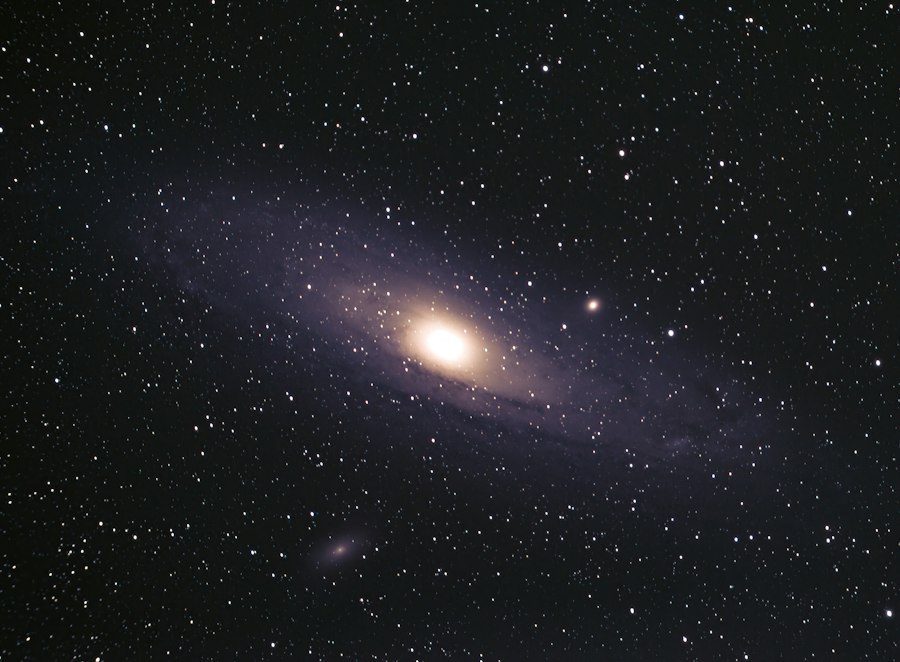
Andromeda’s iconic spiral arms are not merely decorative features; they are dynamic regions where new stars are born and old ones are born anew. These arms are the sites of active star formation, illuminated by the brilliant glow of young, hot stars and the nebulae from which they emerge. Exploring these regions allows us to witness the ongoing cosmic ballet of creation, a process that has been shaping galaxies for billions of years and continues to shape our own Milky Way. The intricate patterns within these arms reveal the complex interplay of gas, dust, and gravitational forces.
Star-Forming Regions: Stellar Genesis Unveiled
Within the spiral arms of Andromeda, vast clouds of gas and dust, known as molecular clouds, serve as the birthplaces of stars. Under the influence of gravity, these clouds collapse, fragmenting into smaller clumps that eventually ignite into stars. Telescopes have captured stunning images of these stellar nurseries, revealing nebulae in vibrant colors, illuminated by the ultraviolet radiation of newly formed stars. Studying the distribution and properties of these young stars, as well as the chemical composition of the nebulae, helps astronomers understand the initial conditions for star formation and the diversity of stellar populations.
Open Clusters: Fleeting Stellar Families
As stars form in groups, they often remain gravitationally bound for a period, forming open clusters. These clusters are relatively young and tend to disperse over time as their stars drift apart. Observing open clusters in Andromeda provides insights into the timescales of star formation and the early evolution of stellar systems. Their distribution within the spiral arms can also reveal patterns in the galaxy’s star formation history, indicating periods of intense activity or quiescence. The study of these clusters is crucial for understanding the stellar populations of galaxies.
Dust Lanes and Molecular Clouds: The Building Blocks
The dark, obscuring dust lanes that trace the spiral arms of Andromeda are composed of tiny grains of silicates and carbon, along with molecules like carbon monoxide. These regions are crucial for star formation as they provide the raw material and the necessary shielding from disruptive radiation. By studying the infrared light emitted by these dust clouds, astronomers can infer their temperature, density, and composition, providing a deeper understanding of the conditions that lead to the birth of stars and planetary systems. The presence and distribution of these molecular clouds are key indicators of galactic health.
The Galactic Halo and Beyond: Dark Matter’s Invisible Grip
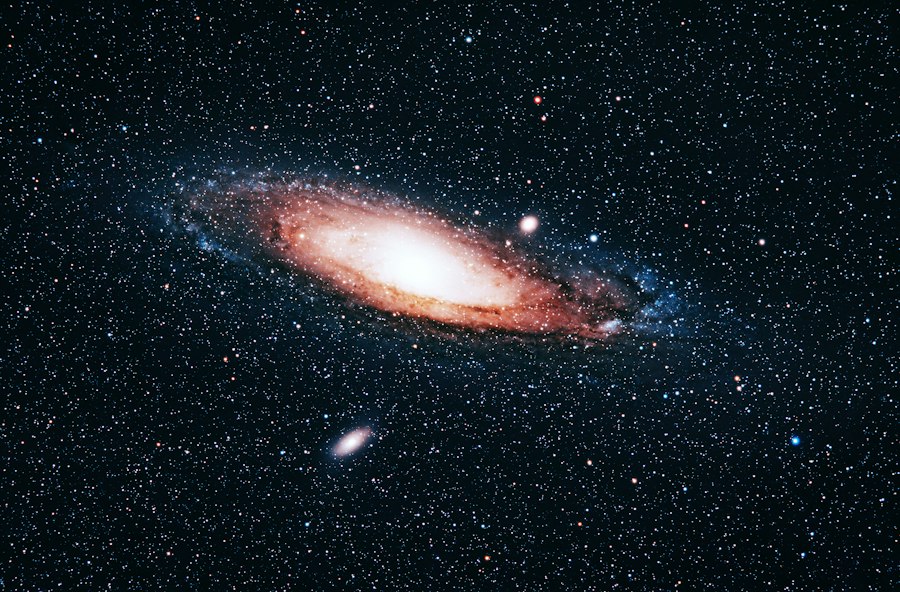
Beyond the visible disk of Andromeda lies a vast, enigmatic region known as the galactic halo. This spherical envelope is composed of sparsely distributed stars, globular clusters, and, most importantly, a significant amount of dark matter. Dark matter, an invisible substance that interacts only through gravity, plays a crucial role in the formation and structure of galaxies, including Andromeda. Its presence is inferred through its gravitational influence on the visible matter. Unraveling the mysteries of Andromeda’s halo is paramount to understanding the fundamental composition of the universe.
Globular Clusters: Ancient Stellar Relics
Scattered throughout Andromeda’s halo are ancient globular clusters, dense, spherical collections of hundreds of thousands to millions of old, metal-poor stars. These clusters are among the oldest structures in the galaxy, offering a glimpse into the galaxy’s early formation history. Their survival in the halo suggests they formed before the disk itself coalesced or were captured from smaller dwarf galaxies. Studying the stars within these clusters allows astronomers to date the formation of the galaxy and understand the conditions of the early universe.
The Dark Matter Enigma: Invisible Influence
The most compelling aspect of Andromeda’s halo is the overwhelming evidence for dark matter. Observations of the rotation speeds of stars and gas in the outer regions of the galaxy reveal that there is far more mass present than can be accounted for by visible matter. This unseen mass is attributed to dark matter, which acts as a gravitational scaffold, holding the galaxy together and influencing its formation and evolution. Understanding the distribution and properties of dark matter in Andromeda is a key goal of modern cosmology, as it constitutes approximately 85% of the universe’s matter.
Satellite Galaxies: A Cosmic Neighborhood
Andromeda is not an isolated entity; it is surrounded by a retinue of smaller dwarf galaxies, known as satellite galaxies. These companions are gravitationally bound to Andromeda and are gradually being accreted by the larger galaxy. Studying these satellite galaxies provides crucial insights into the processes of galactic mergers and the hierarchical nature of cosmic structure formation. The tidal forces exerted by Andromeda on its satellites can create streams of stars and gas, offering further evidence for its gravitational dominance and the distribution of dark matter.
If you have ever wondered what the Andromeda Galaxy would look like up close, you might find the insights in this fascinating article intriguing. The article explores the stunning details of Andromeda’s structure, including its swirling arms and vibrant star clusters, providing a vivid picture of our neighboring galaxy. To learn more about the wonders of Andromeda and the latest discoveries in astronomy, check out this informative piece on Freaky Science.
The Future of Exploration: Andromeda’s Inevitable Embrace
| Aspect | Description |
|---|---|
| Size | Andromeda would appear as a massive spiral galaxy, spanning over 220,000 light-years in diameter. |
| Structure | It would display prominent spiral arms, dust lanes, and a bright central bulge. |
| Color | Andromeda would exhibit a range of colors, including blue regions of young star formation and reddish areas of older stars. |
| Stars | Individual stars within Andromeda would be visible, along with star clusters and nebulae. |
| Gas and Dust | Clouds of gas and dust would be apparent, contributing to the overall structure and appearance of the galaxy. |
The exploration of Andromeda is not a static endeavor; it is a dynamic process that continues to evolve with technological advancements and our ever-growing understanding of the universe. The data gathered from current and future observations promise to revolutionize our knowledge of galactic evolution, star formation, and the fundamental nature of dark matter. Moreover, Andromeda’s ultimate fate is intrinsically linked to our own Milky Way. The two galaxies are on a collision course, destined to merge in billions of years, forming a new, larger elliptical galaxy. This cosmic destiny makes the study of Andromeda even more poignant, as it offers a preview of our own galaxy’s future.
The Next Generation of Telescopes: Pushing the Boundaries
The ongoing development of new astronomical instruments, such as the Extremely Large Telescope (ELT) and future space-based observatories, will provide unprecedented resolution and sensitivity for studying Andromeda. These advanced telescopes will enable astronomers to probe deeper into the galaxy’s core, resolve fainter stars and nebulae in its outer regions, and gather more precise measurements of dark matter distribution. This next generation of observational tools will undoubtedly unlock new secrets about this cosmic neighbor.
Andromeda’s Role in Galactic Evolution Models
Andromeda serves as a crucial testbed for theoretical models of galaxy formation and evolution. Its large size, relatively close proximity, and the presence of a well-defined satellite galaxy system make it an ideal laboratory for validating and refining these models. By comparing observational data with theoretical predictions, astronomers can gain a deeper understanding of the processes that shaped Andromeda and, by extension, our own Milky Way and countless other galaxies throughout the cosmos. Its detailed structure allows for fine-tuning of parameters in these complex simulations.
The Great Collision: A Cosmic Dance of Destiny
Perhaps the most profound aspect of Andromeda’s exploration is the knowledge of its inevitable collision with the Milky Way. In approximately 4.5 billion years, the two galaxies will begin a spectacular cosmic merger, a process that will unfold over billions of years. This event will reshape both galaxies, transforming them into a single, massive elliptical galaxy, often referred to as “Milkomeda.” Studying Andromeda today allows us to anticipate and better understand this grand cosmic event, a testament to the ever-changing nature of the universe and our place within its vast, unfolding story. The details of this future merger are being refined with every new observation.

The Space Photos Are Real—But Your Eyes Would See This
FAQs
1. What is Andromeda?
Andromeda, also known as Messier 31, is a spiral galaxy located about 2.537 million light-years from Earth. It is the closest spiral galaxy to the Milky Way and is part of the Local Group of galaxies.
2. What would Andromeda look like up close?
If we were able to observe Andromeda up close, it would appear as a majestic spiral galaxy with a bright central bulge and spiral arms filled with young, hot stars, dust, and gas. The galaxy would display intricate details and structures, including star clusters, nebulae, and dark lanes of dust.
3. What colors would be visible in Andromeda up close?
Up close, Andromeda would display a range of colors, including the blue glow of young, hot stars in its spiral arms, the reddish hues of older stars in the central bulge, and the dark patches of dust obscuring starlight. Additionally, nebulae within the galaxy would exhibit vibrant colors due to the emission and reflection of light from ionized gases.
4. What other features would be visible in Andromeda up close?
Observing Andromeda up close would reveal a multitude of features, such as star clusters, supernova remnants, and regions of active star formation. Additionally, the galaxy’s central supermassive black hole and its surrounding environment would be of great interest for study.
5. How would observing Andromeda up close benefit our understanding of galaxies?
Studying Andromeda up close would provide valuable insights into the formation, evolution, and dynamics of spiral galaxies. By examining its structure, stellar populations, and interstellar medium in detail, scientists could gain a deeper understanding of the processes shaping galaxies and the universe as a whole.