The Kitchen Counter as a Laboratory
You probably don’t think of your kitchen counter as a high-tech research facility, but in reality, it’s a surprisingly fertile ground for observing scientific principles in action. From the way your toast browns to the steam rising from your morning coffee, everyday objects are constantly demonstrating the fundamental laws that govern our universe. You interact with these phenomena multiple times a day, often without a second thought, but a little curiosity can unlock a world of hidden science. Consider the simple act of boiling water. You fill a kettle, turn on the stove, and witness the water transform from a placid liquid to a vigorously churning, steamy spectacle. This isn’t magic; it’s thermodynamics at play. As you apply heat, the water molecules gain kinetic energy, vibrating faster and faster. Eventually, they gain enough energy to overcome the intermolecular forces holding them together as a liquid and transition into a gaseous state – steam. You observe this phase change, a critical concept in chemistry and physics, every time you brew a cup of tea. The bubbles that form are also a tell-tale sign. Initially, you might see small bubbles clinging to the bottom and sides of the kettle. These are not yet steam; they are dissolved gases, like air, escaping the water as it heats up. As the temperature continues to rise, these are joined by actual steam bubbles forming within the liquid, rising to the surface, and dissipating. The phenomenon of convection, the transfer of heat through the movement of fluids, is also evident. The hotter water at the bottom of the kettle rises, displacing the cooler water above, creating a continuous cycle that efficiently heats the entire volume. You can even see this effect in a pot of soup simmering on the stove; the way the ingredients swirl is a visual representation of convection currents.
The Culinary Chemistry of Cooking
Beyond the purely physical processes, your kitchen is a hub of chemical reactions that transform raw ingredients into delicious meals. When you bake bread, for instance, you’re orchestrating a complex series of chemical transformations. Yeast, a single-celled fungus, performs fermentation. It consumes sugars present in the flour and produces carbon dioxide gas and ethanol. The carbon dioxide gas gets trapped within the gluten network of the dough, causing it to rise. This leavening process is a biological and chemical marvel you experience as fluffy bread. When you apply heat in the oven, further chemical reactions occur. The Maillard reaction, a browning process that occurs between amino acids and reducing sugars at elevated temperatures, is responsible for the appetizing golden-brown crust of your bread, and also for the savory flavors of roasted meats and caramelized onions. This is a non-enzymatic browning reaction that creates hundreds of different flavor compounds. Simultaneously, starches in the flour gelatinize, absorbing water and contributing to the texture of the bread. The proteins in the flour coagulate and denature, providing structure to the final product. Even something as simple as toasting bread involves intricate chemical changes. The heat causes water to evaporate, and the Maillard reaction begins to break down carbohydrates and proteins, creating the characteristic toasted flavor and crispy texture. You are, in essence, performing food chemistry experiments every time you cook. The way meat changes color when you sear it, from pink to brown, is another example of protein denaturation and the Maillard reaction. The acids in lemon juice can also cause changes in food. Adding lemon juice to milk, for instance, can cause it to curdle, as the acid denatures the milk proteins, creating a chemical reaction that results in a different texture and taste.
The Physics of Everyday Appliances
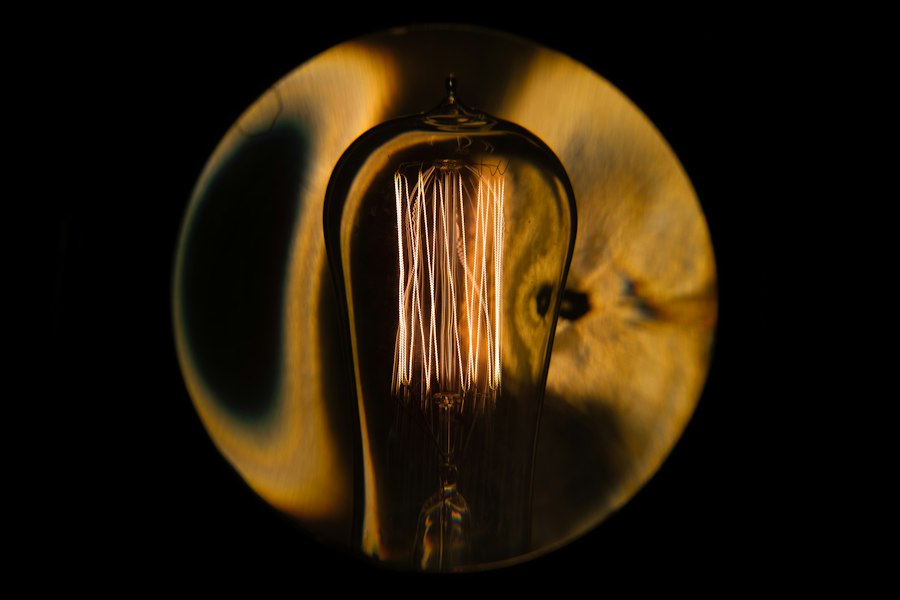
Your home is filled with appliances that harness and manipulate fundamental scientific principles. Your refrigerator, for example, is a masterclass in thermodynamics and the refrigeration cycle. It doesn’t “create cold”; rather, it moves heat from the inside to the outside. A refrigerant fluid circulates through a closed system. In the freezer compartment, the refrigerant absorbs heat from the air, causing it to evaporate into a gas. This gas then travels to the compressor, which pressurizes it, increasing its temperature. The hot gas then flows through condenser coils, typically on the back of the refrigerator, where it releases heat to the surrounding air and condenses back into a liquid. This liquid then flows through an expansion valve, where its pressure drops, causing it to cool down significantly, and the cycle repeats. You benefit from this constant heat transfer every time you reach for a cold drink. Your washing machine utilizes principles of mechanics and fluid dynamics. The tumbling action of the drum, driven by an electric motor, creates mechanical agitation that helps to dislodge dirt from your clothes. The water and detergent mixture acts as a solvent and a surfactant, breaking down and emulsifying grease and grime. The spinning cycle at the end of the wash uses centrifugal force to remove excess water, a demonstration of inertia and rotational motion. Even the simple light bulb in your room is a testament to electrical engineering and physics. Incandescent bulbs work by passing an electric current through a thin filament, usually made of tungsten. This filament heats up to a very high temperature, causing it to glow and emit light. This process, known as incandescence, is a direct conversion of electrical energy into thermal and light energy. Modern LED bulbs, on the other hand, utilize the principles of semiconductors and electroluminescence to produce light, a much more energy-efficient process.
In exploring the hidden science in everyday objects, one can gain fascinating insights into the world around us. For a deeper understanding of how common items can reveal extraordinary scientific principles, check out this related article on Freaky Science. It delves into the unexpected phenomena that occur in our daily lives, showcasing the intricate connections between science and the ordinary. You can read more about it here: Freaky Science.
The Natural World in Your Backyard
You don’t need to venture into a laboratory to witness the wonders of science; they are all around you, even in the most mundane settings. Your backyard, a park, or even a potted plant on your windowsill can serve as a miniature ecosystem brimming with scientific phenomena. Consider the growth of a plant. This seemingly simple process is a complex interplay of photosynthesis, cellular respiration, and nutrient uptake. Plants harness sunlight, water, and carbon dioxide to produce glucose, their primary source of energy, through photosynthesis. This process releases oxygen as a byproduct, a crucial element for animal life. You observe this at a macroscopic level as the plant grows taller and its leaves expand. The way rain naturally irrigates your garden is another example of the water cycle in action. Water evaporates from surfaces, condenses in the atmosphere to form clouds, and then returns to the earth as precipitation. You see the tangible results of this continuous cycle as your plants thrive. Even the way ants navigate their environment is a fascinating display of chemistry and collective intelligence. Ants secrete pheromones, chemical signals, to mark trails and communicate with each other. You can observe these trails as they diligently march to and from their nest, a testament to chemical communication and organized behavior. The life cycle of insects, from egg to larva to pupa to adult, is a biological marvel you can observe in your own garden, demonstrating metamorphosis, a profound biological transformation. The way a spider spins its web is another incredible display of biology and engineering. The silk produced by a spider is a remarkably strong and elastic material, a biological innovation that allows them to trap prey. You witness the intricate patterns of a web, a testament to instinct and specialized biological structures. The way seeds disperse, carried by wind or by animals, is another demonstration of evolutionary adaptations and natural processes that ensure the continuation of plant species.
The Subtle Art of Observation
To truly appreciate the science in plain sight, you need to cultivate a habit of careful observation. This isn’t about conducting complex experiments, but about noticing the details and asking “why?” Why does the soap bubble float and eventually pop? Why does your shadow change length throughout the day? Why does a dropped ball always fall downwards? These seemingly simple questions lead to profound scientific concepts. The way soap bubbles work is a great example. The thin film of soapy water is made up of water molecules sandwiched between surfactant molecules. Surface tension, the cohesive force between water molecules, creates the spherical shape. The iridescence you see on a soap bubble is a result of thin-film interference, where light waves reflecting off the inner and outer surfaces of the film interfere with each other, creating the colorful patterns. The changing length of your shadow throughout the day is a direct consequence of the Earth’s rotation and its orbit around the sun. As the sun moves across the sky, the angle of its rays changes, affecting the length and direction of your shadow. The force of gravity, as famously described by Isaac Newton, is the invisible force that pulls everything towards the center of the Earth, explaining why the ball always falls down. You experience gravity every moment of your life, from standing on the ground to jumping and landing. Even the seemingly random movement of dust particles in a sunbeam is a demonstration of Brownian motion, the random movement of particles suspended in a fluid (gas or liquid) resulting from their collision with the fast-moving molecules in the fluid. You are constantly surrounded by these phenomena, and a little attention can transform the ordinary into the extraordinary. You can also observe the principles of buoyancy when you see objects float or sink in water. Whether an object floats or sinks depends on its density relative to the density of the water. A dense object will sink, while a less dense object will float. This is the same principle that allows ships to float on the ocean.
Unlocking the Wonders of Everyday Physics
The world around you is a continuous physics lesson, if you’re willing to pay attention. Consider the simple act of riding a bicycle. You’re not just pedaling; you’re engaging with principles of inertia, friction, and momentum. When you push off, inertia keeps you moving. Friction, both from the tires on the road and the air resistance, works to slow you down. Momentum, a measure of an object’s mass in motion, helps you maintain balance. The way a boomerang flies and returns is another fascinating display of physics, specifically aerodynamics and angular momentum. The curved shape of the boomerang and its spin create a complex aerodynamic force that causes it to curve and return to the thrower. You might also notice the phenomenon of resonance in your everyday life. Think about a tuning fork: when struck, it vibrates at a specific frequency. If you bring it near another tuning fork of the same frequency, the second one will start to vibrate as well, even without being struck directly. This is resonance, where an object absorbs energy when the frequency of an external force matches its own natural frequency of vibration. You can see this in musical instruments, where the strings or air columns vibrate at specific frequencies to produce different notes. Even the way a bridge is designed takes into account forces like tension and compression to ensure its stability. The suspension cables of a suspension bridge are under tension, while the supporting pillars are under compression. These forces are crucial for the structural integrity of the bridge. The way water flows through pipes, creating pressure and velocity, is another example of fluid dynamics at play. The pressure at a certain point in a fluid is influenced by its depth and the velocity of its flow. Understanding these principles is essential for designing efficient plumbing systems and for predicting how water will behave in various situations.
The Magic of Light and Sound
You experience light and sound every moment of your waking life, and these phenomena are governed by elegant scientific principles. Think about how you see colors. When light, which is essentially a spectrum of different wavelengths, strikes an object, the object absorbs some wavelengths and reflects others. The wavelengths that are reflected are what you perceive as the color of the object. A red apple appears red because it absorbs most wavelengths of visible light and reflects red wavelengths. You are, in essence, witnessing the interaction of electromagnetic radiation with matter. The way sunlight streams through a window and creates patterns on your floor is a demonstration of light’s wave-like properties, specifically diffraction and interference. You can also observe the phenomenon of refraction every time you look at something through water. A straw in a glass of water appears to be bent because light rays bend, or refract, as they pass from one medium (water) to another (air). This change in direction is due to the difference in the speed of light in these different media. Sound, on the other hand, is a mechanical wave, meaning it needs a medium to travel through, such as air, water, or solids. When you speak, your vocal cords vibrate, creating pressure waves in the air that travel to your ears. The pitch of your voice is determined by the frequency of these vibrations – higher frequency means higher pitch. The loudness of a sound is related to its amplitude, or the intensity of the pressure waves. You can feel this when someone speaks loudly; the vibrations are more intense. Even the echoes you hear in large spaces are a direct result of sound waves reflecting off surfaces, a phenomenon known as reflection. The time it takes for the echo to return allows us to calculate the distance to the reflecting surface. The Doppler effect, which causes the pitch of a sound to change as the source moves towards or away from you, is another everyday observation. You’ve likely experienced this with the siren of an ambulance or police car – the pitch is higher as it approaches and lower as it recedes.
Exploring the hidden science in everyday objects can reveal fascinating insights about the world around us. For instance, a recent article delves into the surprising physics behind common kitchen utensils, showcasing how items like spoons and spatulas are designed with specific shapes and materials to optimize their functionality. To learn more about these intriguing connections, you can check out the article here. Understanding these principles not only enhances our appreciation for these objects but also encourages us to think critically about the science that surrounds us daily.
The Science of Illusion
Your senses can sometimes play tricks on you, creating illusions that reveal the complexities of perception and the brain’s interpretation of sensory input. Optical illusions are a prime example. The Müller-Lyer illusion, where two lines of the same length appear to be different lengths due to the inward or outward-pointing fins at their ends, highlights how our brains interpret visual cues and depth. Your brain is accustomed to interpreting these angles as representing corners of rooms or the outside of buildings, and it unconsciously adjusts the perceived length of the lines. Similarly, the Ames room illusion, a distorted room that makes people appear to change size as they move around it, demonstrates how our perception of size and distance is influenced by our assumptions about the environment. The brain is wired to perceive rectangular rooms, and the Ames room exploits this assumption to create the illusion. Auditory illusions also exist, showcasing how our brains interpret sound. For instance, the McGurk effect, where the visual information of a speaker’s lips moving can alter the sound we perceive, demonstrating the powerful interplay between sight and sound in our perception. Your brain integrates information from multiple senses to create a coherent experience of the world. These illusions aren’t necessarily flaws in our sensory systems but rather the result of sophisticated cognitive processes that help us make sense of a complex world. They show that what you perceive is not always a direct reflection of reality but rather an interpretation constructed by your brain. The way you perceive depth, for example, relies on a combination of binocular vision, motion parallax, and other cues, and these cues can be manipulated to create illusions. Even the way you perceive time can be subjective, influenced by your emotional state and the amount of information your brain is processing.
Understanding Magnetism in Household Objects
Magnetism, often perceived as something confined to compasses and refrigerator magnets, is actually present in many everyday objects, quietly influencing their function. You might not even realize it, but you interact with magnetic principles daily. Consider your smartphone or tablet. The touchscreens often utilize capacitive sensing, which relies on the conductive properties of your fingers to register touch. However, some older screens, or specialized applications, might use magnetic sensors. More broadly, the speakers in your headphones or any audio device rely heavily on magnetism. A coil of wire carrying an electrical current is placed near a permanent magnet. When the current changes direction (which happens rapidly to create sound), it creates a fluctuating magnetic field that interacts with the permanent magnet, causing a diaphragm to vibrate and produce sound waves. This is a fundamental principle of electromagnetism. Even the humble electric toothbrush utilizes magnetic forces. Many electric toothbrushes use a motor that generates a rotating magnetic field, which then induces a magnetic field in a coil within the brush head, causing it to oscillate at high speed. The motor itself, the heart of many household appliances from blenders to fans, relies on the interaction between magnetic fields and electric currents to generate rotational motion. You can observe this principle in action if you’ve ever taken apart an old appliance. The electromagnets used in these motors are crucial for their operation. Furthermore, magnetic switches are used in many devices to detect the presence or absence of something. For example, the magnetic contact on a door or window alarm system uses a magnet in the door/window and a sensor in the frame. When the door/window is closed, the magnetic field is detected, and the alarm is disarmed. When opened, the field is broken, and the alarm is triggered. This simple yet effective application of magnetism ensures security and convenience. Even the way a simple door latch works can involve a magnetic catch, which uses a permanent magnet to hold the door shut, providing a smooth and silent closure mechanism.
The Hidden Science of Everyday Materials
The materials that make up the objects you use every day are not just inert substances; they are fascinating examples of chemistry, physics, and material science. Your plastic water bottle, for instance, is a product of polymer chemistry. Polymers are large molecules made up of repeating subunits, and the specific properties of the plastic (flexibility, transparency, durability) depend on the type of monomer used and how it’s polymerized. You might be familiar with different types of plastics, each with its unique chemical structure and applications. The glass in your windows or drinking glasses is a form of amorphous solid, meaning its atoms are not arranged in a regular, crystalline structure. Its transparency is a result of its atomic structure, which allows visible light to pass through without significant scattering. The way glass can be molded when heated is due to the weakening of interatomic bonds at high temperatures. Even the fabric of your clothes is a marvel of material science. Cotton, a natural fiber, is composed primarily of cellulose, a complex carbohydrate. Synthetic fabrics like polyester and nylon are man-made polymers designed for specific properties like durability, wrinkle resistance, and water repellency. The weaving or knitting process itself also influences the material’s strength, elasticity, and texture. You are, in essence, wearing a carefully engineered material. Consider the metal in your cutlery or tools. Metals are characterized by their ability to conduct heat and electricity, their malleability (ability to be shaped), and their ductility (ability to be drawn into wires). These properties are due to the metallic bond, where electrons are delocalized and can move freely throughout the metallic lattice. The strength and hardness of metals can be further enhanced through alloying, the process of mixing metals with other elements. For example, steel is an alloy of iron and carbon, which is much stronger and harder than pure iron. You interact with these materials constantly, and their properties are a direct result of their chemical composition and atomic structure. The way a metal bends without breaking, or the way a fabric stretches and returns to its original shape, are all governed by the fundamental principles of material science.
The Engineering Behind Common Tools
The tools you use to simplify your life are often elegant examples of applied physics and engineering. A screwdriver, for example, is a simple lever. It multiplies the force you apply to turn a screw, allowing you to overcome the resistance of the material. The handle provides leverage, and the shaft transfers that torque to the screw head. A hammer is another classic example of a lever, designed to deliver a forceful impact. The weight of the hammer head and the length of the handle are carefully chosen to maximize the force applied to the nail. Even a pair of scissors is essentially two levers working in opposition, allowing you to cut through materials by applying shearing forces. The blades are designed with sharp edges to concentrate the force over a small area, making them effective at cutting. A wheelbarrow, when used correctly, also demonstrates the power of levers and mechanical advantage. By placing the load between the axle (pivot point) and the handles, you reduce the amount of force you need to lift the load. This makes it easier to transport heavy objects. The design of these seemingly simple tools is a testament to centuries of human ingenuity and a deep understanding of basic physics principles. They are designed to amplify human capabilities and make tasks more efficient and manageable. You often use these tools without thinking about the underlying science, but their effectiveness is a direct result of their carefully considered design, which harnesses fundamental physical laws. The pulley system, used in many lifting mechanisms, is another prime example of mechanical advantage, allowing you to lift heavy objects with less force by distributing the load over multiple ropes or chains. Even a simple can opener is an ingenious combination of levers and cutting mechanisms, designed to efficiently open sealed containers. The gears in a clock or a gearbox are another sophisticated application of physics, allowing for the transfer of rotational motion and torque, often with a change in speed or direction. This enables complex machinery to perform precise tasks.

Your Car Window Can Keep You In—Even When You Need Out
FAQs
What is hidden science in everyday objects?
Hidden science in everyday objects refers to the scientific principles and concepts that are present in common items or materials that we use in our daily lives, often without realizing the scientific complexity behind them.
Can you give examples of hidden science in everyday objects?
Examples of hidden science in everyday objects include the physics of how a ball bounces, the chemistry behind cooking food, the engineering principles in a simple pencil, the biology of how plants grow, and the mathematics involved in creating music.
Why is it important to understand the hidden science in everyday objects?
Understanding the hidden science in everyday objects can help us appreciate the world around us, make better decisions in our daily lives, spark curiosity and interest in science, and inspire innovation and creativity in various fields.
How can one uncover the hidden science in everyday objects?
One can uncover the hidden science in everyday objects by asking questions, conducting experiments, researching the scientific principles behind the objects, seeking out educational resources, and engaging in hands-on activities that explore the science within common items.
What are some ways to incorporate the exploration of hidden science in everyday objects into daily life?
Some ways to incorporate the exploration of hidden science in everyday objects into daily life include observing the natural world, conducting simple science experiments at home, reading about the science behind everyday items, visiting science museums, and participating in science-related hobbies or activities.