
The allure of ice cream, a frozen confection that conjures images of summer days and childhood joy, has long captivated palates worldwide. Yet, beneath the surface of its delightful sweetness lies a peculiar phenomenon that has puzzled scientists and delighted dessert enthusiasts alike: the Mpemba effect. This intriguing scientific quirk, named after a Tanzanian student, Erasto Mpemba, suggests that under certain conditions, hot water can freeze faster than cold water. The implications of this counterintuitive observation extend far beyond the realm of frozen desserts, hinting at complex physical processes that continue to be explored and debated.
The Curious Case of Erasto Mpemba and the Frozen Conundrum
The story of the Mpemba effect is as charming as it is scientifically significant. It is said that in the late 1960s, a young Tanzanian schoolboy named Erasto Mpemba, while making ice cream in his village, noticed something peculiar. He observed that the batch of ice cream made with hot milk seemed to freeze faster than the one made with cold milk. Initially, his teachers dismissed his observation, attributing it to inaccuracies in his measurement or perhaps a faulty freezer. However, Mpemba persisted, and his persistent questioning eventually led to a series of experiments conducted with his physics teacher, D. G. Osborne. Their findings, published in the journal Nature in 1969, brought the Mpemba effect to the attention of the scientific community.
Early Discoveries and the Persistence of a Student
Erasto Mpemba’s initial observations were not meticulously recorded in a scientific journal. Instead, they were born from a practical, everyday task: making ice cream. He was reportedly preparing ice cream in a school laboratory, and it was during this process that he noticed the difference in freezing times. This anecdotal evidence, while not immediately accepted, sparked curiosity. The conventional wisdom of the time dictated that colder water should freeze faster, as it had less thermal energy to lose. Mpemba’s observation directly challenged this intuitive understanding, prompting further investigation. His persistence was key; he didn’t let the initial skepticism deter him. He continued to pursue the matter, eventually collaborating with his teacher to design experiments that could systematically test his hypothesis. This dedication to an unusual observation is a testament to the power of everyday curiosity to drive scientific inquiry.
The Scientific Scrutiny and Initial Explanations
When Mpemba and Osborne published their findings, the scientific community reacted with a mixture of skepticism and intrigue. The Mpemba effect, as it came to be known, defied common sense and established thermodynamic principles. Early explanations, often proposed by scientists attempting to debunk the effect, focused on potential flaws in the experimental setup. These included arguments about variations in container shape, impurities in the water, convection currents, and even differences in evaporation rates. However, as more experiments were conducted and refined, it became increasingly difficult to dismiss the phenomenon entirely. The debate shifted from whether the effect existed to why it occurred, leading to a richer exploration of the underlying physics.
The fascinating phenomenon known as the Mpemba effect, where hot liquids can freeze faster than cold ones, has intrigued scientists and enthusiasts alike. This concept has even inspired the creation of a unique ice cream recipe that utilizes the Mpemba effect to achieve a creamy texture and delightful flavor. For more insights into the science behind this intriguing effect and its applications, you can read a related article on Freaky Science at Freaky Science.
Unraveling the Thermal Mysteries: Proposed Mechanisms for the Mpemba Effect
The Mpemba effect has inspired a multitude of hypotheses, each attempting to explain why hot water might freeze faster than cold water. No single explanation has been universally accepted, and it is likely that a combination of factors contributes to the phenomenon, depending on the specific experimental conditions. The complexity arises from the multifaceted nature of water as a substance and the intricate processes involved in phase transitions.
The Role of Evaporation: A Weighty Consideration
One of the most frequently cited explanations for the Mpemba effect involves evaporation. When water is heated, its vapor pressure increases, leading to a higher rate of evaporation. As water evaporates, it carries away thermal energy, a process known as evaporative cooling. If the hot water is in an open container, this evaporation can cool the remaining water more rapidly than if the water started at a colder temperature, especially if the cold water is in a sealed container or has a lower surface area to volume ratio. Moreover, the loss of mass due to evaporation in the hot water sample can also contribute to a faster decrease in its total internal energy, potentially leading to freezing sooner. This effect is particularly pronounced in environments with low humidity and good air circulation.
Evaporative Cooling’s Impact on Freezing Point
The cooling effect of evaporation is a significant factor. As water molecules escape into the atmosphere, they take with them kinetic energy. This loss of energy lowers the overall temperature of the remaining liquid. For hot water, the initial higher temperature provides a greater driving force for evaporation, leading to more substantial cooling. This rapid cooling can, under the right circumstances, overtake the initial temperature difference between the hot and cold water samples, allowing the hot sample to reach the freezing point and subsequently freeze faster.
Mass Reduction and Energy Loss
Beyond simple cooling, the reduction in mass due to evaporation directly impacts the amount of energy that needs to be removed for the water to freeze. A smaller volume of water requires less energy to be extracted to reach its freezing point and then to solidify. Therefore, if evaporation is sufficiently significant in the hot water sample, the reduction in mass can contribute to a shorter freezing time, even if the initial cooling rate is not the sole determinant.
Dissolved Gases and Their Influence on Ice Crystal Formation
Another important proposed mechanism relates to the amount of dissolved gases in water. Cold water can hold more dissolved gases, such as oxygen and nitrogen, than hot water. When water freezes, these dissolved gases can interfere with the formation of ice crystals. As hot water cools, these gases tend to bubble out more readily, leaving behind water with fewer dissolved impurities. This reduced impurity content might lead to a more efficient and rapid formation of ice crystals, thus accelerating the freezing process.
The Degassing Hypothesis
The degassing hypothesis suggests that heating water drives out dissolved gases. When this degassed hot water is then cooled, it freezes more readily because there are fewer gas molecules to disrupt the ordered structure of ice crystals. These dissolved gases can act as nucleation sites for boiling, but when it comes to freezing, they can hinder the formation of a stable crystalline lattice. By removing them, the water is effectively ‘primed’ for faster freezing.
Purity and Crystal Nucleation
The purity of the water, or rather the absence of dissolved substances, plays a crucial role in nucleation – the initial formation of ice crystals. With fewer dissolved gases, the water molecules can more easily arrange themselves into the ordered structure of ice. This enhanced nucleation can lead to a faster overall freezing process, particularly at the surfaces where ice formation often begins.
Convection Currents and Heat Transfer Dynamics
Convection currents are another factor that may contribute to the Mpemba effect. When water is heated, convection currents are set up as warmer, less dense water rises and cooler, denser water sinks. These currents help to distribute heat throughout the water, leading to more uniform cooling initially. However, as the water cools further, the dynamics of convection can change. In some scenarios, the convection currents in hot water might facilitate a more efficient transfer of heat to the surrounding environment, leading to faster cooling.
Thermal Stratification and its Disruption
In cold water, thermal stratification can occur, where layers of different temperatures form, hindering efficient heat transfer. Hot water, on the other hand, might experience more vigorous convection, which can initially lead to faster cooling of the bulk of the liquid. However, as the temperature approaches freezing, the behavior of convection currents becomes more complex and can interact with other factors.
The Role of Supercooling
Supercooling, the phenomenon where a liquid cools below its freezing point without solidifying, can also be influenced by convection. If convection currents in hot water are more efficient in distributing any potential nucleation sites, it might reduce the likelihood or extent of supercooling, allowing ice to form sooner.
Solubility of Gases and Hydrogen Bonding
Further delving into the dissolved gas theory, the solubility of gases in water is temperature-dependent. Hot water can dissolve less gas than cold water. Therefore, as hot water cools, it may be less prone to trapping dissolved gases during the freezing process. Additionally, some theories suggest that the structure of water molecules themselves, particularly the arrangement of hydrogen bonds, might be altered by heating in a way that facilitates faster freezing. When water is heated, the hydrogen bonds become more dynamic. Upon cooling, these bonds may re-form in a more ordered fashion, potentially leading to faster crystal nucleation.
The Impact of Dissolved Oxygen
The solubility of oxygen, a common dissolved gas in water, decreases significantly with increasing temperature. This means that hot water contains less dissolved oxygen than cold water. During freezing, dissolved gases can impede the formation of ice crystals. Therefore, water with less dissolved oxygen might freeze more readily.
Hydrogen Bond Dynamics and Clustering
Water molecules are held together by hydrogen bonds, which are constantly breaking and reforming. Heating water increases the kinetic energy of the molecules, leading to more frequent breaking of these bonds. However, some research suggests that upon cooling, the hydrogen bonds in initially hot water might re-establish themselves in a more organized and stable configuration more rapidly than in cold water, facilitating faster ice crystal formation. This is related to the concept of water clusters, where molecules aggregate. Heating may disrupt these clusters in a way that promotes their rapid reformation into ice.
The Versatile Applications: Beyond the Ice Cream Scoop
While the most immediate association with the Mpemba effect is with frozen desserts, the underlying scientific principles have potential applications in various fields. Understanding how to manipulate phase transitions, particularly freezing, can have significant implications for industrial processes, scientific research, and even environmental applications.
Refrigeration and Food Preservation
The ability to accelerate freezing could have a direct impact on refrigeration and food preservation technologies. Faster freezing of food products can lead to smaller ice crystals, which in turn preserves the texture and quality of the food. This is crucial for the food industry, where maintaining product integrity during freezing and thawing is paramount.
Minimizing Ice Crystal Damage
In traditional freezing methods, large ice crystals can form, damaging cell structures within food. Rapid freezing, which the Mpemba effect might help to achieve, creates smaller ice crystals that are less destructive. This is particularly important for delicate foods like fruits, vegetables, and seafood.
Energy Efficiency in Freezing Processes
If hot water could indeed be used to achieve faster freezing under controlled conditions, it might lead to more energy-efficient refrigeration systems. By reducing the time required to freeze a product, less energy would be consumed overall. This could translate into cost savings and a reduced environmental footprint for industries reliant on freezing.
Scientific Research and Material Science
The Mpemba effect serves as a fascinating case study in thermodynamics and fluid dynamics. Its continued investigation pushes the boundaries of our understanding of water’s complex behavior. This research can have broader implications in material science, where controlling the formation of crystalline structures is essential for developing new materials with specific properties.
Understanding Phase Transitions
The Mpemba effect highlights the complexities of phase transitions, the process by which matter changes from one state to another. Studying this phenomenon can lead to a deeper understanding of how temperature, pressure, impurities, and other factors influence these transitions, not just for water but for other substances as well.
Designing Novel Materials
In material science, controlling the crystallization process is critical for creating materials with desired properties, such as strength, conductivity, or optical characteristics. Insights gained from studying the Mpemba effect could inform techniques for more precise control over crystal formation in various applications.
Environmental Applications: From Water Treatment to Climate Modeling
While perhaps less direct, the principles governing the Mpemba effect could find applications in environmental science. For instance, understanding the factors that influence freezing rates might be relevant in areas like water treatment, where freezing can be used for purification, or in climate modeling, where accurate representation of ice formation is crucial.
Water Purification Techniques
Freezing is sometimes used as a method for purifying water, as impurities tend to be excluded from the ice crystal lattice. If hot water could be manipulated to freeze more efficiently, it might lead to more effective and potentially faster water purification processes.
Enhancing Climate Models
Accurate modeling of the Earth’s climate requires a precise understanding of phenomena like ice formation in oceans and the atmosphere. Research into the Mpemba effect contributes to a more nuanced understanding of the physics of freezing, which can then be incorporated into more sophisticated climate models.
The Ongoing Debate: A Conundrum That Persists
Despite decades of research and numerous proposed explanations, the Mpemba effect remains a subject of scientific debate. The challenge lies in replicating the effect consistently and isolating the precise factors responsible. Different experimental setups and conditions can yield varying results, leading to conflicting interpretations and fueling ongoing research.
Reproducibility Challenges in Experimental Settings
One of the primary difficulties in definitively proving the Mpemba effect is the challenge of reproducibility. Many experiments designed to test the phenomenon have yielded mixed results. This variability can be attributed to subtle differences in experimental conditions, such as the purity of the water, the shape and material of the containers, the ambient temperature and humidity, and even the specific method of heating and cooling used.
Variations in Experimental Parameters
Even slight variations in parameters like the initial temperature difference, the volume of water, or the surface area exposed to the environment can significantly influence the outcome. Researchers must meticulously control these variables to ensure that observed differences in freezing times are indeed due to the phenomenon itself and not extraneous factors.
The Importance of Standardized Protocols
The lack of universally standardized protocols for testing the Mpemba effect contributes to the ongoing debate. Developing such protocols would allow for more direct comparisons between different studies and a clearer understanding of the conditions under which the effect is most likely to occur.
Critiques and Alternative Interpretations
Many scientists have offered critiques of the Mpemba effect or proposed alternative explanations that do not necessarily invoke a fundamental anomaly in thermodynamics. These critiques often focus on identifying potential experimental errors or on arguing that the observed effects can be fully explained by known physical processes like evaporation, dissolved gas content, or convection, without invoking any “magic” of hot water freezing faster.
Questioning the Definition of “Freezing Faster”
Some critics argue that the definition of “freezing faster” itself can be ambiguous. Does it refer to the time it takes for the entire volume to freeze solid, or the time it takes for the first ice crystals to appear? Different definitions can lead to different conclusions about the Mpemba effect.
Emphasizing Known Physical Laws
Many explanations for the Mpemba effect rely on well-established laws of physics, such as Fourier’s law of heat conduction, Newton’s law of cooling, and principles of evaporative cooling and gas solubility. The debate often centers on whether these known laws, when applied rigorously and in concert, can fully account for the observed phenomenon.
The fascinating phenomenon known as the Mpemba effect, where hot water freezes faster than cold water, has intrigued scientists and dessert enthusiasts alike, leading to the creation of unique treats like Erasto Mpemba ice cream. For those interested in exploring the science behind this curious effect and its implications, a related article can be found at Freaky Science, which delves into the intricacies of temperature and phase changes in a captivating manner.
The Future of Mpemba: Continued Exploration and Unanswered Questions
| Metric | Value | Description |
|---|---|---|
| Origin | Tanzania | Country where Erasto Mpemba discovered the Mpemba effect |
| Mpemba Effect | Yes | Phenomenon where hot water freezes faster than cold water, related to Mpemba’s ice cream story |
| Ice Cream Type | Traditional Tanzanian | Type of ice cream made by Erasto Mpemba |
| Ingredients | Milk, Sugar, Vanilla | Basic ingredients used in Mpemba’s ice cream |
| Freezing Time | Varies | Time taken for the ice cream to freeze, influenced by the Mpemba effect |
| Popularity | High in Tanzania | Popularity of Mpemba’s ice cream in local markets |
The Mpemba effect, born from a simple observation by a schoolboy, continues to inspire scientific curiosity and investigation. While definitive answers remain elusive, the pursuit of understanding this counterintuitive phenomenon promises to deepen our knowledge of water and its intricate behaviors. Future research will likely focus on developing more precise experimental techniques, exploring the role of quantum effects, and seeking new applications for the principles unearthed by this enduring scientific enigma.
Advanced Experimental Techniques and Modeling
Future research into the Mpemba effect will likely involve more sophisticated experimental techniques. This could include the use of advanced imaging methods to observe crystal formation in real-time, highly sensitive temperature probes to measure subtle temperature gradients, and carefully controlled environments to minimize external influences. Furthermore, advanced computational modeling will play a crucial role in simulating the complex interactions of heat transfer, convection, evaporation, and phase change in water.
Real-time Observation of Ice Formation
Techniques such as high-speed microscopy and spectroscopic analysis could provide unprecedented insights into the nucleation and growth of ice crystals in both hot and cold water. This direct observation would be invaluable in validating or refuting proposed mechanisms.
Computational Fluid Dynamics and Thermodynamics
Sophisticated computer simulations, employing computational fluid dynamics (CFD) and detailed thermodynamic models, can help researchers explore a wide range of parameters and conditions that might be difficult to replicate in a laboratory setting. These models can help to identify the specific combinations of factors that lead to the Mpemba effect.
Exploring Quantum and Nanoscale Phenomena
While macroscopic explanations are dominant, some researchers are beginning to explore whether quantum mechanical effects or phenomena at the nanoscale might play a role in the Mpemba effect. The behavior of water molecules at the atomic level, particularly their vibrational modes and interactions, could potentially influence their ability to form ordered ice structures.
Quantum Effects in Water Clusters
At the nanoscale, the arrangement and dynamics of water molecules within clusters might be influenced by their initial temperature in ways that are not fully captured by classical thermodynamics. Investigating these quantum effects could reveal new avenues of explanation.
The Role of Nanoparticles and Impurities
The presence of even trace amounts of nanoparticles or specific impurities in water could influence nucleation and freezing rates. Future research might focus on understanding how these microscopic factors interact with macroscopic conditions to produce the Mpemba effect.
The Enduring Legacy of a Curious Observation
Erasto Mpemba’s seemingly simple observation has had a profound impact on scientific discourse, demonstrating that even the most commonplace phenomena can hold profound scientific mysteries. The Mpemba effect serves as a powerful reminder that our intuition about the physical world is not always complete and that persistent curiosity, coupled with rigorous scientific inquiry, can lead to remarkable discoveries. The quest to fully understand this sweet science behind ice cream continues, promising further insights into the fascinating world of thermodynamics and the ubiquitous substance that is water.
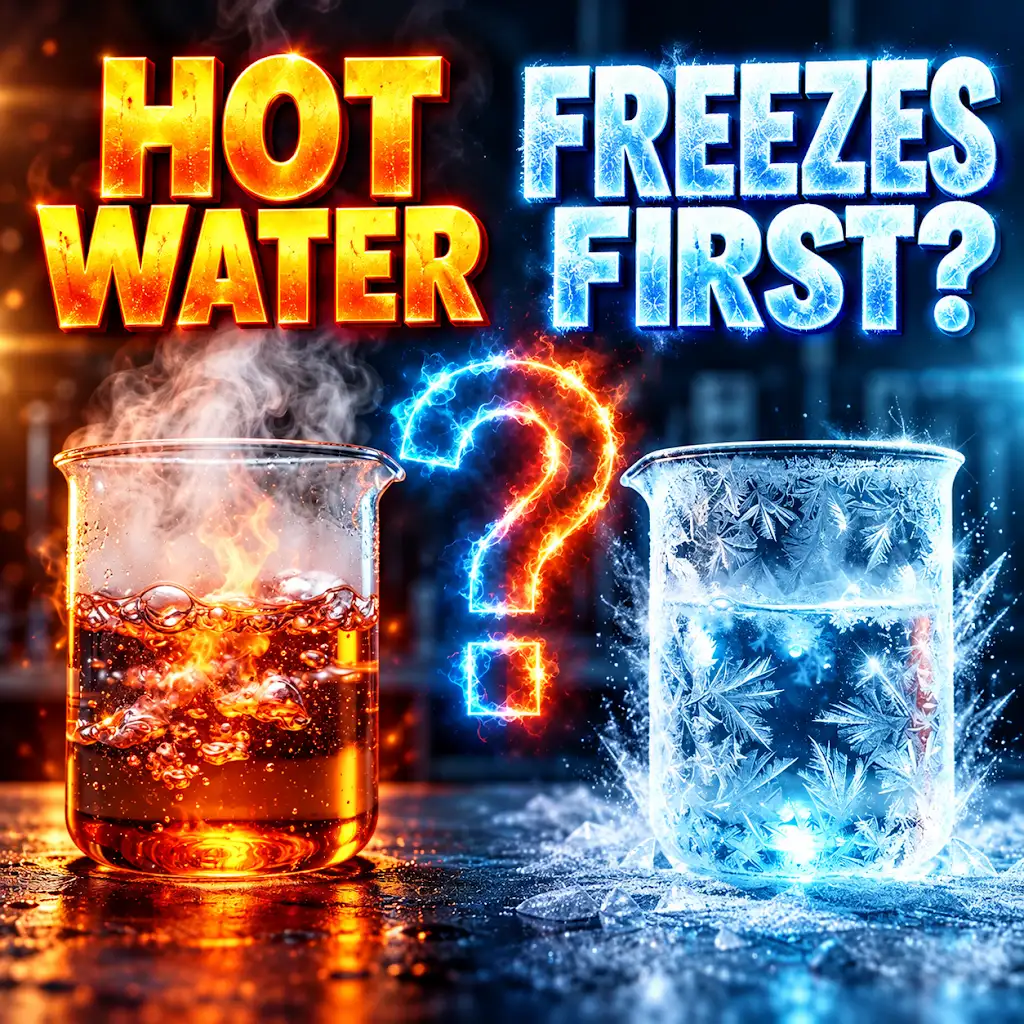
Why Hot Water Freezes Faster Than Cold (The Mpemba Effect)
FAQs
What is Erasto Mpemba ice cream?
Erasto Mpemba ice cream is a unique type of ice cream that is made using the Mpemba effect, which is the phenomenon where hot water freezes faster than cold water.
How is Erasto Mpemba ice cream made?
To make Erasto Mpemba ice cream, hot water is mixed with the ice cream ingredients and then frozen. The hot water freezes faster than cold water, resulting in a quicker freezing process for the ice cream.
Who is Erasto Mpemba?
Erasto Mpemba is a Tanzanian scientist who first observed the Mpemba effect when he noticed that hot ice cream mix froze faster than cold ice cream mix. This observation led to the creation of Erasto Mpemba ice cream.
What are the benefits of using the Mpemba effect in making ice cream?
Using the Mpemba effect in making ice cream can save time and energy as the ice cream freezes faster. This can be particularly useful for commercial ice cream production where time is of the essence.
Is Erasto Mpemba ice cream different in taste or texture from regular ice cream?
Erasto Mpemba ice cream is not significantly different in taste or texture from regular ice cream. The main difference lies in the freezing process, which is faster due to the Mpemba effect.