
The James Webb Space Telescope (JWST) has revolutionized our understanding of the cosmos, delivering breathtaking images that probe the universe’s earliest epochs. However, the raw data captured by JWST’s instruments are not directly visible to the human eye. They are collected as infrared light, a spectrum invisible to us. To translate this ethereal information into the stunning, vibrant visuals that capture public imagination and fuel scientific discovery, a meticulous and artful process of colorization is employed. This transformation of raw infrared data into visually comprehensible and aesthetically compelling images is a cornerstone of scientific visualization, allowing researchers and the public alike to perceive and interpret the universe in new and profound ways. The colorization of James Webb images is not merely a cosmetic enhancement; it is a crucial step in making complex scientific data accessible, fostering deeper understanding, and igniting a passion for space exploration.
The James Webb Space Telescope operates primarily in the infrared portion of the electromagnetic spectrum. This is by design. Infrared light can penetrate the dust clouds that obscure visible light, allowing JWST to observe the formation of stars and planets in their nascent stages, as well as the faint light from the universe’s first galaxies. However, the human eye is sensitive only to visible light, a narrow band of wavelengths ranging from violet to red. Therefore, the data collected by JWST’s sophisticated instruments, which detect infrared wavelengths, must be translated into something we can see.
What is Infrared Light?
Infrared light, often referred to as infrared radiation, is a type of electromagnetic radiation with wavelengths longer than visible light and shorter than microwaves. It is responsible for the heat we feel from the sun or a warm object. While we cannot see infrared light directly, we experience its effects daily. Different infrared wavelengths correspond to different energy levels. The longer the wavelength, the lower the energy. JWST is equipped with instruments capable of detecting a wide range of infrared wavelengths, from the near-infrared to the mid-infrared.
Why Infrared for Webb?
The universe is a vast and dusty place. These dust clouds, composed of microscopic particles of rock and ice, absorb and scatter visible light, rendering many cosmic phenomena invisible to telescopes operating solely in the visible spectrum. Infrared light, with its longer wavelengths, can easily pass through these obscuring veils. This capability is paramount for JWST’s scientific objectives, which include:
Studying the Early Universe
The light from the very first stars and galaxies has traveled for billions of years to reach us. Due to the expansion of the universe, this light has been stretched to longer, redder wavelengths, a phenomenon known as redshift. For the earliest objects, this redshift pushes their emitted light far into the infrared spectrum, making JWST the only telescope capable of observing them.
Observing Stellar Nurseries and Planetary Systems
Stars and planets are born within dense clouds of gas and dust. These clouds are opaque to visible light but transparent to infrared radiation. JWST’s infrared vision allows astronomers to peer into these stellar nurseries, witnessing the intricate processes of star and planet formation in unprecedented detail.
Investigating the Atmospheres of Exoplanets
By analyzing the infrared light that passes through or is emitted by the atmospheres of exoplanets (planets orbiting other stars), JWST can identify the chemical composition of these distant worlds, searching for signs of life or the building blocks of life.
The Challenge of Raw Data
The raw data from JWST are not images in the conventional sense. They are complex arrays of numbers, representing the intensity of infrared light detected at different points across the telescope’s field of view. These numbers, when processed, reveal patterns and structures within celestial objects. However, without a visual representation, these patterns remain abstract and inaccessible to most.
The stunning images captured by the James Webb Space Telescope have captivated the public’s imagination, but many wonder why these images are often presented in vibrant colors. A related article that delves into the reasons behind this colorization can be found at Freaky Science. The article explains that the colors are not just for aesthetic appeal; they serve to highlight different wavelengths of light that are invisible to the human eye, allowing scientists to analyze celestial phenomena in greater detail.
The Art and Science of Mapping Wavelengths to Color
The process of colorizing JWST images is a sophisticated dance between scientific accuracy and artistic interpretation. It involves assigning specific colors to different infrared wavelengths, thereby translating the invisible into the visible. This mapping is not arbitrary; it is guided by scientific understanding and aims to convey meaningful information about the celestial objects being observed.
The RGB Color Model and Infrared Data
The most common method for colorizing JWST images utilizes the red, green, and blue (RGB) color model, familiar from computer monitors and digital cameras. In this system, combinations of red, green, and blue light are used to create a vast spectrum of colors. For JWST images, specific infrared filters are used to capture light within distinct wavelength ranges. These filtered images are then assigned to the red, green, and blue channels of the RGB model.
Filter Selection: The Foundation of Color
JWST is equipped with several scientific instruments, each with its own set of filters. These filters are designed to isolate specific bands of infrared light. For instance, one filter might capture light in the near-infrared range, while another might focus on a slightly longer or shorter band within that range. The choice of which filters to use and how to assign them to RGB channels is a critical decision made by the scientific teams.
Assigning Filters to RGB Channels: A Deliberate Choice
The assignment of filters to the red, green, and blue channels is not a one-to-one mapping of infrared to visible light. Instead, it is a deliberate choice to highlight specific scientific phenomena. For example:
- Near-infrared data might be assigned to the blue channel, with progressively longer near-infrared wavelengths mapped to the green and red channels. This approach often reveals the distribution of hot, young stars and molecular hydrogen, which emit strongly in these wavelengths.
- Different combinations can be used to emphasize specific chemical elements or dust features. For instance, one filter might be chosen to highlight the presence of water ice, another for methane. By assigning these filters to different RGB channels, astronomers can visually pinpoint the locations of these molecules.
False Color vs. True Color
It is crucial to understand that JWST images are rarely “true color” in the way we perceive colors in everyday life. Because they are constructed from infrared data, they are technically false color images. The colors used are assigned to represent specific wavelengths and data, not to reflect how these objects would appear if our eyes could see infrared.
The Purpose of False Color
The primary purpose of false color is to make scientific data visible and interpretable. By assigning distinct colors to different wavelengths or intensities, scientists can:
- Differentiate between various components of a celestial object. For example, different colors might represent different gas compositions, temperatures, or densities.
- Highlight subtle features that would be lost in monochrome data.
- Convey information about the redshift of distant objects. Longer wavelengths are often mapped to redder colors, visually indicating greater distance and the age of the light.
Navigating the Interpretation
While false color images are invaluable scientific tools, it is essential for the audience to understand their nature. Accompanying captions and explanations from NASA and the European Space Agency (ESA) are crucial for providing context and guiding interpretation. These explanations clarify which wavelengths or phenomena each color represents.
Revealing the Invisible: Scientific Insights Through Color
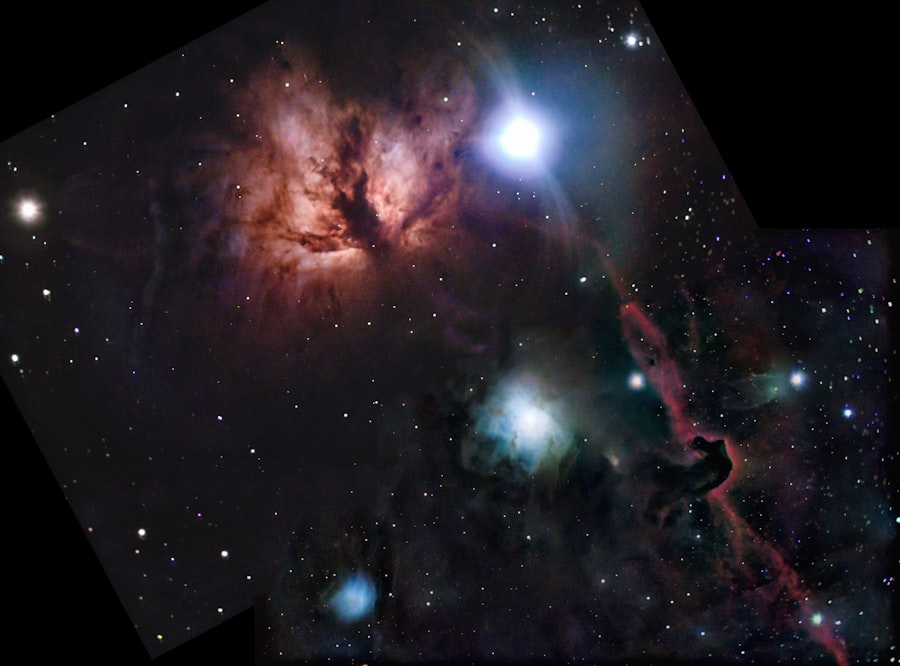
The colorization of JWST images goes far beyond aesthetics; it unlocks profound scientific insights by making previously invisible cosmic structures and processes perceptible. The careful mapping of wavelengths to colors allows scientists to identify and study phenomena that would otherwise remain hidden.
Unveiling Molecular Clouds and Stellar Birthplaces
The vibrant reds, oranges, and yellows often seen in JWST images frequently depict the emission from molecular hydrogen, a key ingredient for star formation. The blues and greens might represent different temperature regimes or the presence of other molecules. By observing how these colors are distributed, astronomers can map out the intricate structures of nebulae, identifying dense pockets of gas and dust where new stars are being born.
Tracing the Dynamics of Star Formation
The colors can reveal the flow of gas and dust as it collapses under gravity to form stars. Different colors can indicate areas of higher or lower density, shockwaves from nascent stellar winds, or the expulsion of material from young stars. This detailed visualization helps scientists understand the complex and often violent process of stellar birth.
Identifying the Building Blocks of Planets
The dust within stellar nurseries can contain various complex organic molecules. Certain color mappings can highlight the presence and distribution of these molecules, which are the chemical precursors to planets. This allows astronomers to study the conditions under which planetary systems form and the potential for life to arise.
Mapping Chemical Signatures in Exoplanet Atmospheres
When JWST observes exoplanets, it can analyze the starlight that passes through their atmospheres. Different molecules in an exoplanet’s atmosphere absorb specific wavelengths of infrared light. By identifying which wavelengths are missing from the transmitted light, scientists can deduce the atmospheric composition. The colorization of this data allows for a visual representation of these chemical signatures.
Detecting Water, Methane, and Other Molecules
For example, specific colors might be used to highlight the absorption features corresponding to water vapor, methane, carbon dioxide, or other molecules. This visual mapping helps scientists to pinpoint the presence and abundance of these substances, providing crucial clues about the planet’s environment and potential habitability.
Understanding Atmospheric Conditions
The distribution and intensity of these colored features can also provide insights into the temperature, pressure, and cloud cover of an exoplanet’s atmosphere, offering a more complete picture of these distant worlds.
Studying the Composition of Galaxies and Quasars
JWST’s infrared capabilities are also invaluable for studying the composition of galaxies and the energetic phenomena associated with active galactic nuclei and quasars.
Distinguishing Stellar Populations
Different stellar populations within galaxies emit light at different infrared wavelengths. Colorized images can help distinguish between older, cooler stars and younger, hotter stars, providing insights into the star formation history of a galaxy.
Investigating Dust Extinction and Reddening
The dust within galaxies absorbs and re-emits infrared light. The colorization of JWST data allows astronomers to map the distribution of this dust and understand how it affects the light we observe. This is crucial for accurately measuring the intrinsic properties of galaxies.
Unveiling the Jets of Active Galactic Nuclei
The powerful jets emanating from supermassive black holes at the centers of galaxies are often strong emitters of infrared radiation. Specific color mappings can highlight the structure and composition of these jets, revealing the physics of their formation and their impact on the surrounding galaxy.
The Role of Visualization in Public Engagement and Education
Beyond its scientific utility, the colorization of James Webb images plays a pivotal role in captivating the public imagination and fostering a deeper understanding of space exploration and scientific endeavor. These breathtaking visuals serve as powerful educational tools, bridging the gap between complex scientific data and public appreciation.
Inspiring Awe and Wonder
The sheer beauty and detail of JWST images, made possible by expert colorization, evoke a sense of awe and wonder about the universe. These images inspire curiosity, prompting questions about the vastness of space, the origins of life, and humanity’s place within the cosmos.
Making the Abstract Tangible
For many, the universe remains an abstract concept. The vibrant colors and intricate details of JWST images make the cosmos tangible and relatable. They transform complex scientific discoveries into easily digestible and emotionally resonant experiences, fostering a connection with the universe.
Fueling a Passion for STEM
These visually stunning images are powerful motivators for young people to pursue careers in science, technology, engineering, and mathematics (STEM). They demonstrate the exciting and impactful nature of scientific research, showcasing how imagination, creativity, and rigorous analysis can lead to groundbreaking discoveries.
Communicating Complex Science Effectively
The colorization process provides a visual language for communicating complex scientific concepts to a broad audience, including those without specialized scientific backgrounds.
Translating Data into Narratives
The assigned colors in JWST images tell a story about the universe. Reds might signify heat, blues might represent cooler regions, and distinct color gradients can illustrate the distribution of different chemical elements or gas densities. These visual cues help to build a narrative around the scientific findings.
Facilitating Understanding of Scale and Distance
The visual representation of celestial objects, with their vibrant colors and intricate structures, helps audiences to grasp the immense scale and distances involved in astronomical observations. The perceived depth and detail in colorized images can foster a more intuitive understanding of the universe’s grandeur.
The Collaborative Effort: Scientists and Artists
The creation of these impactful images is often a collaborative effort between scientists and visualization specialists. Scientists provide the raw data and the crucial scientific context, while visualization experts employ their skills to translate this information into compelling visual narratives.
The Importance of Scientific Integrity
While artistic license is involved in the colorization process, maintaining scientific integrity is paramount. The colors are not chosen arbitrarily; they are mapped to represent specific wavelengths, chemical compositions, or physical processes. This ensures that the images, while beautiful, are also scientifically accurate and informative.
The Role of Public Outreach
Organizations like NASA and ESA have dedicated outreach teams that work to disseminate these images and their scientific context to the public through websites, social media, documentaries, and educational materials. This ensures that the wonders revealed by JWST reach a global audience.
The stunning images captured by the James Webb Space Telescope have sparked curiosity about their vibrant colors, which are not simply a reflection of what the human eye would see. Instead, these images are colorized to enhance specific features and details that would otherwise be invisible. For a deeper understanding of this fascinating process, you can explore a related article that explains the techniques used in colorizing these astronomical images. This insightful piece can be found here.
The Future of Scientific Visualization with JWST
| Reason | Explanation |
|---|---|
| Enhanced Visualization | Colorization helps to differentiate between different elements in the images, making it easier for scientists and the public to interpret the data. |
| Highlighting Features | Colorization can be used to highlight specific features or structures within the images, making them more prominent and easier to study. |
| Artistic Representation | Colorization can also be used for artistic representation, creating visually appealing images that capture the public’s interest and imagination. |
The James Webb Space Telescope’s groundbreaking discoveries are just beginning, and with them, the evolution of scientific visualization will continue to advance. As JWST probes deeper into the universe and uncovers more intricate details, the techniques used to colorize and present its data will undoubtedly become more sophisticated, leading to even richer and more informative visualizations.
Evolving Color Mapping Techniques
As our understanding of infrared astronomy deepens, so too will the sophistication of color mapping techniques. Future colorization efforts may involve:
Multi-wavelength Combinations for Greater Detail
Scientists may develop more complex color palettes that combine data from multiple instruments and filters simultaneously, allowing for the visualization of even more nuanced scientific phenomena. This could involve mapping subtle variations in dust composition or temperature distributions with greater precision.
Interactive and Dynamic Visualizations
The future of scientific visualization is likely to embrace interactivity. Imagine being able to “fly through” a nebula, adjusting the color filters on the fly to explore different wavelengths and chemical signatures. Dynamic visualizations that show the evolution of celestial objects over time, or the movement of gas and dust, will also become more prevalent.
Incorporating Data Beyond Wavelength
Future visualizations might not solely rely on wavelength. Scientists could explore incorporating other forms of data, such as spectroscopic information (which reveals the precise chemical composition of objects), into the visual representation. This could lead to visualizations that are not just beautiful but also scientifically comprehensive.
Enhancing Data Accessibility and Interpretability
The goal of scientific visualization is to make complex data accessible and understandable. With JWST, this will continue to be a driving force.
Developing Standardized Color Palettes for Specific Phenomena
To aid in consistent interpretation across different research groups and public outreach efforts, there may be a move towards developing more standardized color palettes for representing specific scientific phenomena, such as the emission of certain molecules or the signatures of early galaxies.
Utilizing Virtual and Augmented Reality
Immersive technologies like virtual reality (VR) and augmented reality (AR) offer powerful new avenues for experiencing JWST data. Imagine standing virtually on a distant exoplanet and seeing its atmosphere rendered with scientifically accurate colors, or exploring the structure of a distant galaxy in a fully immersive 3D environment.
Democratizing Scientific Discovery
As visualization techniques become more advanced and accessible, they will play a crucial role in democratizing scientific discovery. Tools that allow citizen scientists or students to explore and interpret JWST data visually could foster a new generation of astronomers and a more engaged public.
The Symbiotic Relationship Between Science and Art
The colorization of JWST images exemplifies the symbiotic relationship between scientific rigor and artistic expression. The pursuit of scientific truth is enhanced by the ability to visualize that truth in a compelling and understandable manner, and conversely, the beauty and wonder captured in these visualizations can inspire further scientific inquiry.
Pushing the Boundaries of Perception
By translating the invisible into the visible, JWST’s colorized images push the boundaries of human perception, allowing us to see and understand the universe in ways that were previously unimaginable. This ongoing process of translation and visualization will continue to deepen our understanding of the cosmos and our place within it.
A Legacy of Cosmic Wonder
The stunning and scientifically rich colorizations of James Webb images are not just snapshots of the universe; they are a testament to human ingenuity, scientific curiosity, and the power of collaboration. They represent a legacy of cosmic wonder, inspiring awe and driving scientific progress for generations to come. The journey of transforming invisible infrared light into breathtaking visual narratives is a crucial and ongoing chapter in humanity’s exploration of the universe.

The Space Photos Are Real—But Your Eyes Would See This
FAQs
1. Why are James Webb images colorized?
Colorizing James Webb images helps scientists and the public better understand the data by highlighting different wavelengths of light. This can reveal important details about the objects being observed.
2. How are the colors in James Webb images determined?
The colors in James Webb images are determined by assigning different wavelengths of light to specific colors. For example, infrared light may be represented as red, while ultraviolet light may be represented as blue.
3. What is the benefit of colorizing James Webb images?
Colorizing James Webb images can help scientists identify different elements and compounds in space, as well as understand the temperature and composition of celestial objects. It also makes the images more visually appealing and easier for the public to interpret.
4. Are the colors in James Webb images true to what the human eye would see?
No, the colors in James Webb images are not true to what the human eye would see. They are assigned based on scientific data and are used to represent different wavelengths of light that are not visible to the human eye.
5. Can the colorized images from James Webb telescope be used for scientific analysis?
Yes, colorized images from the James Webb telescope can be used for scientific analysis. By assigning different wavelengths of light to specific colors, scientists can extract valuable information about the objects being observed and gain insights into their properties and composition.