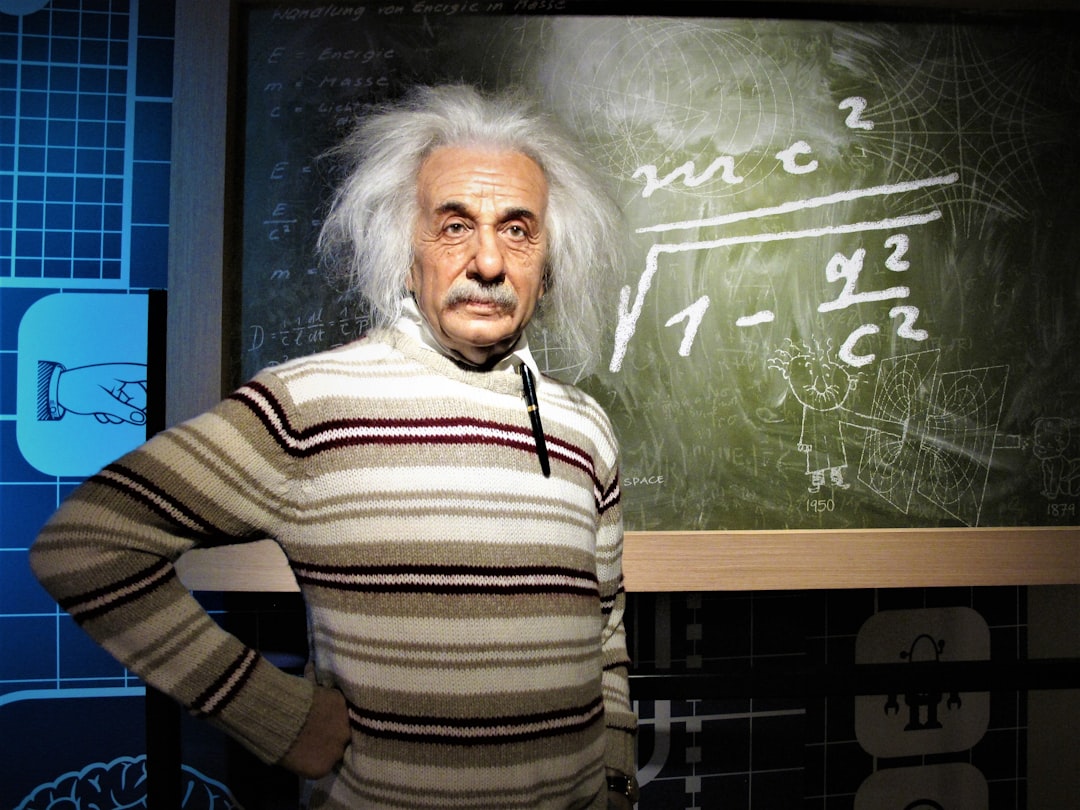
So, what’s the big deal with Einstein’s photoelectric effect? Basically, it’s the idea that light isn’t just a wave, but also comes in tiny packets of energy, like little bullets. This simple concept, which won Einstein his Nobel Prize, explains how light can knock electrons right out of metals. Understanding this can help us get our heads around a lot of modern tech, from solar panels to digital cameras. Let’s break it down without making your brain hurt.
Before Einstein, scientists largely thought of light as a wave. Think of ripples on a pond. Waves spread out, they can interfere with each other, and they carry energy. This wave theory explained a lot of things about light, like how it bends and reflects. But then came experiments that just couldn’t be explained by light being only a wave.
The Puzzling Experiments
One of these tricky experiments involved shining light on a metal surface. What they observed was that if the light was a certain color (or, as we now know, had enough energy), it could actually push electrons right off the metal. This made sense to some degree – light has energy, so it could give electrons enough of a kick to escape.
The Wave Problem
But here’s where the wave theory hit a snag. According to wave theory, if you made the light brighter (increased its amplitude), it should have more energy. So, even dim light of the right color should eventually get electrons hopping. But that wasn’t what happened! Dim light, no matter how long you shone it, wouldn’t eject electrons if its frequency (related to color) was too low. Conversely, even very dim light of a high enough frequency would knock electrons off almost instantly. It was like the intensity of the wave didn’t matter as much as its frequency. This was a real head-scratcher for the physicists of the time.
The photoelectric effect, a phenomenon that played a crucial role in the development of quantum mechanics, can be better understood through simplified explanations and visual aids. For those interested in delving deeper into this topic, a related article can be found at Freaky Science, which breaks down the concepts in an accessible manner. You can read more about it by visiting this link.
Einstein Steps In: Light Bullets!
This is where Albert Einstein, in 1905, came up with a revolutionary idea. He proposed that light isn’t just a continuous wave, but also behaves like it’s made up of discrete packets of energy. He called these packets “quanta,” and we now know them as photons.
The Analogy: Coins in a Slot Machine
Think of it like this: imagine you’re trying to get a gumball out of a machine. If you have a bunch of tiny, weak pushes (like dim, low-frequency light), they might not have enough power individually to dislodge the gumball. But if you can toss in a single, strong coin (a high-energy photon), it has a much better chance of doing the trick. The individual coin’s power is what matters, not the number of weak pushes you’ve given it.
Energy of Each Packet
Einstein suggested that the energy of each photon is directly proportional to the frequency of the light. High-frequency light (like blue or ultraviolet) has high-energy photons, while low-frequency light (like red) has low-energy photons.
The Threshold Frequency
This explained the experimental results perfectly. For an electron to be ejected from the metal, it needs to absorb a photon with enough energy to overcome the forces holding it to the metal (this is called the work function). If the photon’s energy is less than the work function, it doesn’t matter how many of these low-energy photons hit the metal; no electrons will be ejected. There’s a minimum “threshold frequency” of light required for the photoelectric effect to occur.
How it All Works: Knocking Out Electrons
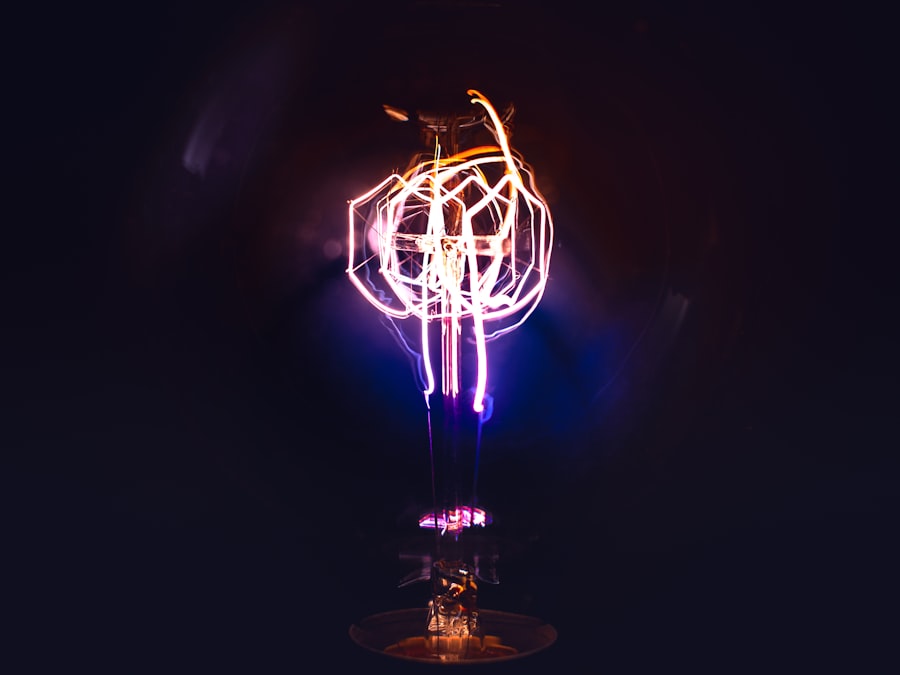
So, the photoelectric effect is all about these photons doing their work. When a photon of sufficient energy strikes an electron in the metal, it’s like a collision.
Absorption is Key
The electron absorbs the entire energy of the photon. It’s an all-or-nothing deal. The photon disappears, transferring all its energy to the electron.
Escaping the Metal
If the energy the electron receives from the photon is greater than the energy required to break free from the metal (the work function), the electron will indeed escape.
Leftover Energy Adds Speed
Any energy the photon had above the work function is converted into the kinetic energy of the ejected electron. This means the ejected electrons will be moving faster if they absorb photons with higher energy (i.e., light of a higher frequency).
No Time Lag
This is another crucial part that a wave theory struggled to explain. Since it’s a single photon interacting with a single electron, the ejection happens almost instantaneously. There’s no waiting for a wave to build up enough energy. As soon as a photon with enough energy hits, the electron can be ejected.
Why This Was a Big Deal (Beyond Just Fancy Physics)
Einstein’s explanation of the photoelectric effect wasn’t just an interesting academic exercise. It fundamentally changed our understanding of light and reality.
The Birth of Quantum Mechanics
This work was a cornerstone in the development of quantum mechanics, the theory that describes the behavior of matter and energy at the atomic and subatomic levels. The idea of energy coming in discrete packets (quanta) was revolutionary.
Light Duality: Wave and Particle
It firmly established the concept of wave-particle duality for light. Light behaves like a wave in some situations and like a stream of particles in others. This duality is a fundamental concept in quantum mechanics and applies to other subatomic particles too.
Nobel Prize Recognition
It was for this explanation of the photoelectric effect that Einstein was awarded the Nobel Prize in Physics in 1921. This highlights just how impactful and significant his contribution was.
The photoelectric effect, a phenomenon explained by Albert Einstein, demonstrates how light can eject electrons from a material, fundamentally changing our understanding of light and matter. For those looking to delve deeper into this topic in a more accessible manner, a related article can be found at Freaky Science, which simplifies the concepts surrounding the photoelectric effect and its implications in modern physics. This resource is perfect for anyone interested in grasping the essentials of this groundbreaking discovery.
Practical Applications: It’s Not Just Theory
| Concept | Description |
|---|---|
| Discovery | Albert Einstein proposed the photoelectric effect in 1905, which explained the behavior of light and electrons. |
| Explanation | The photoelectric effect occurs when light (photons) strikes a material, causing the ejection of electrons from the surface. |
| Threshold Frequency | The minimum frequency of light required to cause the photoelectric effect, which is determined by the material’s work function. |
| Energy of Electrons | The kinetic energy of the ejected electrons is directly proportional to the frequency of the incident light. |
| Applications | The photoelectric effect is utilized in devices such as photodiodes, solar cells, and photoelectric sensors. |
The photoelectric effect isn’t just a historical footnote in physics; it’s the basis for many technologies we use every day.
Solar Panels: Harnessing the Sun
This is perhaps the most obvious and widespread application. Solar panels work by using the photoelectric effect. When sunlight (photons) hits the semiconductor material in a solar cell, it knocks electrons loose. These freed electrons then flow, creating an electric current. The higher the frequency of light (and the more photons there are), the more electricity can be generated.
Digital Cameras and Sensors
Think about the sensors in your smartphone camera or a digital SLR. They capture images through millions of tiny photodiodes. When light hits these photodiodes, the photoelectric effect ejects electrons, which then generate a small electrical signal. The brighter the light (more photons), the stronger the signal. This process is how light is converted into the digital information that forms a photograph.
Photomultiplier Tubes: Detecting Faint Light
These are super-sensitive devices used to detect very faint levels of light, even single photons. When a photon hits a photocathode inside the tube, it triggers the emission of electrons via the photoelectric effect. These electrons are then amplified through a series of electrodes, producing a measurable current. They’re used in everything from scientific research to medical imaging.
Light Meters
The meters in cameras and in professional lighting equipment often use the photoelectric effect to measure the intensity of light. They convert incoming light into an electrical signal, which is then displayed as a light reading.
Gate Openers and Burglar Alarms
Some motion sensors and automatic gates utilize the photoelectric effect. They work by breaking a beam of light. When the beam is interrupted, it signifies that something is passing through, triggering the desired action.
Challenging Intuition: Why It’s Tricky to Grasp
It’s completely normal if the photoelectric effect still feels a little mind-bending. Our everyday experience with light is mostly wave-like.
Our Everyday Experience
When we think of light, we usually imagine a continuous flow, like water from a tap. We don’t typically sense individual “packets” of light hitting us.
The Quantum Leap
The idea that energy comes in discrete chunks, not just in a smooth continuum, is a core principle of quantum mechanics and can be counter-intuitive. It requires a shift in thinking from classical physics to the quantum realm.
The Energy-Frequency Link
Understanding that the frequency of light (its color) is more important than its intensity (brightness) for initiating the photoelectric effect can also be a mental hurdle. We tend to associate “more light” with “more energy” in a general sense, but for this specific phenomenon, the type of energy (associated with frequency) is critical.
In Summary: Simple Once You Get It
So, to wrap it up, Einstein’s photoelectric effect is the concept that light, in addition to being a wave, also acts as tiny particles called photons. Each photon carries a specific amount of energy that’s directly related to the light’s frequency. When a photon hits a metal, if its energy is high enough to overcome the binding forces of an electron, it can knock that electron out. This fundamental discovery not only revolutionized physics by introducing quantum ideas and wave-particle duality but also paved the way for many of the amazing technologies that shape our modern world, from the solar cells powering our homes to the cameras capturing our memories. It’s a prime example of how understanding the tiny, invisible world can have huge, visible impacts.
FAQs
What is the photoelectric effect?
The photoelectric effect is the phenomenon where electrons are emitted from a material when it is exposed to light or electromagnetic radiation.
Who discovered the photoelectric effect?
The photoelectric effect was first observed by Heinrich Hertz in 1887, and later explained by Albert Einstein in 1905.
How did Albert Einstein explain the photoelectric effect?
Albert Einstein explained the photoelectric effect by proposing that light is made up of particles called photons, and that the energy of these photons is directly related to the frequency of the light.
What are the practical applications of the photoelectric effect?
The photoelectric effect has practical applications in devices such as photovoltaic cells (solar panels), photoelectric sensors, and photoelectric cells used in digital cameras.
How does the photoelectric effect relate to Einstein’s theory of relativity?
The photoelectric effect provided experimental evidence for the particle-like nature of light, which was a key concept in Einstein’s theory of relativity.