
You’re standing in your kitchen, a recipe in hand, ready to whip up a culinary masterpiece. But before you even begin to chop, you might be wondering about the most efficient way to get that heat exactly where you need it. You’ve probably heard whispers about induction cooking, and perhaps you’re even considering making the switch. This isn’t just a trend; it’s a fundamental shift in how you interact with heat, a journey into the world of precise control and remarkable efficiency. Today, we’re diving deep into how induction cooking, powered by the magic of joule heating, can revolutionize your kitchen experience.
You might be accustomed to the slow, radiating warmth of a gas flame or the gentle hum of an electric coil. Induction cooking is a different beast entirely, and its efficiency stems from a sophisticated understanding of electromagnetism. At its core, induction cooking utilizes the principles of electromagnetic induction to generate heat directly within your cookware. This is a game-changer, moving the heat source from an external element to the very vessel you’re using to cook.
The Electromagnetism of It All
Imagine a coiled wire beneath the smooth surface of your cooktop. When you turn on the induction burner, an alternating electric current flows through this coil. This current, oscillating back and forth, creates a rapidly changing magnetic field. Think of it like an invisible, pulsating force field emanating from the cooktop. This magnetic field is the key to the entire process.
The Role of Ferrous Metals
Now, this is where your cookware plays a crucial role. Not all pots and pans are created equal when it comes to induction. For the magnetic field to do its work, your cookware needs to be made of a material that is ferromagnetic – meaning it contains iron. When you place a compatible pot or pan on the induction burner, this rapidly changing magnetic field penetrates the base of the cookware.
Generating Heat: Joule Heating in Action
As the magnetic field oscillates, it forces the electrons within the metal of your cookware to move back and forth. This movement of electrons, you see, is precisely what we call electric current. And when an electric current flows through a resistive material, it generates heat. This phenomenon is known as Joule heating, or resistive heating. So, the induction cooktop doesn’t heat up itself; it induces a current in your pan, and it’s the pan that gets hot, directly and efficiently.
Why This is More Efficient
The brilliance of induction lies in its directness. Unlike traditional electric or gas stoves, which heat an element or a burner that then transfers heat to your cookware, induction bypasses this intermediary. The heat is generated within the pan itself. This means significantly less heat is lost to the surrounding air, making induction cooking incredibly energy-efficient. You’re not wasting energy heating up the cooktop surface unnecessarily.
Joule heating, a phenomenon that plays a crucial role in induction cooking, is effectively harnessed to provide efficient and rapid heating of cookware. For those interested in exploring the science behind this technology further, a related article can be found at Freaky Science, which delves into the principles of electromagnetic induction and its applications in modern cooking methods. This resource offers valuable insights into how Joule heating enhances the cooking experience by ensuring even heat distribution and energy efficiency.
The Wonders of Joule Heating for Your Culinary Creations
Joule heating in induction cooking isn’t just about efficiency; it’s about unparalleled control and a superior cooking experience. You’ll discover a level of responsiveness that might surprise you, allowing for precision that was once the exclusive domain of professional chefs.
Precision Temperature Control
One of the most celebrated benefits of induction cooking is its precise temperature control. Because the heat is generated directly in the pan and is responsive to changes in electrical current, you can adjust the heat output almost instantaneously. This means you can go from a rolling boil to a gentle simmer with a mere flick of your finger on the control panel.
From Searing to Simmering
Think about searing a steak. You need intense, immediate heat to create that perfect crust. With induction, you get it instantly. Then, when you want to reduce the heat to gently cook the interior, the response is equally swift. This allows for a much finer control over the cooking process, reducing the risk of burning or undercooking your food.
Delicate Sauces and Chocolates
Even for the most delicate tasks, like making a béchamel sauce or melting chocolate, induction excels. The ability to maintain a very low, consistent heat prevents scorching and ensures smooth, velvety results. You’re no longer playing a guessing game with heat; you’re dictating it.
Rapid Heating Speeds
The direct generation of heat through joule heating also translates to incredibly fast cooking times. Water boils significantly faster on an induction cooktop compared to traditional electric or gas stoves. This means less time waiting and more time enjoying your meals.
Boiling Water in a Flash
You’ll notice this immediately the next time you need to boil water for pasta or a cup of tea. The speed at which the water reaches a rolling boil is remarkable, saving you precious minutes in your busy schedule.
Quicker Stir-Fries and Sautéing
The rapid heating also benefits dishes that require quick, high-heat cooking, like stir-fries and sautéed vegetables. You can achieve that satisfying sizzle and crisp texture without the long preheating times.
Enhanced Safety Features
The efficiency and directness of induction cooking also contribute to enhanced safety in your kitchen. Because the cooktop surface itself doesn’t get as hot as traditional electric elements, the risk of accidental burns is significantly reduced.
Cool-Touch Surface
While the pan gets hot, the induction surface surrounding it remains relatively cool. This is a huge advantage, especially in households with children or pets, as it minimizes the chance of accidental contact and burns.
Auto Shut-Off and Pan Detection
Most induction cooktops are equipped with intelligent features like auto shut-off. If you accidentally leave a burner on without a pot or pan, it will automatically turn off after a short period, further enhancing safety and preventing energy waste. They also detect whether a compatible pan is present, meaning the burner won’t activate if you place something non-ferrous on it.
The Mechanics of Induction: How Joule Heating Works

To truly appreciate the efficiency of induction, it’s helpful to delve a little deeper into the precise mechanics of how joule heating is initiated and sustained. It’s a beautiful interplay of physics and engineering.
The Induction Coil and Alternating Current
As mentioned, at the heart of each induction zone is a tightly wound coil of copper wire. When you select a heat setting, an alternating current is sent through this coil. The frequency of this alternating current is crucial, typically falling within the range of 20 to 100 kHz. This high frequency is what allows for the rapid generation of the magnetic field.
Creating Eddy Currents
The oscillating magnetic field generated by the coil penetrates the base of your ferromagnetic cookware. This changing magnetic field induces circulating currents within the metal of the pan. These circulating currents are called eddy currents. Imagine them as tiny whirlpools of electricity swirling within the metal.
Resistance is What Heats
Now, metals, even good conductors like iron, possess a certain degree of electrical resistance. As these eddy currents flow through the resistive material of the pan, they encounter opposition. This opposition causes the kinetic energy of the electrons to be converted into thermal energy, thus generating heat. This is the direct application of Joule’s Law, which states that the heat generated ($H$) is proportional to the square of the current ($I$), the resistance ($R$), and the time ($t$): $H = I^2Rt$. The induction cooktop is designed to maximize the efficiency of this process.
Minimizing Heat Loss
Unlike radiant heat from a traditional electric coil, which heats the air around the element and then the pan, or gas, which heats the air and then the pan, induction’s heat generation is localized within the pan itself. This significantly reduces heat loss to the surroundings. The only significant heat loss is to the food being cooked and a small amount radiating from the pan.
Optimizing Your Induction Cooking Experience
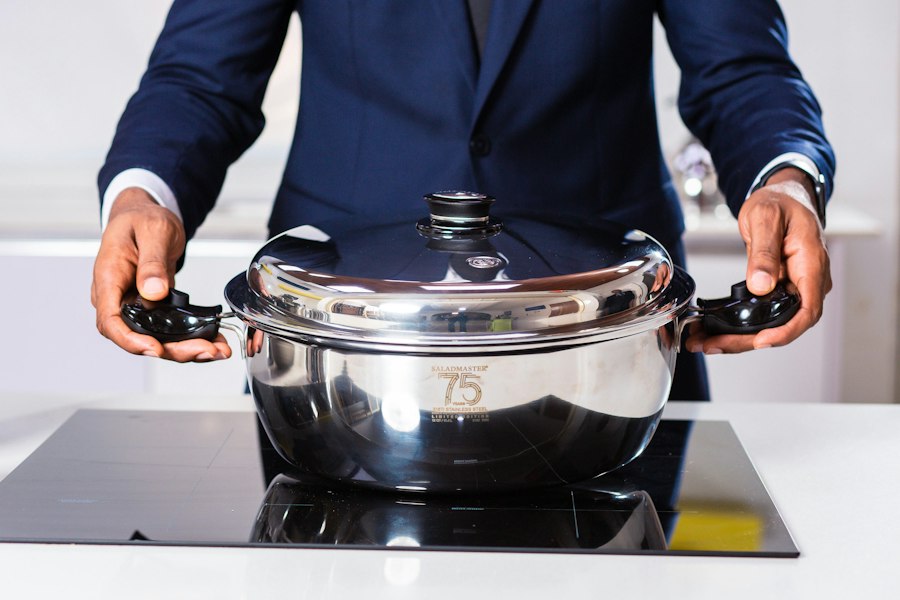
While induction cooktops are inherently efficient, there are a few key practices you can adopt to maximize their performance and further enhance your cooking. It’s about understanding the nuances of this technology and working with it, not against it.
Choosing the Right Cookware is Paramount
This cannot be stressed enough. The efficiency of induction cooking hinges entirely on the compatibility of your cookware. If your pots and pans aren’t ferromagnetic, they simply won’t work with an induction cooktop.
The Magnet Test
A simple way to check if your cookware is induction-compatible is to use a magnet. If a magnet sticks firmly to the base of your pot or pan, it’s likely compatible. Be aware that some cookware might have a ferromagnetic base layered within other materials.
Induction-Ready Cookware Materials
Commonly, cookware made of cast iron, enameled cast iron, and stainless steel with a magnetic core are ideal. Aluminum, copper, and glass cookware are generally not induction-compatible unless they have a special ferromagnetic plate attached to their base.
Investing in Quality Cookware
While you don’t need to break the bank, investing in good quality, induction-ready cookware will ensure optimal heat distribution and longevity, contributing to a better cooking experience overall.
Understanding Pan Placement and Contact
For the magnetic field to effectively induce currents, good contact between the pan and the cooktop surface is essential.
Flat and Even Bases
Ensure your pots and pans have flat, even bases. Warped or uneven bases can lead to uneven heating and reduced efficiency.
Avoiding Gaps
While you don’t need to press down forcefully, simply placing the pan securely on the surface is usually sufficient. Avoid placing thin items like paper towels or cloth between the pan and the cooktop, as this can interfere with the magnetic field.
Utilizing the Power Boost Feature
Many induction cooktops come with a “power boost” or “power surge” feature. This is a fantastic tool for rapidly heating liquids or achieving high temperatures for searing.
When to Use Power Boost
Use this feature judiciously. It temporarily draws more power than the standard setting, allowing for exceptionally fast heating. It’s perfect for getting water to a boil in a matter of seconds or for achieving that initial sear on a piece of meat.
Understanding Limitations
Be aware that the power boost feature is usually designed for short bursts of intense heat. Prolonged use can sometimes strain the cooktop or your electrical system, so consult your user manual for specific guidelines.
Joule heating plays a crucial role in the efficiency of induction cooking, as it directly relates to how quickly and evenly food is heated. For a deeper understanding of the principles behind this technology, you can explore a related article that delves into the science of thermal energy transfer in cooking appliances. This article provides insights into the mechanisms that make induction cooking a preferred choice for many chefs and home cooks alike. To read more about it, visit this informative page.
The Environmental and Economic Advantages
| Parameter | Description | Typical Value / Range | Unit |
|---|---|---|---|
| Frequency | Operating frequency of induction coil | 20,000 – 50,000 | Hz |
| Current (I) | Electric current flowing through the cookware | 10 – 50 | Amperes |
| Resistance (R) | Electrical resistance of cookware material | 0.01 – 0.1 | Ohms |
| Power Dissipated (P) | Heat generated by Joule heating (P = I²R) | 500 – 3000 | Watts |
| Temperature Rise Rate | Rate at which cookware temperature increases | 5 – 20 | °C per second |
| Cookware Material | Material affecting resistance and heating efficiency | Cast iron, Stainless steel, Ferromagnetic steel | N/A |
| Skin Depth | Depth at which current density reduces to 1/e of surface value | 10 – 100 | Micrometers |
| Efficiency | Ratio of heat delivered to cookware vs input power | 80 – 90 | Percent (%) |
Beyond the immediate culinary benefits, the efficiency of induction cooking, driven by joule heating, translates into significant environmental and economic advantages. You’re not just cooking smarter; you’re also living more sustainably and saving money.
Reduced Energy Consumption
The most direct economic and environmental benefit is the reduced energy consumption. Because so little heat is wasted, induction cooktops are significantly more energy-efficient than their gas or traditional electric counterparts. This means lower electricity bills for you.
Comparing Energy Efficiency
Studies consistently show that induction cooktops are up to 50% more energy-efficient than traditional electric stoves and can be comparable or even more efficient than gas, especially when considering heat loss in gas cooking.
A Greener Kitchen Footprint
By using less energy, you’re also reducing your carbon footprint. Embracing induction cooking is a tangible step towards a more sustainable lifestyle and a greener kitchen.
Faster Cooking Times = Less Energy Usage
The fact that induction heats up so quickly also contributes to energy savings. Shorter cooking times mean less overall energy is consumed to prepare your meals. That quick boil for pasta or the rapid sauté for vegetables all add up to a more efficient use of electricity.
Lower Greenhouse Gas Emissions
For those connected to the grid, a reduction in electricity consumption directly translates to lower demand from power plants, which in turn can lead to reduced greenhouse gas emissions, especially if your electricity is sourced from renewable or cleaner energy providers.
Reduced Heat Emission into the Kitchen
Traditional stoves, especially gas, release combustion byproducts and significant amounts of heat into your kitchen. Induction cooktops, by contrast, emit very little heat and no combustion gases. This can lead to a cooler, more comfortable kitchen environment and potentially reduce the need for excessive air conditioning in warmer months.
The Future of Culinary Efficiency
Induction cooking, powered by the precise and efficient application of joule heating, is not just a modern convenience; it’s a glimpse into the future of culinary efficiency. As technology continues to advance, we can expect even smarter, more intuitive, and more sustainable cooking solutions.
Technological Advancements
Manufacturers are continually innovating, developing cooktops with even more precise temperature control, advanced sensor technology, and seamless integration with smart home systems. You might see features that automatically adjust heat based on the weight or type of food in the pan.
Integration with Smart Technology
Imagine your cooktop communicating with your oven, preheating your oven to the perfect temperature as your induction burner finishes searing your protein. The possibilities for a more integrated and automated kitchen are vast, all stemming from the underlying efficiency of induction.
The Rise of Induction
As more consumers become aware of the benefits of induction cooking – its speed, precision, safety, and sustainability – its popularity is only set to grow. It’s moving from a niche high-end appliance to a mainstream choice for home cooks seeking a better way to prepare their meals.
Your Kitchen, Transformed
So, as you contemplate your next kitchen upgrade, consider the profound impact that efficient induction cooking with joule heating can have. It’s an investment in speed, precision, safety, and a more sustainable future. It’s about transforming the way you cook, making every meal preparation a more enjoyable and effective experience. Your kitchen can become a more responsive, more efficient, and ultimately, more rewarding space. You’re not just cooking food; you’re harnessing the power of physics to create culinary excellence, one perfectly heated pan at a time.
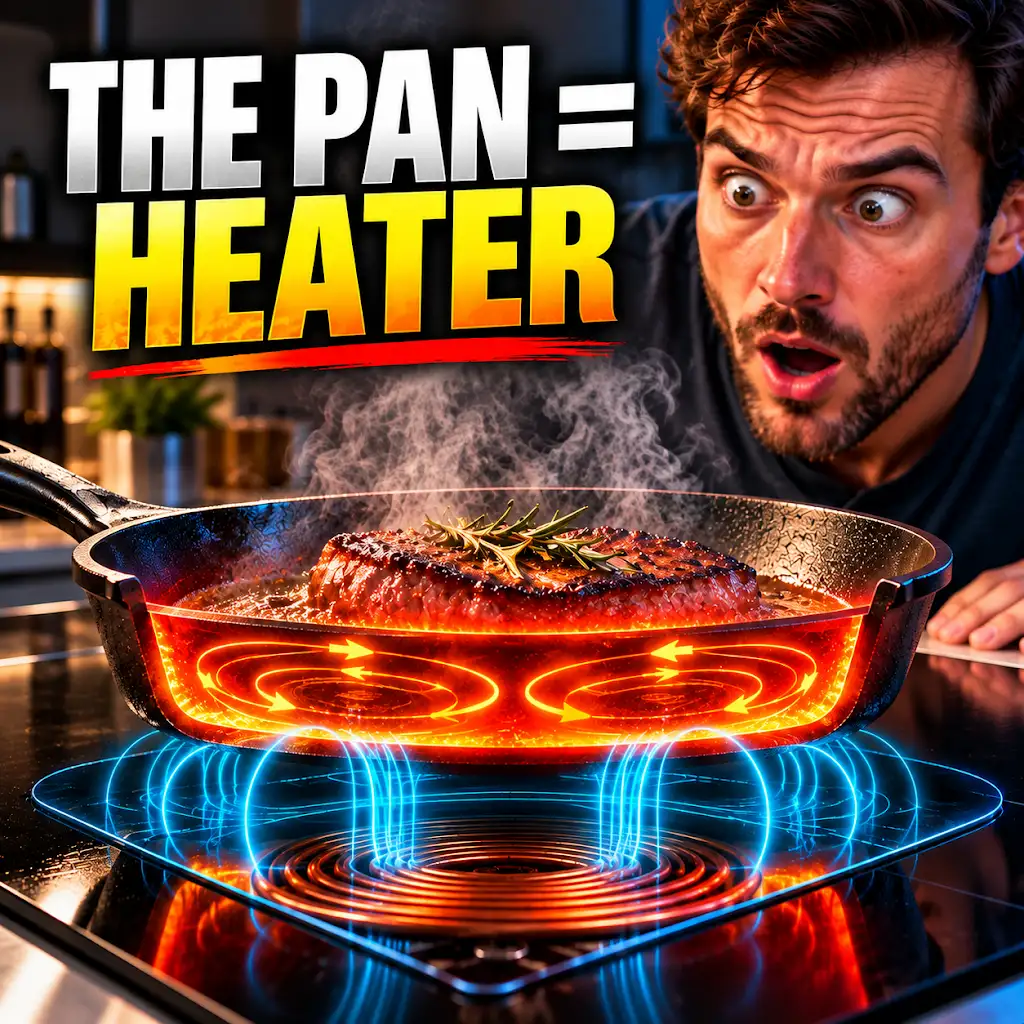
The Pan Is the Heater: How Induction Cooking Really Works
FAQs
What is Joule heating in induction cooking?
Joule heating in induction cooking is the process where electrical currents pass through a conductive material, such as a metal cooking pot, generating heat due to resistance in the material.
How does Joule heating work in induction cooking?
In induction cooking, an alternating current passes through a coil beneath the cooking surface, creating a magnetic field. When a conductive material is placed on the cooking surface, the magnetic field induces electrical currents in the material, leading to Joule heating and heating up the cookware.
What are the advantages of Joule heating in induction cooking?
Joule heating in induction cooking is highly efficient as it directly heats the cookware, resulting in faster cooking times and precise temperature control. It is also safer as the cooking surface remains cool to the touch, reducing the risk of burns.
Are there any limitations to Joule heating in induction cooking?
One limitation of Joule heating in induction cooking is that it requires the use of cookware that is magnetic and conductive, such as cast iron or stainless steel. Non-magnetic cookware, like aluminum or copper, will not work on an induction cooktop.
How does Joule heating compare to other cooking methods?
Joule heating in induction cooking is more energy-efficient compared to traditional gas or electric stovetops, as it heats the cookware directly without wasting heat on the surrounding air. It also allows for faster cooking times and precise temperature control, making it a popular choice for many home cooks.