
You’ve probably stood in front of an induction stove, marveling at how quickly water boils or how precise the temperature control is. It seems like magic, but the science behind it is surprisingly elegant and hinges on a fundamental electromagnetic principle: eddy currents. Forget the open flame of gas or the glowing coils of traditional electric stoves; your induction cooktop is a masterclass in harnessing the invisible forces of magnetism. Let’s dive into how this remarkable technology works, from the coils beneath the surface to the way your pots and pans transform into heating elements.
Beneath the sleek, smooth ceramic-glass surface of your induction cooktop lies the real magic. It’s not a heating element in the traditional sense; instead, you’ll find a carefully arranged system of copper coils. These coils are the conductors of electrical current, and their precise placement and configuration are crucial to the entire process. When you turn on your induction stove and select a heat setting, electricity is channeled through these coils.
Electricity’s Dance: The Alternating Current
The key here is that the electricity flowing through these coils is not a steady, direct current like you might find in a battery. Instead, it’s an alternating current (AC). This means the direction of the electrical flow is constantly reversing, typically at a high frequency. Think of it as a rapid back-and-forth motion of electrons. This rapid switching is essential because it’s the very thing that generates the changing magnetic field that your stove relies on. The frequency of this alternating current is carefully controlled by the stove’s electronics to match the requirements of induction heating. Lower frequencies might be used for gentler heating, while higher frequencies can generate more intense heat more quickly.
Understanding Frequency and its Impact
The specific frequency chosen for induction cooking is a critical design parameter. It needs to be high enough to create a significant changing magnetic field, but not so high that it becomes inefficient or poses other safety concerns. Different manufacturers might use slightly different frequency ranges, leading to subtle variations in performance. However, the underlying principle remains the same: a rapidly fluctuating magnetic field is the catalyst for the entire heating process.
The Magnetic Symphony: Generating a Changing Field
As the alternating current surges through the copper coils, it creates a powerful and rapidly changing magnetic field. This magnetic field extends upwards, through the ceramic-glass surface, and into the cookware placed on top. It’s important to understand that the cooktop itself doesn’t get hot from an internal heating element. Instead, it acts as a conduit, generating and directing this invisible magnetic force. The ceramic-glass surface is designed to be non-magnetic and to withstand high temperatures, ensuring that only the cookware is heated.
Field Strength and Induction Power
The strength of this magnetic field is directly related to the amount of current flowing through the coils and the number of turns in the coils. This is where your power settings come into play. When you turn the dial or press the buttons to increase the heat, you are essentially increasing the electrical current flowing through the coils, which in turn strengthens the magnetic field. This stronger field then induces more powerful eddy currents in your cookware, leading to faster and more intense heating.
Eddy currents play a crucial role in the functioning of induction stoves, providing an efficient and rapid way to heat cookware. For a deeper understanding of how these currents are generated and utilized in induction cooking, you can explore the article on Freaky Science, which delves into the science behind eddy currents and their practical applications. To read more, visit Freaky Science.
The Crucial Connection: Introducing Your Cookware
Not all cookware is created equal when it comes to induction cooking. For the magic of eddy currents to happen, your pots and pans need to be made of a ferromagnetic material. This means they need to contain iron, as iron is highly susceptible to magnetic fields. Think of cast iron skillets, stainless steel pots with a magnetic base, or carbon steel pans. If a magnet sticks to the bottom of your pot or pan, it’s likely induction-compatible.
The Ferromagnetic Advantage: Why Iron Matters
The iron content in your cookware is what allows it to interact so effectively with the magnetic field generated by the cooktop. When the changing magnetic field penetrates the ferromagnetic material of your cookware, it causes the free electrons within the metal to move. This movement of electrons is precisely what we call an electric current. Because the magnetic field is constantly changing, these induced currents are also constantly changing, swirling around within the metal of the cookware itself.
Testing for Induction Compatibility: The Magnet Trick
A simple way to determine if your existing cookware will work on an induction stove is to grab a common household magnet. If the magnet firmly adheres to the bottom of the pot or pan, it’s almost certainly compatible. If the magnet weakly sticks or doesn’t stick at all, it’s unlikely to work efficiently, if at all, on an induction cooktop. This simple test can save you from buying new cookware unnecessarily.
The Material Science of Induction Cookware
While iron is the core requirement, other materials can be incorporated into the base of induction cookware to enhance performance and durability. For example, many stainless steel pots have a layered base that includes a core of aluminum or copper for even heat distribution, sandwiched between layers of ferromagnetic stainless steel. This combination ensures both induction compatibility and excellent cooking properties.
The Dance of the Eddy Currents: The True Heating Mechanism

Now we arrive at the heart of the induction stove’s operation: eddy currents. As the alternating magnetic field from the cooktop penetrates your ferromagnetic cookware, it induces circulating currents within the metal itself. These currents are called eddy currents because they flow in circular paths, much like eddies in a flowing stream. The movement of these electrons within the metal encounters resistance from the metal’s atomic structure.
Resistance is Futile (for the electrons, but not for the heat!)
This resistance is the key to generating heat. Just like a light bulb filament glows when electricity passes through it and encounters resistance, the eddy currents flowing through your cookware generate heat due to this resistance. The faster the electrons move and the greater the resistance of the metal, the more heat is produced. This heat is generated directly within the base of your cookware, making the entire pot or pan a heating element.
Joule Heating: The Science Behind the Warmth
This phenomenon is known as Joule heating, or resistive heating. It’s the same principle that causes a toaster element to glow red-hot. In induction cooking, however, the heat is generated much more efficiently and directly within the cookware, minimizing heat loss to the surrounding air. The intensity of the Joule heating is directly proportional to the square of the current and the resistance of the material.
Power, Frequency, and Resistance: The Heat Equation
The amount of heat generated is influenced by several factors:
- The strength of the induced eddy currents: This is determined by the power setting on your stove and the effectiveness of the magnetic field.
- The electrical resistance of the cookware: Different metals have different resistances.
- The frequency of the alternating current: Higher frequencies can lead to more efficient heating.
The interplay of these factors determines how quickly and how intensely your food cooks.
Beyond Eddy Currents: Secondary Heating Mechanisms

While eddy currents are the primary driver of heat generation in induction cooking, there’s another important heating mechanism at play, especially at higher temperatures: hysteresis losses. This effect is also dependent on the ferromagnetic properties of your cookware.
Hysteresis Losses: Magnetic Reorientation
As the alternating magnetic field swings back and forth, it forces the magnetic domains within the ferromagnetic material of your cookware to align and then reorient themselves repeatedly. This constant flipping and realigning of magnetic domains within the metal requires energy, and this energy is dissipated as heat. Think of it like trying to bend and unbend a piece of metal repeatedly – it generates friction and warmth.
The Role of Magnetic Materials
Hysteresis losses are more pronounced in materials that are strongly ferromagnetic and have a tendency to become permanently magnetized. The constant internal friction caused by the magnetic reorientation contributes to the overall heating of the cookware, particularly when dealing with the strong magnetic fields generated by induction stoves.
Combining Forces: The Total Heat Output
The total heat generated in your cookware is a combination of both eddy current heating and hysteresis losses. For most common cookware materials used in induction, eddy currents are the dominant contributor to heat. However, hysteresis losses can become more significant at higher power settings and with certain types of ferromagnetic materials, adding to the overall efficiency of the heating process.
Eddy currents play a crucial role in the functioning of induction stoves, allowing for efficient heating by generating heat directly in the cookware. For a deeper understanding of this fascinating phenomenon and its applications, you can explore a related article that delves into the science behind eddy currents and their practical uses. This informative piece can be found here, where you will discover more about how these currents are harnessed in various technologies.
The Efficiency Advantage: Why Induction Reigns Supreme
| Parameter | Description | Typical Value / Range | Unit |
|---|---|---|---|
| Operating Frequency | Frequency of the alternating current generating eddy currents | 20,000 – 50,000 | Hz |
| Power Output | Maximum power delivered to the cookware | 1000 – 3000 | Watts |
| Cookware Material | Material suitable for eddy current induction heating | Ferromagnetic metals (e.g., cast iron, stainless steel) | N/A |
| Heating Efficiency | Percentage of electrical energy converted to heat in cookware | 80 – 90 | % |
| Penetration Depth | Depth at which eddy currents effectively heat the cookware | 0.1 – 1.0 | mm |
| Coil Current | Current flowing through the induction coil | 20 – 50 | Amperes |
| Induction Coil Diameter | Size of the coil generating the magnetic field | 10 – 20 | cm |
| Magnetic Field Strength | Intensity of the magnetic field inducing eddy currents | 10 – 100 | mT (millitesla) |
The beauty of induction cooking lies in its incredible efficiency. Because the heat is generated directly within the cookware itself, very little energy is lost to the surrounding environment. Compare this to a gas stove, where a significant amount of heat escapes around the sides of the pot, or even a traditional electric coil, which heats the air and the cooktop surface before transferring that heat to the cookware.
Direct Heat Transfer: Minimizing Waste
In induction, the energy from the magnetic field is directly converted into thermal energy within the base of your pot or pan. This means that almost all the energy you’re paying for is being used to cook your food. This translates to faster cooking times and noticeable savings on your energy bills. You’ll often find that your induction stove heats up dramatically faster than older stove technologies.
Energy Savings and Environmental Impact
The efficiency of induction cooking has a positive impact not only on your wallet but also on the environment. By using less energy, you reduce your overall carbon footprint. This makes induction a more sustainable choice for your kitchen.
Faster Cooking and Precise Control
The direct and rapid heat generation also means that induction stoves heat up incredibly quickly. You can often boil water in a fraction of the time it would take on other types of stoves. Furthermore, the electronic control systems in induction stoves allow for very precise temperature adjustments. Turning the dial up or down results in an almost immediate change in heat output, giving you a level of control that even gas stoves can sometimes struggle to match.
Safety Features: A Cooler Cooktop
Another significant advantage of induction is safety. Because the cooktop surface itself isn’t a primary heating element, it remains much cooler than traditional electric or gas stoves. The surface only gets hot from residual heat transferred back from the cookware. This significantly reduces the risk of accidental burns, making it a safer option, especially in households with children.
By understanding the principles of eddy currents, you can truly appreciate the sophisticated engineering behind your induction stove. It’s a testament to how fundamental scientific concepts can be harnessed to create everyday marvels that make our lives easier, more efficient, and ultimately, more delicious.
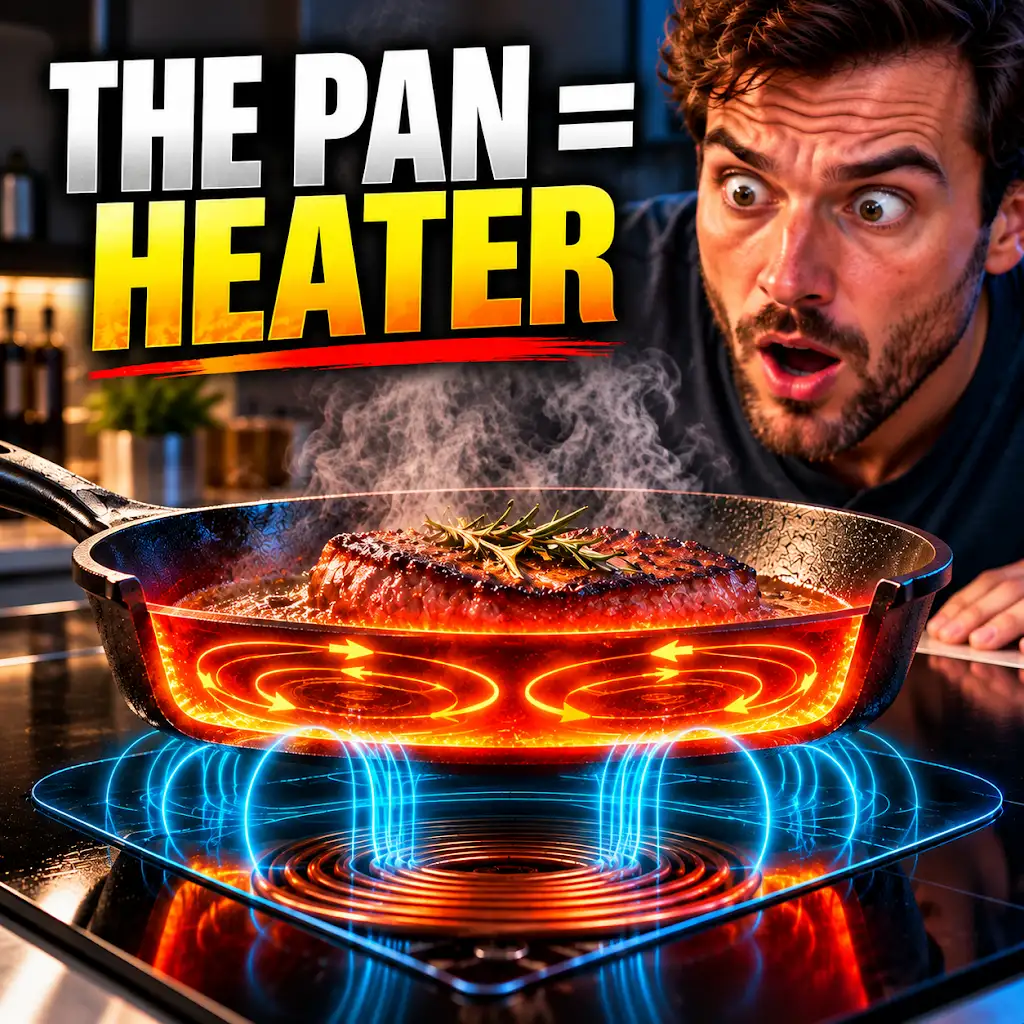
The Pan Is the Heater: How Induction Cooking Really Works
FAQs
What are eddy currents in the context of an induction stove?
Eddy currents are swirling currents of electricity induced within a conductive material, such as the metal cookware used on an induction stove, when exposed to a changing magnetic field.
How do eddy currents heat up the cookware on an induction stove?
Eddy currents generate heat through resistance as they flow within the metal cookware, causing the cookware to heat up rapidly. This heat is then transferred to the food inside the cookware.
Are there any advantages to using an induction stove over traditional gas or electric stoves?
Yes, induction stoves are known for their efficiency as they heat up quickly and provide precise temperature control. They are also safer to use as the cooktop remains cool to the touch, reducing the risk of burns.
Can any type of cookware be used on an induction stove?
Not all cookware is compatible with induction stoves. Cookware must be made of a magnetic material, such as cast iron or stainless steel, in order to generate eddy currents and heat up on the stove.
Are there any safety concerns associated with eddy currents in an induction stove?
Eddy currents themselves do not pose a safety risk, but it is important to be cautious when using induction stoves as the cookware can become very hot. Additionally, individuals with pacemakers should consult with their doctor before using induction stoves, as they generate electromagnetic fields.