The hum of electricity powering our modern lives is so pervasive that it’s easy to forget the energy demands of even seemingly simple devices. Screens, in particular, are notorious energy hogs, constantly refreshing pixels, emitting light, and consuming power. Yet, a revolutionary technology exists that defies this norm: E Ink, also known as electrophoretic ink. These displays, found in e-readers like the Kindle, electronic shelf labels, and even some smartwatches, possess a remarkable ability to remain visible without consuming any power once an image is set. This phenomenon, the magic of E Ink without power, lies in its fundamental design and the ingenious way it mimics the behavior of ink on paper.
The Electrophoretic Dance: How E Ink Mimics Paper
At its core, E Ink is not a light-emitting technology like LCD or OLED. Instead, it is a reflective display, meaning it relies on ambient light to be seen, much like a physical book or newspaper. This fundamental difference is the key to its energy efficiency and unique visual characteristics. The display is composed of millions of microscopic capsules, each about the diameter of a human hair. Within these tiny capsules, charged pigment particles are suspended in a clear fluid. The particles are typically black and white, though color variations are also being developed. When an electric field is applied to these capsules, it causes the charged particles to move.
The Role of Microcapsules and Charged Pigments
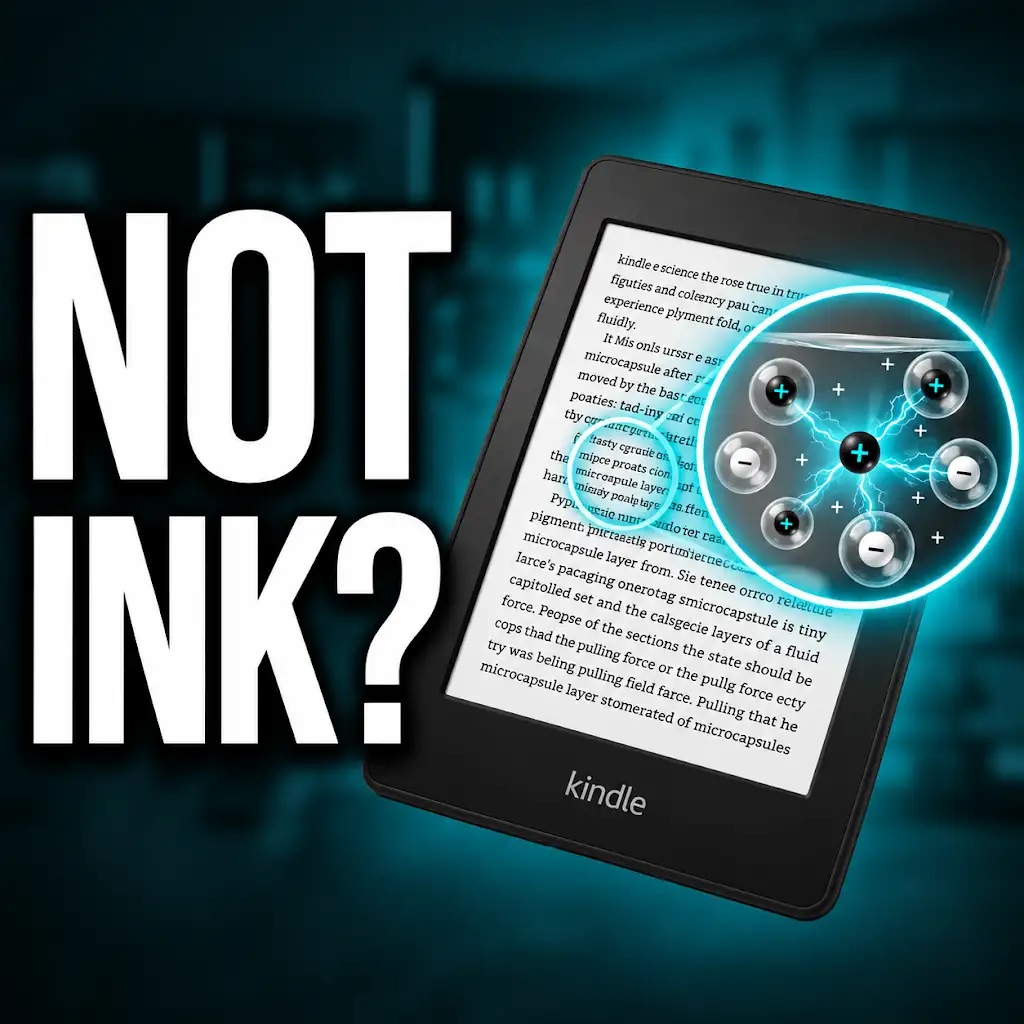
Each microcapsule is a self-contained unit responsible for creating a single pixel’s appearance. Imagine a miniature, transparent sphere filled with a clear liquid and tiny black and white beads, each carrying an opposite electrical charge. When a positive electrical charge is applied to the area of the display beneath a particular microcapsule, the negatively charged black particles are repelled and move to the top of the capsule, while the positively charged white particles are attracted to the bottom. Conversely, when a negative charge is applied, the white particles rise to the surface, and the black particles recede. This controlled movement of pigment particles is the electrophoretic process, the very engine that drives the display’s ability to form images. The precise arrangement and movement of these black and white particles, dictated by the electronic signals, are what create the text and images we see.
The Significance of Ambient Light Reflection
The reflective nature of E Ink is crucial. Unlike self-illuminating displays that generate their own light, E Ink displays bounce ambient light off their surface. This means that in bright sunlight, an E Ink screen can be even more legible than a traditional screen, a stark contrast to the glare issues often faced by LCD and OLED panels. The perceived “brightness” of an E Ink display is actually the ambient light reflecting back to the viewer. When the black particles are at the top of the microcapsules, they absorb light, making that area appear dark. When the white particles are at the top, they scatter and reflect light, making that area appear white. This passive reflection is what allows the display to remain visible without any power consumption for holding a static image.
E-ink technology has revolutionized the way we read and interact with digital content, particularly in environments where power sources are limited. A fascinating article that delves into the potential of e-ink displays without the need for continuous power is available at Freaky Science. This piece explores innovative applications of e-ink in various fields, highlighting its energy efficiency and versatility, making it an ideal choice for sustainable technology solutions.
The Power-Saving Phenomenon: No Refresh, No Power
The most astounding aspect of E Ink technology is its ability to retain an image indefinitely without drawing any power. This is achieved through a clever mechanism that distinguishes it sharply from power-hungry displays. The energy is only consumed when the image needs to change. Once the desired arrangement of pigment particles is achieved within the microcapsules, they remain in that position due to surface tension and the absence of any active force compelling them to move.
Bistability: The Key to Static Image Retention
The principle behind E Ink’s power saving is known as bistability. This means that each microcapsule has two stable states: one where black particles are at the surface and one where white particles are at the surface. Once the electrophoretic process moves the particles to one of these stable states, they will stay there until an external force, namely an electrical signal, intervenes to change their position. There is no continuous electrical current required to maintain the image. It’s akin to setting a switch; once it’s flipped to “on” or “off,” it stays there until someone flips it again. This fundamental property means that once a page of text is displayed on an e-reader, the pixels that form that text are essentially “frozen” in place, requiring no ongoing power to remain visible.
The Energy Cost of Change: Image Refresh Bursts
The only time E Ink displays consume power is during the transition between images, or when a page is turned or updated. This process is called a “refresh.” When an image needs to change, electrical signals are sent to the microcapsules, causing the pigment particles to move to their new positions. This requires a brief burst of energy. For e-readers, this refresh happens relatively infrequently, typically only when a page is turned. The perceived “flickering” or brief flash that some users notice when a page turns on an e-reader is actually the display momentarily resetting itself to clear the old image before displaying the new one. This refresh cycle consumes a small amount of energy, but it is significantly less than the continuous power draw of traditional displays for maintaining a static image. This is why e-readers can operate for weeks on a single charge, a feat unimaginable for a tablet or smartphone with a comparable screen size.
Applications Beyond the E-Reader: Expanding Horizons
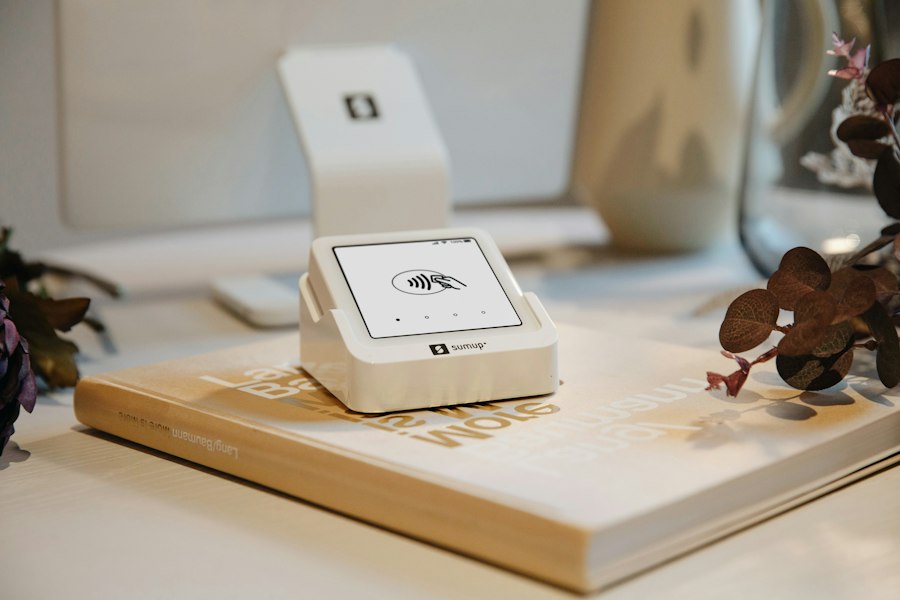
While e-readers are the most well-known application of E Ink technology, its unique power-saving and readability characteristics have led to its adoption in a diverse range of products. The ability to display information continuously without draining a battery opens up possibilities for devices that need to be always-on and highly visible.
Electronic Shelf Labels: Revolutionizing Retail
In the retail sector, E Ink has found a perfect niche in electronic shelf labels (ESLs). Traditional paper price tags are labor-intensive to update and prone to errors. ESLs, powered by E Ink, can be updated wirelessly and in real-time, allowing retailers to change prices, promotions, and product information instantly across an entire store. Because these labels are typically battery-powered and need to remain visible for extended periods, E Ink’s power efficiency is paramount. A single coin-cell battery can power an ESL for months, or even years, making them a highly cost-effective and environmentally friendly alternative to paper tags. The crisp, paper-like appearance also ensures excellent readability for customers, even in brightly lit store environments.
Smartwatches and Wearables: Always-On Information
The trend towards wearable technology has also embraced E Ink. Some smartwatches, particularly those focused on outdoor use or long battery life, feature E Ink displays. These allow for an always-on display of essential information like time, date, and notifications without significantly impacting battery performance. This is a stark contrast to the energy demands of full-color AMOLED displays often found on other smartwatches, which can drain the battery within a day or two if the always-on feature is enabled. E Ink smartwatches can often last for a week or more on a single charge, making them ideal for users who prioritize functionality and longevity over the vibrant graphics of their competitors.
Industrial and IoT Devices: Rugged and Reliable Displays
Beyond consumer electronics, E Ink is finding applications in industrial settings and the Internet of Things (IoT). Devices that need to display status updates, sensor readings, or operational instructions in remote or harsh environments benefit greatly from E Ink’s durability and low power consumption. For example, asset trackers, smart meters, and environmental monitoring equipment can utilize E Ink displays to provide crucial information without needing frequent battery changes or a constant power source. The ruggedness and sunlight readability of E Ink make it suitable for applications where traditional displays would be impractical or prone to damage.
The Visual Experience: Readability and Aesthetics
The unique visual characteristics of E Ink displays are a significant part of their appeal, offering an experience that is distinctly different from other screen technologies. This difference is often cited as a major reason for their adoption in specific applications.
Sunlight Legibility: A True Paper-Like Experience
One of the most lauded benefits of E Ink is its exceptional readability in bright sunlight. As a reflective display, it uses ambient light to illuminate the screen, meaning that the brighter the light, the clearer the image becomes. This is in direct opposition to the challenges faced by backlit LCD and OLED displays, which often suffer from glare and reduced contrast in direct sunlight. For reading outdoors, on a sunny patio, or even near a window, E Ink provides a viewing experience that is remarkably similar to reading a physical book or newspaper, with no eye strain from harsh backlighting.
Reduced Eye Strain: A Comfort for Prolonged Reading
The absence of a backlight and the use of reflective technology significantly reduce eye strain, especially during prolonged reading sessions. Traditional backlit displays emit light directly into the eyes, which can lead to fatigue, dryness, and discomfort over time. E Ink, by mimicking the way we see ink on paper, offers a much gentler visual experience. This has made E Ink displays the dominant technology for dedicated e-readers, as they are specifically designed for comfortable, long-form reading. The stark contrast between dark text and a light background, without the added glow of a backlight, is perceived as more natural and less taxing on the eyes.
Monochrome and Limited Color Palettes: Design Considerations
Historically, E Ink displays have been predominantly monochrome (black and white). While color E Ink technologies have advanced significantly in recent years, they still often feature a more muted and less vibrant color palette compared to full-color displays. This is a design consideration that can be both a limitation and an advantage. For applications where vivid color is not essential, such as displaying text, simple graphics, or status indicators, monochrome or limited-color E Ink is perfectly adequate and maintains the core power-saving benefits. The aesthetic of E Ink, with its matte finish and paper-like texture, also contributes to a distinct visual appeal that many find pleasing and less distracting than the glossy, reflective surfaces of other displays.
E Ink technology has revolutionized the way we read and interact with digital content, particularly in devices like e-readers that require minimal power. A fascinating article discusses how E Ink displays can function without a constant power supply, making them ideal for applications in various fields. For more insights on this innovative technology, you can check out this related article that explores the benefits and potential uses of E Ink in everyday life.
Future Innovations and Challenges
| Metric | Value | Unit | Description |
|---|---|---|---|
| Power Consumption (Static) | 0 | Watts | Power used to maintain an image without refresh |
| Reflectivity | 40-50 | Percent | Percentage of ambient light reflected by e-ink display |
| Contrast Ratio | 10:1 to 15:1 | Ratio | Contrast between black and white states without power |
| Refresh Power Consumption | 0.5 – 1.5 | Watts | Power used during screen refresh or page turn |
| Image Retention Time | Indefinite | Time | Duration image remains visible without power |
| Viewing Angle | 170 | Degrees | Angle at which display can be viewed without distortion |
| Operating Temperature Range | -20 to 60 | °C | Temperature range for reliable operation without power |
While E Ink technology has already achieved significant milestones, its development is far from over. Ongoing research and development are focused on addressing existing limitations and unlocking new possibilities.
Advancements in Color E Ink and Refresh Rates
One of the key areas of innovation in E Ink technology is the development of more vibrant and responsive color displays. Early color E Ink prototypes were often grainy and suffered from slow refresh rates, limiting their applicability. However, recent advancements have introduced more sophisticated color filter arrays and improved particle control, leading to E Ink displays with richer colors and significantly faster refresh times. These improvements are paving the way for E Ink to compete in applications that previously required more traditional displays, such as digital signage, notebooks, and even more interactive mobile devices. The goal is to offer the power-saving benefits of E Ink with the visual richness and responsiveness that consumers have come to expect.
Addressing Durability and Touch Sensitivity
As E Ink finds its way into more rugged and interactive applications, durability and touch sensitivity become increasingly important. While the microcapsules themselves are relatively robust, the substrates and protective layers of E Ink displays can be vulnerable to scratches and impacts. Manufacturers are continuously working on improving the physical resilience of these displays. Furthermore, integrating advanced touch-sensing capabilities without compromising the display’s power efficiency or visual quality is another ongoing challenge. Successful integration of both will be crucial for the widespread adoption of E Ink in interactive devices like digital notebooks and tablets that aim to offer a pen-on-paper feel with the convenience of digital storage and sharing. The journey of E Ink, from a niche technology for e-readers to a versatile display solution, is a testament to its elegant simplicity and profound impact on how we interact with information in an increasingly power-conscious world.
Why Your Kindle Screen Doesn’t Work the Way You Think
FAQs
Can e ink displays work without power?
Yes, e ink displays can maintain an image without power. The technology uses tiny microcapsules filled with positively and negatively charged particles that are rearranged to display different colors and images without the need for a constant power source.
How does an e ink display differ from a traditional LCD screen?
An e ink display differs from a traditional LCD screen in that it does not require a backlight to be visible. E ink displays reflect light just like paper, making them easier on the eyes and more energy-efficient compared to LCD screens.
What are the advantages of using e ink technology?
Some advantages of using e ink technology include lower power consumption, better readability in direct sunlight, and the ability to maintain an image without power. E ink displays are also known for their crisp text and paper-like appearance.
Can e ink displays be used in e-readers and electronic shelf labels?
Yes, e ink displays are commonly used in e-readers like the Amazon Kindle and electronic shelf labels in retail stores. The technology’s low power consumption and high visibility make it ideal for these applications.
Are there any limitations to using e ink displays?
One limitation of e ink displays is their slower refresh rate compared to traditional LCD screens, which can make them less suitable for applications that require fast-moving images or videos. Additionally, e ink displays may have limited color options compared to LCD screens.