
The subtle dance between light and dark on a screen, often taken for granted, is the very foundation of how we perceive information. For electronic displays, this perception is largely governed by their contrast ratio, a metric that dictates the difference between the brightest white and the darkest black the screen can produce. While high contrast ratios are often lauded for their ability to deliver vibrant and dynamic visuals, the unique characteristics of E Ink displays present a compelling case for examining contrast ratio through a different lens, particularly in the context of improving readability in low-light conditions. Unlike emissive displays that generate their own light, E Ink technology relies on ambient light to illuminate its electrophoretic particles, and it is this inherent difference that makes its contrast ratio a crucial factor in its specific strengths.
Understanding E Ink’s Unique Reflective Nature
E Ink displays, often found in e-readers and other specialized devices, operate on a fundamentally different principle than traditional LCD or OLED screens. Instead of emitting light, they mimic the appearance of ink on paper by reflecting ambient light. This fundamental distinction has profound implications for how their contrast ratio is perceived and how it impacts readability, especially when external light sources are scarce.
Electrophoretic Technology: The Black and White Foundation
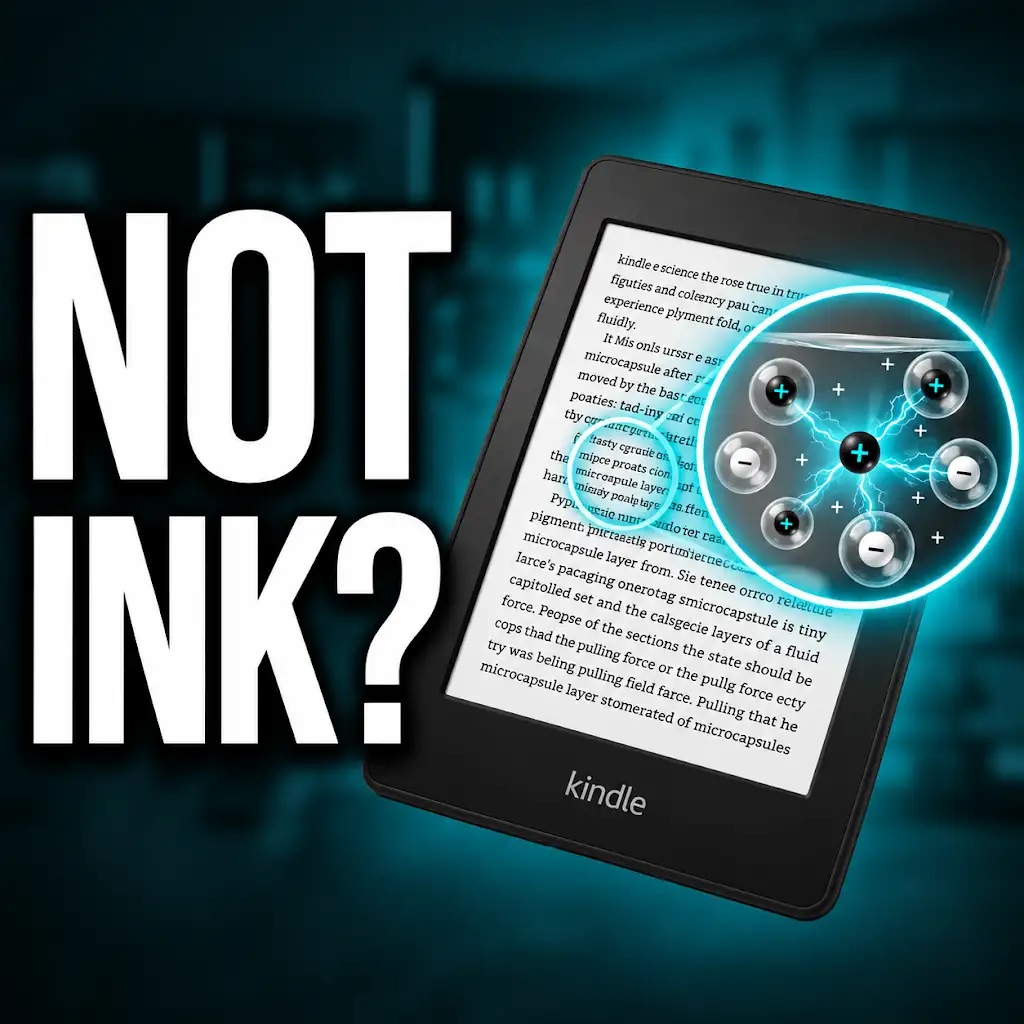
At the heart of E Ink technology lies electrophoresis. The display surface is composed of microcapsules, tiny spheres containing positively charged white particles and negatively charged black particles suspended in a clear fluid. Applying an electric field causes these particles to migrate to the surface of the microcapsule, creating either a white or black pixel. When viewed from a distance, these collections of black and white particles form the characters and images we see. This direct manipulation of light reflection, rather than emission, is the key to E Ink’s paper-like appearance and its inherent energy efficiency, as it only consumes power when the image is changing.
The Absence of Backlighting: A Double-Edged Sword for Contrast
The absence of a backlight, a defining characteristic of E Ink, is a significant factor in its performance. On one hand, it eliminates the eye strain associated with prolonged exposure to self-emissive screens, making it ideal for extended reading sessions. On the other hand, it means that the display’s brightness and contrast are entirely dependent on the external light available. In bright sunlight, E Ink displays can excel, often appearing clearer and more legible than backlit screens that suffer from glare. However, in low-light environments, the reliance on ambient light becomes a critical challenge, and it is here that the E Ink’s contrast ratio plays a pivotal role in determining readability.
Defining Contrast Ratio in Reflective Displays
The traditional definition of contrast ratio, as the difference between the maximum and minimum luminance, becomes nuanced when applied to reflective displays. For E Ink, contrast ratio is less about the absolute luminance of black and white pixels and more about the difference in reflectivity between the two. A higher contrast ratio in an E Ink display signifies a greater distinction between the areas that reflect light (white) and those that absorb it (black). This greater distinction is crucial for separating text from its background, a fundamental requirement for legibility.
The contrast ratio of E Ink displays is a crucial factor that affects readability and overall user experience. For a deeper understanding of how contrast ratios influence the performance of E Ink technology, you can refer to this insightful article on the topic. It provides a comprehensive analysis of various display technologies and their respective contrast ratios, which can be particularly beneficial for those interested in the advancements of E Ink displays. To read more, visit this article.
The Impact of E Ink Contrast Ratio on Low-Light Readability
In environments where ambient light is limited, the ability of an E Ink display to create a clear separation between text and background becomes paramount. A high contrast ratio on an E Ink screen can significantly mitigate the challenges posed by dim lighting, offering a superior reading experience compared to a display with poor contrast in the same conditions.
Text Clarity and Character Definition
For E Ink, a high contrast ratio directly translates to sharper, more defined text. When the difference between the black and white particles is pronounced, the edges of characters appear crisper, and the individual strokes are more distinct. In low light, where the eye is already struggling to perceive fine details, this enhanced character definition is crucial. A low contrast ratio can lead to fuzzy or blurred text, making it difficult to distinguish between similar letters (like “o” and “c”) and increasing the cognitive load on the reader. This can result in slower reading speeds and increased fatigue.
Reduced Eye Strain and Improved Comfort
The paper-like quality of E Ink displays, amplified by a good contrast ratio, contributes to reduced eye strain, particularly in low-light conditions. Unlike backlit displays that can emit a harsh, direct light, E Ink reflects ambient light. When the contrast is strong, the illuminated text stands out clearly against the background without requiring the reader to actively squint or strain their eyes to discern the characters. This is especially important for individuals with vision impairments or those who spend extended periods reading. A higher contrast ratio means less effort is needed to process the visual information, leading to a more comfortable and enjoyable reading experience.
The Role of Ambient Light in Perception
It is important to reiterate that E Ink’s contrast ratio is not an absolute measure but is perceived in conjunction with available ambient light. In very dim conditions, even a display with a high native contrast ratio might struggle if there is insufficient ambient light to reflect. Conversely, a display with a moderate contrast ratio might perform adequately in moderately dim light if there is a good quality light source available. The ideal scenario for E Ink readability in low light involves a high contrast ratio coupled with an appropriate, preferably front-lit, light source.
Factors Influencing E Ink Contrast Ratio
Several technological and design choices influence the contrast ratio achievable by E Ink displays. Understanding these factors provides insight into how manufacturers strive to optimize performance, especially for low-light scenarios.
Microcapsule Technology and Particle Properties
The physical characteristics of the microcapsules and the electrophoretic particles within them are fundamental to the achievable contrast ratio. The size, shape, and material composition of both the white and black particles affect their ability to migrate and their reflectivity. Smaller, more uniformly sized particles can contribute to sharper image formation and a greater distinction between black and white. The pigment quality of the particles also plays a significant role; richer, deeper blacks and brighter whites will inherently lead to a higher contrast ratio.
Refresh Rate and Ghosting Phenomena
While not directly a contrast ratio setting, the refresh rate of an E Ink display and the phenomenon of ghosting can indirectly impact the perception of contrast, particularly in dynamic content or when transitioning between images. Older E Ink technologies or displays with slower refresh rates could exhibit “ghosting,” where remnants of previous images linger on the screen. This can reduce the clarity of new content and make it appear less distinct, effectively lowering the perceived contrast. Modern E Ink implementations have significantly improved in this regard, minimizing ghosting for a cleaner visual experience.
Display Layering and Surface Treatments
The construction of the E Ink display itself, including the layers of material between the electrophoretic layer and the viewer, can influence contrast. Anti-glare coatings, for example, are crucial for reducing reflections from external light sources, which can wash out the E Ink image. However, overly aggressive anti-glare treatments could potentially reduce the overall brightness of the reflected light, subtly impacting contrast. The transparency of the cover glass and other protective layers also plays a role in ensuring that the maximum amount of reflected light reaches the viewer.
Strategies for Enhancing E Ink Low-Light Readability
While E Ink’s inherent reflectivity presents challenges in low light, several strategies have been developed to enhance readability, often focusing on augmenting the ambient light available to the display.
Integrated Front Lighting Systems
The most significant advancement in E Ink low-light readability has been the integration of front lighting systems. Unlike the backlighting found in LCDs, front lights are positioned along the edge of the display and shine light across the surface. This illuminates the E Ink screen without directly shining into the reader’s eyes, preserving the paper-like quality and minimizing eye strain. These lights are typically adjustable in brightness and often feature a warm or cool color temperature setting, allowing users to further fine-tune their reading experience for optimal contrast and comfort.
Ambient Light Sensors and Adaptive Brightness
Many modern E Ink devices incorporate ambient light sensors. These sensors can detect the surrounding light levels and automatically adjust the brightness of the integrated front light. In low-light conditions, the front light will increase its output, providing the necessary illumination for the E Ink particles to be clearly visible and for the contrast ratio to be effectively leveraged. This adaptive brightness ensures that the display is always optimized for the current environment, reducing the need for manual adjustments and further enhancing the user experience.
User-Adjustable Contrast and Brightness Settings
Beyond automated systems, many E Ink devices offer manual controls for contrast and brightness. While the underlying E Ink technology dictates the maximum achievable contrast ratio, users can often fine-tune the intensity of the front light. This allows individuals to find the perfect balance for their specific reading preferences and the ambient conditions. Some advanced settings might even allow for more granular control over the pixel activation, though this is less common and more of an engineering feat.
When exploring the advancements in e-ink technology, one crucial aspect to consider is the contrast ratio of e-ink displays, which significantly affects readability and user experience. A related article that delves into this topic can be found at Freaky Science, where various factors influencing display performance are discussed in detail. Understanding these elements can help consumers make informed choices when selecting e-readers or other devices that utilize e-ink technology.
The Future of E Ink Contrast and Low-Light Performance
| e Ink Display Model | Contrast Ratio | Display Size | Resolution | Typical Usage |
|---|---|---|---|---|
| e Ink Carta | 10:1 | 6 inches | 1448 x 1072 | E-readers |
| e Ink Pearl | 8:1 | 6 inches | 800 x 600 | E-readers |
| e Ink Mobius | 10:1 | 6.8 inches | 1440 x 1080 | E-readers, Note-taking devices |
| e Ink Kaleido (Color) | 7:1 | 6 inches | 1448 x 1072 | Color e-readers |
| e Ink Advanced Color ePaper (ACeP) | 5:1 | 13.3 inches | 2200 x 1650 | Color signage and displays |
The ongoing evolution of E Ink technology promises further improvements in contrast ratio and, consequently, enhanced readability in all lighting conditions, including low light.
Next-Generation E Ink Technologies
Manufacturers are continually developing new generations of E Ink displays with improved particle formulations, enhanced microcapsule designs, and more sophisticated control electronics. These advancements aim to achieve deeper blacks, brighter whites, and faster refresh rates, all of which contribute to a higher and more impactful contrast ratio. Emerging technologies like Kaleido, which introduces color to E Ink, also present new challenges and opportunities in achieving optimal contrast across a broader spectrum.
The Synergistic Relationship with Advanced Lighting
The future of E Ink in low-light reading is not solely dependent on the display technology itself but also on the continued innovation in integrated lighting systems. The development of more uniform and efficient front lighting, perhaps with even finer control over color temperature and intensity, will further complement the strengths of E Ink displays with high contrast ratios. This synergistic relationship between display and lighting technology is crucial for pushing the boundaries of what E Ink can achieve in terms of visual comfort and legibility.
Expanding Applications Beyond E-Readers
As E Ink technology matures and its contrast ratio capabilities improve, its applications are expanding beyond e-readers. Digital signage, smart labels, and even some secondary displays on smartphones are leveraging E Ink’s unique advantages. In these diverse applications, achieving excellent readability in a variety of lighting conditions, including dimly lit retail environments or offices, will remain a critical factor, underscoring the enduring importance of E Ink’s contrast ratio.
Why Your Kindle Screen Doesn’t Work the Way You Think
FAQs
What is contrast ratio in an e ink display?
Contrast ratio in an e ink display refers to the difference between the brightest white and the darkest black that the screen can produce. It is a measure of the display’s ability to show details and text clearly.
How does contrast ratio affect readability on an e ink display?
A higher contrast ratio on an e ink display results in sharper and clearer text and images, making it easier to read content on the screen, especially in different lighting conditions.
What factors can impact the contrast ratio of an e ink display?
The contrast ratio of an e ink display can be influenced by factors such as the quality of the display panel, the lighting conditions in which it is viewed, and the age of the screen.
Is a higher contrast ratio always better in an e ink display?
While a higher contrast ratio generally indicates better image quality and readability, extremely high contrast ratios may not always be necessary for all users and can sometimes lead to increased power consumption.
Can the contrast ratio of an e ink display be adjusted by the user?
Some e ink displays may offer settings that allow users to adjust the contrast ratio to suit their preferences or optimize readability based on the lighting conditions in which the device is being used.