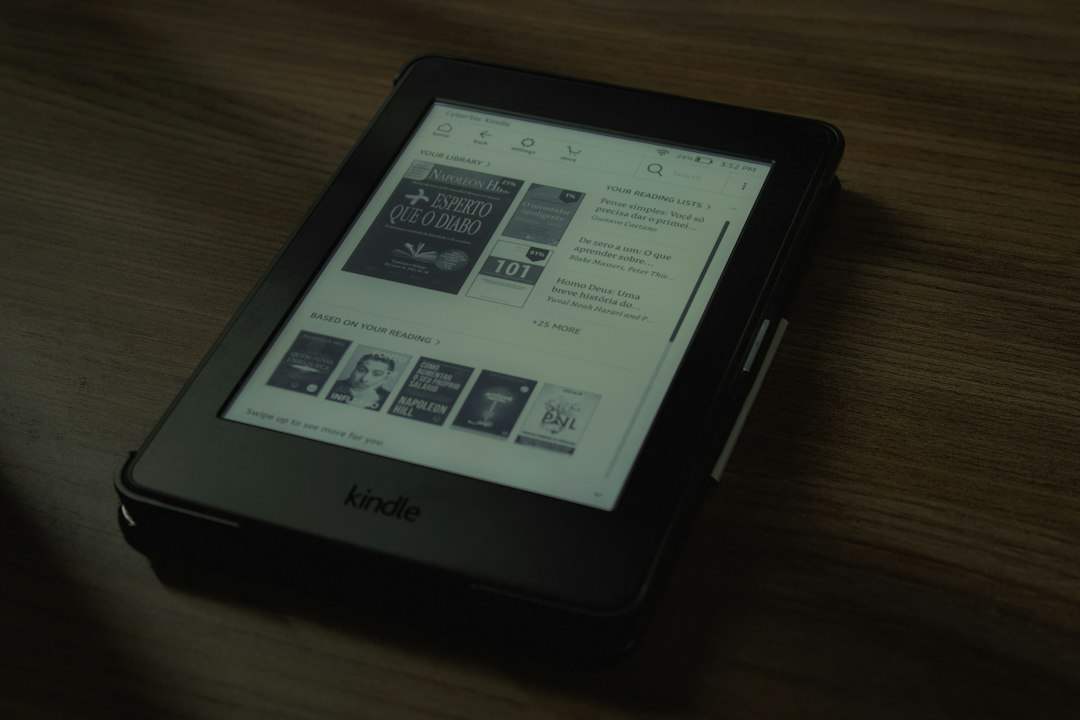
The soft glow of a backlit LED screen has become ubiquitous in modern life, a constant companion from smartphones and laptops to televisions and smartwatches. Yet, for all its ubiquity, this emitted light can also be a source of eye strain, a drain on battery life, and a limitation in bright outdoor conditions. Enter E Ink, a display technology often synonymous with Amazon’s Kindle e-readers, which offers a radically different approach. E Ink’s signature paper-like appearance, remarkable power efficiency, and superior outdoor readability are no longer confined to the pages of digital books. Today, this innovative technology is quietly, yet profoundly, transforming the landscape of digital displays beyond the realm of dedicated e-readers, offering compelling alternatives for a diverse range of applications.
The Fundamental Advantages of Electrophoretic Displays
At its core, E Ink is a type of electrophoretic display (EPD). Unlike emissive displays like LCD or OLED, which generate their own light, E Ink displays are reflective, meaning they utilize ambient light to be seen. This fundamental difference underpins many of its inherent advantages. The technology relies on microcapsules, tiny spheres containing charged black and white particles suspended in a clear fluid. When an electric field is applied, these particles move to the surface of the microcapsule, creating either a black or white pixel. This bistable nature means that once an image is set, it requires no further power to be maintained, leading to unparalleled energy efficiency for static content. This fundamental difference from traditional displays is the bedrock upon which its new wave of applications is built.
Unmatched Power Efficiency for Static Content
The most celebrated attribute of E Ink technology is its astonishing power efficiency, particularly when displaying static information. Traditional displays, even when showing a static image, continuously draw power to maintain the light emitted by their pixels. This is akin to keeping a light bulb on even when the room is bright. E Ink, however, operates on a different principle. Once a change is made to the display – an image is updated, text is rewritten – the particles settle into their new positions, and that configuration requires virtually no power to sustain. This “bistable” nature means that a device utilizing an E Ink display can remain on for weeks or even months on a single charge if the content is not frequently changing. This is a game-changer for devices that need to provide information consistently without the need for constant charging. Consider the implications for smart signage, electronic shelf labels, and even battery-powered sensors that need to convey status updates. The elimination of frequent recharging cycles dramatically reduces operational costs and enhances user convenience, making E Ink an attractive proposition for environments where power outlets are scarce or impractical.
The Comfort of Reading Like Paper
The visual experience offered by E Ink is perhaps its most compelling and widely appreciated feature. The matte, non-emissive surface mimics the appearance of ink on paper, significantly reducing glare and eye strain compared to backlit screens. This is a crucial distinction for extended reading sessions. Backlit displays emit light directly into the user’s eyes, which can lead to discomfort, dryness, and fatigue over time. E Ink, by reflecting ambient light, provides a much gentler viewing experience, making it ideal for digital books, textbooks, and any application where prolonged visual engagement is required. This paper-like quality also contributes to excellent readability in bright sunlight, a common challenge for conventional displays that become washed out and difficult to see under direct illumination. For anyone who has struggled to read a tablet screen at the beach or a smartphone in direct sunlight, the clarity and contrast offered by E Ink are a revelation. This ergonomic advantage is not just a comfort; it can also lead to improved comprehension and retention of information, particularly in educational or professional settings.
E Ink technology has evolved significantly beyond its initial application in devices like the Kindle, leading to innovative uses in various industries. For a deeper understanding of how E Ink is being utilized in areas such as signage, smart labels, and even fashion, you can explore this insightful article: E Ink Beyond Kindle. This resource highlights the versatility and potential of E Ink displays in enhancing user experiences across different platforms.
Expanding Horizons: E Ink Beyond E-Readers
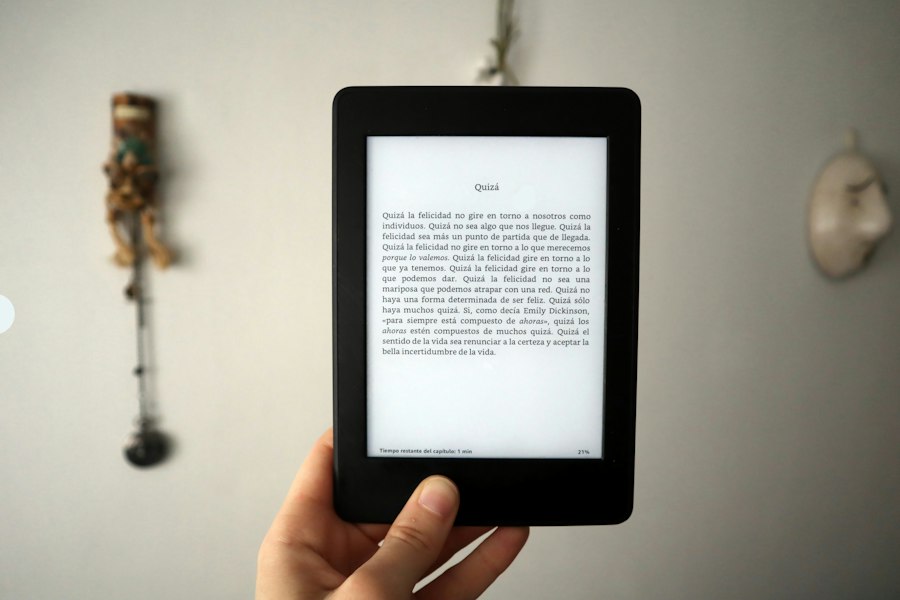
While the Kindle popularized E Ink, its limitations in refresh rates and color reproduction initially confined it to single-purpose reading devices. However, advancements in E Ink’s underlying technology have dramatically expanded its capabilities, paving the way for its adoption in a much wider array of applications where its unique advantages can shine. These innovations have addressed previous drawbacks and unlocked new possibilities for designers and engineers seeking to create more energy-efficient, comfortable, and visually appealing digital displays.
Smart Signage and Public Information Displays
The energy efficiency and sunlight readability of E Ink make it an ideal candidate for public signage and information displays, especially in outdoor or high-traffic environments. Imagine bus stop schedules that update wirelessly and are always visible, airport departure boards that consume minimal power, or retail store directories that can be easily changed remotely. Unlike traditional LED or LCD screens that require significant power and can be prone to overheating, E Ink displays offer a robust and eco-friendly alternative. They can be deployed in locations where power infrastructure is limited or costly to install, significantly reducing installation and maintenance expenses. Furthermore, the static nature of the display means that once information is set, it remains visible without consuming power, making it perfect for applications where content changes periodically but does not require constant animation. This also contributes to a more sustainable digital infrastructure, reducing the overall energy footprint of public information systems. The ability to remotely update content without physical intervention is another significant advantage, streamlining operations for businesses and municipalities.
Electronic Shelf Labels (ESLs) in Retail
The retail sector has embraced E Ink for electronic shelf labels (ESLs) with remarkable success. These small, low-power displays replace traditional paper price tags, allowing retailers to update prices and product information instantly and remotely. This eliminates the labor-intensive process of manually changing thousands of price tags and significantly reduces errors. Moreover, ESLs enable dynamic pricing strategies, allowing retailers to adjust prices in real-time based on demand, promotions, or competitor pricing. This agility can lead to increased sales and improved profit margins. The power efficiency of E Ink means that ESLs can operate for years on a single battery, further reducing operational costs and environmental impact. The visual consistency of E Ink also ensures that all shelf labels maintain a clean and professional appearance, enhancing the overall shopping experience. Beyond just price, ESLs can display other crucial information such as product availability, nutritional facts, or promotional messages, transforming the humble price tag into an interactive marketing tool. The scalability of E Ink solutions makes them suitable for both small independent stores and large supermarket chains, offering a flexible and future-proof approach to in-store merchandising.
E Ink technology has evolved significantly beyond its initial application in Kindle devices, finding its way into various innovative products that enhance user experience. For instance, a recent article discusses how E Ink displays are being utilized in electronic shelf labels, enabling retailers to update prices in real-time and improve inventory management. This advancement showcases the versatility of E Ink technology in different industries. To learn more about these exciting developments, you can read the full article here.
Wearable Technology and Smartwatches
The integration of E Ink into wearable devices, particularly smartwatches, represents a significant leap in practicality. Traditional smartwatches, with their vibrant but power-hungry OLED or LCD screens, often struggle to last more than a day or two on a single charge. By incorporating E Ink displays, manufacturers can significantly extend battery life, allowing users to wear their devices for days or even weeks without needing to recharge. This is especially beneficial for fitness trackers and smartwatches that are intended for continuous wear. While full-color E Ink has advanced considerably, even monochrome E Ink excels at displaying essential information like time, notifications, and activity metrics with exceptional clarity and minimal power consumption. This allows for a more seamless and less interrupted user experience, removing the anxiety of a dying battery during a critical workout or a busy day. The reflective nature of E Ink also means that these wearables are highly visible in direct sunlight, a common scenario for active individuals. The continued development of higher refresh rates and more sophisticated color palettes in E Ink technology promises even more versatile wearable applications in the future.
Technological Advancements Driving E Ink’s Evolution

The widespread adoption of E Ink beyond its initial niche is a direct result of continuous innovation in its underlying technology. These advancements have focused on improving key performance metrics, making the displays more versatile and appealing for a broader range of applications. The evolution from basic monochrome displays to more vibrant and dynamic solutions has been crucial in breaking down previous barriers.
Enhanced Color Capabilities and Refresh Rates
Early E Ink displays were predominantly monochrome, limiting their application to text-based content. However, significant progress has been made in developing color E Ink technologies. These newer displays, such as E Ink Kaleido™ and E Ink Gallery™ palettes, utilize color filters or multiple layers of microcapsules to achieve a wider spectrum of colors. While not yet matching the vibrancy and refresh rates of OLED or LCD for video content, these color E Ink displays offer a compelling balance for applications that benefit from visual information, such as comics, magazines, or product information with color-coded details. Equally important has been the improvement in refresh rates. While still slower than emissive displays, E Ink’s refresh technology has advanced to a point where animations and transitions are becoming smoother, making them more viable for interactive applications where occasional dynamic updates are needed. This progress has been crucial in moving E Ink from static signage to more interactive interfaces.
Improved Durability and Flexibility
Beyond the visual and electrical characteristics, E Ink technology has also seen advancements in its physical properties. Newer generations of E Ink displays are becoming more durable and even flexible. This opens up possibilities for integration into curved surfaces, ruggedized devices, and applications where impact resistance is a concern. Flexible E Ink displays can be integrated into materials like textiles or thin plastic substrates, leading to innovative designs for smart clothing, portable displays that can be rolled up, or even integrated into packaging that provides dynamic information. The inherent robustness of E Ink, being less susceptible to damage from drops or scratches compared to glass-based displays, further enhances its appeal for demanding environments. This growing versatility in form factor allows designers to rethink the very nature of digital displays, moving beyond rigid rectangles to more organic and adaptable solutions.
The Future of Display Technology: E Ink’s Growing Role
As the demand for more sustainable, user-friendly, and versatile digital displays continues to grow, E Ink is poised to play an increasingly significant role. Its unique advantages, coupled with ongoing technological advancements, are positioning it as a compelling alternative and a complementary technology to traditional emissive displays. The trajectory of E Ink suggests a future where it is no longer a niche technology but a mainstream option for a wide spectrum of digital interactions.
Seamless Integration into the Internet of Things (IoT)
The Internet of Things (IoT) ecosystem is characterized by a vast network of interconnected devices, many of which require low-power, persistent displays for monitoring and interaction. E Ink technology is a natural fit for many IoT applications. Think of smart home devices that display temperature and humidity readings, industrial sensors that show operational status, or agricultural monitoring systems that provide real-time data in the field. The ability of E Ink to operate for extended periods without battery replacement or access to power outlets is critical for the widespread deployment and long-term viability of many IoT solutions. Furthermore, the unobtrusive visual appearance of E Ink allows these devices to blend more seamlessly into their environments, avoiding the aesthetic disruption often associated with brightly lit screens. The future of IoT hinges on efficient, reliable, and unobtrusive data presentation, and E Ink is exceptionally well-suited to meet these demands.
Sustainability and Environmental Considerations
In an era of increasing environmental awareness, the energy efficiency of E Ink technology presents a significant sustainability advantage. By drastically reducing power consumption, E Ink contributes to lower carbon emissions associated with electricity generation. Its long lifespan, particularly in applications with infrequent content updates, also means fewer devices need to be manufactured and disposed of, reducing electronic waste. The development of more recyclable materials and manufacturing processes for E Ink further enhances its environmental credentials. As consumers and corporations alike prioritize eco-friendly solutions, the inherent sustainability of E Ink is becoming a powerful differentiator, driving its adoption in a world increasingly focused on reducing its ecological footprint. This commitment to sustainability is not just a marketing advantage; it represents a fundamental alignment with global efforts to create a more responsible and resource-conscious technological future.
The journey of E Ink from a niche e-reader technology to a transformative force in digital displays is a testament to ongoing innovation and a growing appreciation for its inherent advantages. As advancements continue, the paper-like comfort, exceptional power efficiency, and remarkable outdoor readability of E Ink will undoubtedly reshape how we interact with digital information across an ever-expanding range of devices and environments. The future of displays is not solely about emitting more light, but also about presenting information intelligently, sustainably, and in a manner that is inherently more harmonious with the human experience.
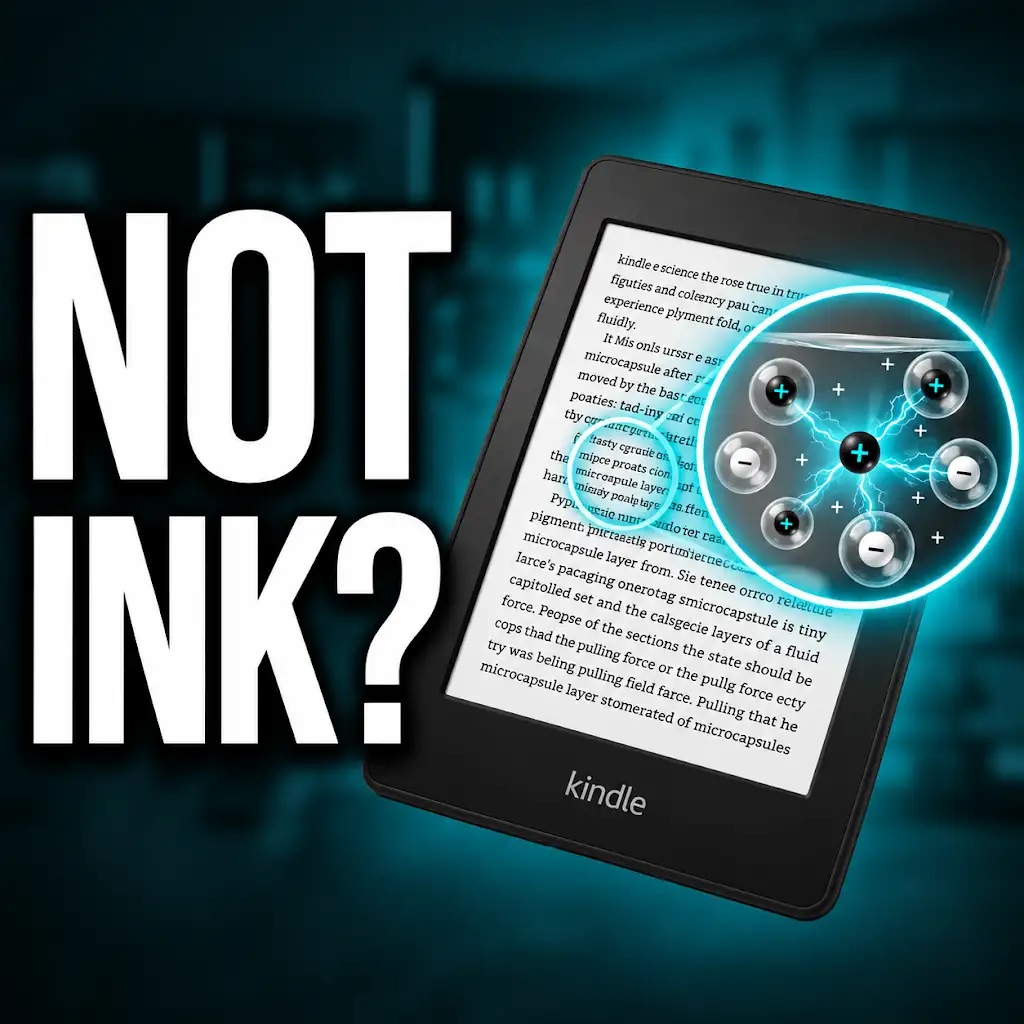
Why Your Kindle Screen Doesn’t Work the Way You Think
FAQs
What is e ink technology?
E ink technology is a type of electronic paper display that mimics the appearance of ink on paper. It is commonly used in e-readers like the Kindle due to its low power consumption and high readability in various lighting conditions.
How does e ink differ from traditional LCD screens?
E ink displays do not emit light like traditional LCD screens, which means they are not backlit. Instead, e ink relies on ambient light to be visible, making it easier on the eyes and more energy-efficient.
Can e ink displays show color?
While early e ink displays were limited to black and white, newer versions can display grayscale and limited color. However, full-color e ink displays are still in development and not as common as black and white versions.
What are some potential applications of e ink technology beyond e-readers?
E ink technology can be used in various applications beyond e-readers, such as digital signage, smart labels, electronic shelf labels, and wearable devices. Its low power consumption and high visibility make it ideal for these applications.
How does e ink technology contribute to sustainability?
E ink technology is considered more sustainable than traditional displays because it consumes less power, leading to longer battery life and reduced energy consumption. Additionally, e ink displays do not contain harmful substances like mercury, making them more environmentally friendly.