The scientific community often grapples with evolving theories, and the concept known as “Dark Oxygen” is no exception. While initially proposed with intriguing implications for understanding atmospheric chemistry, it has faced significant scrutiny and debate, leading to a robust body of counter-arguments and alternative explanations. The Dark Oxygen theory, in essence, suggests the existence of an oxygen species or compound that is not readily detectable by conventional spectroscopic methods, yet purportedly plays a role in certain atmospheric phenomena. However, a closer examination of the evidence and theoretical underpinnings reveals numerous challenges and discrepancies, prompting a detailed disputation of its validity.
The origins of the Dark Oxygen theory are rooted in observations that seemed to defy conventional chemical understanding. Scientists, attempting to explain anomalies in atmospheric measurements, particularly concerning the behavior of oxygen in specific environments, began to hypothesize about an unseen or “dark” form of oxygen. This dark oxygen was posited to interact in ways that standard diatomic oxygen (O2) or ozone (O3) could not account for.
Early Anomalies and Unexplained Phenomena
Initial proponents of the Dark Oxygen theory pointed to various atmospheric puzzles. These included unexplained energy budget discrepancies, unusual reaction rates in certain atmospheric layers, and peculiar spectral absorptions that couldn’t be definitively attributed to known species. The idea was that a stable, yet spectroscopically silent, oxygen-containing molecule or radical could bridge these gaps.
The Spectroscopic Challenge
The very premise of “dark” oxygen presents a fundamental scientific hurdle. Much of our understanding of atmospheric composition relies on spectroscopy – the study of how matter interacts with electromagnetic radiation. Different molecules absorb and emit light at characteristic wavelengths, creating unique spectral “fingerprints.” The concept of a significant atmospheric component being entirely “dark” implies it would not interact with a broad range of electromagnetic radiation, making its detection and characterization exceedingly difficult, if not impossible, with current technologies.
The dark oxygen theory, which posits that certain forms of oxygen may exist in a state that is not detectable by conventional means, has sparked considerable debate within the scientific community. Critics argue that the theory lacks empirical support and fails to account for established principles of chemistry and physics. For a deeper exploration of the controversies surrounding this theory, you can read the related article at Freaky Science, which discusses various perspectives and the implications of dark oxygen on our understanding of atmospheric science.
Critiques of Spectroscopic Evidence
The primary pillar of scientific evidence rests on observable and measurable phenomena. When scientific theories are challenged, the focus often shifts to the validity and interpretation of the supporting evidence. In the case of Dark Oxygen, the lack of direct spectroscopic evidence is a significant point of contention.
The Absence of Direct Detection
Despite numerous sophisticated spectroscopic instruments deployed in atmospheric research, no definitive spectral signature attributable to Dark Oxygen has ever been unambiguously identified. This absence, in itself, is a powerful argument against its existence. Scientific theories are built upon reproducible observations, and the inability to detect this proposed species raises serious doubts about its presence.
Interfering Signals and Artifacts
Proponents might argue that the signals are subtle and masked by other atmospheric constituents or instrumental noise. However, atmospheric scientists are highly skilled at distinguishing real signals from artifacts. The rigorous calibration and validation processes for atmospheric instruments are designed to minimize such issues. Furthermore, if Dark Oxygen were present in significant quantities, it is highly probable that some of its spectral features, even if weak or in specific atmospheric windows, would have been detected by now.
Reinterpreting Existing Spectral Data
Many of the anomalies that initially fueled the Dark Oxygen theory can be re-examined and explained through the lens of known atmospheric chemistry and physics.
The Role of Metastable States
One avenue of explanation for certain energy anomalies lies in the concept of metastable states of known molecules. These are excited states that persist for a measurable time before returning to their ground state, releasing energy. While not a “new” oxygen species, metastable O2 or O3 could, under specific conditions, account for some of the observed energy discrepancies without requiring the existence of a truly novel and undetectable entity.
Photochemical Complexities
Atmospheric photochemistry is incredibly complex, involving numerous intermediate species and reactions. The interplay of sunlight, trace gases, and aerosols can lead to a cascade of reactions that are not always fully understood. Anomalies attributed to Dark Oxygen may, in fact, be manifestations of poorly understood but ultimately conventional photochemical pathways.
Theoretical Inconsistencies and Chemical Plausibility
Beyond the observational challenges, the theoretical underpinnings of Dark Oxygen also face considerable scrutiny. Chemical theories must adhere to fundamental principles of chemical bonding, thermodynamics, and kinetics.
The Stability Problem
A key question for any proposed chemical species is its thermodynamic stability. For Dark Oxygen to exist in the atmosphere in significant quantities and for extended periods, it would need to be thermodynamically stable under atmospheric conditions. This stability is challenged by the high reactivity of oxygen. Oxygen, in its elemental form, is a potent oxidizing agent, readily reacting with most other elements and compounds. A hypothetical “dark” oxygen species would likely need to possess unusually strong chemical bonds or unique electronic configurations to remain unreactive and thus undetectable, yet still be capable of participating in the proposed atmospheric processes.
Bonding Energetics
The bonding energies of known oxygen-containing molecules are well-established. Any new oxygen species would need to fit within the existing framework of chemical bonding theory. Proposing a species with exceptionally high bond strength that somehow evades all known detection methods presents a significant theoretical hurdle.
Reaction Pathways and Kinetics
If Dark Oxygen participates in atmospheric reactions, its kinetic behavior should also be predictable. The rates at which it forms, reacts, and decomposes are governed by fundamental kinetic principles. The lack of observable reaction pathways that are uniquely explained by Dark Oxygen further weakens the theory.
Alternative Reaction Mechanisms
Many proposed reaction mechanisms involving Dark Oxygen can often be explained by alternative pathways involving known species, albeit sometimes under less common conditions or with more complex intermediates. The principle of parsimony, or Occam’s Razor, suggests that the simplest explanation that fits the data is usually the best. In this context, invoking a novel, undetectable species is less parsimonious than elaborating on the complexities of known atmospheric chemistry.
Exploring Alternative Explanations

The scientific process thrives on proposing hypotheses and then rigorously testing them, often leading to the refinement or rejection of initial ideas. The persistent challenges to the Dark Oxygen theory have spurred the exploration of alternative, more conventional explanations for the observed atmospheric anomalies.
Advanced Atmospheric Modeling
Modern atmospheric models are increasingly sophisticated, incorporating a vast array of chemical and physical processes. These models can simulate atmospheric conditions with remarkable accuracy and are continually being updated as our understanding of atmospheric science grows.
Parameterizations and Sub-grid Scale Processes
Some anomalies might arise from limitations in current models, particularly in representing complex microphysical or chemical processes that occur at scales too small to be explicitly resolved. The use of parameterizations – simplified representations of these processes – can sometimes introduce discrepancies that might be misinterpreted.
Unknown Intermediates and Trace Species
The atmosphere contains a multitude of trace gases and intermediate species that are present in very low concentrations and can be difficult to detect. It is plausible that some of the unexplained phenomena are due to the presence and reactivity of such species, rather than a fundamentally “dark” form of oxygen.
Radical Chemistry
Atmospheric radical chemistry, involving highly reactive species with unpaired electrons, is a particularly active area of research. Unaccounted-for radical reactions could explain certain observed rates and energy transfers.
Isotopic Anomalies
Another potential area of investigation for unusual atmospheric oxygen behavior lies in isotopic ratios. While not directly related to a “dark” species, variations in the ratios of oxygen isotopes (e.g., 16O, 17O, 18O) can provide clues about the origins and processes of atmospheric oxygen. Some anomalies might be misattributed to a novel oxygen form when they are, in fact, related to subtle isotopic fractionation processes.
The dark oxygen theory, which suggests that certain forms of oxygen may exist in a state that contributes to dark matter, has faced significant scrutiny within the scientific community. Critics argue that the theory lacks empirical support and fails to align with established principles of chemistry and physics. For a deeper understanding of the controversies surrounding this theory, you can explore a related article that discusses various scientific perspectives on the matter. This article provides insights into why many researchers remain skeptical about the validity of the dark oxygen theory. You can read more about it here.
The Burden of Proof and Scientific Consensus
| Reasons for Dispute | Explanation |
|---|---|
| Lack of Evidence | Some scientists argue that there is not enough evidence to support the dark oxygen theory. |
| Alternative Explanations | Other theories, such as the impact hypothesis, provide alternative explanations for the observed phenomena. |
| Conflicting Data | There are conflicting data and interpretations of the data that challenge the dark oxygen theory. |
| Unanswered Questions | There are still unanswered questions and uncertainties surrounding the dark oxygen theory. |
In science, the burden of proof lies with the proponent of a new theory. Extraordinary claims require extraordinary evidence, and the Dark Oxygen theory, with its invocation of an undetectable atmospheric component, certainly qualifies as an extraordinary claim.
The Need for Reproducible and Direct Evidence
Until direct, reproducible evidence for Dark Oxygen emerges, the scientific community will continue to operate under the assumption that its existence is not supported by current data. This does not mean that scientists are closed to new discoveries, but rather that new theories must be rigorously tested and validated against empirical evidence.
Peer Review and Replication
The cornerstone of scientific progress is peer review and independent replication. For the Dark Oxygen theory to gain traction, it would need to withstand intense scrutiny from the scientific community and be independently verified by multiple research groups.
The Evolution of Scientific Understanding
It is important to acknowledge that scientific understanding is not static. Theories are refined, challenged, and sometimes overturned as new evidence comes to light. However, the current evidence, or rather the lack thereof, strongly suggests that the Dark Oxygen theory, as initially proposed, does not accurately reflect the composition and behavior of our atmosphere. The focus of atmospheric research remains on unraveling the complexities of known chemical and physical processes, and until compelling evidence to the contrary is presented, the “darkness” surrounding this proposed oxygen species is more likely a reflection of our current, albeit incomplete, understanding, rather than the presence of an entirely new and undetectable atmospheric constituent. The scientific community continues to actively research and debate these complex issues, always striving for a more complete and accurate picture of the Earth’s atmosphere.
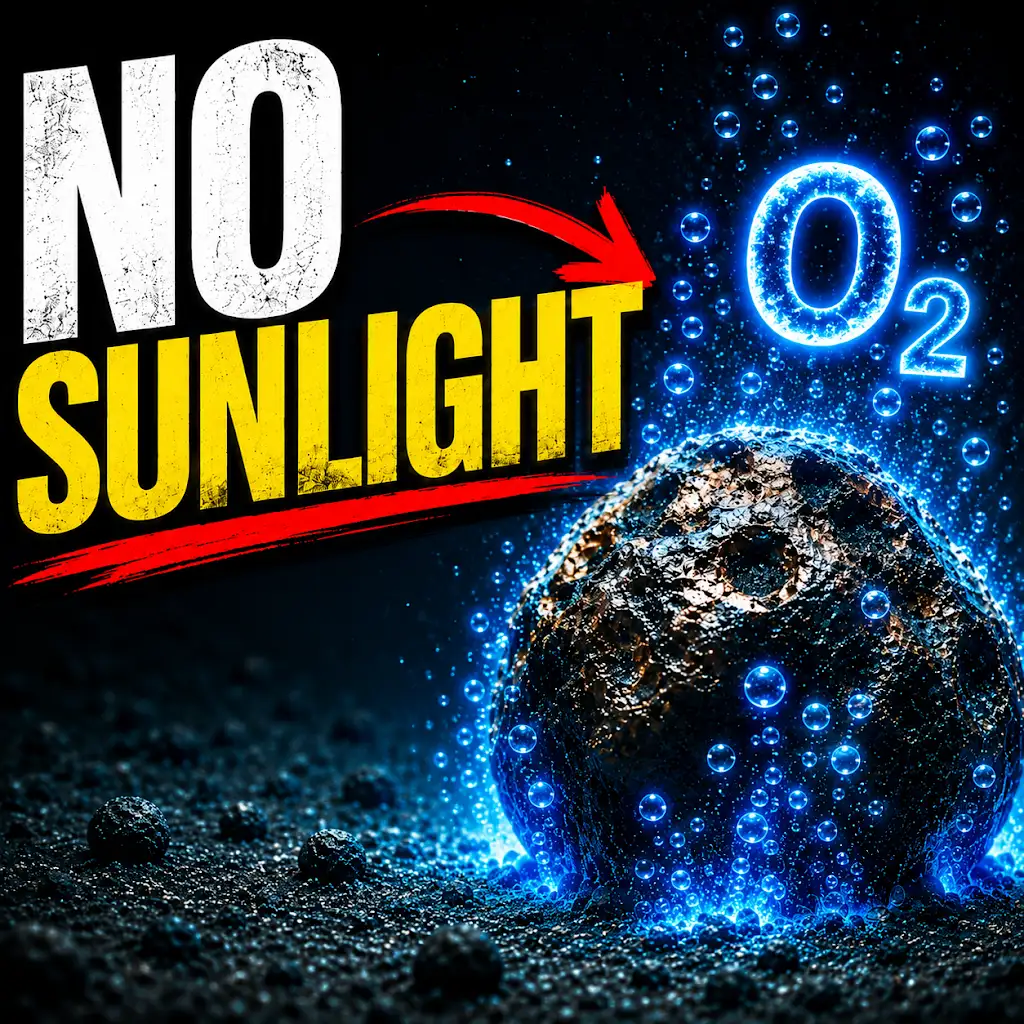
Scientists Found Oxygen Where It Should Be Impossible
FAQs
What is the dark oxygen theory?
The dark oxygen theory suggests that a significant portion of Earth’s oxygen is produced deep within the planet’s mantle, rather than solely by photosynthetic organisms in the oceans and on land.
Why is the dark oxygen theory disputed?
The dark oxygen theory is disputed because it challenges the long-standing understanding of oxygen production and the carbon cycle on Earth. It also lacks substantial evidence and has not been widely accepted by the scientific community.
What evidence supports the dark oxygen theory?
Proponents of the dark oxygen theory point to isotopic signatures in certain rocks and minerals, as well as experimental data from high-pressure and high-temperature laboratory studies, as evidence for deep oxygen production.
What are the main criticisms of the dark oxygen theory?
Critics argue that the evidence for deep oxygen production is not conclusive and that the theory does not adequately explain the abundance and distribution of oxygen in Earth’s atmosphere. They also question the feasibility of oxygen production in the mantle.
What are the implications of the dark oxygen theory being true?
If the dark oxygen theory were proven to be true, it would significantly alter our understanding of Earth’s geological and biological processes. It could also have implications for our understanding of other planets and their potential for hosting life.