The silent hunters of the deep, submarines, have long posed a formidable challenge to naval forces worldwide. Their ability to operate unseen beneath the waves grants them strategic advantages, making their detection a paramount concern for national security. For decades, the science of submarine detection has evolved dramatically, driven by relentless innovation and the ever-present need to maintain situational awareness. Two primary pillars of this endeavor are sonar technology and satellite surveillance, each offering distinct yet complementary capabilities in the continuous cat-and-mouse game beneath the ocean’s surface. This article delves into the intricate world of submarine detection, exploring the fundamental principles, technological advancements, and the synergistic roles of sonar and satellite technology.
Sonar, an acronym for Sound Navigation and Ranging, is the cornerstone of underwater detection. It harnesses the power of sound waves to perceive objects and map the marine environment. Unlike sight, which is severely limited by the turbidity of water, sound travels effectively over long distances, making it the ideal medium for underwater exploration and detection. The fundamental principle behind sonar is simple: emit a sound pulse and then listen for its echo. The time it takes for the echo to return, along with its characteristics, provides crucial information about the target.
Active Sonar: The “Ping” of Awareness
Active sonar systems, the most straightforward form of sonar, involve the deliberate transmission of sound waves from a platform – be it a surface ship, a submarine, or an aircraft with towed arrays – into the water. These sound pulses, often referred to as “pings,” travel through the ocean and reflect off any objects they encounter, including submarines. The returning echoes are then picked up by sensitive hydrophones, essentially underwater microphones, on the transmitting platform.
Transducers and Waveforms: Crafting the Sonic Signature
The heart of an active sonar system lies in its transducers, which are responsible for converting electrical energy into acoustic energy (the sound waves) and vice-versa. These transducers can be designed to emit a variety of waveforms, from simple broadband pulses to more complex frequency-modulated (FM) signals. The choice of waveform is crucial and depends on the intended application. Narrowband signals, for instance, are excellent for detecting specific tones produced by a target’s machinery, while broadband signals are better for determining range and bearing.
Understanding the Doppler Effect: A Subtle Tell
One of the most critical pieces of information gleaned from sonar echoes is the Doppler shift. This phenomenon, familiar from the changing pitch of a siren as it approaches and recedes, describes the change in frequency of a wave in relation to an observer moving relative to the wave source. For sonar, as a submarine moves towards a sonar source, its echoes will have a slightly higher frequency than the transmitted pulse. Conversely, if the submarine is moving away, the echoes will be lower in frequency. By analyzing this Doppler shift, sonar operators can determine the target’s radial velocity – its speed directly towards or away from the sonar source. This is a vital clue in distinguishing a moving submarine from stationary objects on the seabed.
Limitations of Active Sonar: The Trade-off of Visibility
While effective, active sonar has a significant drawback: it reveals the position of the sonar platform. The transmitted “ping” is unmistakable and can be detected by enemy submarines equipped with passive sonar systems, akin to an adversary seeing a spotlight turned on their hiding place. This makes active sonar a powerful tool for initial detection and tracking but often a risky one for maintaining stealth. Navies are thus constantly balancing the need for detection with the imperative of remaining undetected themselves.
Passive Sonar: The Art of Eavesdropping
Passive sonar, in contrast to active sonar, does not emit any sound whatsoever. Instead, it relies solely on listening for sounds generated by the target itself. Submarines, even when running silently, produce a range of acoustic signatures. These can include the hum of their machinery (propulsion, pumps, life support systems), the click of closing hatches, the creak of the hull under pressure, and even the sounds of its crew.
Hydrophones and Arrays: Amplifying the Whispers
Passive sonar systems utilize an array of hydrophones, strategically placed to capture faint underwater sounds. These hydrophones are often mounted on the hull of a surface vessel or towed behind it in a long cable known as a towed array. Towed arrays are particularly effective because they can be deployed far from the noise generated by the ship’s own engines and propellers, allowing them to listen more intently to distant sounds. The signals captured by these hydrophones are then processed and amplified, making even the faintest whispers of a submarine audible.
Acoustic Signatures: A Submarine’s Fingerprint
Each submarine, or class of submarine, possesses a unique acoustic signature – a distinctive pattern of sounds that it produces. This signature is determined by its design, the type of engines it uses, its maintenance history, and even its operational procedures. Naval acoustic analysts spend countless hours studying these signatures, building vast libraries of known sounds. By analyzing the frequency, amplitude, and temporal characteristics of the sounds detected by passive sonar, they can attempt to identify the type of submarine, its speed, its course, and even the actions it is performing. This identification process, often referred to as acoustic intelligence (ACOUSTINT), is incredibly complex and requires a deep understanding of ocean acoustics and submarine technology.
Challenges of Passive Sonar: The Noise of the Ocean
The primary challenge of passive sonar is the overwhelming ambient noise in the ocean. This noise can come from a multitude of sources: wind and waves, marine life, shipping traffic, and geological activity. Distinguishing the faint sounds of a submarine from this cacophony is a monumental task. Sophisticated signal processing techniques, including filtering and noise reduction algorithms, are employed to enhance the clarity of the desired signals. Furthermore, the accuracy of passive sonar is heavily dependent on the acoustic conditions of the ocean, which can vary significantly with depth, temperature, and salinity.
Submarine detection is a critical aspect of modern naval warfare, and understanding the various methods employed can provide insights into underwater operations. For a deeper exploration of the technologies and strategies used to detect submarines, you can refer to the article available at Freaky Science. This resource delves into the advancements in sonar technology, satellite surveillance, and other innovative techniques that enhance the ability to track submarines, ensuring maritime security in an increasingly complex global environment.
The Expanding Horizon: Sophistication in Sonar Technology
Over the years, sonar technology has undergone substantial advancements, moving beyond simple “ping and listen” mechanisms. Modern sonar systems are far more sophisticated, employing advanced signal processing, machine learning, and novel deployment methods to enhance their detection capabilities.
Advanced Signal Processing: Unraveling Complexities
The raw data from sonar systems is often noisy and complex. Advanced signal processing techniques are crucial for extracting meaningful information. These techniques include:
Matched Filtering: Sharpening the Echo
Matched filtering is a signal processing technique used to maximize the signal-to-noise ratio of a detected signal. In sonar, it involves comparing the received echo with a known replica of the transmitted pulse. This process effectively “sharpens” the echo, making it easier to distinguish from background noise and extract precise timing information.
Spectral Analysis: Deconstructing Frequencies
Spectral analysis involves breaking down a complex sound signal into its constituent frequencies. This allows operators to identify specific tonal components within a submarine’s acoustic signature, such as the distinct hums of its cooling systems or propulsion shafts. Analyzing the power distribution across different frequencies can help categorize the type of machinery and infer operational states.
Beamforming: Pinpointing the Source
Beamforming is a signal processing technique that essentially creates a directional “listening” capability for an array of sensors. By combining the signals from multiple hydrophones in a specific way, the sonar system can focus its attention in a particular direction, effectively “steering” its listening beam. This allows for a more precise determination of the bearing (direction) of an underwater sound source, significantly improving the accuracy of tracking.
Machine Learning and Artificial Intelligence: Automating the Acoustic Detective
The sheer volume of acoustic data generated by modern sonar systems can overwhelm human operators. This is where machine learning and artificial intelligence (AI) are revolutionizing the field. AI algorithms can be trained on vast datasets of known submarine signatures and acoustic environments.
Pattern Recognition: Identifying the Unseen
Machine learning algorithms excel at identifying complex patterns within noisy data. They can be trained to recognize the subtle nuances of submarine sounds that might be missed by human ears, even experienced ones. This allows for faster and more accurate identification of potential targets, reducing the likelihood of false alarms.
Real-time Analysis: Adapting to the Environment
AI can also enable real-time analysis of acoustic data, allowing sonar systems to adapt their detection strategies based on the prevailing oceanographic conditions and the tactical situation. This dynamic adaptability is crucial in the ever-changing underwater battlefield.
Novel Sonar Platforms: Reaching New Depths and Breadths
Beyond traditional hull-mounted and towed arrays, sonar technology is being integrated into a wider array of platforms:
Unmanned Underwater Vehicles (UUVs): The Silent Scouts
UUVs, ranging from small autonomous underwater vehicles (AUVs) to larger remotely operated vehicles (ROVs), are increasingly equipped with sophisticated sonar systems. Their ability to operate autonomously for extended periods, in areas too dangerous or inaccessible for manned vessels, makes them invaluable for reconnaissance and surveillance. They can pre-emptively map sea floors, detect quiet submarines in known operating areas, and act as distributed sensor networks.
Expendable Sonobuoys: Disposable Ears in the Water
Sonobuoys are small, expendable acoustic sensors dropped from aircraft or ships. They float on the surface and deploy hydrophones into the water column. Some sonobuoys are passive, listening for sounds, while others are active, transmitting a sonar ping. Their wide dispersal allows for the rapid coverage of large ocean areas, providing an invaluable early warning capability.
The Vantage Point from Above: Satellite Technology in Submarine Detection
While sonar excels at detecting submarines within the water, satellite technology offers a unique perspective from above, complementing sonar’s capabilities and providing intelligence that sound alone cannot acquire. Satellites, orbiting the Earth, can monitor vast areas of the ocean continuously, offering a global reach.
Inferential Detection: More Than Just Seeing
Satellites cannot directly “see” submarines submerged miles beneath the surface. Instead, their role in submarine detection is primarily inferential. They rely on detecting the subtle signatures or effects that submarines may have on their environment, or by identifying suspicious patterns of activity associated with submarine operations.
Synthetic Aperture Radar (SAR): Peering Through Clouds and Darkness
Synthetic Aperture Radar (SAR) is a powerful radar imaging technique that allows satellites to create high-resolution images of the Earth’s surface, regardless of weather conditions or time of day. While primarily used for land imaging, SAR can detect subtle anomalies on the ocean surface that might indicate the presence of a submerged object.
Wake Detection: The Subtle Trace
Even a deeply submerged submarine can leave a faint trace on the surface in the form of a wake. This wake is not a visible trail of bubbles, but rather a subtle disturbance in the water’s surface tension and flow patterns. SAR satellites can detect these minute variations. The pressure exerted by the submarine’s movement can alter the water’s surface, creating a detectable pattern that can be analyzed for anomalies. This is particularly effective for submarines operating at shallower depths.
Ocean Color and Thermal Imaging: Unveiling Subsurface Activity
Satellites equipped with sensors that measure ocean color and sea surface temperature can also provide clues.
Plume Detection: The Unintended Spill
When a submarine surfaces for ventilation or to recharge its batteries, it may release gases or other emissions that can alter the water’s chemistry or temperature at the surface. These changes, even if minor, can be detected by satellite sensors. Similarly, the movement of a large submerged object can influence the thermal profile of the water column, creating subtle temperature gradients that might be visible from space.
Hyperspectral Imaging: Unlocking Chemical Clues
Hyperspectral imaging, a more advanced form of remote sensing, captures light across a wide range of specific wavelengths. This allows for the detection of minute chemical traces that might be released by a submarine, such as fuel leaks or exhaust fumes, which could alter the spectral signature of the ocean surface.
Intelligence, Surveillance, and Reconnaissance (ISR) Missions
Satellite technology plays a crucial role in broader Intelligence, Surveillance, and Reconnaissance (ISR) missions that indirectly support submarine detection.
Monitoring Naval Activity: Tracking Surface Departures
Satellites can monitor shipping lanes and naval bases, tracking the movements of submarines’ parent vessels and support infrastructure. Unusual patterns of activity, such as a particular naval base being unusually active or a specific submarine patrol area showing increased activity, can trigger further investigation using other sensors.
Identifying Suspicious Vessels: The Stealthy Transfer
Satellites can identify and track vessels that may be involved in covert operations, such as transferring supplies or personnel to submarines in remote locations. By analyzing vessel traffic patterns and identifying transponders, suspicious activities can be flagged for closer scrutiny.
Communications Interception: Listening from Orbit
While not directly detecting the submarine itself, satellites can be used for signals intelligence (SIGINT) to intercept communications. If a submarine is transmitting or receiving electronic signals, these could potentially be intercepted by orbiting satellites, providing valuable intelligence about its location and operations.
The Synergy of Sonar and Satellite: A Combined Assault on Stealth
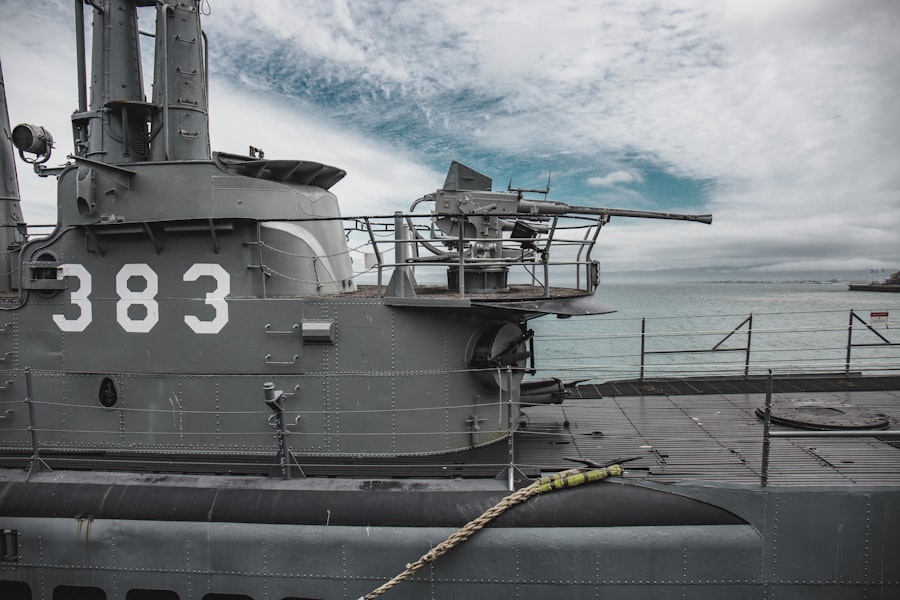
The true power of modern submarine detection lies in the intelligent integration of sonar and satellite technologies. Each has its strengths and weaknesses, but when used in concert, they create a far more robust and effective detection network.
Complementary Capabilities: Bridging the Gaps
Sonar is the primary tool for detecting submarines in their immediate underwater environment, providing detailed acoustic information. However, it is limited by range and the risk of revealing the sonar platform’s position. Satellites, on the other hand, offer broad area surveillance and the ability to detect indirect evidence of submarine activity.
Data Fusion: Weaving the Narrative
Modern defense systems employ sophisticated data fusion techniques to combine information from various sources, including sonar and satellite imagery. This fusion process allows for the creation of a comprehensive operational picture, where disparate pieces of intelligence are woven together to form a coherent narrative.
Cross-Validation: Confirming the Contact
If a satellite detects a potential anomaly on the ocean surface, such as a suspicious wake, this can prompt a more focused sonar search in that specific area. Conversely, if sonar detects an unidentified acoustic signature, satellite imagery of the surrounding ocean can be analyzed for any surface activity or unusual patterns that might correlate with the underwater contact.
Enhancing Situational Awareness: The Bigger Picture
By combining the detailed underwater information from sonar with the broad-area surveillance capabilities of satellites, naval forces can achieve a higher level of situational awareness. This allows them to:
Predictive Analysis: Anticipating Movement
When both sonar and satellite data indicate a potential submarine presence, advanced analytics can be used to predict the submarine’s likely course and future operational areas, allowing for more effective interception or avoidance strategies.
Dynamic Threat Assessment: Adapting to Evolving Threats
The constant flow of information from both sonar and satellites allows for a dynamic assessment of the threat landscape. If a particular region shows increased submarine activity detected by satellites, naval assets can be redeployed to that area, and sonar patrols can be intensified.
Detecting submarines has become an increasingly sophisticated endeavor, with advancements in technology playing a crucial role in enhancing detection methods. For a deeper understanding of the various techniques used in submarine detection, you can explore a related article that discusses the intricacies of sonar systems and other detection technologies. This comprehensive resource provides valuable insights into the challenges and innovations in underwater surveillance, making it an essential read for anyone interested in maritime security. To learn more, visit this article.
The Future of Submarine Detection: A Constant Evolution
| Method of Detection | Description |
|---|---|
| Sonar | Uses sound waves to detect submarines underwater. |
| Radar | Uses radio waves to detect submarines on the surface or just below the surface of the water. |
| Magnetic Anomaly Detection (MAD) | Detects changes in the Earth’s magnetic field caused by the presence of a submarine. |
| Acoustic Detection | Uses hydrophones to listen for the sounds made by submarines. |
The development of submarine detection technologies is a continuous arms race. As submarines become quieter and more sophisticated, so too must the methods employed to find them.
Acoustic Singularity: Pursuing Ultimate Stealth
The ongoing pursuit of “acoustic singularity” – making submarines virtually undetectable by sound – drives constant innovation in submarine design, leading to quieter propulsion systems, reduced machinery noise, and advanced hull coatings that absorb sonar signals.
Counter-Stealth Technologies: Adapting to the Challenge
In response, the development of counter-stealth technologies is accelerating. This includes exploring new acoustic frequencies that are harder for submarines to absorb, developing more sensitive passive sonar systems capable of detecting ever fainter sounds, and leveraging advanced AI to sift through increasing amounts of environmental noise.
Emerging Technologies: Beyond Sound and Light
The future may also see the integration of entirely new detection modalities.
Gravimetric Sensors: Sensing Mass Anomalies
Gravimetric sensors, which can detect subtle variations in Earth’s gravitational field, are being explored as a potential method for detecting large submerged objects like submarines. The mass of a submarine, even at depth, could theoretically create a detectable gravitational anomaly.
Quantum Sensing: The Unseen Whisper
Quantum sensing technology, a rapidly evolving field, offers the potential for incredibly sensitive detection of magnetic fields and other subtle environmental cues that submarines might produce. Breakthroughs in quantum physics could lead to entirely new paradigms for underwater detection.
Conclusion: Vigilance in the Silent Depths
Detecting submarines is a complex and multifaceted challenge that relies heavily on the sophisticated interplay of sonar and satellite technology. Sonar, with its ability to listen to the ocean’s depths, provides the immediate and detailed acoustic picture. Satellite technology, offering a broad, inferential view from above, complements this by monitoring surface anomalies and broader naval activities. The synergy between these two pillars of detection, driven by continuous innovation in signal processing, AI, and novel sensor platforms, ensures that the silent hunters of the deep remain under constant, albeit often unseen, scrutiny. As technology advances and submarines evolve, the pursuit of ever more effective methods for their detection will undoubtedly continue to shape naval strategy and global security for decades to come.

The Secret Ocean Layer That Lets Sound Travel for Thousands of Miles
FAQs
1. How are submarines detected?
Submarines can be detected using a variety of methods including sonar, magnetic anomaly detection, radar, and acoustic detection systems.
2. What is sonar and how is it used to detect submarines?
Sonar, which stands for Sound Navigation and Ranging, is a technology that uses sound waves to detect objects underwater. Submarines can be detected using active sonar, which sends out pulses of sound and listens for the echoes, or passive sonar, which listens for sounds emitted by the submarine itself.
3. What is magnetic anomaly detection and how does it work in detecting submarines?
Magnetic anomaly detection (MAD) is a technology that detects changes in the Earth’s magnetic field caused by the presence of a submarine’s metal hull. MAD sensors are typically mounted on aircraft or ships and can detect submarines by measuring these magnetic anomalies.
4. How does radar play a role in detecting submarines?
Radar can be used to detect periscopes or snorkels of submarines when they are close to the surface. However, radar is less effective in detecting submerged submarines compared to other detection methods.
5. What are acoustic detection systems and how are they used to detect submarines?
Acoustic detection systems, also known as hydrophones, are used to listen for the sounds emitted by submarines, such as their engines or propellers. These systems can be deployed on ships, aircraft, or fixed underwater arrays to detect and track submarines.