The human brain, a marvel of biological engineering, operates under significant constraints. Unlike a high-definition digital display, the brain does not process and present a fully detailed, pixel-by-pixel representation of the external world. Instead, it constructs a functional, albeit simplified, version of reality. This article delves into the processes and implications of what can be termed the brain’s “low-resolution reality rendering.” Understanding this inherent simplification offers crucial insights into perception, cognition, and the very nature of our subjective experience.
The brain’s ability to render reality is fundamentally limited by the very biological hardware responsible for gathering information. Sensory organs, the initial gateways to the external world, are not perfect recording devices. They are designed for survival and efficient processing, not for capturing every nuance of physical stimuli.
Visual System: A Limited Spectrum of Light
The human eye, while a sophisticated organ, possesses inherent limitations in its visual processing capabilities.
Photoreceptor Density and Distribution
The retina, the light-sensitive tissue at the back of the eye, contains photoreceptor cells: rods and cones. Rods are highly sensitive to light and are crucial for scotopic (low-light) vision, but they do not discriminate color and have low spatial acuity. Cones, responsible for color vision and fine detail, are concentrated in the fovea, the central part of the retina, resulting in higher acuity in this small area. Peripheral vision, encompassing the vast majority of our visual field, relies on less densely packed photoreceptors, leading to a significant reduction in spatial resolution. This means that while we perceive a wide vista, the detailed information within that vista is concentrated in a narrow cone of attention.
Rods and Cones: Specialized Roles and Trade-offs
The distinct functions of rods and cones highlight a fundamental trade-off in sensory processing: sensitivity versus resolution. Rods provide a broad, low-resolution sense of light and darkness, vital for detecting movement in dim conditions. Cones offer detailed color and shape information but require more light and are less sensitive to faint stimuli. This functional division means that at any given moment, the brain is receiving fundamentally different types of information from different parts of the visual field, contributing to a composite, not uniform, visual representation.
The Blind Spot: An Anatomical Reality
A significant limitation in visual perception is the presence of the optic disc, or blind spot, where the optic nerve exits the eye. This area lacks photoreceptors, and therefore, no visual information is processed. The brain seamlessly fills in this gap using information from the surrounding visual field and predictive algorithms, demonstrating its active role in constructing perception rather than passively receiving it.
Auditory System: Frequency and Amplitude Limitations
Similar to vision, the auditory system, while capable of processing a wide range of sounds, has its own limitations in fidelity.
Frequency Range and Sensitivity
The human ear can detect sound frequencies roughly between 20 Hz and 20,000 Hz. Sounds outside this range, such as those produced by bats or elephants, are imperceptible. Furthermore, within this audible range, sensitivity varies. The ear is most sensitive to frequencies within the speech range (around 500 Hz to 4,000 Hz), reflecting an evolutionary adaptation for communication. Sounds at the extreme ends of the frequency spectrum may require higher amplitudes to be perceived.
Amplitude Dynamics and Perception
While the dynamic range of human hearing is impressive, the ability to distinguish subtle differences in loudness diminishes at very high amplitudes. Sounds that are extraordinarily loud may be perceived as a uniform overwhelming roar rather than a nuanced gradation of intensity. This compression of dynamic range contributes to a less precise auditory rendering of highly intense soundscapes.
Other Sensory Modalities: Olfaction, Gustation, and Somatosensation
While often considered less “high-resolution” than vision and hearing, other sensory systems also contribute to the brain’s low-resolution reality.
Olfactory and Gustatory Sensitivity
The human sense of smell and taste are remarkable for their ability to detect a vast array of chemical compounds, but their acuity in differentiating precise concentrations or subtle variations is limited compared to the precise mapping of visual or auditory stimuli. This often results in a perception of broad categories of smells and tastes rather than highly discriminable individual components, especially in complex mixtures.
Somatosensory Processing: Spatial Resolution and Adaptation
The sense of touch, or somatosensation, involves a network of receptors responding to pressure, temperature, and pain. The spatial resolution of touch varies across the body; areas like the fingertips have a higher density of receptors, allowing for finer discrimination of texture and shape, while other areas are less precise. Furthermore, sensory adaptation means that constant stimuli are perceived less intensely over time, prioritizing the detection of new or changing environmental factors.
Recent research has shed light on how our brains construct a low-resolution version of reality, filtering and interpreting sensory information to create a coherent experience of the world around us. This fascinating process highlights the limitations of human perception and cognition, suggesting that what we perceive is often a simplified representation rather than an accurate depiction of our environment. For further insights into this topic, you can read the related article at Freaky Science, which delves into the intricacies of how our minds process and render reality.
Neural Processing: The Art of Abstraction and Inference
The raw data from sensory organs is far too voluminous and often too ambiguous to be directly processed. The brain employs sophisticated neural mechanisms to abstract, infer, and construct a coherent representation of the world. This process inherently involves simplification.
Feature Detection: Building Blocks of Perception
The brain doesn’t perceive entire objects; it breaks them down into fundamental features.
Early Visual Cortex and Receptive Fields
In the visual cortex, neurons respond to specific features like edges, lines, orientations, and colors. These neurons have “receptive fields,” small areas in the visual field to which they are sensitive. The organization of these receptive fields allows for the hierarchical processing of visual information, starting with simple features and progressing to more complex representations. This feature-based processing is inherently a form of abstraction, prioritizing certain aspects of the visual input.
Auditory Feature Extraction
Similarly, in the auditory system, neurons are tuned to specific frequencies, amplitudes, and temporal patterns. This allows the brain to extract fundamental elements like pitch, loudness, and rhythm from complex soundscapes, forming the basis for recognizing speech and musical notes.
Predictive Coding: Anticipating the Next Moment
A prominent theory in neuroscience suggests that the brain operates on principles of predictive coding. It constantly generates predictions about incoming sensory information and updates these predictions based on actual input.
The Role of Top-Down Processing
This top-down processing, where higher-level cognitive areas inform lower-level sensory processing, means that our expectations and prior experiences significantly influence what we perceive. If the brain predicts a certain sensory input, even a slightly different input might be interpreted as fitting the prediction, leading to a perception that is not a direct reflection of the raw data. This is a crucial mechanism for efficient processing, but it can also lead to biases and illusions.
Surprise and Prediction Error
When sensory input deviates significantly from predictions, a “prediction error” signal is generated, which prompts the brain to update its internal models. This mechanism is vital for learning and adapting to new environments, but it also underscores that perception is not a passive absorption of reality but an active process of refinement and correction of internal representations.
Filling in the Gaps: Constructing a Complete Picture
As demonstrated by the blind spot, the brain is adept at inferring missing information.
Gestalt Principles of Perception
Principles like proximity, similarity, and continuity, first described by Gestalt psychologists, illustrate how the brain organizes sensory elements into coherent wholes. For example, objects that are close together are perceived as a group, even if they are distinct. This is a form of cognitive shortcut, creating perceived order from potentially fragmented input.
Temporal Integration and Motion Perception
Our perception of continuous motion is a prime example of temporal integration. The brain stitches together discrete snapshots of visual information over time to create the illusion of smooth movement. Flickering lights, if presented rapidly enough, are perceived as a steady illumination due to this temporal integration.
Cognitive Economy: Efficiency Through Simplification

The rendering of a low-resolution reality is not merely a byproduct of biological limitations; it is a fundamental strategy for cognitive economy. The brain’s computational resources are finite, and processing every detail of the environment would be impossibly demanding.
Attention: The Spotlight of Consciousness
Attention acts as a filter, allowing the brain to focus on relevant information while suppressing irrelevant stimuli.
Selective Attention and Filtering
Our ability to concentrate on a single conversation in a noisy room exemplifies selective attention. The brain prioritizes the auditory stream of the desired speaker and filters out much of the surrounding noise. This selective focus inherently means that a vast amount of sensory information is not consciously processed.
Sustained Attention and Cognitive Load
Maintaining sustained attention on a complex task can be cognitively taxing, highlighting the energy demands of focused processing. This is why our attention naturally wanders to less demanding stimuli or breaks subject to fatigue.
Memory Consolidation and Reconstruction
Memory is not a perfect video recording of events. Instead, it is a reconstructive process, prone to biases and simplifications.
Schema and Frameworks for Information
Our existing knowledge structures, or schemas, influence how we encode and retrieve memories. Information that fits within an established schema is more easily integrated, while information that contradicts it may be altered or ignored. This schema-driven memory formation inherently simplifies past experiences.
The Malleability of Recollection
Research has consistently shown that memories can be inaccurate, distorted by post-event information, suggestion, or current emotional states. This indicates that what we recall is not a direct playback of the past but a re-creation influenced by present cognitive processes.
Decision-Making and Heuristics
In complex situations, the brain often employs heuristics, mental shortcuts, to make decisions quickly and efficiently.
Availability Heuristics and Representative Heuristics
The availability heuristic, for example, leads us to overestimate the likelihood of events that are easily recalled. This reliance on readily accessible information is a simplification that can lead to systematic biases. Similarly, representative heuristics involve judging probabilities based on how well something matches a prototype, an inherently abstract and simplified comparison.
The Trade-off Between Accuracy and Speed
These heuristics, while contributing to cognitive efficiency, often come at the expense of absolute accuracy. The brain prioritizes making a timely decision over achieving perfect optimality.
Implications for Subjective Experience
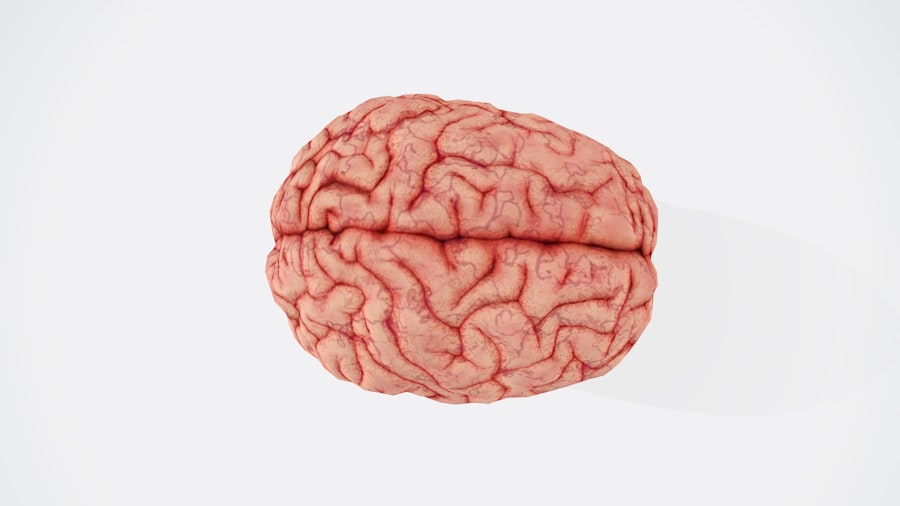
The low-resolution nature of the brain’s reality rendering has profound implications for how we experience the world and ourselves.
The Illusion of a Stable, Objective Reality
While we perceive a stable and objective world, this perception is a construct. The constant flux of sensory input and the brain’s active interpretation create a consistent, yet simplified, narrative.
The Problem of Qualia
The subjective experience of “what it is like” to see red or feel pain, known as qualia, remains a deeply complex philosophical and scientific challenge. The low-resolution rendering suggests that our subjective experience is not a direct apprehension of physical properties but a complex interaction between sensory data, internal models, and cognitive interpretation.
The Role of Consciousness
Consciousness itself is intimately linked to this rendering process. What we are consciously aware of is a highly processed and curated version of reality, shaped by attentional filters and cognitive biases.
Understanding Illusions and Misperceptions
Illusions, both visual and auditory, are powerful demonstrations of the brain’s constructed reality. They highlight the assumptions and shortcuts the brain makes to create its simplified perception.
Optical Illusions as Windows into Processing
Optical illusions often exploit the inherent design principles of the visual system, such as the reliance on context, edge detection, and assumptions about lighting and depth. For instance, the Müller-Lyer illusion plays on the brain’s interpretation of depth cues associated with corners.
Auditory Illusions and Pattern Recognition
Auditory illusions, like the Shepard tone, demonstrate how the brain can misinterpret temporal or spectral information, creating a perceived cascade that defies physical reality. These illusions reveal the brain’s tendency to impose its learned patterns on ambiguous sensory input.
The Subjectivity of Experience
Because reality is rendered through individual brains with unique histories, genetic predispositions, and current states, our subjective experiences are inherently unique.
The Influence of Prior Knowledge and Emotions
An individual’s prior knowledge and current emotional state can significantly alter their perception of the same sensory input. A familiar object might be perceived differently by someone who associates it with a positive memory versus someone who associates it with a negative experience.
The Limits of Empathy and Shared Understanding
The inherent subjectivity of subjective experience poses a challenge for complete empathy and shared understanding. While we can communicate about our experiences, the underlying qualia and the precise nature of our internal renderings may remain fundamentally distinct.
Recent research has shown that our brains often create a low-resolution version of reality, filtering out unnecessary details to help us navigate the world more efficiently. This fascinating phenomenon is explored in greater depth in an article on the topic, which discusses how our perception is shaped by various cognitive processes. For those interested in understanding the intricacies of human perception, you can read more about it in this insightful piece on Freaky Science. By examining how our minds prioritize certain information over others, we can gain a better understanding of the complexities of our everyday experiences.
Future Directions and Therapeutic Potential
| Aspect | Details |
|---|---|
| Resolution | Our brains can render a low resolution reality by filling in missing details based on context and past experiences. |
| Perception | We perceive the world around us in a coherent and meaningful way, even when the visual input is low resolution. |
| Adaptation | Our brains can adapt to low resolution environments by focusing on key features and ignoring irrelevant details. |
| Recognition | We can still recognize objects and faces in low resolution images or environments, thanks to our brain’s pattern recognition abilities. |
Understanding the brain’s low-resolution reality rendering opens avenues for both scientific advancement and therapeutic intervention.
Enhancing Sensory Perception and Cognitive Function
Exploring the mechanisms of sensory processing and cognitive abstraction could lead to interventions that enhance perception.
Neuroprosthetics and Sensory Substitution
Developments in neuroprosthetics aim to bypass damaged sensory organs and directly stimulate neural pathways. Understanding efficient rendering could inform the design of more effective sensory substitution devices, allowing individuals to perceive information through alternative modalities.
Cognitive Training and Bias Mitigation
Cognitive training programs could be designed to improve attentional control, reduce reliance on faulty heuristics, and enhance the accuracy of memory recall. This could have applications in areas ranging from education to clinical psychology.
Addressing Neurological and Psychiatric Disorders
Many neurological and psychiatric conditions involve disruptions in sensory processing, attention, and reality construction.
Schizophrenia and Hallucinations
Conditions like schizophrenia are characterized by hallucinations and delusions, suggesting profound alterations in the brain’s reality rendering process. Research into the neural basis of these phenomena could lead to more targeted treatments.
Anxiety Disorders and Attentional Bias
Anxiety disorders often involve an attentional bias towards threat-related stimuli. Understanding how this bias is implemented in neural circuits could pave the way for interventions that recalibrate attentional focus.
Depression and Cognitive Distortions
Depression is frequently associated with negative cognitive distortions, where individuals interpret neutral or positive events in a negative light. Cognitive Behavioral Therapy (CBT), in part, works by challenging and modifying these distorted interpretations.
The Ethical Considerations of Reality Alteration
As our understanding of reality rendering grows, so too do the ethical questions surrounding its potential manipulation.
Technologies for Cognitive Enhancement
The development of technologies that directly influence perception or cognition raises concerns about their accessibility, potential for misuse, and the definition of “normal” cognitive function.
The Blurring Lines Between Reality and Simulation
With the increasing sophistication of virtual and augmented reality, the distinction between simulated and perceived reality becomes more nuanced. Understanding the brain’s fundamental rendering processes is crucial for navigating these evolving technological landscapes.
In conclusion, the brain’s operation is not one of a perfect mirror reflecting the external world. Instead, it is a dynamic, adaptive system that constructs a functional, low-resolution rendition of reality. This inherent simplification, driven by biological constraints and the need for cognitive economy, shapes every aspect of our subjective experience, from the simplest perception to complex decision-making. Further research into this intricate process promises not only to deepen our understanding of the mind but also to offer novel approaches to enhancing human capabilities and addressing significant neurological and psychiatric challenges.
FAQs
What is low resolution reality?
Low resolution reality refers to the concept of our brains processing and interpreting the world around us in a simplified and less detailed manner. This means that our perception of reality is not as high in fidelity as we might think.
How does our brain render a low resolution reality?
Our brain renders a low resolution reality by selectively focusing on certain aspects of our environment while ignoring others. It also fills in gaps in our perception with assumptions and predictions based on past experiences.
What are the implications of our brain rendering a low resolution reality?
The implications of our brain rendering a low resolution reality include the potential for inaccuracies in our perception of the world, as well as the influence of cognitive biases and heuristics on our decision-making processes.
Can we train our brains to render a higher resolution reality?
While we cannot change the fundamental way our brains render reality, we can improve our perception and cognition through practices such as mindfulness, meditation, and cognitive training exercises.
How does technology impact our perception of reality?
Technology can both enhance and distort our perception of reality. Virtual reality and augmented reality technologies can create immersive and high-resolution experiences, while social media and digital manipulation can contribute to a distorted and low-resolution perception of reality.