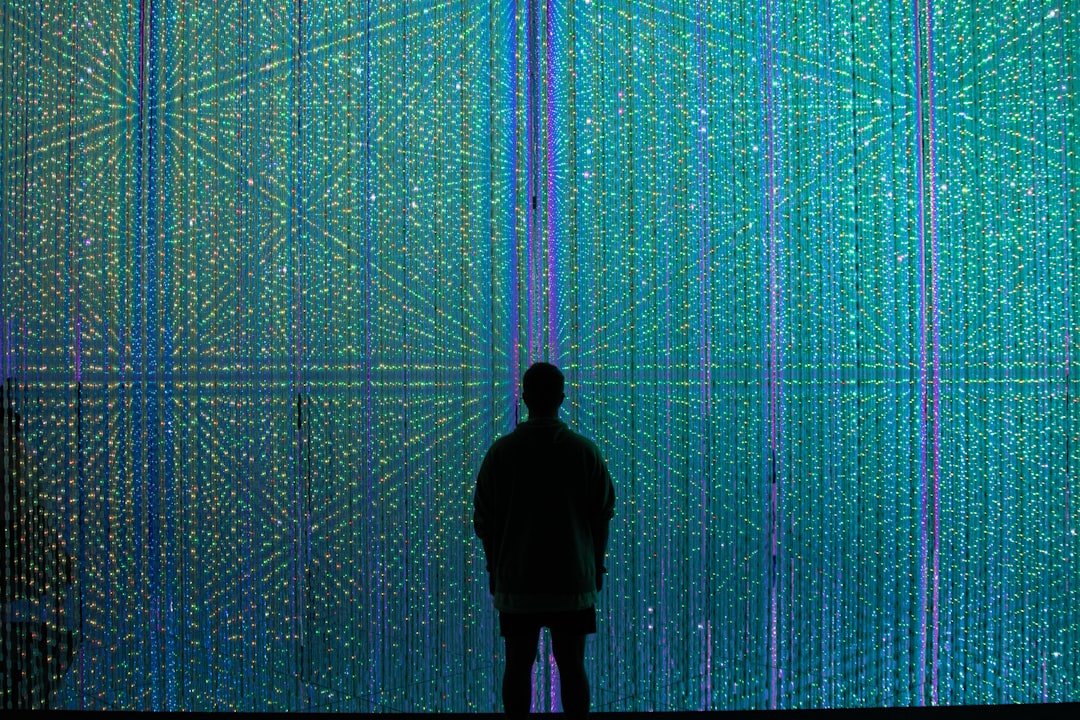
The concept of a “glitch in the matrix” has permeated popular culture, often evoking images of a reality that is not as solid as it seems. This phrase, popularized by the 1999 film “The Matrix,” suggests that the world may be a simulation, and that occasional errors or anomalies can reveal the underlying artificiality of existence. Such glitches can manifest in various forms, from déjà vu experiences to inexplicable coincidences, leading individuals to question the very fabric of their reality.
The allure of this idea lies in its ability to challenge conventional perceptions and provoke deep philosophical inquiries about existence, consciousness, and the nature of reality itself. As society becomes increasingly reliant on technology and digital interfaces, the notion of glitches has taken on new dimensions. The rapid advancement of virtual reality, artificial intelligence, and immersive digital environments has blurred the lines between what is real and what is simulated.
This intersection of technology and philosophy invites a closer examination of how glitches can serve as metaphors for deeper existential questions. By exploring the historical, scientific, and psychological dimensions of glitches in the matrix, one can gain a more nuanced understanding of their implications for human perception and reality.
Key Takeaways
- Glitches in the Matrix refer to anomalies or inconsistencies in perceived reality that challenge our understanding of existence.
- Historical and cultural perspectives have long explored these phenomena, often linking them to supernatural or metaphysical beliefs.
- Scientific and quantum physics approaches aim to explain glitches through the nature of reality, consciousness, and the possibility of a simulated universe.
- Psychological and cognitive factors provide alternative explanations, suggesting glitches may arise from perception errors or brain function.
- Ongoing research seeks to clarify the implications of glitches, potentially reshaping our concepts of reality and advancing simulation theory.
Historical Perspectives on Glitches in the Matrix
Throughout history, the idea of reality being an illusion or a construct has been a recurring theme in various philosophical traditions. Ancient philosophers such as Plato posited that the material world is merely a shadow of a higher reality, suggesting that human perception is limited and often deceptive. This philosophical groundwork laid the foundation for later explorations into the nature of existence and consciousness.
The allegory of the cave, for instance, illustrates how individuals may be trapped in a limited understanding of reality, only to discover a more profound truth beyond their immediate perceptions. In more recent history, the advent of modern science has further complicated these discussions. The Enlightenment period brought about a shift towards empirical observation and rational thought, yet it also raised questions about the reliability of human senses.
Figures like René Descartes famously pondered the possibility of an evil demon deceiving humanity about the nature of reality. This skepticism echoes in contemporary discussions about glitches in the matrix, as individuals grapple with the implications of living in a world where technology can manipulate perceptions and create artificial experiences.
The Scientific Approach to Understanding Glitches

The scientific community has approached the phenomenon of glitches with a blend of curiosity and skepticism. Researchers have sought to understand these anomalies through various lenses, including psychology, neuroscience, and computer science. From a psychological standpoint, glitches can be viewed as cognitive errors or misinterpretations of sensory information.
For instance, phenomena like déjà vu may arise from the brain’s complex memory systems, leading individuals to feel as though they have experienced a moment before when, in fact, it is a trick of memory.
Studies have shown that our perception is not a direct reflection of external stimuli but rather an interpretation shaped by past experiences and expectations.
This understanding raises intriguing questions about the reliability of human perception and whether glitches are simply manifestations of cognitive limitations or something more profound. As scientists continue to explore these questions, they uncover layers of complexity that challenge simplistic explanations for glitches in the matrix.
The Role of Quantum Physics in Decoding Glitches
| Metric | Description | Value/Range | Unit | Relevance to Quantum Physics in Decoding Glitches |
|---|---|---|---|---|
| Quantum Coherence Time | Duration over which a quantum system maintains coherence | 10 – 1000 | microseconds (µs) | Longer coherence times improve the accuracy of glitch detection in quantum systems |
| Qubit Error Rate | Frequency of errors occurring in qubit operations | 0.1% – 1% | Percentage (%) | Lower error rates reduce false positives in glitch decoding |
| Entanglement Fidelity | Measure of the quality of entanglement between qubits | 85 – 99 | Percentage (%) | High fidelity is crucial for reliable glitch pattern recognition |
| Quantum Gate Speed | Time taken to perform a quantum gate operation | 10 – 100 | nanoseconds (ns) | Faster gates enable real-time glitch analysis |
| Signal-to-Noise Ratio (SNR) | Ratio of signal power to noise power in quantum measurements | 20 – 40 | decibels (dB) | Higher SNR improves the detection of subtle glitches |
| Quantum Error Correction Efficiency | Effectiveness of error correction protocols in quantum systems | 70 – 95 | Percentage (%) | Enhances the decoding of glitches by mitigating errors |
Quantum physics introduces an additional layer of complexity to the discussion surrounding glitches in the matrix. At its core, quantum theory posits that particles exist in states of probability rather than fixed realities until observed. This principle challenges traditional notions of determinism and suggests that reality may be far more fluid than previously understood.
Some theorists have drawn parallels between quantum mechanics and simulation theory, proposing that our universe could be akin to a sophisticated computer program where glitches represent deviations from expected outcomes. The implications of quantum physics extend beyond theoretical musings; they invite profound questions about consciousness and observation. If reality is influenced by observation, then could human awareness play a role in creating or altering perceived glitches?
This intersection between quantum mechanics and consciousness has sparked debates among physicists and philosophers alike, leading to diverse interpretations about the nature of existence and the potential for multiple realities coexisting simultaneously.
Exploring the Concept of Simulation Theory
Simulation theory posits that what individuals perceive as reality may actually be an artificial construct created by advanced technology or higher intelligences. This idea has gained traction in both philosophical circles and popular culture, particularly with advancements in virtual reality and artificial intelligence. Proponents argue that if humanity continues to develop increasingly sophisticated simulations, it becomes plausible that an advanced civilization could create a simulated universe indistinguishable from what is perceived as “real.” The implications of simulation theory are profound, raising questions about free will, identity, and the nature of existence itself.
If individuals are living within a simulation, what does that mean for their experiences and choices? Are they mere players in a game designed by others? These inquiries challenge deeply held beliefs about autonomy and purpose, prompting individuals to reconsider their understanding of self and reality.
The Influence of Technology on Perceptions of Reality

In an age dominated by technology, individuals are increasingly confronted with experiences that blur the lines between reality and simulation. The rise of virtual reality (VR) and augmented reality (AR) technologies has transformed how people interact with their environments, creating immersive experiences that can feel remarkably real. As users don VR headsets or engage with AR applications, they often find themselves questioning what constitutes genuine experience versus simulated interaction.
This technological influence extends beyond entertainment; it shapes social interactions, communication patterns, and even perceptions of identity. Social media platforms create curated realities where individuals present idealized versions of themselves, leading to a dissonance between online personas and authentic identities. As technology continues to evolve at an unprecedented pace, it becomes essential to critically examine how these advancements impact perceptions of reality and contribute to the phenomenon of glitches in the matrix.
Psychological and Cognitive Explanations for Glitches
Psychological perspectives offer valuable insights into why individuals experience glitches in their perception of reality. Cognitive psychology suggests that human brains are wired to seek patterns and make sense of complex information. However, this tendency can lead to cognitive biases and errors in judgment.
For instance, confirmation bias may cause individuals to interpret ambiguous situations in ways that align with their preexisting beliefs, resulting in perceived anomalies or glitches. Additionally, phenomena such as pareidolia—where individuals perceive familiar patterns or images in random stimuli—illustrate how cognitive processes can create illusions that challenge perceptions of reality. These psychological explanations highlight that glitches may not necessarily indicate a flaw in reality itself but rather reflect the intricacies of human cognition.
By understanding these cognitive mechanisms, individuals can gain greater awareness of how their minds shape their experiences and perceptions.
Case Studies and Examples of Reported Glitches
Numerous anecdotal accounts exist detailing personal experiences with glitches in the matrix. One common example is déjà vu—a sensation where individuals feel they have experienced a moment before. While some attribute this phenomenon to memory lapses or neurological quirks, others view it as evidence of alternate realities intersecting with one’s current experience.
Another intriguing case involves instances where people report seeing identical twins or doppelgängers in unexpected places. These encounters often evoke feelings of confusion or disbelief, prompting individuals to question whether they are witnessing a glitch in their reality or simply experiencing an uncanny coincidence. Such stories contribute to the growing body of anecdotal evidence surrounding glitches in the matrix, inviting further exploration into their significance.
Debunking Myths and Misconceptions about Glitches
Despite their intriguing nature, many myths and misconceptions surround glitches in the matrix. One prevalent belief is that these anomalies signify impending doom or catastrophic events; however, most glitches are benign occurrences rooted in cognitive processes rather than harbingers of disaster. Understanding this distinction is crucial for demystifying glitches and fostering a more rational approach to interpreting unusual experiences.
Another misconception is that glitches are solely tied to technological failures or malfunctions. While technology can certainly produce glitches—such as software bugs or system errors—the concept extends far beyond digital realms into human cognition and perception. By debunking these myths, individuals can cultivate a more nuanced understanding of glitches as multifaceted phenomena that encompass both psychological and technological dimensions.
The Implications of Glitches for our Understanding of Reality
The exploration of glitches in the matrix carries significant implications for humanity’s understanding of reality itself. As individuals grapple with questions about existence, consciousness, and perception, they are compelled to confront fundamental truths about their place within the universe. Glitches serve as reminders that reality may not be as fixed or absolute as it appears; instead, it may be shaped by individual experiences and interpretations.
Moreover, acknowledging the potential for glitches encourages open-mindedness toward alternative perspectives on existence. It invites individuals to consider that their understanding of reality may be limited by cognitive biases or societal constructs. By embracing this uncertainty, one can foster a deeper appreciation for the complexities inherent in human experience and cultivate a sense of curiosity about what lies beyond conventional perceptions.
Future Research and the Quest for a Comprehensive Explanation
As interest in glitches continues to grow across various disciplines, future research holds promise for uncovering deeper insights into their nature and significance. Interdisciplinary collaborations between fields such as psychology, neuroscience, philosophy, and computer science may yield comprehensive frameworks for understanding glitches within broader contexts. Additionally, advancements in technology will likely play a pivotal role in shaping future inquiries into glitches in the matrix.
As virtual reality becomes increasingly sophisticated and artificial intelligence continues to evolve, researchers will have new tools at their disposal for exploring how these technologies influence perceptions of reality. Ultimately, the quest for understanding glitches invites humanity to engage with profound questions about existence itself—questions that transcend disciplinary boundaries and challenge conventional wisdom. By embracing this journey into uncertainty, individuals may uncover new dimensions of understanding that enrich their experiences within an ever-evolving landscape of reality.
The concept of a “glitch in the matrix” has fascinated many, often leading to discussions about the nature of reality and perception. For those interested in a scientific perspective on this phenomenon, the article found at Freaky Science delves into the intriguing theories that explore the possibility of our universe being a simulation, providing insights that blend philosophy with cutting-edge science.
WATCH THIS! The Glitch Is Real: Why Physics Says Time Is Breaking Down
FAQs
What is a “glitch in the matrix”?
A “glitch in the matrix” refers to an experience or event that seems to defy the normal laws of reality, often perceived as a momentary anomaly or inconsistency in the world around us. The term originates from the 1999 film *The Matrix*, where the simulated reality occasionally shows errors or “glitches.”
Can science explain glitches in the matrix?
Science explains these experiences through psychological, neurological, and perceptual phenomena. For example, memory errors, cognitive biases, and brain malfunctions can create sensations or perceptions that feel like reality is “glitching.”
What psychological factors contribute to perceived glitches?
Factors such as déjà vu, false memories, and confirmation bias can cause people to interpret ordinary events as unusual or inexplicable glitches. Stress, fatigue, and altered states of consciousness can also affect perception and memory.
Are there neurological explanations for glitches in the matrix?
Yes. Neurological conditions like temporal lobe epilepsy, migraines, or brief disruptions in brain activity can produce experiences that feel like reality is momentarily altered or inconsistent.
Do glitches in the matrix suggest that reality is a simulation?
While the simulation hypothesis is a philosophical idea proposing that reality might be a computer simulation, there is currently no scientific evidence supporting this claim. Most “glitches” can be explained by known cognitive and neurological processes.
How do memory errors relate to glitches in the matrix?
Memory errors, such as confabulation or misremembering details, can cause people to perceive inconsistencies in their experiences. These errors can make ordinary events seem like anomalies or “glitches.”
Is déjà vu considered a glitch in the matrix?
Déjà vu is often cited as an example of a “glitch” because it involves a strong feeling of familiarity with a new situation. Scientifically, déjà vu is thought to result from a temporary overlap or misfiring in brain regions responsible for memory and perception.
Can technology or virtual reality cause glitches in perception?
Yes. In virtual reality or digital environments, technical glitches can cause visual or sensory anomalies. However, in everyday life, such glitches are usually due to human perception rather than actual faults in reality.
Are there any scientific studies on glitches in the matrix?
Scientific studies focus on related phenomena such as memory errors, perception anomalies, and neurological conditions. Research in cognitive neuroscience and psychology helps explain why people experience moments that feel like glitches.
What should I do if I experience something that feels like a glitch in the matrix?
If you frequently experience unusual perceptions or memory lapses, it is advisable to consult a healthcare professional to rule out neurological or psychological conditions. Understanding the scientific explanations can also help reduce anxiety about such experiences.