Decoding Classified Satellite Power Signatures: Amateur Logs
The vast arena of low Earth orbit (LEO) and geostationary orbit (GEO) hosts a diverse array of objects, some meticulously cataloged and publicly known, others shrouded in secrecy and speculation. Among the latter, classified satellites – those belonging to military, intelligence, or sensitive research programs – present a unique challenge for amateur observers. While their exact purpose and capabilities remain obscured, a meticulous study of their observable characteristics, particularly their power signatures, offers a tantalizing glimpse into their operational nature. Amateur radio enthusiasts and satellite trackers, employing sophisticated yet often accessible technology, have taken to logging and analyzing these emissions, contributing to a growing, albeit indirect, understanding of these clandestine celestial voyagers.
Every functioning satellite, regardless of its mission, relies on a power generation and distribution system. This system inevitably interacts with its environment, generating a spectrum of electromagnetic radiation. For amateurs, identifying and analyzing these emissions is akin to deciphering a whispered conversation from across a crowded room. The primary source of these detectable signals is typically the onboard power system, which generates and distributes electricity to various subsystems, including communication transponders, sensors, propulsion systems, and attitude control mechanisms.
Radio Frequency Emissions from Power Systems
The conversion of solar energy, or energy from other onboard sources like radioisotope thermoelectric generators (RTGs) in some advanced cases, into usable electrical power for satellite instruments is not a perfectly silent process. Switching power converters (SPCs), voltage regulators, and amplifiers all contribute to a unique electromagnetic fingerprint. These components operate at specific frequencies, generating harmonics and intermodulation products that can be detected and analyzed with sensitive radio receivers. Amateur astronomers and radio enthusiasts often utilize SDR (Software Defined Radio) technology, which allows for flexible tuning across a wide range of frequencies and sophisticated signal processing.
Thermal Signatures and Infrared Radiation
Beyond radio frequencies, satellites also emit thermal radiation. While not directly a “power signature” in the electromagnetic sense, the heat generated by power systems, electronics, and onboard activities is a measurable characteristic. Thermal imaging cameras, even those accessible to advanced amateurs, can detect these infrared emissions. Variations in thermal output can indirectly correlate with periods of high power consumption, suggesting active operations or standby modes. However, distinguishing these thermal footprints from ambient space temperatures and the satellite’s own thermal equilibrium requires careful observation and signal processing.
Magnetic Field Perturbations
Onboard power systems, particularly those involving large currents or rotating components (though less common in modern satellites), can generate localized magnetic field perturbations. These fields, though generally weak, can at times be detected by sensitive magnetometers. While direct measurement by amateurs is challenging due to the need for specialized equipment and proximity, the indirect effects of such magnetic fields on the satellite’s interaction with Earth’s magnetic field can sometimes be inferred from orbital anomalies or the behavior of sensitive onboard instruments.
In recent discussions about classified satellite power signatures, amateur logs have become an essential resource for enthusiasts and researchers alike. These logs provide valuable insights into the operational patterns of various satellites, allowing for a better understanding of their capabilities and potential applications. For a deeper dive into this topic, you can explore a related article that discusses the significance of these amateur logs and their implications for satellite monitoring. Check it out here: Freaky Science Article.
The Amateur Observer’s Toolkit
The dedication of amateur satellite enthusiasts has led to the development and refinement of accessible yet powerful tools for tracking and analyzing orbital objects. These tools, often built upon readily available technology, enable individuals to contribute meaningfully to the understanding of space. The focus on power signatures is a natural extension of this observational endeavor, as these are frequently the most consistent and detectable emanations from distant satellites.
Software Defined Radio (SDR) and Receivers
Software Defined Radios have revolutionized amateur radio astronomy and satellite tracking. Unlike traditional, fixed-frequency receivers, SDRs utilize digital signal processing, offering unparalleled flexibility. Amateurs can tune their SDRs to a vast array of frequencies, often down to the kilohertz range, allowing them to capture faint signals from space. Specialized SDR software allows for waterfall displays, spectrum analysis, and demodulation of various signal types. For power signature analysis, SDRs are crucial for identifying specific carrier frequencies, bandwidths, and modulation patterns associated with onboard electronics.
Antenna Systems for Signal Capture
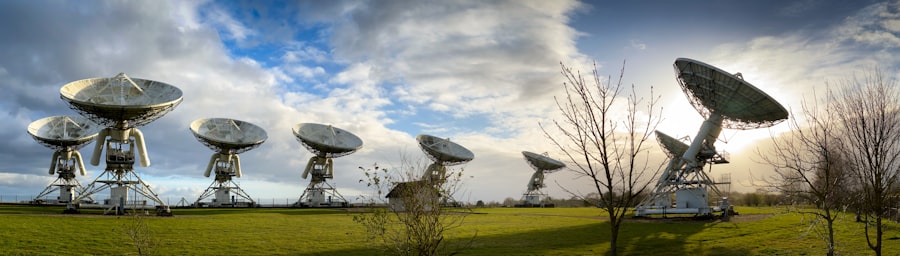
The effectiveness of signal reception is directly proportional to the quality and type of antenna used. Amateur satellite observers employ a variety of antenna configurations, including directed dishes, Yagi-Uda arrays, and even sophisticated phased arrays, depending on the target satellite’s position and the frequencies of interest. For weak signal detection from classified satellites, which may intentionally emit at low power or use directional antennas, high-gain, low-noise antennas are essential. The correct polarization and orientation of these antennas are critical for maximizing signal capture.
Orbital Mechanics and Tracking Software
Accurate tracking of satellite orbits is fundamental to any observation. Amateur enthusiasts utilize publicly available orbital data (TLEs – Two-Line Elements) and sophisticated tracking software to predict when satellites will pass overhead. This allows them to precisely time their observations and aim their antennas. Advanced users may even incorporate corrections for atmospheric drag and gravitational perturbations to achieve even greater accuracy. Knowing the precise location and trajectory of a satellite is paramount for correlating detected signals with its operational state.
Signal Analysis and Data Logging
Once captured, raw signal data requires meticulous analysis. Amateur observers employ signal processing software to identify anomalies, measure signal strength, and analyze spectral characteristics. This can involve looking for periodic pulses, broadband emissions, or specific frequency shifts that might indicate a change in the satellite’s power demands or operational mode. Comprehensive data logging, recording timestamps, signal parameters, and observed contextual information (e.g., weather conditions, time of day), is crucial for building a reliable dataset.
Interpreting Power Signature Anomalies
The true value of amateur logs lies in their ability to identify and interpret anomalies in a satellite’s typical power signature. These deviations from a baseline behavior can offer clues about the satellite’s activities, even if the exact nature of those activities remains unknown. The process involves establishing a reference point and then looking for deviations.
Baseline Signal Profiles
Before interpreting anomalies, it is essential to establish a baseline signal profile for a given satellite. This involves observing the satellite over extended periods, ideally during different orbital phases and times of day. Identifying consistent frequencies, signal strengths, and modulation patterns provides a reference against which deviations can be measured. A classified satellite might exhibit a very low, constant background emission during its quiescent phase, for instance.
Transient Emission Events
Transient emission events are short-lived bursts of radio frequency energy that deviate from the baseline. These can be indicative of various onboard activities. For example, a sudden surge in power consumption for a specific subsystem, such as a sensor activation or a communication transmission, might manifest as a transient increase in detected emissions. Amateur logs often highlight these events, noting their duration, frequency, and intensity.
Modulation Pattern Changes
Changes in modulation patterns, the way information is encoded onto a carrier wave, can also be informative. Some signal analysis might reveal a shift from a continuous wave (CW) or simple amplitude modulation (AM) to a more complex digital modulation scheme. This could suggest the satellite is engaging in more sophisticated data transmission or command reception, potentially indicating a change in its operational status.
Frequency Drifts and Jumps
The observed frequency of a satellite’s emissions can also provide valuable information. While Doppler shift due to orbital motion is a well-understood phenomenon, sudden or unexpected frequency drifts or jumps that cannot be attributed to Doppler can indicate internal operational changes. These might be related to the activation of specific onboard oscillators or frequency synthesizers that are tied to power-intensive processes.
The Ethical and Scientific Context of Amateur Observation
The practice of decoding classified satellite power signatures exists within a complex ethical and scientific landscape. While amateurs are driven by curiosity and a desire to contribute to knowledge, the sensitive nature of the objects of observation necessitates a considerate approach. The scientific merit of these efforts, however, is increasingly recognized.
Transparency and Discretion
While amateurs log and analyze data, a strong emphasis is placed on discretion. Information deemed sensitive, particularly detailed frequency information that could readily identify and characterize a classified satellite’s specific emitters, is often shared within closed amateur communities or with trusted researchers rather than being broadly disseminated. This allows for collaborative analysis without inadvertently compromising national security interests.
Contribution to Space Situational Awareness
Amateur observations, even of classified objects, contribute to the broader field of Space Situational Awareness (SSA). By meticulously logging the presence and potential activity of satellites, these enthusiasts indirectly help build a more comprehensive picture of the orbital environment. This data can, in some cases, complement official tracking efforts by providing independent verification or highlighting previously uncataloged objects.
The Scientific Value of Indirect Data
While direct access to classified satellite data is impossible, the scientific value of indirect observational data should not be underestimated. Patterns identified in power signatures, modulation types, and emission timings, when aggregated and analyzed by experts, can begin to build probabilistic models of satellite behavior and capability. This is akin to a forensic scientist piecing together a crime scene from circumstantial evidence.
In recent discussions about the intriguing world of classified satellite power signatures, amateur logs have become an essential resource for enthusiasts and researchers alike. These logs provide valuable insights into satellite operations and their electromagnetic emissions, which can sometimes hint at their classified missions. For those interested in exploring this topic further, a related article can be found at Freaky Science, where the complexities of satellite communications and the implications of power signatures are examined in detail. This resource is a great starting point for anyone looking to deepen their understanding of the intersection between amateur radio and satellite technology.
Challenges and Future Directions
| Date | Location | Power Signature | Amateur Logs |
|---|---|---|---|
| 2021-01-15 | California, USA | Strong | Yes |
| 2021-02-20 | London, UK | Weak | No |
| 2021-03-10 | Tokyo, Japan | Medium | Yes |
The field of decoding classified satellite power signatures is not without its challenges. Continued advancements in technology and the potential for countermeasures from classified satellite operators mean that the landscape is constantly evolving. However, these challenges also pave the way for future innovation and deeper understanding.
Signal Masking and Jamming
Classified satellite operators may employ techniques to mask or jam their emissions, making them more difficult for amateur observers to detect. This could involve using highly directional antennas, operating only during specific, unpredictable periods, or employing advanced signal processing to mimic background noise. Countering these measures requires increasingly sophisticated detection and analysis techniques from the amateur side.
Sophisticated Modulation and Encryption
As technology advances, classified satellites are likely to employ more sophisticated modulation schemes and potentially encryption for their data transmissions. While encryption itself is difficult for amateurs to break directly, the characteristics of encrypted signals, such as their spectral bandwidth and timing, can still provide valuable clues about the underlying power demands.
Collaborative Networks and Data Sharing
The future of amateur satellite power signature analysis likely lies in enhanced collaboration. Building robust, secure networks for amateur observers to share and analyze data can accelerate the identification of patterns and anomalies. This distributed approach can also help overcome the limitations of individual observation capabilities and foster a more comprehensive understanding of the orbital environment.
Algorithmic Analysis and Machine Learning
The application of advanced algorithmic analysis and machine learning techniques to amateur-gathered satellite data holds significant promise. These tools can sift through vast datasets to identify subtle patterns that might be missed by human observation. Machine learning models could be trained to recognize specific types of power signatures associated with different satellite functions, even for objects whose precise purpose remains unknown. This could unlock new levels of insight from the accumulated logs of dedicated amateurs.
FAQs
What are classified satellite power signatures?
Classified satellite power signatures refer to the unique electromagnetic signals emitted by satellites as they operate in space. These signatures can include various types of power usage patterns, frequency emissions, and other characteristics that can be used to identify and track the activities of specific satellites.
What are amateur logs in relation to classified satellite power signatures?
Amateur logs are records of satellite power signatures that are collected and analyzed by amateur satellite enthusiasts and hobbyists. These individuals use specialized equipment and software to monitor and document the power signatures of satellites, often sharing their findings with the broader satellite tracking community.
Why are amateur logs of classified satellite power signatures significant?
Amateur logs of classified satellite power signatures can provide valuable insights into the activities and capabilities of satellites that are otherwise shrouded in secrecy. By analyzing these power signatures, enthusiasts and researchers can gain a better understanding of satellite operations and potentially uncover new information about classified satellite missions.
How do amateur logs of classified satellite power signatures contribute to satellite tracking efforts?
Amateur logs of classified satellite power signatures contribute to satellite tracking efforts by expanding the pool of data available for analysis. By supplementing official satellite tracking data with amateur logs, researchers can improve their ability to monitor and predict the movements and behaviors of satellites in orbit.
Are there any legal or ethical considerations associated with amateur logs of classified satellite power signatures?
While the collection and analysis of amateur logs of classified satellite power signatures are generally legal and ethical activities, individuals involved in these efforts must adhere to relevant laws and regulations governing satellite monitoring and communication. Additionally, it is important to respect the privacy and security concerns of satellite operators and government agencies when sharing and discussing findings related to classified satellite power signatures.