
You’re standing in your kitchen, a bowl of leftover pasta in hand. The microwave beckons, a beacon of quick warmth. But as you press start, a little voice in the back of your mind whispers doubts. Is it safe? Does it zap your food with radiation? Does it make your food unhealthy? You’re not alone in these concerns. For decades, microwaves have been shrouded in a fog of misinformation. It’s time to clear the air and understand, in plain terms, how these culinary marvels actually work. Forget the science fiction; we’re diving into the reality of microwave cooking.
You might picture a microwave as some sort of futuristic ray gun, bombarding your food with invisible, potentially harmful beams. The truth is far more grounded, relying on a fundamental principle of physics: the interaction of electromagnetic waves with water molecules. Think of it less as a ray gun and more as a very efficient way to excite tiny water particles.
What Exactly Are Microwaves?
Let’s break down the term itself. “Micro” implies small, and “wave” refers to electromagnetic waves. Microwaves are a type of electromagnetic radiation, just like radio waves, visible light, and X-rays. They fall within a specific portion of the electromagnetic spectrum, typically with frequencies between 300 MHz and 300 GHz. Your microwave oven specifically operates at a frequency of about 2.45 GHz. This particular frequency is chosen for a very practical reason: it’s highly effective at interacting with water molecules, which are present in virtually all foods.
The Electromagnetic Spectrum: Where Microwaves Fit In
Imagine a vast spectrum, a rainbow of energy. Radio waves, with their longer wavelengths and lower frequencies, are used for broadcasting. Infrared radiation, which you feel as heat, comes next. Then comes visible light, the colors you see. Ultraviolet (UV) rays, which can cause sunburn, are on the higher frequency side. Further up the spectrum are X-rays and gamma rays, which are indeed ionizing radiation and can be harmful in large doses. Microwaves sit comfortably between radio waves and infrared, meaning they are non-ionizing. This is a crucial distinction.
Non-Ionizing vs. Ionizing Radiation: A Critical Difference
This is where many myths begin to sprout. Ionizing radiation, like X-rays and gamma rays, has enough energy to knock electrons out of atoms and molecules. This process can damage DNA and is why excessive exposure to these forms of radiation is a health concern. Non-ionizing radiation, on the other hand, does not have enough energy to do this. Microwaves fall into this category. While they do interact with molecules, they primarily cause them to vibrate, not to break apart or become inherently radioactive. The energy they impart is kinetic energy, which we perceive as heat.
The Power of Polar Molecules: Why Water is Key
The secret to microwave cooking lies in the behavior of water molecules. Water molecules are polar, meaning they have a slightly positive charge on one end (where the hydrogen atoms are) and a slightly negative charge on the other end (where the oxygen atom is). When microwaves, which are also electromagnetic waves with positive and negative poles that constantly shift, pass through food, they interact with these polar water molecules. The oscillating electric field of the microwaves causes the water molecules to rapidly spin and orient themselves with the field.
The Dance of Molecules: Friction Generates Heat
This rapid spinning and reorientation creates friction between the water molecules. Think of rubbing your hands together very quickly – they get warm. The same principle applies here, but on a molecular level. This friction generates heat, and it’s this heat that cooks your food. The more water present in a food item, the more efficiently it will heat up in a microwave. This explains why foods with high water content, like vegetables and soups, cook faster than drier items like bread or crackers (though even these contain some moisture).
Many people hold misconceptions about how microwaves work, believing that they cook food from the inside out or that they can cause harmful radiation to leak. To debunk these myths and provide a clearer understanding of microwave technology, you can read a related article that explores the science behind microwaves and addresses common misunderstandings. For more information, check out this insightful piece at Freaky Science.
Inside the Microwave Oven: A Symphony of Components
Understanding the components of your microwave oven helps demystify the process. It’s a clever engineering feat designed to generate and direct microwaves efficiently. You’re not just dealing with a box; you’re interacting with a carefully constructed system.
The Magnetron: The Heart of the Operation
The star of the show, the component responsible for generating microwaves, is the magnetron. This is a vacuum tube that, when supplied with electricity, produces high-frequency radio waves, which are microwaves. It’s a powerful device, and the microwaves it generates are then channeled into the cooking cavity.
How the Magnetron Works (Simplified)
Imagine a cylindrical vacuum tube with a filament at its center. When electricity flows through the filament, it heats up and releases electrons. These electrons are then forced to move in a circular path by strong magnets surrounding the tube. As they move, they oscillate at a specific frequency, producing the microwaves. It’s a sophisticated process, but the end result is a stream of microwave energy.
The Waveguide: Directing the Energy
Once generated by the magnetron, the microwaves need to be directed into the cooking chamber. This is the job of the waveguide. It’s essentially a hollow metal tube that efficiently transmits microwaves from the magnetron to the oven cavity. The dimensions of the waveguide are precisely engineered to carry the microwaves without significant loss of energy.
The Stirrer Fan or Turntable: Ensuring Even Heating
Microwaves can create “hot spots” and “cold spots” within the oven cavity because of the way they bounce around. To ensure your food heats evenly, microwaves employ either a stirrer fan (often hidden in the top of the oven) or a turntable. The stirrer fan is a metal blade that rotates, deflecting the microwaves in different directions. The turntable rotates the food, moving it through these varying microwave fields. This constant movement and redirection is crucial for preventing uneven cooking, where one part of your meal might be scalding hot while another remains stubbornly cold.
The Physics of Standing Waves: Why Even Heating is Tricky
Without a stirrer or turntable, microwaves would create what are known as “standing waves” inside the oven. These are patterns of high and low energy that form when waves reflect back and forth. If your food were stationary, parts of it would be constantly bombarded with high energy, while other parts would receive very little. This would lead to very uneven cooking. The stirrer or turntable breaks up these standing wave patterns, promoting more uniform heating.
The Oven Cavity: The Faraday Cage Effect
The metal walls of your microwave oven serve a critical purpose: they act as a Faraday cage. A Faraday cage is an enclosure made of conductive material that blocks external electromagnetic fields. In the case of a microwave, the metal walls prevent the microwaves from escaping the oven cavity, ensuring they are contained and focused on cooking your food. This is why you should never operate a microwave with the door open – the microwaves would escape, and the oven wouldn’t be able to cook effectively.
Why Metal is Tricky: The Reflection Problem
While the metal walls are essential for containment, putting metal objects inside the microwave during cooking can be problematic. Metal reflects microwaves, and if these reflected waves are directed back at the magnetron, they can damage it. Furthermore, sharp edges on metal objects can concentrate the microwave energy, leading to arcing (sparks). This is why most microwave-safe cookware is made of glass, ceramic, or certain plastics.
Debunking the Radiation Myth: What You’re Not Being Zapped With

The word “radiation” often conjures images of nuclear explosions and hazardous waste. This fear is understandable, but it’s largely misplaced when it comes to microwave ovens. The “radiation” from your microwave is fundamentally different from the harmful types.
Microwaves Are Not “Nuclear” Radiation
This is perhaps the most common misconception. Microwaves are non-ionizing electromagnetic radiation, as we’ve already established. They do not have the energy to alter the atomic structure of your food or make it radioactive. The energy they impart is kinetic, causing molecules to vibrate and generate heat. Think of it as a very efficient way to agitate water molecules, not to break them down at an atomic level.
The Difference Between Heating and Ionizing
To reiterate, the difference between being heated by microwaves and being exposed to ionizing radiation is profound. Heating is a physical process of increasing molecular motion. Ionizing radiation is a process that can strip electrons from atoms, leading to chemical changes and damage. Your microwave oven is designed for the former, not the latter.
Leakage Levels: Safety Standards at Play
Modern microwave ovens are built with stringent safety standards to minimize microwave leakage. The door seals are designed to be highly effective, and the metal casing acts as a Faraday cage. While it’s impossible to achieve absolute zero leakage, the levels permitted by regulatory bodies are extremely low, well within safety limits.
Understanding Leakage Testing
Microwave ovens undergo rigorous testing to ensure they meet safety regulations. These tests measure the amount of microwave energy that leaks from the oven, particularly around the door and seals. If an oven exceeds these limits, it should not be sold. It’s important to note that any leakage typically decreases significantly as the oven ages and the door seals wear down, but the initial design and manufacturing standards are very high.
What Happens to the Microwaves After Cooking?
Once the cooking cycle is complete and you open the door, the microwaves cease to be generated by the magnetron. Any residual microwave energy within the cavity dissipates very rapidly, similar to how a light bulb extinguishes. There’s no lingering “charge” of microwaves in your food or the oven.
The Self-Limiting Nature of Microwaves
Microwaves are only generated when the magnetron is active and the oven is powered. As soon as you stop the cooking process or open the door, the generation of microwaves stops. They don’t persist in the environment or in the food.
Nutritional Myths: Does Microwaving Destroy Nutrients?

Another common concern is that microwave cooking somehow “zaps” the nutritional value out of your food. While it’s true that some nutrient loss can occur during any cooking method, microwaves are often unfairly blamed. In many cases, they are actually better at preserving nutrients than other methods.
Minimal Nutrient Loss: The Water Factor Again
Because microwave cooking is so fast and uses minimal water (compared to boiling, for example), it can actually preserve more water-soluble vitamins like Vitamin C and B vitamins. These vitamins are easily leached out into cooking water. When you boil vegetables, a significant portion of these nutrients can end up down the drain.
Comparing Cooking Methods: Boiling vs. Microwaving
Consider boiling broccoli. You typically immerse it in a large pot of water and cook it for several minutes. A significant amount of water-soluble vitamins will dissolve into that water. Now consider microwaving broccoli. You might steam it in a covered dish with just a tablespoon or two of water for a few minutes. The amount of water used is minimal, and the cooking time is short, leading to much less nutrient loss.
Denaturation of Proteins: A Natural Process
Some myths suggest that microwaves “denature” proteins in a harmful way. However, protein denaturation is a natural process that occurs with all forms of cooking, not just microwaving. Heat, acid, and even agitation can cause proteins to change their shape and structure. This is how cooking makes proteins digestible and safe to eat. The denaturation caused by microwaving is no different from the denaturation caused by grilling, baking, or frying.
The Role of Heat in Protein Structure
Proteins are complex molecules made of long chains of amino acids. When heated, these chains unfold and rearrange themselves. This is essential for making them easier for your body to break down and absorb. Microwaves simply provide the heat to initiate this process.
No “Bad” Compounds Created: A False Alarm
There’s no scientific evidence to suggest that microwave cooking creates harmful or toxic compounds in food. The rapid heating process doesn’t magically transform healthy food into something unhealthy. If anything, by cooking food more quickly and with less water, it can preserve more of its natural goodness.
Many people hold misconceptions about how microwaves operate, believing that they cook food from the inside out or that they emit harmful radiation. To debunk these and other common myths, you can explore a related article that provides insightful information on the science behind microwave cooking. For a deeper understanding, check out this informative piece on Freaky Science, which clarifies how microwaves actually work and addresses various myths surrounding their use.
Microwave-Safe Cookware: What to Use and What to Avoid
| Myth | Reality |
|---|---|
| Microwaves cook food from the inside out | Microwaves actually cook food from the outside in, as the microwaves penetrate only about 1 to 1.5 inches into the food |
| Microwaves destroy the nutrients in food | Microwaving is actually one of the best cooking methods for preserving nutrients, as it requires minimal water and shorter cooking times |
| Microwaves cause cancer | There is no evidence to support the claim that microwaves cause cancer. Microwaves use non-ionizing radiation, which is not powerful enough to damage DNA and cause cancer |
| Microwaves heat food unevenly | Microwaves heat food more evenly than traditional cooking methods, as they can penetrate food and heat it from all directions |
Choosing the right cookware for your microwave is crucial for both safety and effective cooking. Not all materials are created equal when it comes to interacting with microwaves.
Glass and Ceramic: Your Best Friends
Glass and ceramic dishes are generally excellent choices for microwave use. They are non-reactive and allow microwaves to pass through them easily, heating the food directly. Ensure that the glass or ceramic is labeled as “microwave-safe.” Some older glass items or those with metallic glazes may not be suitable.
What to Look For: The “Microwave Safe” Symbol
Most microwave-safe dishes will have a symbol on the bottom – often a set of wavy lines or a microwave icon. Always look for this symbol before placing a dish in the microwave.
Plastics: Use with Caution
While many plastics are safe for microwave use, it’s essential to choose wisely. Some plastics can warp, melt, or leach chemicals into your food when heated. Look for plastics specifically labeled as “microwave-safe.” Avoid using plastic wrap directly touching your food during cooking, as it can melt and contaminate your meal.
The BPA Concern: Opting for Safer Alternatives
Many “microwave-safe” plastics are now BPA-free (Bisphenol A), which is a good thing. If you’re concerned about plastic, opt for glass or ceramic whenever possible.
Metal: The Big No-No
As discussed earlier, metal should generally be avoided in the microwave. It reflects microwaves, which can lead to arcing, damage to the magnetron, and uneven cooking. The only exceptions are specific microwave-safe metal racks designed for certain ovens or small amounts of foil used to shield parts of food from overcooking (though this requires careful monitoring).
The Exception of Small Amounts of Foil: Use with Extreme Caution
Some advanced microwave ovens and recipes might suggest using small pieces of aluminum foil to shield parts of food from overcooking. However, this is a technique that requires careful understanding and monitoring. Never cover the entire dish with foil, and ensure the foil is smooth and not touching the oven walls. If you’re unsure, it’s best to err on the side of caution and avoid metal altogether.
The Verdict: Microwaves Are Your Ally, Not Your Enemy
You’ve journeyed through the inner workings of your microwave, debunked persistent myths, and learned about safe usage. The reality is that microwave ovens are incredibly convenient, energy-efficient, and, when used correctly, safe appliances that can preserve the nutritional value of your food. They are a testament to modern engineering, designed to make your life easier and your meals quicker. So, the next time you reach for that bowl of leftovers, embrace the power of your microwave with confidence. You now understand the science behind the speed, and you can enjoy your warm meal without a second thought about the phantom dangers that likely exist only in myth.
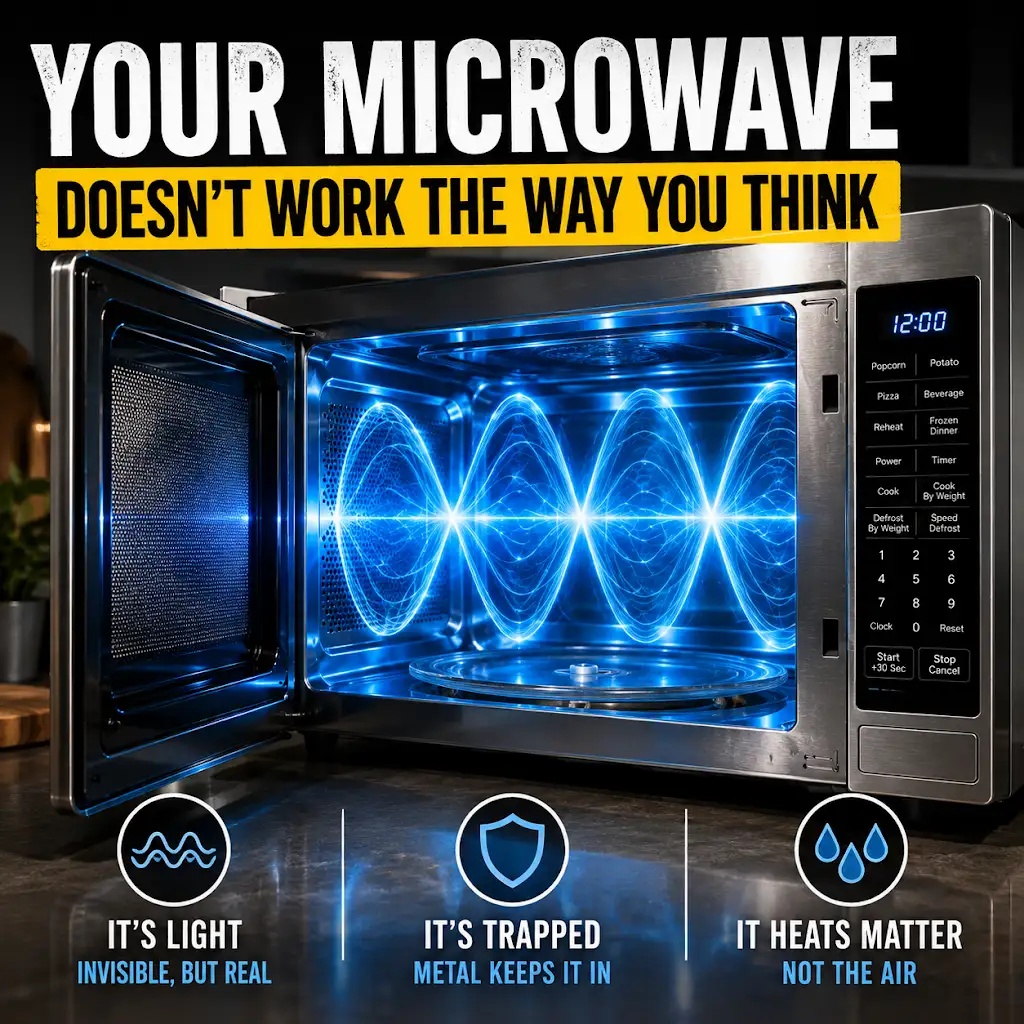
Your Microwave Doesn’t Work the Way You Think
FAQs
What is the common myth about how microwaves work?
The common myth about how microwaves work is that they cook food from the inside out.
How do microwaves actually work?
Microwaves work by emitting non-ionizing radiation that causes the water molecules in food to vibrate, generating heat and cooking the food.
Is it true that microwaves change the chemical composition of food?
No, microwaves do not change the chemical composition of food. They only heat the food by causing the water molecules to vibrate.
Can microwaves cause harm to humans?
When used according to the manufacturer’s instructions, microwaves are safe for heating and cooking food. However, it is important to follow safety guidelines and avoid using damaged microwaves.
Do microwaves destroy the nutrients in food?
Microwaves can actually help retain more nutrients in food compared to other cooking methods, as they cook food quickly and with minimal water, which can help preserve nutrients.