The deep ocean, a realm of perpetual twilight and crushing pressure, harbors an astonishing secret: a form of photosynthesis that thrives without a single ray of sunlight. For decades, scientists have grappled with the existence of this “dark oxygen production,” a phenomenon that challenges our fundamental understanding of how life creates energy. This article delves into the unfolding mystery of sunlight-free photosynthesis, exploring its mechanisms, its implications for understanding life on Earth and beyond, and the ongoing research pushing the boundaries of our knowledge.
Photosynthesis, as commonly understood, is the cornerstone of most terrestrial and aquatic ecosystems. Plants, algae, and some bacteria harness light energy from the sun to convert carbon dioxide and water into glucose (a sugar for energy) and oxygen. This process, vital for the breathable atmosphere we depend on, is inextricably linked to sunlight. However, the discovery of life thriving in environments devoid of sunlight, such as deep-sea hydrothermal vents and subsurface rock formations, ignited a persistent question: could life generate oxygen in the absence of light? The answer, it turns out, is a resounding yes, albeit through mechanisms far more complex and diverse than the familiar solar-powered pathways.
Redefining Photosynthesis: Beyond the Sun
The term “photosynthesis” itself carries the implicit meaning of “light synthesis.” However, as research has progressed, the definition has broadened to encompass processes that utilize light energy for biochemical reactions, even if that light isn’t from the sun. Dark oxygen production refers to the generation of oxygen through processes that do not rely on visible light for energy input. This has led to a re-evaluation of the very definition of photosynthesis and its potential manifestations in diverse environments.
The Paradox of Deep-Sea Life
The deep sea, with its extreme conditions – lack of light, high pressure, and often toxic chemical environments – was once thought to be largely devoid of complex life. Yet, the discovery of vibrant ecosystems around hydrothermal vents, teeming with unique organisms, forced a paradigm shift. These ecosystems are chemosynthetic, meaning they derive energy from chemical reactions, primarily involving hydrogen sulfide released from the Earth’s interior. However, the persistent observation of oxygen in these otherwise anoxic environments posed a significant puzzle, hinting at a process that could replenish oxygen without relying on surface-dwelling photosynthetic organisms.
Early Clues and Persistent Questions
Initial observations of oxygen presence in deep-sea environments were met with skepticism. Could it be residual oxygen from surface waters? Could it be a byproduct of geological processes? While these possibilities were explored, the sheer scale and persistence of oxygen in certain deep-sea locations pointed towards an active biological source. The challenge lay in identifying the specific organisms and the metabolic pathways responsible for this anoxic oxygen production.
Recent research has explored the intriguing concept of dark oxygen production, a process that occurs without the influence of sunlight. This phenomenon is particularly relevant in environments where traditional photosynthesis is not feasible, such as deep-sea ecosystems or certain terrestrial habitats. For a deeper understanding of this topic and its implications for our planet’s ecosystems, you can read more in the related article found here: Dark Oxygen Production Without Sunlight.
Unraveling the Mechanisms of Dark Oxygen Production
The breakthrough in understanding dark oxygen production came with the identification of specific microorganisms capable of this remarkable feat. These organisms, primarily bacteria and archaea, employ a suite of biochemical reactions that, while not directly utilizing solar energy, effectively mimic aspects of photosynthesis, leading to oxygen release.
Chemosynthesis: The Chemical Engine of Deep-Sea Ecosystems
While chemosynthesis is not photosynthesis, it shares the fundamental goal of energy acquisition. In hydrothermal vent ecosystems, for instance, chemosynthetic bacteria oxidize reduced sulfur compounds (like hydrogen sulfide) to produce energy, which they then use to fix carbon dioxide into organic matter. This forms the base of the food web in these environments. The presence of oxygen, however, suggested a more complex interplay.
The Role of Sulfur Oxidation
Many deep-sea microorganisms rely on sulfur compounds for energy. The oxidation of these compounds can release electrons, which can then be utilized in various biochemical pathways. Some of these pathways, when coupled with specific electron acceptors, can result in the production of oxygen.
Nitrogen Cycling and Oxygen
Another significant area of research focuses on the intricate cycles of nitrogen within the deep sea. Certain microbial processes involved in nitrogen transformations have been implicated in dark oxygen production. For example, some forms of denitrification, the process of converting nitrates back into nitrogen gas, can involve intermediate steps that lead to oxygen release.
The Emerging Role of Photosynthetic Pigments in the Dark
Perhaps the most counterintuitive aspect of dark oxygen production is the involvement of photosynthetic pigments, like bacteriochlorophylls, in organisms that are not exposed to light. This has led to the hypothesis that these pigments might be serving functions beyond light capture in these environments.
Light-Independent Photochemistry
Research suggests that some bacteria possess the ability to utilize their photosynthetic machinery in a light-independent manner. These pigments might be involved in electron transfer reactions or in capturing faint residual light that might penetrate to certain depths, or even in utilizing thermal radiation.
Energy Transfer in the Absence of Visible Light
Scientists are exploring the possibility that these pigments can facilitate energy transfer through alternative means, such as utilizing energy from chemical reactions or even from heat generated by geological processes. This opens up a fascinating avenue of research into the adaptability of biological systems.
Unveiling Novel Enzymatic Pathways
Beyond the known photosynthetic machinery, researchers are discovering entirely new enzymatic pathways that contribute to dark oxygen production. These pathways often involve unique redox reactions and specialized electron carriers.
Oxidative Phosphorylation and Oxygen Production
In some cases, dark oxygen production appears to be linked to variations of oxidative phosphorylation, a process typically associated with respiration. However, in these novel pathways, the directionality of electron flow and the final electron acceptors are different, leading to oxygen generation instead of oxygen consumption.
The Mystery of the Electron Donors
Identifying the ultimate source of electrons for these oxygen-producing pathways is a critical area of ongoing research. These donors could be various inorganic compounds present in the deep-sea environment, or even organic matter derived from other organisms.
Organisms at the Forefront: The Pioneers of Dark Oxygen
The discovery of dark oxygen production has been intimately linked to the identification and study of specific groups of microorganisms. These extremophiles, thriving in environments that would be lethal to most life forms, are the true pioneers of sunlight-free photosynthesis.
Deep-Sea Microbes: Masters of Adaptation
The harsh conditions of the deep sea – high pressure, low temperature, and limited nutrient availability – have driven the evolution of remarkable metabolic adaptations in microorganisms. Dark oxygen producers are a prime example of this evolutionary ingenuity.
Hydrothermal Vent Communities
Hydrothermal vents, spewing superheated, mineral-rich fluids from the Earth’s crust, are hotbeds of microbial activity. Many of the bacteria and archaea found here are chemosynthetic, but some have also been found to produce oxygen without light.
Subsurface Biosphere
The Earth’s crust itself harbors a vast, largely unexplored biosphere. Microorganisms living within these deep rock formations, far removed from sunlight, have also been found to exhibit oxygen-producing capabilities, often linked to the available geochemistry.
The Role of Archaea
Archaea, a domain of single-celled organisms distinct from bacteria, are particularly prominent in extreme environments. Many of the newly discovered dark oxygen producers belong to this ancient lineage, highlighting their resilience and metabolic diversity.
Methanogens and Oxygen Production
Interestingly, some methanogenic archaea, which typically produce methane, have been found to exhibit oxygen-producing capabilities under specific conditions, blurring the lines between previously defined metabolic groups.
Bacterial Diversity and Innovation
Bacteria also play a crucial role in dark oxygen production. Various bacterial phyla have been identified as carrying out these novel oxygen-generating processes, showcasing the widespread nature of this phenomenon across different microbial domains.
Cyanobacteria in Unexpected Niches
While typically associated with surface waters, some strains of cyanobacteria have been found to persist and even thrive in dimly lit or dark environments, suggesting an ability to adapt their photosynthetic machinery for light-independent oxygen production.
Implications of Dark Oxygen Production
The discovery and understanding of dark oxygen production have profound implications, not only for our understanding of Earth’s biosphere but also for the search for life beyond our planet.
Rethinking Earth’s Oxygen History
The existence of sunlight-free photosynthesis suggests that Earth’s oxygen may not have always been solely the product of solar-powered plant life. This could necessitate a re-evaluation of the timeline and sources of oxygenation in Earth’s early history, potentially influencing our understanding of the evolution of aerobic life.
The Great Oxidation Event
The Great Oxidation Event, a period around 2.4 billion years ago when Earth’s atmosphere became significantly oxygenated, has long been attributed to the proliferation of oxygenic photosynthesis by cyanobacteria. Dark oxygen production offers a potential supplementary or even alternative pathway for oxygen accumulation in earlier geological periods.
Astrobiological Significance: Searching for Life Beyond Earth
The discovery that life can produce oxygen without sunlight significantly expands the potential habitability of planets and moons within our solar system and beyond. Environments previously considered too dark to support photosynthetic life might now be viable candidates for harboring life.
Icy Moons and Subsurface Oceans
Moons like Europa (Jupiter) and Enceladus (Saturn) are thought to harbor vast subsurface oceans. If life exists within these oceans, dark oxygen production could be a crucial mechanism for maintaining an oxygenated environment, making them more promising targets in the search for extraterrestrial life.
Martian Subsurface Exploration
Mars, with its thin atmosphere and lack of surface liquid water, is a prime target for astrobiological exploration. The possibility of subsurface microbial life capable of dark oxygen production adds another layer of intrigue to the search for extant life on the Red Planet.
Novel Biotechnological Applications
Understanding the biochemical pathways involved in dark oxygen production could lead to innovative biotechnological applications, such as the development of new methods for oxygen generation in artificial environments or for the production of biofuels.
Oxygen Generation Systems
The ability to produce oxygen without relying on external light sources could revolutionize oxygen generation systems for medical applications, space exploration, and even for creating artificial habitats on other planets.
Bioremediation and Energy Production
The unique metabolic capabilities of dark oxygen-producing organisms might also be harnessed for bioremediation purposes, breaking down pollutants, or for novel forms of bioenergy production.
Recent research has unveiled intriguing methods of producing oxygen in environments devoid of sunlight, a process often referred to as dark oxygen production. This innovative approach could have significant implications for space exploration and sustainable living in extreme conditions. For a deeper understanding of this fascinating topic, you can explore a related article that discusses various scientific advancements in this field. Check it out here to learn more about the potential of generating oxygen without relying on solar energy.
The Future of Dark Oxygen Research: Frontiers and Challenges
| Location | Rate of Dark Oxygen Production | Method |
|---|---|---|
| Oceans | 0.1 – 0.5 mol O2/m^2/yr | Chemosynthesis by bacteria |
| Caves | Varies | Chemosynthesis by bacteria |
| Deep Sea | 0.01 – 0.1 mol O2/m^2/yr | Chemosynthesis by bacteria |
Despite significant progress, the field of dark oxygen production is still in its nascent stages, with many questions remaining unanswered and numerous frontiers to explore.
Identifying More Oxygen Producers
The vast majority of the deep sea and subsurface biosphere remains unexplored. Continued exploration and advanced sampling techniques are crucial for identifying new organisms that exhibit dark oxygen production and for understanding their ecological roles.
Genomic and Metagenomic Approaches
Modern genomic and metagenomic techniques allow scientists to analyze the genetic material of entire microbial communities without culturing individual organisms. This is proving invaluable in discovering novel genes and pathways associated with dark oxygen production.
Culturing Challenges
Culturing extremophiles in laboratory settings remains a significant challenge. Developing new techniques for growing and studying these organisms in conditions that mimic their natural habitats is essential for detailed mechanistic studies.
Elucidating Complex Biochemical Pathways
Precisely mapping out the intricate biochemical pathways involved in dark oxygen production requires sophisticated analytical techniques and a deep understanding of microbial metabolism.
Isotope Labeling and Tracer Studies
Using stable isotopes to trace the flow of atoms through metabolic pathways can provide crucial insights into the sequence of reactions and the intermediates involved in oxygen generation.
Spectroscopic and Electrochemical Techniques
Advanced spectroscopic and electrochemical methods are being employed to study the redox potentials of electron carriers and the kinetics of enzymatic reactions involved in dark oxygen production.
Understanding Environmental Triggers and Regulation
Investigating the environmental factors that trigger and regulate dark oxygen production is vital for understanding its ecological significance and for potentially manipulating these processes for biotechnological applications.
Geochemical Influences
The availability of specific chemical compounds, such as reduced sulfur or nitrogen species, is likely a key driver of dark oxygen production. Understanding these geochemical influences is crucial.
Pressure and Temperature Effects
The extreme pressures and temperatures of the deep sea can significantly impact enzyme activity and metabolic rates. Studying how these factors influence dark oxygen production is a critical area of research.
The Interplay with Other Metabolic Processes
Dark oxygen production does not occur in isolation. It is intricately linked with other metabolic processes within microbial communities. Understanding these complex interdependencies is essential for a holistic view.
Symbiotic Relationships
Many deep-sea organisms live in symbiotic relationships. Investigating how dark oxygen production contributes to or is influenced by these symbiotic interactions is a key area of future research.
Microbial Community Dynamics
The presence and activity of dark oxygen producers can influence the structure and function of entire microbial communities. Studying these community dynamics will provide a broader ecological context for this phenomenon.
The ongoing exploration of dark oxygen production promises to reshape our understanding of life’s resilience and adaptability. From the deepest ocean trenches to the potential subsurface oceans of alien worlds, the ability of life to forge its own oxygen, independent of the sun, is a testament to the boundless ingenuity of nature. As research continues, the mystery of sunlight-free photosynthesis will undoubtedly yield further astonishing revelations, pushing the boundaries of biology, astrobiology, and our very conception of what it means to be alive.
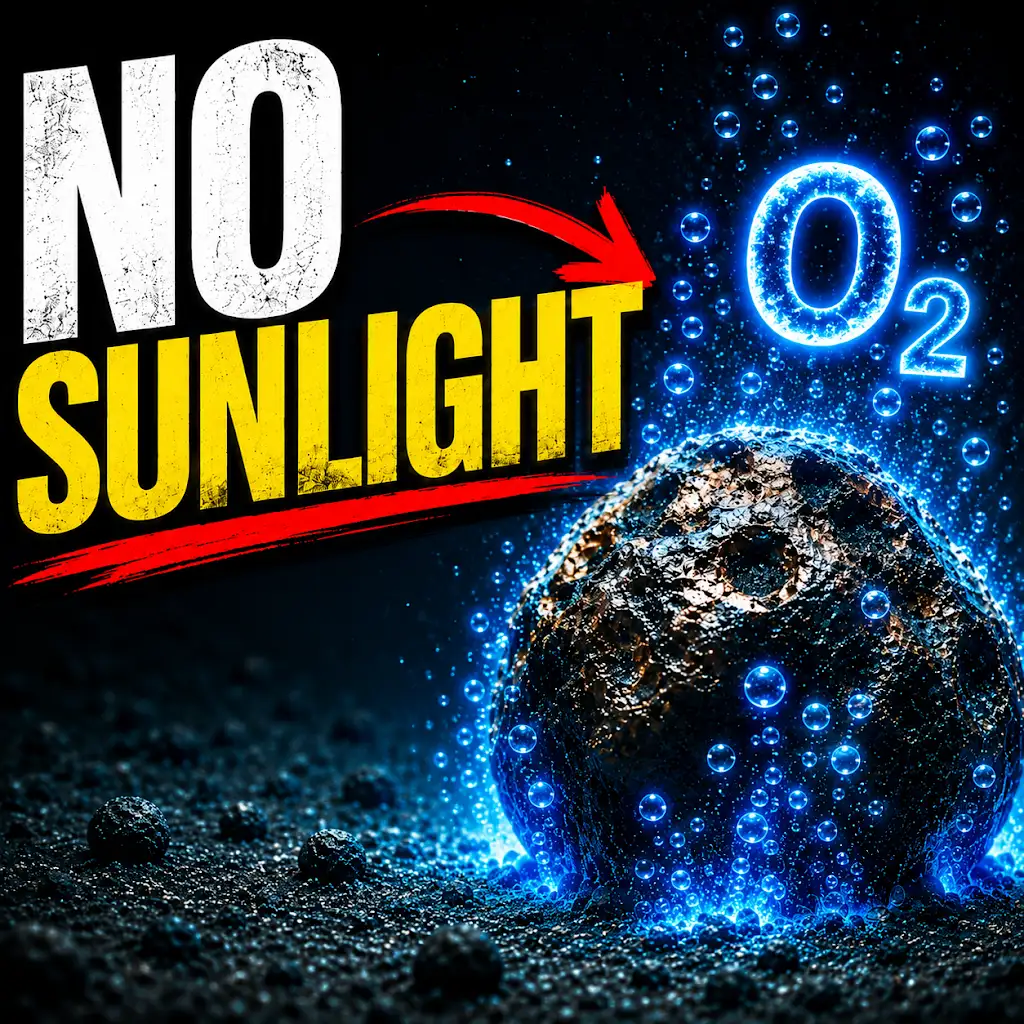
Scientists Found Oxygen Where It Should Be Impossible
FAQs
What is dark oxygen production without sunlight?
Dark oxygen production without sunlight refers to the process of oxygen production in the absence of light. This process occurs through various biochemical reactions, such as the breakdown of organic matter and the oxidation of inorganic compounds, which result in the release of oxygen.
How does dark oxygen production occur?
Dark oxygen production occurs through processes such as microbial respiration, chemosynthesis, and the decomposition of organic matter. These processes involve the breakdown of organic compounds or the oxidation of inorganic compounds, resulting in the release of oxygen as a byproduct.
Where does dark oxygen production occur?
Dark oxygen production can occur in various environments, including deep-sea hydrothermal vents, oxygen minimum zones in the ocean, and within soil and sediment. These environments provide the necessary conditions for the biochemical reactions that lead to dark oxygen production.
What are the implications of dark oxygen production without sunlight?
Dark oxygen production plays a crucial role in maintaining oxygen levels in environments where sunlight is limited or absent. This process contributes to the overall oxygen balance in ecosystems and supports the survival of organisms that rely on oxygen for respiration.
How does dark oxygen production without sunlight impact the environment?
Dark oxygen production without sunlight has significant implications for the biogeochemical cycling of elements and the overall functioning of ecosystems. It influences nutrient cycling, carbon sequestration, and the distribution of oxygen in various habitats, ultimately shaping the dynamics of ecological processes.