
You’ve always thought of yourself as a singular entity, a unified being navigating the world. But deep within your skin, in every nook and cranny of your being, lies a bustling metropolis of microscopic citizens: your cells. They are the fundamental units of life, and they don’t just exist; they communicate. You’ve stumbled upon the extraordinary truth: there’s a hidden language spoken within your own body, a constant chatter that dictates everything from your mood to your metabolism, your immune response to your very survival. This is the code you’re about to crack.
Imagine your cells as highly sophisticated individuals, each with a specific job. A neuron firing electrical impulses, a muscle cell contracting, a liver cell detoxifying your blood – they are all specialists. But how do they coordinate their actions? How does a signal from your brain reach your toes to initiate a step? How does your body know when to heal a cut or fight off an infection? The answer lies in their intricate communication network, a complex dance of molecules and signals that, once understood, reveals the astounding intelligence underpinning your existence. This isn’t magic; it’s biology, and you’re about to become fluent in its most fundamental dialect.
The Building Blocks of Communication: Molecular Messengers
Your cells don’t possess vocal cords or the ability to type out emails. Their language is far more nuanced and elegant, relying on a sophisticated system of molecular messengers. Think of these molecules as tiny letters, words, and even entire sentences, carrying vital information from one cell to another. Understanding these messengers is your first step to deciphering the cellular code.
Imagine a vast postal service operating within you, with no postage due. These molecular messages are dispatched, travel through the extracellular space, and are received by specialized cellular antennas. The types of messengers and their modes of transport are vast and varied, each contributing to the symphony of cellular interaction.
Hormones: The Body’s Broadcast System
Hormones are your body’s most far-reaching communicators. Released by specialized glands, like the pituitary or thyroid, they travel through your bloodstream, acting like widespread broadcasts that can influence multiple target cells throughout your body. This is how your body orchestrates grand plans, like growth and development, or manages long-term processes like blood sugar regulation.
The Endocrine Network: A Symphony of Glands
Your endocrine system is a master conductor of hormonal communication. When you experience stress, the adrenal glands release cortisol, sending out a signal that prepares your body for “fight or flight.” Conversely, when you eat, the pancreas releases insulin, a signal that tells your cells to absorb glucose from your bloodstream, lowering your blood sugar. The intricate interplay between these glands ensures a delicate balance, and disruptions can lead to a cacophony of cellular confusion.
Receptor-Ligand Binding: The Key and the Lock
For a hormone to exert its effect, it needs to find its specific recipient. This is where receptors come in. Embedded in the cell membrane or within the cell itself, these receptors act like locks, and the hormones are the keys. When a hormone (the ligand) binds to its specific receptor, it triggers a cascade of events within the cell, initiating a specific response. This exquisite specificity ensures that only the intended cells hear the message.
Neurotransmitters: The Speedy Signals of the Nervous System
While hormones are slow-moving and long-acting, neurotransmitters are the sprint runners of cellular communication. These chemical messengers transmit signals across synapses, the tiny gaps between nerve cells. This allows for rapid, precise communication, forming the basis of your thoughts, reflexes, and every voluntary and involuntary movement you make.
Synaptic Transmission: The Spark of Connection
When an electrical impulse reaches the end of a neuron, it triggers the release of neurotransmitters into the synaptic cleft. These molecules then diffuse across the gap and bind to receptors on the neighboring neuron, either exciting it (making it more likely to fire) or inhibiting it (making it less likely to fire). This rapid exchange is what allows you to react instantly to stimuli.
The Diversity of Neurotransmitters: A Spectrum of Signals
From the calming influence of GABA to the invigorating power of dopamine, a vast array of neurotransmitters exist, each with its own unique function. Serotonin, for instance, plays a crucial role in mood regulation, while acetylcholine is vital for muscle contraction. Understanding their specific roles is like learning the vocabulary of your nervous system.
Growth Factors: Orchestrating Growth and Repair
Growth factors are another type of molecular messenger, crucial for cell division, differentiation, and tissue repair. They are like the blueprints and construction crews that guide the growth and maintenance of your body’s structures.
Cell Division and Differentiation: Building Your Future
When you’re growing, or when your body needs to repair itself after an injury, growth factors are released to stimulate cells to divide and specialize. For example, nerve growth factor (NGF) is essential for the survival and growth of nerve cells. Without these signals, your body would stagnate, unable to adapt or heal.
Wound Healing: A Collaborative Effort
When you cut yourself, a complex series of events unfolds, orchestrated by a symphony of growth factors. These molecules signal cells to migrate to the wound site, proliferate, and lay down new tissue, effectively patching up the damage. This intricate process is a testament to the cooperative nature of cellular communication.
The hidden language of cells is a fascinating topic that delves into the complex communication systems within our bodies. For those interested in exploring this subject further, a related article can be found at Freaky Science, where you can discover more about the intricate ways in which cells interact and convey information to one another, ultimately influencing various biological processes.
The Cellular Conversation: Mechanisms of Signal Transduction
Once a cellular messenger delivers its message, it doesn’t just disappear. The cell has a sophisticated internal machinery that translates this external signal into a specific internal action. This process is known as signal transduction, and it’s like the decoding of a message at the receiving end.
Imagine a relay race within the cell. The initial signal acts as the baton, passed from one molecular component to another, each step amplifying and modifying the original message until it reaches its ultimate destination and elicits a cellular response.
Receptor Activation: The Initial Trigger
As we touched upon, the binding of a messenger to its receptor is the crucial first step. This binding event causes a conformational change in the receptor, essentially “turning it on.” This activation is the spark that ignites the entire transduction pathway.
G Protein-Coupled Receptors (GPCRs): A Versatile Signaling Hub
GPCRs are a massive family of receptors that play a role in an astonishing array of cellular processes. When a ligand binds, the GPCR activates a G protein, a molecular switch that then interacts with other cellular components, initiating a signaling cascade. Many drugs are designed to target GPCRs, highlighting their importance in human health and disease.
Enzyme-Linked Receptors: Direct Action Pathways
Other receptors, like tyrosine kinases, are enzymes themselves. When activated by a ligand, they directly catalyze a biochemical reaction, such as phosphorylating other proteins, which can then go on to relay the signal. This is a more direct pathway, leading to a swift cellular response.
Intracellular Signaling Cascades: The Domino Effect
Once the initial receptor is activated, a series of events unfolds inside the cell. These are the intracellular signaling cascades, a chain reaction of molecular interactions that amplify and diversify the original signal. Think of it as a complex domino effect, where the falling of one domino triggers a long line of others.
Second Messengers: Amplifying the Signal
Often, the initial signal transduction event leads to the production of “second messengers” within the cell. These are small molecules like cyclic AMP (cAMP) or calcium ions (Ca2+). They act as amplifiers, spreading the signal throughout the cell and activating multiple downstream targets. A single activated receptor can lead to the production of many second messengers, exponentially increasing the signal’s impact.
Protein Phosphorylation: The On/Off Switch
A common mechanism in signal transduction is protein phosphorylation. This is the process of adding a phosphate group to a protein, which can either activate or inactivate it. Kinases are enzymes that add phosphate groups, while phosphatases remove them. This constant toggle of phosphorylation and dephosphorylation acts like a molecular on/off switch, controlling many cellular functions.
Cellular Responses: The Outcome of the Conversation
The ultimate goal of signal transduction is to elicit a specific cellular response. This response can take many forms, depending on the cell type and the signal it receives.
Gene Expression: Rewriting the Cellular Blueprint
Sometimes, the signal transduction pathway leads to changes in gene expression. This means the cell is instructed to turn on or turn off the production of specific proteins, effectively altering its behavior and function. This is a profound change, akin to rewriting the cell’s operational manual.
Metabolic Changes: Adjusting the Body’s Engine
Other signals can trigger rapid changes in metabolism. For instance, insulin signaling leads to increased glucose uptake and storage, altering the cell’s energy balance. This is how your body fine-tunes its energy production and utilization.
Cell Movement and Differentiation: Shaping Tissues and Functions
Signals can also direct cells to move to specific locations, a crucial process during embryonic development and wound healing. Furthermore, they can instruct stem cells to differentiate into specialized cell types, contributing to the formation of complex tissues and organs.
Decoding Cellular Messages: The Power of Observation and Experimentation
You might be thinking, “This is fascinating, but how do scientists actually crack this code?” The answer lies in a combination of meticulous observation and ingenious experimentation, constantly refining our understanding of these intricate cellular conversations.
Imagine being a detective, piecing together clues to understand a secret dialogue. Scientists use a variety of tools and techniques to observe cellular activity and deduce the meaning of their communications.
Microscopy: Peering into the Microscopic World
Microscopy is your most fundamental tool for visualizing cells. From light microscopes to the incredible resolution of electron microscopes, these instruments allow you to see the cells themselves, their internal structures, and even some of the larger molecular players involved in communication.
Fluorescence Microscopy: Lighting Up the Signals
Fluorescence microscopy has revolutionized cell biology. By tagging specific molecules with fluorescent dyes, scientists can visualize their location and movement within living cells. This allows you to see where neurotransmitters are released, where receptors are located, and how signals are transmitted in real-time.
Confocal Microscopy: Building 3D Pictures
Confocal microscopy provides even greater detail by creating optical slices of a specimen. This allows for the reconstruction of three-dimensional images, giving you a more comprehensive understanding of the spatial relationships between communicating cells and their molecular components.
Molecular Techniques: Dissecting the Communication Pathways
Beyond just seeing, scientists need to understand the molecular players and their interactions. This is where a suite of molecular techniques comes into play, allowing for the isolation, identification, and manipulation of these communication molecules.
PCR and Gene Sequencing: Understanding the Genetic Blueprint
Techniques like Polymerase Chain Reaction (PCR) and gene sequencing allow scientists to amplify and analyze DNA and RNA. This helps identify the genes that code for specific receptors, signaling molecules, and enzymes involved in cellular communication.
Western Blotting: Quantifying Protein Levels
Western blotting is used to detect and quantify specific proteins within a sample. This is invaluable for understanding how the presence and amount of signaling molecules or their receptors change under different conditions.
CRISPR-Cas9 Gene Editing: Rewriting the Cellular Code
The advent of CRISPR-Cas9 gene editing technology has provided an unprecedented ability to precisely modify genes within cells. This allows scientists to knock out genes to see what happens to cellular communication, or to insert genes to study their effects, providing powerful insights into the functional roles of different molecules.
Implications and Applications: The Future Shaped by Cellular Understanding
Cracking the code of cellular communication isn’t just an academic pursuit; it has profound implications for human health and well-being. As you gain this understanding, you unlock the potential for entirely new approaches to medicine, diagnostics, and even the enhancement of human capabilities.
Imagine being able to precisely control cellular behavior to combat disease or regenerate lost tissue. This knowledge is the bedrock of future medical breakthroughs.
Fighting Disease: Targeting Cellular Malfunctions
Many diseases stem from disruptions in cellular communication. Cancer, for instance, often arises from runaway cell division triggered by faulty signaling pathways. Neurodegenerative diseases like Alzheimer’s and Parkinson’s are linked to the breakdown of communication between neurons.
Cancer Therapeutics: Disrupting the Signals of Growth
Current cancer treatments often aim to disrupt the aberrant signaling pathways that drive tumor growth. For example, tyrosine kinase inhibitors block the activity of specific enzymes that promote cell proliferation. As our understanding deepens, we can develop even more targeted and effective therapies.
Neurological Disorders: Restoring the Flow of Information
Restoring proper communication in the nervous system is a major goal in treating neurological disorders. Research into neurotransmitter imbalances and receptor function is crucial for developing treatments for conditions ranging from depression to epilepsy.
Regenerative Medicine: Rebuilding and Repairing
The ability to precisely control cellular communication opens up exciting avenues in regenerative medicine. By understanding how to stimulate cells to divide, differentiate, and organize, scientists are working to repair damaged tissues and organs.
Stem Cell Therapies: Guiding Differentiation
Stem cells are like blank slates, and growth factors provide the instructions for what they should become. Scientists are learning to harness these signals to guide stem cells into becoming specific cell types, such as heart muscle cells or neurons, for transplantation and repair.
Tissue Engineering: Creating Living Constructs
Tissue engineering combines cells, biomaterials, and signaling molecules to create functional tissues and organs in the lab. This holds the promise of replacing damaged organs and revolutionizing transplant medicine.
The Future of Health: Personalized and Proactive Medicine
Ultimately, understanding the hidden language of cells paves the way for truly personalized and proactive medicine. By analyzing your unique cellular communication patterns, doctors could predict your susceptibility to certain diseases and intervene long before symptoms appear.
Biomarker Discovery: Early Warning Systems
Specific molecules or patterns of cellular communication can act as biomarkers, indicating the presence of disease at its earliest stages. This allows for timely diagnosis and treatment.
Gene Therapy and Beyond: Tailoring Treatments
With advancements in gene therapy and other molecular techniques, treatments can be tailored to an individual’s specific genetic makeup and cellular signaling profile, ensuring maximum efficacy and minimal side effects. You are not just a patient; you are a unique biological system with a unique cellular language.
The hidden language of cells is a fascinating topic that delves into the intricate ways in which cells communicate and interact with one another. Understanding this cellular dialogue can unlock new insights into various biological processes and diseases. For those interested in exploring this subject further, a related article discusses the complexities of cellular communication and its implications for medical science. You can read more about it in this insightful piece on Freaky Science.
Your Role in the Cellular Symphony
You are the conductor of this incredible cellular symphony, whether you realize it or not. Your lifestyle, your diet, your environment – all of these factors influence the way your cells communicate. By understanding this hidden language, you gain the power to become a more conscious and active participant in your own health.
Think of your body as a finely tuned orchestra. The musicians are your cells, and the hidden language is the sheet music that guides their performance. You are not merely an audience member; you have the ability to influence the harmony.
The Impact of Lifestyle Choices: Tuning the Orchestra
What you eat, how you sleep, how you manage stress – these are not just abstract concepts; they are powerful influences on your cellular communication. A nutrient-rich diet provides the building blocks for your molecular messengers, while adequate sleep allows crucial cellular repair processes to occur. Chronic stress, on the other hand, can flood your system with cortisol, disrupt hormonal balance, and impair cellular function.
Nutrition: Fueling the Communication Network
Vitamins, minerals, and essential fatty acids are not just for energy; they are vital components in the synthesis and function of many signaling molecules and receptors. A balanced diet provides the raw materials for your cells to communicate effectively.
Sleep: The Cellular Reset Button
During sleep, your body undergoes a period of intense cellular repair and waste removal. Disrupting sleep cycles can throw off your circadian rhythms, affecting hormone production and the efficiency of your cellular signaling pathways.
Stress Management: Keeping the Orchestra in Harmony
Chronic stress leads to an overproduction of stress hormones, which can interfere with other signaling pathways and lead to inflammation and cellular damage. Practicing mindfulness, meditation, or other stress-reducing techniques can help maintain a healthy cellular environment.
The Environment’s Influence: The External Factors
The air you breathe, the water you drink, the products you use – your environment constantly interacts with your cells. Pollutants and toxins can interfere with cellular communication, while a clean and supportive environment can foster optimal function.
Environmental Toxins: Disrupting the Signals
Exposure to pesticides, heavy metals, and other environmental toxins can act as “noise” in your cellular language, interfering with receptor binding, enzyme activity, and overall signaling efficiency.
The Importance of a Healthy Ecosystem: Nurturing Your Inner World
Just as a healthy ecosystem supports diverse life, a supportive external environment contributes to the healthy functioning of your internal cellular ecosystem. Clean air, pure water, and access to nature can all positively impact your cellular communication.
Embracing the Future: Your Journey of Cellular Literacy
You’ve embarked on a journey to understand the hidden language of cells, the whispers within that orchestrate your entire existence. This is not a destination, but a continuous process of learning and discovery. The more you understand, the more empowered you become to nurture your health and well-being.
The language of cells is complex, beautiful, and incredibly powerful. By unraveling its intricacies, you gain a profound appreciation for the marvel that is your own body and unlock the potential for a healthier, more vibrant future. So, listen closely to the whispers within, and become fluent in the most important language you’ll ever know.

Your Body Knows Something You Don’t
FAQs
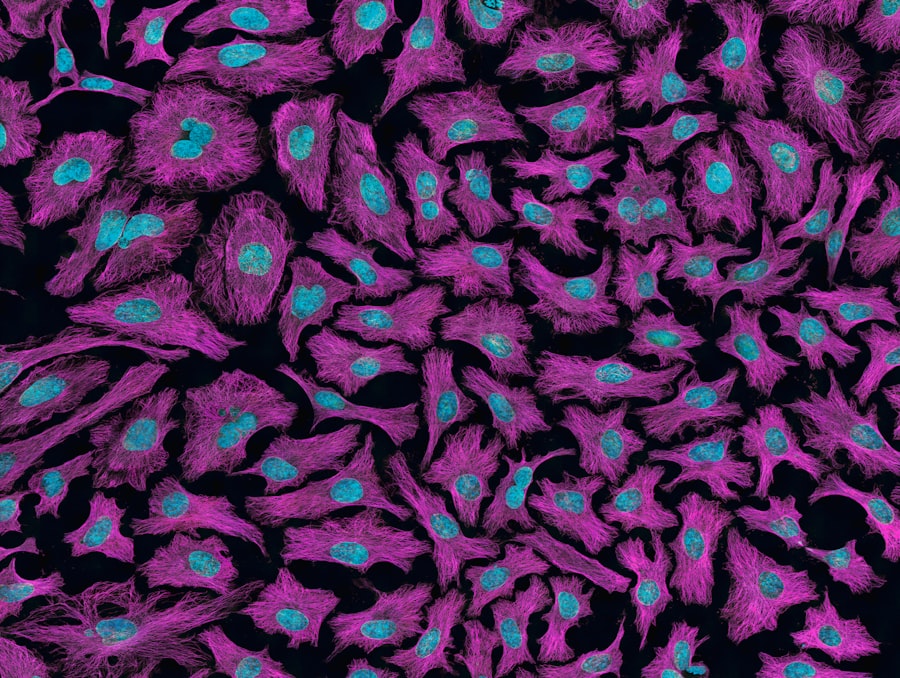
What is the hidden language of cells?
The hidden language of cells refers to the complex system of communication and signaling that occurs within and between cells in the human body. This communication is essential for coordinating various biological processes and maintaining overall health.
How do cells communicate with each other?
Cells communicate with each other through a variety of mechanisms, including direct contact, chemical signaling, and electrical signaling. These communication pathways allow cells to coordinate their activities and respond to changes in their environment.
What are some examples of cell signaling pathways?
Some examples of cell signaling pathways include the release of hormones into the bloodstream, the binding of signaling molecules to cell surface receptors, and the transmission of electrical signals through nerve cells. These pathways play a crucial role in regulating processes such as growth, metabolism, and immune response.
Why is understanding the hidden language of cells important?
Understanding the hidden language of cells is important because it can provide insights into the underlying mechanisms of various diseases and disorders. By deciphering the complex signaling networks within cells, researchers can develop new treatments and therapies for a wide range of health conditions.
How do researchers study the hidden language of cells?
Researchers study the hidden language of cells using a combination of techniques, including molecular biology, biochemistry, and advanced imaging technologies. These approaches allow scientists to observe and manipulate cell signaling pathways in order to gain a deeper understanding of their function and regulation.