
Cosmic rays, enigmatic particles streaming from the far reaches of the universe, are known to bombard Earth with relentless energy. These subatomic projectiles, born from violent cosmic events like supernovae and black hole mergers, carry information about the universe’s most extreme phenomena. While their primary impact on our planet is well-understood – from Aurora Borealis displays to potential atmospheric ionization – a more speculative, yet profoundly significant, question has emerged: could these cosmic visitors, under certain circumstances, trigger a catastrophic event within the very fabric of reality itself? This article delves into the theoretical underpinnings of this startling hypothesis, exploring the concept of vacuum decay and the potential role of ultra-high-energy cosmic rays in initiating such a transition.
The idea that our universe might not be in its most stable state is a concept that arises from the intricate and often counterintuitive laws of quantum field theory. Imagine the vacuum not as an empty void, but as a dynamic, energetic medium, akin to a vast, invisible ocean. This quantum vacuum possesses a certain energy level, and just as a ball will roll downhill seeking a lower point of potential energy, the universe might, in principle, be capable of transitioning to a state of even lower energy. If such a transition were to occur, it could fundamentally alter the laws of physics as we know them, with potentially devastating consequences.
This article will guide you through the theoretical landscape of vacuum decay, examine the energy scales involved, and assess the plausibility of cosmic rays acting as the trigger. We will explore the hypothetical mechanism by which an extremely energetic particle could initiate a bubble of true vacuum, and discuss the implications of such an event for our universe.
The Nature of the Quantum Vacuum
For centuries, the concept of a vacuum conjured an image of absolute emptiness. Newton’s void was a stage upon which physical laws played out, devoid of any intrinsic properties. However, the advent of quantum mechanics, spearheaded by figures like Werner Heisenberg and Paul Dirac, revolutionized this understanding. The quantum vacuum is now understood as a seething sea of virtual particles constantly popping into and out of existence, a manifestation of the zero-point energy inherent in quantum fields. These fleeting particles, though ephemeral, imbue the vacuum with a non-zero energy content. Think of it like the surface of a calm lake; while appearing still, there are microscopic ripples and currents constantly in motion. This dynamic nature is crucial to the concept of vacuum decay.
Vacuum Stability and Meta-stability
In quantum field theory, different states of a fundamental field can exist with varying energy levels. The state with the absolute lowest energy is termed the “true vacuum,” representing the most stable configuration. However, it is possible for a field to reside in a local minimum of energy, a state that is stable against small perturbations but not against sufficiently energetic disturbances. This is known as a “false vacuum” or a “meta-stable vacuum.” Our current universe, according to some theoretical models, might be existing in such a meta-stable state. This is analogous to a ball resting in a small depression on the side of a hill, rather than at the very bottom. It takes a push to get it out of the depression and allow it to roll all the way down.
The Higgs Field and Electroweak Vacuum Stability
A prime example of this meta-stability concern arises from the Higgs field, a fundamental scalar field responsible for giving mass to elementary particles. The mass of the top quark, a particularly heavy particle, plays a critical role in determining the shape of the potential energy landscape of the Higgs field. Precisely measured values suggest that the universe might be sitting on a razor’s edge, in a meta-stable vacuum state. If the true vacuum lies at a lower energy level, a transition from the current false vacuum to the true vacuum would fundamentally alter the properties of fundamental forces and particles, potentially rendering atomic structures unstable. The implications of such a scenario are profound, as it could mean the laws of physics as we know them would cease to apply.
Recent discussions in the scientific community have raised intriguing questions about the potential for cosmic rays to trigger vacuum decay, a phenomenon that could have profound implications for our understanding of the universe. For those interested in exploring this topic further, a related article can be found at Freaky Science, which delves into the mechanics of vacuum states and the role of high-energy particles in cosmic events. This resource provides valuable insights into the ongoing research and theories surrounding this fascinating subject.
Cosmic Rays: Messengers of Cosmic Violence
What are Cosmic Rays?
Cosmic rays are not “rays” in the traditional sense, but rather high-energy charged particles, traversing interstellar and intergalactic space. They are primarily composed of atomic nuclei, with protons (hydrogen nuclei) making up the vast majority (about 90%), followed by alpha particles (helium nuclei, about 9%), and progressively smaller fractions of heavier elements and electrons. These particles are accelerated to incredible energies by various astrophysical phenomena. Imagine these particles as cosmic bullets, launched with unimaginable force from distant celestial battlegrounds.
Origins of Cosmic Rays
The origins of cosmic rays are diverse and still a subject of active research. Lower-energy cosmic rays are believed to be produced in supernova remnants – the expanding shells of gas and dust left behind after a massive star explodes. The shock waves generated by these explosions can accelerate charged particles to very high energies. Higher-energy cosmic rays, however, are thought to originate from more exotic and powerful sources. Active galactic nuclei (AGN), powered by supermassive black holes at the centers of galaxies, and gamma-ray bursts (GRBs), the most luminous explosions in the universe, are prime candidates for accelerating particles to the highest attainable energies. The immense gravitational forces and magnetic fields associated with these phenomena can act as cosmic particle accelerators of unparalleled power.
The Spectrum of Cosmic Ray Energies
Cosmic rays exhibit a wide spectrum of energies, spanning many orders of magnitude. While the majority possess energies comparable to those achievable in terrestrial particle accelerators, a small but significant fraction are ultra-high-energy cosmic rays (UHECRs). These UHECRs possess energies exceeding 10^18 electronvolts (eV), a staggering amount of energy for a single particle. To put this into perspective, an energy of 10^18 eV is equivalent to the kinetic energy of a macroscopic object like a well-hit baseball. The existence of these UHECRs poses a significant puzzle for astrophysicists, as it challenges our understanding of particle acceleration mechanisms in the universe. The question remains: what cosmic engine is capable of imbuing a single particle with such colossal energy?
Vacuum Decay: A Hypothetical Cataclysm
The Bubble Nucleation Mechanism
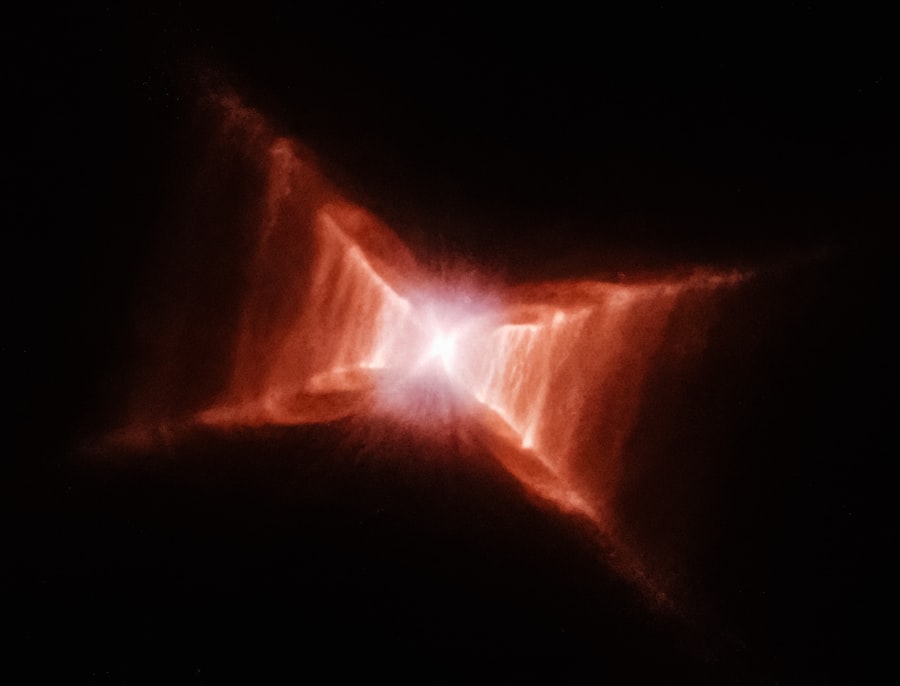
The theory of vacuum decay posits that if our universe resides in a meta-stable vacuum state, it could, in principle, transition to the true vacuum. This transition would likely occur via a process known as bubble nucleation. Imagine this as a phase transition, similar to how water at room temperature can spontaneously form ice crystals if the temperature drops sufficiently. In the case of vacuum decay, a small region of the universe would spontaneously transition to the true vacuum state. This transition would then propagate outwards as a bubble of true vacuum, expanding at the speed of light. This bubble would carry with it the lower energy density of the true vacuum, and as it expands, it would fundamentally alter the fundamental constants and laws of physics within its wavefront.
The Energy Barrier and Tunneling
For a transition from a false vacuum to a true vacuum to occur, the system must overcome an energy barrier. In quantum mechanics, this barrier can be overcome via a process called quantum tunneling. While the system might not have enough classical energy to surmount the barrier, there is a non-zero probability that it can “tunnel” through it to a lower energy state. This is akin to a ghost passing through a solid wall – a phenomenon that is energetically impossible in classical physics but has a calculable probability in quantum mechanics. The higher the energy barrier and the smaller the region involved, the lower the probability of tunneling.
The Role of Perturbations
While quantum tunneling can occur spontaneously, its probability is exceedingly low for macroscopic systems. Therefore, an external perturbation is often invoked as a potential trigger for vacuum decay. This perturbation needs to provide sufficient energy density to nucleate a bubble of the true vacuum. The hypothesis of cosmic rays triggering vacuum decay centers on the idea that UHECRs might be energetic enough to act as such a catalyst. If a UHECR were to collide with another particle, or even with itself, in a region of spacetime where the false vacuum is susceptible to decay, the localized energy release could, in principle, be sufficient to initiate the formation of a true vacuum bubble.
Cosmic Rays as Potential Triggers
Energy Thresholds for Bubble Nucleation
The crucial question is whether the energy imparted by UHECRs is sufficient to overcome the energy barrier separating the false vacuum from the true vacuum. Theoretical calculations suggest that for the electroweak vacuum, the energy scale required for bubble nucleation is on the order of the Planck scale, an extraordinarily high energy far exceeding what is observed in UHECRs. However, these calculations often rely on specific models of fundamental physics. In some hypothetical scenarios, the energy barrier might be lower, or the effective mass of the field at the bubble wall could be different, potentially bringing the required energy within the reach of UHECRs. It is like trying to push a heavy rock over a hill; the required effort depends on the height of the hill.
The Collision Scenario
The impact of a UHECR could initiate vacuum decay through a collision. When a UHECR interacts with another particle, such as a proton in the Earth’s atmosphere or in interstellar matter, it deposits a significant amount of energy in a very small volume. If this energy density is high enough, it could theoretically provide the necessary impetus for a bubble of true vacuum to form. Imagine a single, incredibly powerful spark igniting a chain reaction in a highly volatile substance. The UHECR acts as the spark, and the meta-stable vacuum is the explosive material.
Observational Constraints and Probabilities
The fact that we are still here, and that the universe continues to operate under the known laws of physics, places significant constraints on the probability of vacuum decay. If the likelihood of a UHECR triggering vacuum decay were high, we would not expect to exist. Astrophysicists use observations of UHECRs to place limits on the parameters of vacuum decay models. For example, if UHECRs were indeed the trigger, there would be an expectation of observing specific effects beyond just the decay itself, or the absence of such events would imply a very low probability. The silence of the universe regarding such catastrophic events suggests that, if such a trigger mechanism exists, it is either exceedingly rare or the required energy threshold is far beyond what UHECRs can provide. We are living in a universe that has, for all intents and purposes, survived countless bombardments from the cosmos without succumbing to this ultimate fate.
Recent discussions in the scientific community have raised intriguing questions about the potential for cosmic rays to trigger vacuum decay, a phenomenon that could have profound implications for our understanding of the universe. This topic is explored in detail in a related article that delves into the mechanics of vacuum states and the role of high-energy particles in cosmic events. For those interested in the intersection of particle physics and cosmology, the article can be found here, providing valuable insights into how these cosmic rays might influence fundamental aspects of reality.
Implications and Future Prospects
| Metric | Value | Unit | Description |
|---|---|---|---|
| Cosmic Ray Energy Range | 10^9 to 10^20 | eV | Energy spectrum of cosmic rays reaching Earth |
| Vacuum Decay Trigger Energy Threshold | ~10^19 | eV | Estimated energy required to trigger vacuum decay via particle collisions |
| Cosmic Ray Flux at Earth | 1 | particle per m² per second | Approximate flux of cosmic rays at Earth’s surface |
| Probability of Vacuum Decay Trigger per Collision | Extremely low | Dimensionless | Estimated probability that a high-energy cosmic ray collision triggers vacuum decay |
| Age of Universe | 13.8 | billion years | Time cosmic rays have been interacting with matter |
| Number of High-Energy Cosmic Ray Collisions | ~10^30 | collisions | Estimated total number of ultra-high-energy cosmic ray collisions over Earth’s history |
The End of Physics as We Know It
If vacuum decay were to occur, the consequences would be nothing short of apocalyptic. The bubble of true vacuum, expanding at the speed of light, would fundamentally alter the fundamental forces and constants of nature. The masses of elementary particles could change, the strengths of the strong and weak nuclear forces might be altered, and the electromagnetic force could behave differently. This would mean that atoms as we know them could no longer be stable, and matter itself would disintegrate. The very structure of spacetime might be reconfigured. It would be an end to all known forms of existence, a dissolution of reality as we understand it.
Searching for Evidence
Scientists are actively searching for indirect evidence that could support or refute the hypothesis of vacuum decay. This includes:
Studying Neutrino Observatories
Neutrino observatories, such as IceCube, detect high-energy neutrinos, which are particles that interact very weakly with matter and can travel vast distances unimpeded. If vacuum decay were to occur, it could potentially produce characteristic signatures in the neutrino spectrum. The detection of such signatures would be a monumental discovery, but currently, all observations align with our existing understanding of particle physics.
Analyzing Cosmic Microwave Background Radiation
The cosmic microwave background (CMB) radiation is a faint afterglow of the Big Bang. Subtle anomalies or patterns in the CMB could, in theory, provide clues about the early universe, including its vacuum state. While the CMB has been extensively studied, no definitive evidence for vacuum decay origins has been found.
Theoretical Developments and Experimental Physics
Ongoing theoretical research aims to refine models of vacuum stability and explore potential lower energy thresholds for decay. Simultaneously, advancements in particle physics experiments, such as those at the Large Hadron Collider (LHC), continue to probe the fundamental nature of particles and forces. Discoveries in these areas could provide crucial data points for evaluating the likelihood of our universe being in a false vacuum. The quest continues, pushing the boundaries of human knowledge in our quest to understand the fundamental nature of our reality.
The idea that cosmic rays could trigger vacuum decay remains a fascinating, albeit speculative, area of theoretical physics. While the current evidence suggests our universe is stable, the rigorous examination of such extreme possibilities is essential for a complete understanding of the cosmos and our place within it. The ongoing exploration of these profound questions underscores humanity’s insatiable curiosity and our drive to unravel the deepest mysteries of existence.
WATCH NOW ▶️ The Universe Is A False State: Is Reality a Simulation?
FAQs
What are cosmic rays?
Cosmic rays are high-energy particles, primarily protons and atomic nuclei, that travel through space at nearly the speed of light. They originate from various sources such as the sun, distant stars, supernovae, and other cosmic phenomena.
What is vacuum decay in physics?
Vacuum decay refers to a theoretical process in quantum field theory where the current vacuum state of the universe, considered metastable, transitions to a lower-energy “true vacuum” state. This transition could cause drastic changes in the laws of physics and the structure of the universe.
How could cosmic rays potentially trigger vacuum decay?
Some theories suggest that the high energy of cosmic rays might provide the necessary conditions to overcome the energy barrier separating the metastable vacuum from the true vacuum, potentially initiating vacuum decay. However, this remains speculative and has not been observed.
Is there any evidence that cosmic rays have caused vacuum decay?
No, there is currently no experimental or observational evidence that cosmic rays have triggered vacuum decay. The universe has been exposed to cosmic rays for billions of years without any indication of such an event occurring.
What would be the consequences if vacuum decay were triggered?
If vacuum decay were triggered, it could lead to a rapid and catastrophic change in the fundamental constants and forces of nature, effectively destroying existing matter and altering the universe’s structure. This hypothetical event would propagate at the speed of light, making it impossible to detect or escape once initiated.