You’re probably holding a microwave in your hand right now, or at least have one in your kitchen. It’s a marvel of modern convenience, rapidly heating your leftovers or popping popcorn with a hum and a glow. But have you ever stopped to wonder how this magical box actually works, and more importantly, how it keeps something as potentially dangerous as radiation safely contained within its metal walls? It’s a question of physics, engineering, and a clever design that you probably take for granted every day. You might imagine that a device that uses “radiation” to cook food must be leaking all sorts of harmful energy. However, the reality is far more controlled and, frankly, quite ingenious. The containment system of your microwave oven is a sophisticated piece of engineering, designed with one primary goal in mind: to ensure that the microwave energy stays exactly where it’s supposed to – inside the cooking cavity – while you enjoy your safely heated meal.
Before you can understand how it’s contained, you need to grasp what microwave radiation actually is. It’s not some mysterious, malevolent force. In fact, it’s a form of electromagnetic radiation, just like visible light, radio waves, and X-rays. The key differentiator lies in its wavelength and frequency. Microwave radiation falls within a specific band of the electromagnetic spectrum, typically between 300 megahertz (MHz) and 300 gigahertz (GHz). Your everyday microwave oven operates at a frequency of about 2.45 GHz. This specific frequency is no accident; it’s chosen because it’s highly effective at interacting with water molecules.
The Nature of Electromagnetic Waves
Think of electromagnetic radiation as a wave, oscillating through space. This wave has both an electric field and a magnetic field that are perpendicular to each other and to the direction the wave is traveling. The frequency of this oscillation determines the type of radiation. Higher frequencies mean shorter wavelengths and more energy. Visible light, for instance, has much higher frequencies than microwaves. Radio waves, used for broadcasting, have even lower frequencies. Microwaves sit in a sweet spot, energetic enough to make water molecules jiggle, but not so energetic that they ionize atoms or cause the kind of damage associated with ionizing radiation like X-rays or gamma rays.
How Microwaves Heat Your Food
The magic of microwave cooking lies in how these electromagnetic waves interact with food. Water molecules, abundant in most foods, are polar. This means they have a slightly positive end and a slightly negative end, like tiny magnets. When the oscillating electric field of the microwave radiation encounters these polar molecules, it tries to align them. As the electric field rapidly flips direction (billions of times per second), the water molecules try to keep up, twisting and turning back and forth. This rapid jostling creates friction between the molecules, and this friction is what generates heat. It’s a direct and efficient way of heating food, primarily from within the food itself, rather than heating the air around it as conventional ovens do.
Why This Frequency is Important
The 2.45 GHz frequency is particularly effective because it resonates with the natural rotational frequency of water molecules. This allows for efficient energy transfer. It’s also a frequency that is not readily absorbed by most plastics or ceramics, meaning the container your food is in usually stays relatively cool. This specificity is crucial for both cooking and for containment. If microwaves could easily pass through common food containers, the whole process would be far less effective, and the energy would be lost before it even reached your meal.
Microwave ovens are designed with safety features that effectively contain radiation within the appliance, ensuring that it does not escape into the surrounding environment. This is achieved through a combination of metal screens and seals that prevent microwaves from leaking out while cooking. For a deeper understanding of how these appliances work and the science behind their safety mechanisms, you can read more in this related article: Freaky Science.
The Faraday Cage Effect: The Microwave’s Protective Shell
Now that you understand the invisible force, let’s talk about how it’s kept under lock and key. The primary mechanism for containing microwave radiation is the use of a Faraday cage. This isn’t just a random term; it’s a well-established scientific principle named after Michael Faraday, an English scientist who discovered it in the 19th century. A Faraday cage is essentially an enclosure made of conductive material that can block external electromagnetic fields. Your microwave oven’s metal interior is precisely this enclosure.
The Principles of Conductive Materials
Conductive materials, like the metal lining of your microwave, have free electrons that can move around easily. When an electromagnetic wave hits a conductor, these free electrons are forced to move in response to the oscillating electric field. This movement of electrons creates an opposing electric field within the conductor that cancels out the incoming electromagnetic field, effectively shielding the interior. It’s like a protective bubble, deflecting the microwave energy away from the outside world.
The Role of the Metal Cavity
The interior of your microwave oven is typically made of stainless steel or a similar conductive metal. This metal forms a continuous shell around the cooking chamber. When the magnetron (the component that generates microwaves) fires, the waves are directed into this cavity. The conductive walls then reflect these waves back into the cavity, bouncing them around until they are absorbed by the food. If any of these waves were to try and escape, the metal walls would act as a barrier, reflecting them back inside. The thicker and more continuous the metal, the more effective the containment.
What About the Door?
The door is the most likely point for leakage, so it’s engineered with extra care. You’ll notice a metal mesh embedded in the glass. This mesh is not just decorative; it’s a crucial part of the Faraday cage. The holes in the mesh are much smaller than the wavelength of the microwaves (which is about 12.2 cm for 2.45 GHz). Because the holes are so small relative to the wavelength, the electromagnetic waves are effectively blocked, just as if the entire door were solid metal. The mesh allows you to see your food cooking while still maintaining the integrity of the containment. It’s a brilliant application of electromagnetic principles in everyday design.
The Sealing and the Screen: Preventing Escape Routes
While the metal cavity and the mesh-covered door are the primary lines of defense, there are other subtle but important design elements that ensure no stray microwaves get out. These include the seals around the door and any other openings. The design is meticulous, ensuring that there are no gaps or imperfections that could compromise the containment.
Door Seals: The Unsung Heroes
The edges of your microwave door aren’t just for aesthetics. They are fitted with specialized seals. These seals are designed to create a tight barrier between the door and the oven body. They are often made of materials that are resistant to heat and wear, ensuring a consistent and effective seal over time. A damaged or worn-out door seal is one of the few things that can compromise the containment of your microwave, which is why it’s important to inspect them periodically.
The Microwave Window: More Than Just Glass
As mentioned earlier, the window in your microwave door is a crucial component. It’s not just a piece of glass. It’s a composite structure. The outer layer is typically tempered glass for durability and heat resistance. However, it’s the inner layer or the embedded mesh that does the heavy lifting for containment. This mesh, as we discussed, has holes that are significantly smaller than the wavelength of microwaves. This effectively creates a waveguide that allows light (which has a much shorter wavelength) to pass through, but blocks the microwaves. This is why you can see your food cooking, but the radiation is kept inside.
The Interlock System: Safety First
Another critical safety feature is the interlock system. Most microwaves have at least two, and often three, interlock switches. These switches are designed to immediately shut off the magnetron if the door is opened, even slightly. This prevents the magnetron from operating without the full containment of the Faraday cage. It’s a vital fail-safe mechanism that prevents accidental exposure to microwave radiation. You’ve probably noticed that the microwave won’t start until the door is firmly shut. This is the interlock system at work, ensuring that the cooking process only begins when the containment is secure.
What Happens to the Waves Inside?

So, the microwaves are inside. What happens to them? They don’t just vanish. The energy has to go somewhere. As you learned, it’s absorbed by the food, primarily the water molecules within it. But what if the food is removed before the cooking cycle is complete? Or what if there’s nothing in the microwave to absorb the energy? This is where other design considerations come into play to prevent damage to the oven itself.
Absorption by Food: The Primary Goal
The intended purpose of your microwave is to heat food. The energy generated by the magnetron is directed into the cavity, and as it bounces around, it’s absorbed by the food. The more water content the food has, the more efficiently it will absorb the microwaves. This absorption is what cooks your food. The continuous bouncing and re-emission of microwaves within the cavity ensure that the energy is distributed as evenly as possible throughout the food.
Reflections and Standing Waves
Microwaves, like all electromagnetic waves, can reflect off surfaces. When waves reflect and interfere with each other, they can create patterns called standing waves. These are areas where the intensity of the microwaves is higher and areas where it is lower. This is one reason why microwave ovens often have a turntable. The turntable rotates the food, ensuring that it passes through both high and low-intensity areas, leading to more even cooking. Without a turntable, you might end up with “hot spots” and “cold spots” in your food.
What Happens When There’s No Load?
If you run a microwave with no food inside (an “empty oven”), the microwaves have nowhere to be absorbed. They will just keep reflecting back and forth between the walls. This can lead to a buildup of energy, potentially damaging the magnetron, which is the component that generates the microwaves. This is why you should never run a microwave empty. The interlock system is designed to prevent the magnetron from running for extended periods without the door being closed, but running it empty is still a risk to the appliance itself.
The Role of the Waveguide
The microwaves are not just randomly thrown into the cavity. They are directed there through a component called a waveguide. The waveguide is a hollow metal channel that guides the microwaves from the magnetron to the cooking cavity. Its dimensions are precisely engineered to match the wavelength of the microwaves, ensuring efficient transfer of energy with minimal loss. This controlled delivery further contributes to the overall containment and efficiency of the oven.
Microwave ovens are designed with safety features that effectively keep radiation contained, ensuring that users are protected while cooking. For a deeper understanding of how these appliances work and the science behind their design, you can explore this informative article on the topic. It provides insights into the technology that prevents radiation from escaping, which is crucial for safe usage. To read more about this, visit this article.
Beyond the Basics: Advanced Containment and Safety Features
| Aspect | Explanation |
|---|---|
| Metal Enclosure | Microwave ovens are designed with a metal enclosure that prevents radiation from escaping. |
| Mesh Screen | The oven door is fitted with a mesh screen that allows you to see inside but prevents radiation leakage. |
| Sealed Door | The door is tightly sealed to prevent any radiation from escaping during operation. |
| Safety Interlocks | Modern microwave ovens are equipped with safety interlocks to ensure that the oven cannot operate if the door is not properly closed. |
While the Faraday cage and the door seal are the fundamental elements, modern microwave ovens incorporate additional layers of safety and sophistication to ensure your well-being. These are often subtle but contribute significantly to the overall trustworthiness of the appliance.
The Magnetron: A Self-Contained Unit
The magnetron itself, the heart of the microwave that generates the radiation, is a sealed and shielded unit. It’s designed to contain the high-energy electrons and the resulting microwaves within its own housing before they are even released into the waveguide. This is an internal layer of containment, ensuring that the generation of microwaves is a controlled process.
Frequency Regulation and Control
While the operating frequency is fixed, the power output of the magnetron is carefully regulated. This is what allows you to select different cooking power levels. This regulation is achieved through electronic controls that adjust the flow of energy to the magnetron, rather than by directly altering the frequency of the waves. This ensures that the waves remain within the safe containment parameters at all times.
Regular Maintenance and Inspection
The containment of your microwave isn’t a “set it and forget it” situation. Over time, wear and tear can occur. Regular visual inspection of the door seal for any cracks or damage is a simple yet effective way to ensure continued safety. If you notice any significant damage to the door, the seals, or the mesh on the window, it’s advisable to have the appliance inspected by a qualified technician. While outright leakage of dangerous levels of radiation is rare due to the robust design, it’s always better to be safe than sorry.
Certification and Standards
Microwave ovens are subjected to rigorous safety testing and must meet strict national and international standards before they can be sold. These standards specifically address the maximum allowable leakage of microwave radiation. Manufacturers design their ovens to far exceed these minimum requirements, providing a significant safety margin. When you purchase a certified microwave, you can be confident that it has undergone extensive testing to ensure its containment capabilities.
In conclusion, the humble microwave oven is a testament to clever engineering and a deep understanding of physics. The seemingly simple act of heating your food is made possible by a sophisticated system designed to keep a powerful force – microwave radiation – precisely where it needs to be: safely inside the cooking cavity. From the conductive metal walls acting as a Faraday cage to the finely tuned mesh in the door and the critical interlock systems, every element works in concert to protect you from any unwanted exposure. So, the next time you hear that familiar hum and see your food spinning, take a moment to appreciate the invisible shield that makes it all possible. You are, quite literally, cooking with science, and that science is keeping the radiation in.
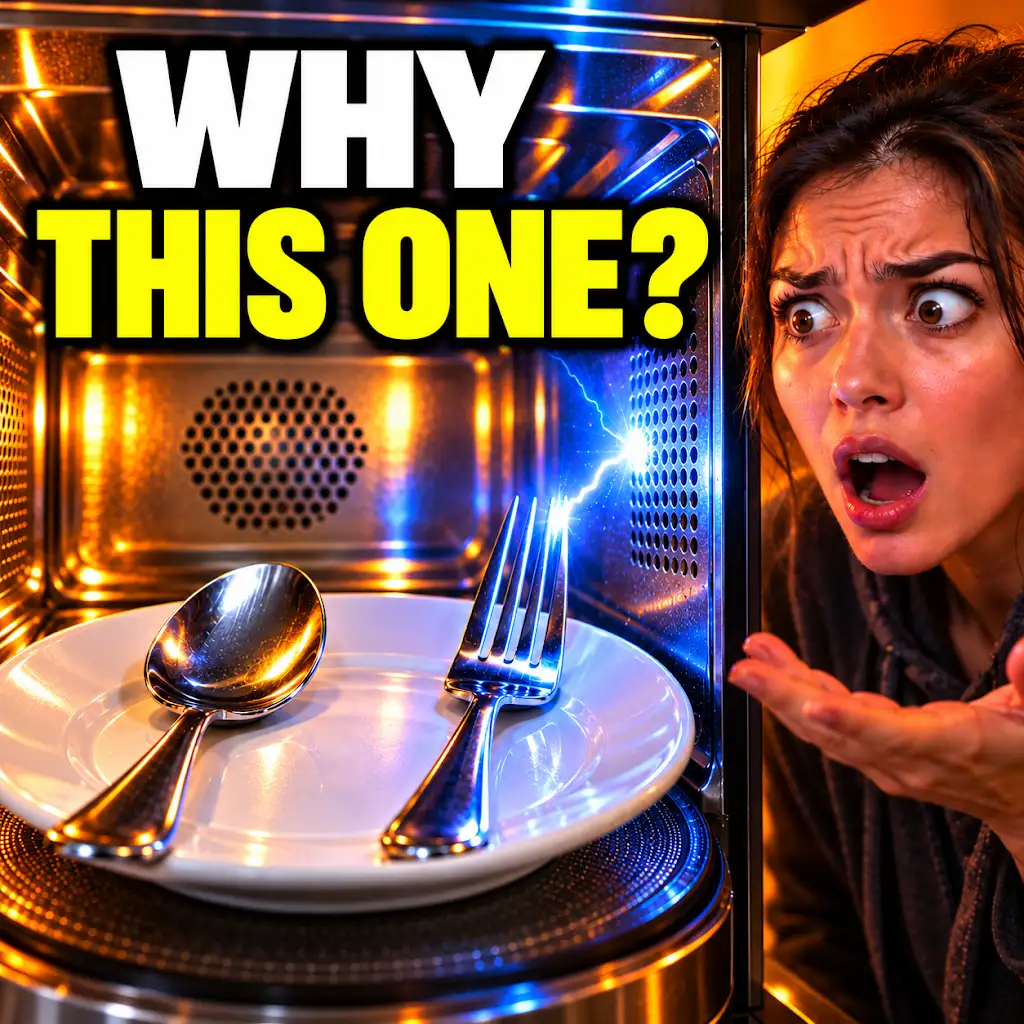
A Fork and a Spoon React Differently in a Microwave. Why?
FAQs
What is the purpose of the metal mesh in the microwave door?
The metal mesh in the microwave door is designed to reflect and contain the microwave radiation inside the oven. It acts as a barrier to prevent the radiation from escaping and causing harm to people nearby.
How does the design of the microwave oven prevent radiation leakage?
Microwave ovens are designed with a metal enclosure that reflects the microwave radiation back into the cooking chamber. The door is also equipped with a metal mesh that blocks the radiation from escaping while allowing visibility into the oven.
Are microwave ovens safe to use in terms of radiation exposure?
When used according to the manufacturer’s instructions, microwave ovens are safe to use and do not pose a risk of radiation exposure. The design of the oven and the safety features in place ensure that the radiation is contained within the cooking chamber.
What are the safety standards for microwave ovens regarding radiation leakage?
Microwave ovens are subject to strict safety standards and regulations to ensure that radiation leakage is minimized. These standards are set by regulatory agencies such as the FDA in the United States and the European Union’s safety standards.
What should I do if I suspect my microwave oven is leaking radiation?
If you suspect that your microwave oven is leaking radiation, it is important to stop using it immediately and have it inspected by a qualified technician. Do not attempt to repair the oven yourself, and contact the manufacturer for further guidance.