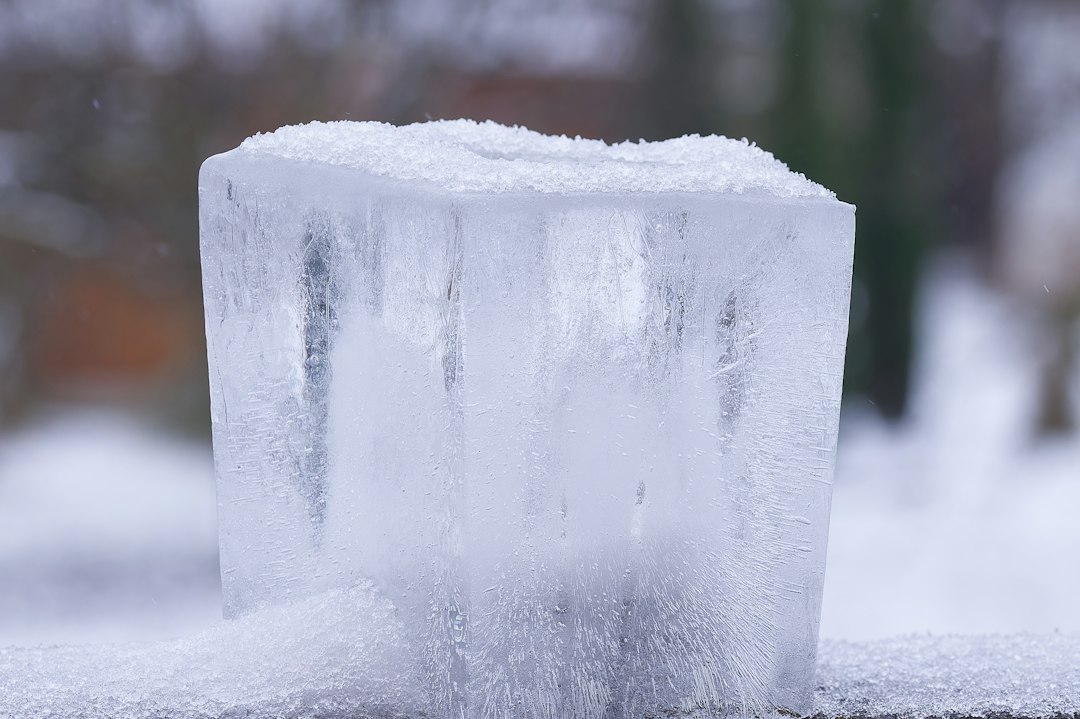
The world of science often presents phenomena that defy easy explanation, and few areas are as captivatingly strange as those involving freezing. From the seemingly solid to the profoundly peculiar, the act of becoming ice-cold can unlock a universe of oddities. This exploration delves into the weird science facts that emerge when matter succumbs to the chill, revealing a realm of unexpected behaviors and mind-bending principles.
The Peculiar Art of Ice Crystal Formation
Ice, a substance most people encounter daily, is far from a simple, uniform entity. The way water molecules arrange themselves as they transition from liquid to solid is a complex dance governed by an intricate set of rules. This process, known as crystallization, leads to a breathtaking diversity of forms, each shaped by environmental factors and the inherent properties of water.
The Hexagonal Blueprint of Snowflakes
The most iconic example of ice’s crystalline nature is, of course, the snowflake. While the adage “no two snowflakes are alike” is largely true, it stems from a fundamental geometric principle: the hexagonal lattice structure of ice. Water molecules, with their slightly positive hydrogen atoms and slightly negative oxygen atom, form hydrogen bonds. In ice, these bonds arrange the molecules into a repeating hexagonal pattern. This inherent six-fold symmetry dictates the six arms that are characteristic of snowflakes. However, the sheer number of possible arrangements for water molecules within this hexagonal framework, coupled with the infinitesimally small variations in temperature, humidity, and air currents encountered during a snowflake’s descent, means that each crystal’s growth path is unique, leading to its individualistic intricate design. The journey from a microscopic ice nucleus in a cloud to the delicate formation reaching the ground is a story of continuous, subtle adjustments, resulting in an almost infinite variety of branching patterns.
Frost Flowers: Ethereal Blooms on Ice
Another fascinating manifestation of ice formation is the phenomenon of “frost flowers.” These delicate, ribbon-like ice structures appear on the stems of certain plants, typically in very cold, humid conditions with little wind. As the plant’s frozen sap slowly melts and is forced upward through cracks in the stem, it emerges as supercooled water. Upon contact with the frigid air, this water rapidly freezes, forming thin, petal-like structures that unfurl outwards. The beauty of frost flowers lies in their ephemeral nature; they are fragile and melt as soon as the temperature rises or the sun hits them. Their formation is a testament to the subtle interplay of plant physiology, atmospheric conditions, and the principles of ice nucleation and growth, creating ephemeral sculptures that seem to bloom from the ice itself.
The Mystery of “Grog” Ice and Solid-State Reactions
Beyond visually striking formations, freezing can also induce bizarre chemical and physical changes within substances. One such oddity is “grog” ice, a term sometimes used to describe ice formed from alcoholic beverages. When alcohol freezes, it doesn’t form a solid block like pure water. Instead, it tends to separate into layers of ice and more concentrated alcohol. This is because alcohol has a lower freezing point than water. The more complex the alcoholic beverage, with its various sugars and flavor compounds, the more intricate this layering can become. This separation can alter the taste and texture of the frozen beverage, leading to unexpected culinary outcomes. More profoundly, extreme cold can even drive solid-state reactions that are impossible at room temperature. Certain chemical transformations can occur when molecules are held in a rigid ice matrix, allowing for unique interactions that wouldn’t happen in a liquid or gaseous state. These reactions are often studied in cryochemistry, a field dedicated to understanding chemical processes at very low temperatures.
If you’re fascinated by the peculiarities of science, you might enjoy exploring more about the intriguing phenomenon of freezing in the article found at Freaky Science. This resource delves into various weird science facts, including how certain substances behave under extreme cold and the surprising effects of freezing on different materials. Whether you’re a science enthusiast or just curious about the oddities of the natural world, this article offers a captivating look at the unexpected aspects of freezing.
The Surprising States of Frozen Water
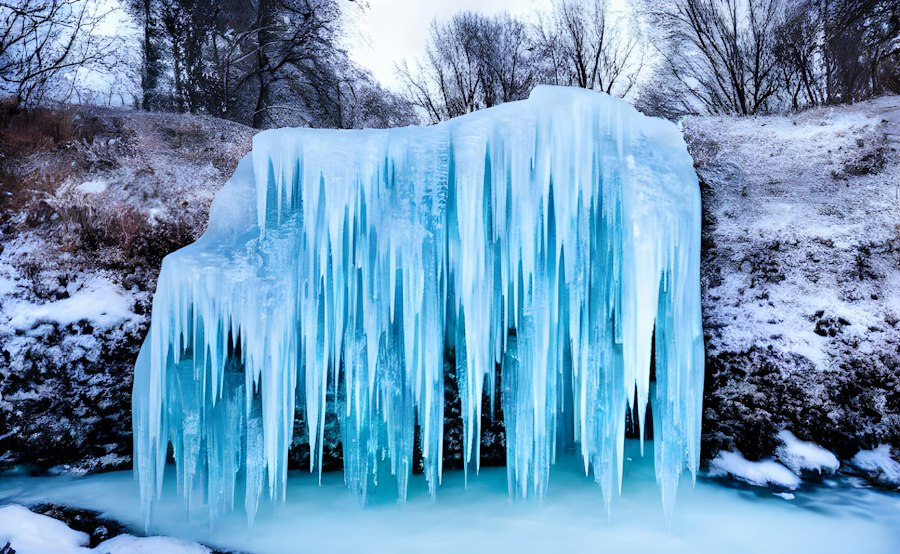
Water’s ability to exist in multiple solid phases, not just the familiar ice we see in our freezers, is one of the most mind-boggling aspects of its freezing behavior. Under different pressures and temperatures, water molecules can pack themselves in remarkably distinct ways, creating a spectrum of frozen states with unique properties.
Beyond Ordinary Ice: The Twelve Phases of Water Ice
Scientists have identified at least seventeen different crystalline forms of water ice, commonly denoted as Ice I through Ice XVII, with more theoretical phases still being investigated. The ice we commonly encounter, found in glaciers, freezers, and on our sidewalks, is known as Ice Ih (Ice one-h). This is the stable form of ice at atmospheric pressure and temperatures below 0°C. However, under immense pressure, water molecules can be squeezed into more compact arrangements. Ice II, for instance, is a rhombohedral crystalline structure that forms at pressures between 200 and 300 MPa. It is metastable at atmospheric pressure and can persist for some time before reverting to Ice Ih. Ice III, IV, and V are other high-pressure crystalline forms, each with a distinct molecular arrangement. The density of these different ice phases varies significantly, with some being denser than liquid water and others less dense. The transitions between these phases are complex and can be influenced by factors like impurities and the rate of pressure change.
Amorphous Ice: The Frozen Ghost of Water
Perhaps the most peculiar solid form of water is amorphous ice, also known as glassy ice. Unlike crystalline ice, which has a regular, repeating lattice structure, amorphous ice lacks long-range order. The molecules are frozen in a disordered state, similar to the arrangement they possess in liquid water. This state can be achieved by rapidly cooling liquid water so quickly that the molecules don’t have time to arrange themselves into a crystalline structure. This can be done through a process called “supercooling” followed by rapid cooling to cryogenic temperatures, or by condensing water vapor onto a very cold surface. Amorphous ice is less dense than crystalline ice Ih and plays a crucial role in various scientific fields, including cryopreservation, where it helps protect biological samples from damage during freezing. The creation and study of amorphous ice challenge our intuitive understanding of what it means for something to be “solid.”
The Strange Behavior of Supercooled Water
The phenomenon of supercooled water is a precursor to many odd freezing events. Supercooled water is liquid water that has been cooled below its freezing point (0°C) without solidifying. This is possible because ice crystal formation requires a nucleation site – a tiny imperfection or impurity around which ice crystals can begin to grow. In sufficiently pure water and under ideal conditions, these nucleation sites are absent, and the water remains liquid despite being below its freezing point. However, supercooled water is inherently unstable. The slightest disturbance – a vibration, a dust particle, or even a gentle nudge – can trigger rapid crystallization, causing the water to freeze almost instantaneously in a spectacular display. This spontaneous freezing of supercooled water is responsible for events like “flash freezing” and can be observed in laboratory settings when carefully prepared water is subjected to a shock.
Freezing Phenomena in the Extreme: From Space to the Deep Sea
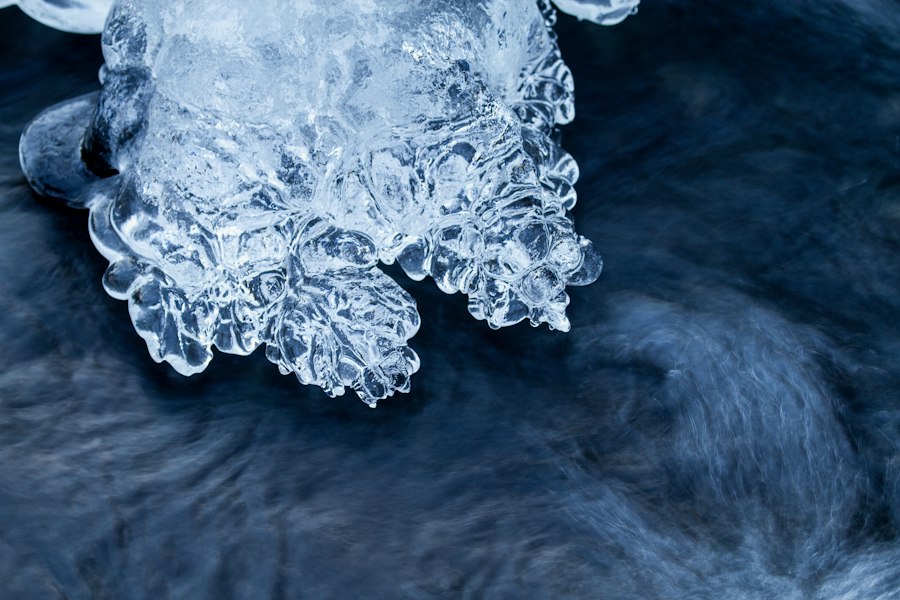
The principles of freezing are not confined to our terrestrial kitchens and refrigerators. Extreme environments, both on Earth and beyond, showcase the remarkable and sometimes bizarre ways freezing manifests, pushing the boundaries of scientific understanding.
The Frozen Oceans of Outer Space
Space is a vast, frigid expanse, and freezing plays a crucial role in the formation and behavior of celestial bodies. Comets, often described as “dirty snowballs,” are essentially large chunks of ice mixed with dust and rock. As they approach the sun, their icy components sublimate directly from solid to gas, creating the characteristic coma and tail. Moons in the outer solar system, such as Europa and Enceladus, are believed to harbor vast subsurface oceans of liquid water beneath thick icy crusts. The formation of these icy shells and the potential for liquid water beneath them are direct consequences of freezing processes operating on a cosmic scale. The study of ice in space, from the frozen methane on Neptune’s moon Triton to the water ice found on Mars and the Moon, is vital for understanding planetary evolution and the potential for life beyond Earth.
Cryovolcanism: Volcanoes of Ice
In contrast to the fiery eruptions of terrestrial volcanoes, some celestial bodies exhibit a phenomenon known as cryovolcanism, where eruptions consist not of molten rock, but of supercooled liquids, water, ammonia, or methane, mixed with dust and ice. This occurs on moons and dwarf planets where internal heat is insufficient to melt rock but can still melt ices. For example, Saturn’s moon Enceladus is known for its geysers of water ice erupting from its south polar region, hinting at a subsurface ocean. Similarly, Neptune’s moon Triton exhibits active cryovolcanic plumes. These “ice volcanoes” provide invaluable insights into the internal composition and geological processes of icy worlds, offering a unique glimpse into how freezing can drive geological activity in the frigid outer reaches of our solar system.
The Deep Sea’s Frozen Mysteries: Brine Pools and Icebergs
Even in the seemingly inhospitable depths of the ocean, freezing plays a peculiar role. Brine pools are underwater lakes of extremely salty water that are much denser than the surrounding seawater. Because of their high salt concentration, their freezing point is significantly lower than that of fresh water, meaning they can remain liquid even at temperatures that would freeze ordinary seawater. These pools, often found on the seafloor, create starkly defined boundaries and unique ecosystems where few organisms can survive. Furthermore, while most icebergs originate from glaciers on land, some unique forms can originate in the deep ocean. These can include tabular icebergs calved from ice shelves in polar regions, but also more unusual formations that can arise from the freezing of seawater around submerged objects or geological features, though these are less common and often ephemeral. The existence of liquid water under immense pressure in the deep sea, juxtaposed with the formation of ice and brine, highlights the complex interplay of temperature, pressure, and salinity in shaping these extreme environments.
The Bizarre Effects of Extreme Cold on Biology
The impact of extreme cold on living organisms is a subject of ongoing fascination, revealing a spectrum of adaptations, bizarre survival strategies, and unsettling transformations. Freezing can halt life in its tracks, but for some, it is an integral part of their life cycle.
Cryopreservation: Pausing Life’s Clock
The ability to freeze biological tissues and organisms and revive them later is a revolutionary scientific achievement known as cryopreservation. This process relies on carefully controlled freezing techniques to minimize damage caused by ice crystal formation and dehydration. Cryoprotective agents, such as glycerol and DMSO, are used to infiltrate cells and prevent the formation of large, damaging ice crystals within them. While successful for many cell types and microorganisms, cryopreserving complex organisms, like mammals, is still a significant challenge. The goal is to effectively pause biological processes, allowing for long-term storage and potential future revival. This technology has profound implications for medicine, conservation, and even potentially the future of species.
Antifreeze Proteins: Nature’s Winter Coats
Many organisms living in frigid environments have evolved remarkable adaptations to survive sub-zero temperatures. One of the most extraordinary is the production of antifreeze proteins (AFPs). These specialized proteins bind to small ice crystals that may form in an organism’s body fluids, preventing them from growing larger and damaging cells. AFPs work by lowering the freezing point of body fluids, a phenomenon known as thermal hysteresis. This allows organisms like polar fish, arctic insects, and some plants to survive in environments where ice formation would otherwise be lethal. The specific structures and mechanisms of AFPs vary across different species, showcasing a remarkable diversity of evolutionary solutions to the problem of freezing. Researchers are actively studying AFPs for potential applications in cryopreservation, food science, and medicine.
The Unsettling Realm of Cryonics
On the more speculative and ethically debated frontier of extreme cold lies cryonics. This practice involves the preservation of legally dead individuals at extremely low temperatures with the hope that future medical technology will be able to revive them and cure the cause of death. The process typically involves cooling the body to liquid nitrogen temperatures (-196°C). While proponents believe this offers a chance for future life, critics raise significant scientific and ethical concerns. The current technology is far from capable of reviving a cryopreserved human, and the long-term effects of vitrification (a process aimed at preventing ice crystal formation by forming a glassy solid) on complex biological systems are not fully understood. Cryonics remains a controversial and highly speculative endeavor at the very edge of our understanding of freezing and life.
If you’re fascinated by the peculiarities of science, you might enjoy exploring some weird science facts about freezing. For instance, did you know that certain substances can remain liquid even below their freezing point? This phenomenon is known as supercooling, and it can lead to some intriguing experiments. To learn more about this and other unusual scientific concepts, check out this interesting article on weird science facts.
Freezing and the Fabric of Reality: Pushing Physical Limits
| Fact | Description | Scientific Explanation | Interesting Metric |
|---|---|---|---|
| Supercooling Water | Water can be cooled below 0°C without freezing. | Pure water without impurities can remain liquid below freezing point due to lack of nucleation sites. | Water can be supercooled down to about -40°C before freezing spontaneously. |
| Mpemba Effect | Hot water can sometimes freeze faster than cold water. | Complex interplay of evaporation, convection, and supercooling causes this counterintuitive effect. | Freezing time difference can be up to 30% faster for hot water under certain conditions. |
| Freezing Point Depression | Adding substances lowers the freezing point of water. | Solutes disrupt the formation of ice crystals, requiring lower temperatures to freeze. | Salt can lower freezing point by up to -21°C depending on concentration. |
| Instant Ice | Supercooled water instantly freezes when disturbed. | Disturbance triggers rapid crystallization in supercooled water. | Freezing occurs within milliseconds after triggering. |
| Freezing Bubbles | Bubbles can freeze in mid-air in cold temperatures. | Soap bubbles freeze due to rapid heat loss and crystallization of the thin liquid film. | Occurs at temperatures below -7°C, freezing time ~1-2 seconds. |
The effects of freezing extend beyond the familiar, influencing fundamental physical properties and even our perception of reality. The transition into a solid state can unlock phenomena that challenge our everyday understanding of matter.
The Superfluidity of Supercooled Helium
At extremely low temperatures, approaching absolute zero, some substances exhibit extraordinary quantum mechanical properties. One such phenomenon is superfluidity, observed in supercooled helium-4. Below a critical temperature (around 2.17 Kelvin), helium transitions into a superfluid state. In this state, helium loses all viscosity and can flow without friction. It can creep up the walls of its container, flow through incredibly narrow channels, and even exhibit strange behaviors like the “fountain effect.” This behavior is a direct consequence of quantum mechanics at a macroscopic level, where the helium atoms behave as a single quantum entity. The study of superfluidity in supercooled helium has provided invaluable insights into quantum physics and has applications in areas like sensitive scientific instruments.
The Enigmatic Behavior of Quasicrystals
While most crystalline solids exhibit repeating, periodic arrangements of atoms, quasicrystals present a different picture. These solids have ordered structures, but they lack translational symmetry, meaning their atomic arrangement does not repeat perfectly in space. Instead, they display a unique form of symmetry, often with five-fold rotational symmetry, which is forbidden in conventional crystals. The formation of quasicrystals can be influenced by rapid cooling processes, where atoms are locked into these unusual, non-repeating patterns. Their discovery challenged long-held beliefs in crystallography and opened up new avenues of research in materials science, with potential applications in areas like durable coatings and thermal insulation. The rigid, yet non-repeating, structures of quasicrystals are a testament to the unexpected possibilities that emerge when matter is forced into ordered, yet unconventional, states through controlled freezing or rapid solidification.
The Philosophical Implications of Absolute Zero
While not strictly a freezing phenomenon in the sense of forming ice, the concept of absolute zero (0 Kelvin or -273.15°C) represents the ultimate limit of cold. At absolute zero, all classical molecular motion theoretically ceases, and systems reach their lowest possible energy state. Reaching absolute zero in practice is impossible, though scientists have achieved temperatures incredibly close to it. The pursuit of understanding and achieving these extreme temperatures pushes the boundaries of physics, leading to the discovery of phenomena like superconductivity and superfluidity. The philosophical implications of absolute zero are profound, touching upon the very nature of temperature, energy, and the fundamental limits of the universe. It represents a theoretical endpoint of freezing, a state where the chaotic dance of atoms is stilled, leading to a realm of exotic physical behaviors.
In conclusion, the world of freezing phenomena is a fertile ground for scientific wonder and peculiar observations. From the delicate artistry of ice crystals to the mind-bending properties of superfluidity, the act of becoming cold unlocks a universe of oddities that continue to captivate and challenge our understanding of the physical world.
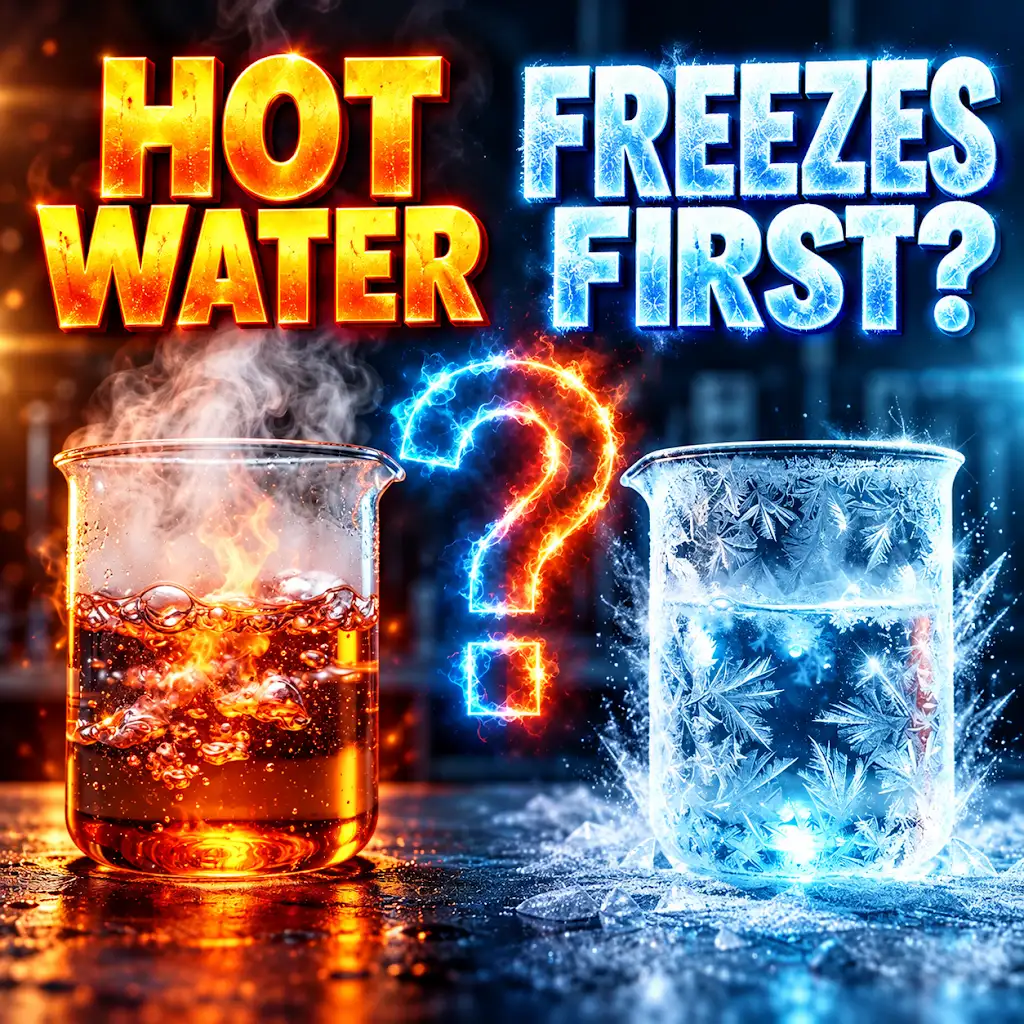
Why Hot Water Freezes Faster Than Cold (The Mpemba Effect)
FAQs
Can water freeze and boil at the same time?
Yes, under certain conditions, water can freeze and boil at the same time. This phenomenon is known as the triple point of water, which occurs at a specific temperature and pressure where water can exist in all three states: solid, liquid, and gas.
What is supercooling?
Supercooling is the process of cooling a liquid below its freezing point without it solidifying. This can happen when the liquid is pure and free of impurities that would normally act as nucleation sites for crystal formation. Supercooled water can remain in a liquid state even at temperatures below 0°C.
Can you freeze a shadow?
No, shadows are not physical objects that can be frozen. Shadows are simply the absence of light caused by an object blocking light rays. Since shadows do not have a physical form or substance, they cannot be frozen.
What is the Mpemba effect?
The Mpemba effect is the phenomenon where hot water freezes faster than cold water under certain conditions. This counterintuitive effect has been observed in various experiments, but the exact cause of the Mpemba effect is still not fully understood and is a subject of ongoing scientific research.
Can you freeze something instantly?
While it is not possible to instantly freeze something in the traditional sense, there are methods like using liquid nitrogen or other cryogenic substances that can rapidly cool objects to extremely low temperatures. These methods can achieve very quick freezing, but not instantaneous freezing.