
The freezer, often viewed as a mere appliance for preserving leftovers and chilling drinks, harbors a secret world of scientific wonder. Far from being a sterile, uninspiring box, its frigid interior offers a unique laboratory for exploring fundamental principles of physics and chemistry. The dramatic transformation of liquids into solids, the intricate beauty of ice crystal formation, and the surprising behavior of substances at sub-zero temperatures provide a captivating backdrop for experiments that can be both educational and thrilling for individuals of all ages. These “chill and thrill” activities demystify scientific concepts, fostering curiosity and hands-on learning in a safe and accessible environment.
The Magic of Freezing: From Liquid to Solid
The most apparent scientific phenomenon occurring in the freezer is freezing, the process by which a liquid transforms into a solid due to the removal of heat. This fundamental change of state is a cornerstone of thermodynamics and offers a visual demonstration of molecular behavior. Understanding why water turns into ice, or why other liquids behave differently, unlocks a deeper appreciation for the physical world.
Why Does Water Freeze?
Water’s unique molecular structure is the key to its freezing behavior. A water molecule (H₂O) consists of one oxygen atom bonded to two hydrogen atoms. The oxygen atom is more electronegative than the hydrogen atoms, meaning it attracts electrons more strongly. This creates a polar molecule, with a slight negative charge on the oxygen side and slight positive charges on the hydrogen sides. When water is cooled, its molecules lose kinetic energy and move slower. As they slow down, the attractive forces between these polar molecules become significant enough to pull them into a highly ordered, crystalline structure – ice. This lattice structure is less dense than liquid water, which is why ice floats.
Supercooling: Breaking the Rules of Freezing
Supercooling is a fascinating phenomenon where a liquid is cooled below its freezing point without solidifying. This occurs when the liquid is exceptionally pure and free from nucleation sites – tiny imperfections or particles that provide a surface for ice crystals to form. In a supercooled state, the water molecules are still moving around, but they are just waiting for a trigger. A slight jolt, the introduction of a tiny particle, or even a sound wave can cause instantaneous crystallization.
A Supercooling Experiment
To witness supercooling, one can carefully take a bottle of distilled water that has been chilled in the freezer for approximately 1.5 to 2 hours (the exact time will vary depending on your freezer). The water should be visibly liquid, not icy. Prepare a shallow dish filled with ice or already frozen ice cubes. Gently and slowly remove the bottle of supercooled water from the freezer and place it on the prepared ice. Then, with a quick and firm tap on the bottom of the bottle, observe the immediate crystallization that spreads through the liquid, turning it into ice in seconds. This experiment vividly demonstrates how subtle environmental factors can influence phase transitions. The tapping provides the necessary nucleation site for the ice crystals to begin forming.
Other Liquids in the Freezer: More Than Just Water
While water is the most common substance we freeze, exploring the freezing behavior of other liquids reveals diverse scientific principles. The freezing point of a substance is determined by the strength of the intermolecular forces between its molecules.
Freezing Point Depression: Salty Water’s Surprise
Adding solutes, such as salt, to water lowers its freezing point. This is known as freezing point depression, a colligative property that depends on the number of solute particles in the solvent, not their identity. When salt dissolves in water, it breaks down into ions (Na⁺ and Cl⁻). These ions interfere with the formation of the ice crystal lattice, requiring more energy to be removed (i.e., a lower temperature) for freezing to occur.
Experiment: The Salty Freeze Challenge
To demonstrate freezing point depression, gather two identical containers of water. In one container, add a generous amount of salt (e.g., a few tablespoons) and stir until dissolved. Place both containers in the freezer alongside a control container of plain water. Periodically check the containers. The plain water will freeze first, followed by the saltwater, which will remain liquid at temperatures where the plain water has already solidified. This experiment has practical applications, such as why salt is used to de-ice roads.
The Behavior of Oils and Other Liquids
Oils, which are typically composed of long hydrocarbon chains, have different intermolecular forces than water. These forces are weaker (primarily van der Waals forces) compared to the hydrogen bonds in water. Consequently, oils often become more viscous and semi-solid rather than forming a hard, crystalline solid at typical freezer temperatures. Other liquids, like alcohol solutions, will have even lower freezing points due to the weaker intermolecular forces and the disruption caused by the alcohol molecules.
If you’re interested in exploring more about engaging science experiments that can be conducted at home, you might want to check out this related article on freezer science experiments. It provides a variety of fun and educational activities that demonstrate the principles of freezing and temperature changes. You can read more about these exciting experiments by visiting this link.
The Art and Science of Ice Crystals
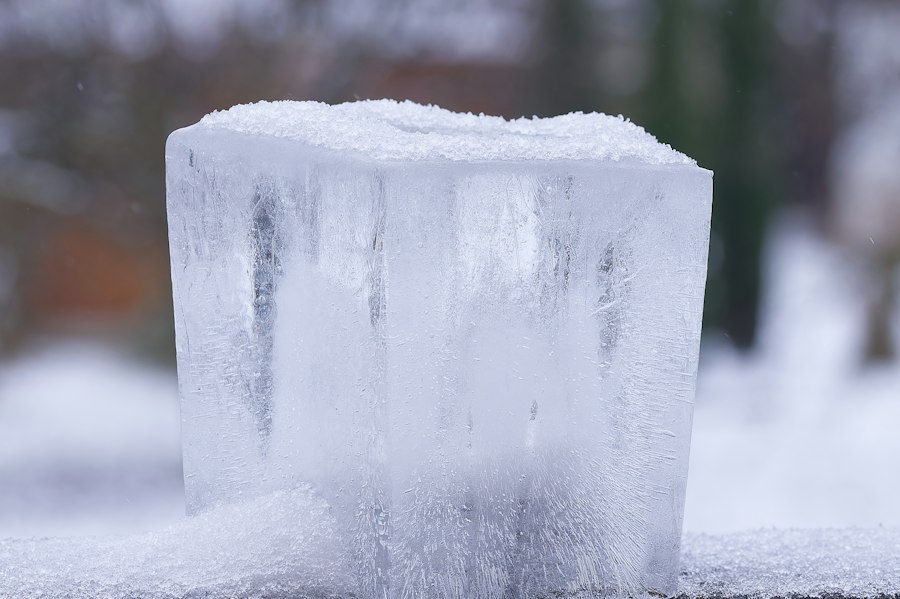
The formation of ice crystals is a breathtaking display of natural artistry driven by precise scientific laws. The intricate, geometric patterns of snowflakes and frost are not random but are dictated by the molecular structure of water and the prevailing environmental conditions during their formation.
Snowflakes: Unique Masterpieces
Each snowflake is a unique hexagonal crystal, a testament to the symmetry of the water molecule and the subtle variations in temperature and humidity encountered as it falls through the atmosphere. As water vapor freezes directly onto a nascent ice crystal (deposition), it adheres to specific points on the hexagonal structure, leading to the growth of elaborate branches.
Frost Formation: Delicate Feathers and Ferns
Frost, which forms when water vapor condenses and freezes directly onto a cold surface, exhibits equally mesmerizing patterns. The type of frost formed depends on factors like the temperature of the surface and the humidity of the air. Delicate, fern-like patterns, known as dendrites, can form on windows and other surfaces when the air is humid and the surface temperature is below freezing.
Creating Your Own Frost Art
To explore frost formation, prepare a metal surface, such as a baking sheet or a metal tray, and chill it thoroughly in the freezer. Once very cold, bring it into a slightly humid environment (perhaps by placing it near a kettle that has recently been boiled, but at a safe distance). Observe as frost crystals begin to form on the cold metal surface. The patterns that emerge can be surprisingly intricate and varied. For a more controlled experiment, place small, textured objects on the chilled metal surface before introducing it to the humid air; the frost will form around these objects, creating unique frosty sculptures.
The Impact of Temperature and Humidity on Crystal Growth
The shape and size of ice crystals are highly sensitive to temperature and humidity. At very cold temperatures, ice crystals tend to be simpler, more tabular forms. As temperatures increase slightly and humidity rises, more complex, branching structures like needles and dendrites emerge. This sensitivity allows scientists to infer past atmospheric conditions by studying ice cores.
Freezer Chemistry: Reactions at Low Temperatures
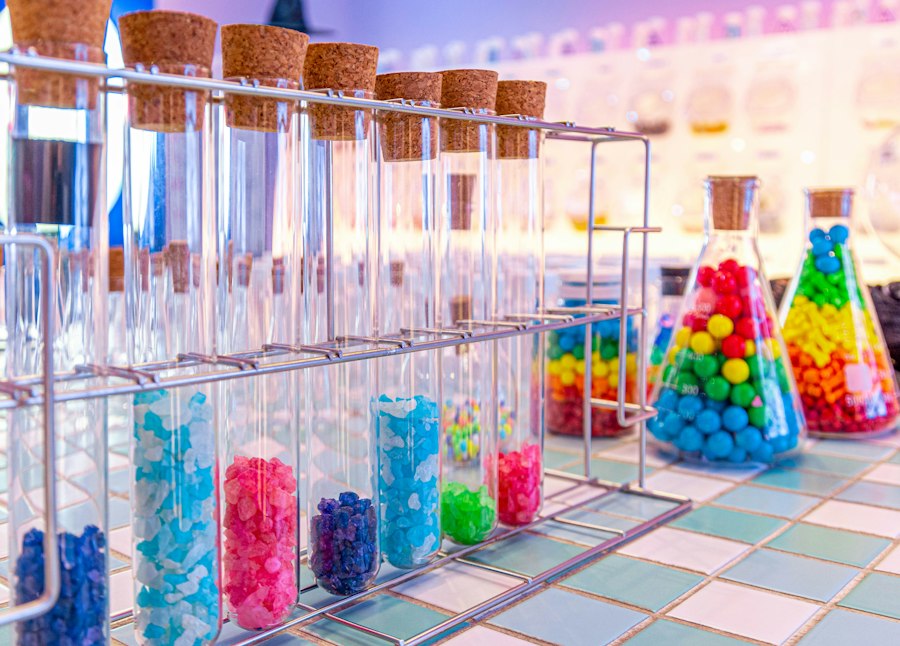
While the freezer is primarily associated with physical changes, it can also serve as a unique environment for exploring certain chemical reactions, or more commonly, for observing how chemical reactions are slowed down or even halted by extreme cold. The principle of chemical kinetics states that reaction rates generally increase with temperature because molecules have more kinetic energy and collide more frequently and with greater force. Conversely, lowering the temperature slows down these molecular interactions.
Preserving Food: A Chemical Slowdown
The primary function of a freezer in a culinary context is food preservation, which is essentially a chemical process. Freezing drastically slows down the enzymatic and microbial activity responsible for food spoilage. Enzymes, which are biological catalysts, function much less effectively at sub-zero temperatures, and the growth of bacteria and fungi is significantly inhibited.
Observing Microbial Growth (or Lack Thereof)
While direct observation of microbial growth in a freezer is not recommended for safety reasons, one can indirectly demonstrate the effect of freezing. Prepare two identical samples of a perishable food item, such as a slice of bread or a small piece of cooked meat. Place one sample in the refrigerator and the other in the freezer. Over several days or weeks, observe the differences in spoilage. The refrigerated sample will likely show signs of mold growth and degradation much sooner than the frozen sample, illustrating the power of freezing in slowing down chemical and biological processes. It is crucial to handle all food items safely and dispose of them appropriately after the observation period.
Chemical Reactions in the Cold: A Slower Pace
Some chemical reactions can be performed in a freezer, though they will proceed at a much slower rate. This can be useful for controlling highly exothermic reactions or for studying reaction mechanisms in detail.
The Slow Oxidation of Metals
While not a dramatic reaction, the slow oxidation of certain metals can be observed over extended periods in a freezer. For example, leaving a piece of iron wool exposed to the air in the freezer (ensure it’s dry to avoid immediate rusting due to condensation) will lead to a very gradual formation of rust. Comparing this to a piece of iron wool left at room temperature will show a significantly accelerated rusting process at ambient temperatures. This highlights how the cold of the freezer dramatically retards the rate of chemical reactions like oxidation.
Advanced Freezer Fun: Beyond Simple Freezing
For those who have mastered the basics, there are more advanced and intriguing experiments that can be conducted using the freezer, pushing the boundaries of what seems possible. These experiments often involve phase changes, supersaturation, and controlled crystallization.
The “Instant Ice” Phenomenon: Controlled Crystallization
The supercooling experiment mentioned earlier is a precursor to more controlled “instant ice” demonstrations. By carefully preparing a supersaturated solution, one can induce rapid crystallization by introducing a seed crystal or a nucleation agent.
Making Rock Candy: A Supersaturated Sweet Treat
Rock candy is a perfect example of a supersaturated solution that can be manipulated for fascinating results. Dissolve as much sugar as possible in hot water until no more sugar will dissolve, creating a supersaturated solution. Carefully pour this solution into a clean jar, taking care not to disturb any undissolved sugar at the bottom. Suspend a string or a clean popsicle stick into the solution, ensuring it doesn’t touch the sides or bottom of the jar. Place the jar in a cool, undisturbed location (not necessarily the freezer, as ambient temperatures are often sufficient for rock candy formation, but the principle applies). Over time, sugar crystals will begin to form on the string or stick, growing into beautiful rock candy formations. While not directly a freezer experiment for formation, the storage of the supersaturated solution and the crystallization process itself are fascinating examples of solubility and crystal growth. For a twist, one could attempt to rapidly cool a supersaturated solution in the freezer and observe the effect on crystal size and formation speed, though this requires careful control to avoid premature uncontrolled crystallization.
The Science of Ice Cream: A Frozen Emulsion
Making ice cream is a classic example of applying freezer science to a delicious outcome. It involves the controlled freezing of an emulsion – a mixture of fat (from cream) and water, stabilized by emulsifiers. The churning process while freezing is crucial for creating small ice crystals and incorporating air, resulting in a smooth, creamy texture.
Homemade Ice Cream in a Bag
A fun and accessible way to demonstrate ice cream making is the “ice cream in a bag” method. Combine milk, cream, sugar, and flavoring in a small resealable bag. In a larger resealable bag, fill it with ice and a generous amount of salt. Place the smaller bag inside the larger bag and seal it tightly. Shake vigorously for about 5-10 minutes. The salt lowers the freezing point of the ice, creating a brine that becomes significantly colder than regular ice water. This super-chilled brine efficiently freezes the mixture in the smaller bag, allowing you to make homemade ice cream without a special machine. This experiment highlights the principles of freezing point depression and heat transfer.
Freezing Effects on Different Materials: Beyond Liquids
The freezer’s influence isn’t limited to liquids. It can also reveal interesting properties of other materials.
The Brittleness of Rubber Bands
Over extended periods, freezing can make certain materials, like rubber bands, significantly more brittle. The cold causes the long polymer chains in the rubber to become less flexible. When stretched after being frozen, they are more likely to snap. This demonstrates how temperature affects the physical properties of solids.
The Hardening of Non-Newtonian Fluids
While often demonstrated at room temperature with cornstarch and water, the behavior of non-Newtonian fluids can be further explored in the freezer. A mixture of cornstarch and water becomes a solid when force is applied (like punching it) and a liquid when the force is removed. Freezing this mixture will solidify it into a solid block. Upon thawing, it will often revert to its non-Newtonian fluid state, though the texture might be slightly altered. This shows how temperature can influence the viscosity and flow properties of complex fluids.
If you’re interested in exploring the fascinating world of freezer science experiments, you might want to check out a related article that delves into various fun and educational activities you can try at home. These experiments not only demonstrate the effects of freezing on different materials but also provide a hands-on way to learn about scientific concepts. For more ideas and detailed instructions, visit Freaky Science to discover a plethora of engaging experiments that will spark curiosity and creativity in young scientists.
Safety and Supervision: Essential Considerations
| Experiment Name | Objective | Materials Needed | Duration | Expected Outcome |
|---|---|---|---|---|
| Freezing Point Depression | To observe how salt affects the freezing point of water | Water, salt, freezer, thermometer, cups | 2-3 hours | Salt lowers the freezing point, causing water to freeze at a lower temperature |
| Ice Crystal Formation | To study the formation and structure of ice crystals | Water, freezer, microscope or magnifying glass, slides | 1-2 hours | Ice crystals form unique patterns depending on freezing conditions |
| Freezing Rate of Different Liquids | Compare freezing times of various liquids | Water, juice, milk, freezer, cups, stopwatch | 3-4 hours | Different liquids freeze at different rates due to composition and freezing points |
| Supercooling Water | To demonstrate supercooling and sudden freezing | Distilled water, freezer, bottle, thermometer | 4-6 hours | Water remains liquid below freezing point and freezes instantly when disturbed |
| Effect of Freezing on Food Texture | Observe how freezing affects texture of fruits and vegetables | Various fruits/vegetables, freezer, knife | 6-12 hours | Freezing changes texture due to ice crystal formation damaging cells |
While freezer science experiments offer a wealth of learning opportunities, safety and appropriate supervision are paramount, especially when involving children. The extreme cold of the freezer can pose risks, and handling certain materials requires caution.
Handling Extreme Cold: Frostbite Prevention
Direct contact with extremely cold surfaces or substances in the freezer can cause frostbite. It is essential to use insulated gloves or mitts when handling items directly from the freezer, especially for prolonged periods. Children should be supervised closely to ensure they do not touch the cold surfaces with bare skin.
Food Safety Protocols
When conducting experiments involving food items, adherence to strict food safety protocols is crucial. This includes using clean utensils, properly storing and disposing of food samples, and washing hands thoroughly before and after experiments. Avoid tasting any experimental substances unless they are explicitly designated as safe for consumption and prepared under hygienic conditions, like the rock candy or ice cream.
Adult Supervision and Guidance
For younger participants, adult supervision is not just recommended but essential. Adults can guide the experiment, explain the scientific concepts in an age-appropriate manner, ensure safety procedures are followed, and help troubleshoot any issues. Even for older participants, having an adult present can add an extra layer of safety and provide valuable insights.
Disposal of Materials
Proper disposal of materials used in experiments is important. Unused food items should be discarded according to food safety guidelines. Any other materials used should be cleaned and disposed of responsibly. For experiments involving chemical solutions, ensure they are neutralized or diluted appropriately before being poured down the drain, if permitted by local regulations. Understanding the implications of what is being used and how it should be disposed of is part of responsible scientific exploration.
The freezer, often overlooked as a tool for scientific exploration, offers a surprisingly vast and engaging arena for hands-on learning. From the fundamental principles of phase transitions to the intricate beauty of ice crystals and the fascinating chemistry that unfolds at low temperatures, these “chill and thrill” experiments provide a memorable and accessible way to discover the wonders of science. By embracing the cold, individuals of all ages can unlock a deeper understanding of the physical world, transforming a common household appliance into a gateway to scientific discovery.

Why Hot Water Freezes Faster Than Cold (The Mpemba Effect)
FAQs
What are some freezer science experiments that can be done at home?
Some freezer science experiments that can be done at home include making ice cream in a bag, creating ice sculptures, testing the freezing point of different liquids, observing the effects of salt on ice, and exploring how objects float or sink in different liquids.
How can freezer science experiments help children learn about the properties of matter?
Freezer science experiments can help children learn about the properties of matter by allowing them to observe changes in states of matter, explore the concepts of freezing and melting, understand the effects of temperature on materials, and discover the principles of buoyancy and density.
What safety precautions should be taken when conducting freezer science experiments?
When conducting freezer science experiments, it is important to wear appropriate safety gear such as gloves to protect against cold temperatures. Additionally, make sure to use only food-safe materials, avoid using glass containers that may shatter in extreme cold, and always have adult supervision, especially when handling sharp objects or potentially hazardous materials.
How can freezer science experiments be used to teach scientific concepts in a fun and engaging way?
Freezer science experiments can be used to teach scientific concepts in a fun and engaging way by allowing children to actively participate in hands-on activities, make observations, ask questions, and draw conclusions based on their findings. By turning learning into a hands-on experience, children are more likely to retain information and develop a love for science.
What are some real-world applications of understanding the principles learned through freezer science experiments?
Understanding the principles learned through freezer science experiments can have real-world applications in fields such as food science, engineering, environmental science, and chemistry. For example, knowledge of freezing points can help in food preservation techniques, while understanding buoyancy and density can be useful in designing ships and submarines.