
The human eye, a marvel of biological engineering, has been humanity’s primary tool for observing the universe since the dawn of consciousness. It allows us to perceive the shimmering dance of stars, the majestic sweep of nebulae, and the subtle hues of distant planets. However, with the advent of photography and, more specifically, sophisticated astronomical cameras, a new era of cosmic observation has dawned. This article delves into the fascinating interplay between the human eye and the camera in capturing the vastness of space, exploring their respective strengths, limitations, and how they complement each other in our quest to understand the cosmos.
The human eye is an incredibly sophisticated organ, capable of processing light and transmitting visual information to the brain. Its ability to adapt to varying light conditions, perceive a wide spectrum of colors, and recognize patterns makes it an invaluable tool for direct observation.
Light Sensitivity and Dynamic Range
One of the most remarkable aspects of the human eye is its ability to adapt to a vast range of light intensities. In bright daylight, the iris constricts to limit the amount of light entering the eye, protecting the delicate photoreceptor cells. As darkness falls, the iris dilates, allowing more light to enter, and the rod cells, which are more sensitive to low light, become dominant. This remarkable dynamic range allows us to perceive details from the sunlit craters of the moon to the faint glow of the Milky Way on a clear night. However, compared to modern astronomical cameras, the human eye’s sensitivity is still limited, especially when it comes to extremely faint celestial objects.
Color Perception and Interpretation
The human eye possesses three types of cone cells, each sensitive to different wavelengths of light, enabling us to perceive a rich spectrum of colors. This color vision allows for an immediate appreciation of the vibrant hues present in nebulae, galaxies, and planetary atmospheres. The brain then interprets these colors, providing an intuitive understanding of the visual information. However, our color perception is subjective and can be influenced by factors such as lighting conditions and individual physiology. While the eye can discern differences in color, it may struggle to distinguish very subtle variations or colors in objects that are extremely dim.
Speed of Observation and Cognitive Processing
The human eye’s observation is instantaneous. Information is captured and processed by the brain in real-time, allowing for immediate reactions and interpretations. This speed is crucial for observing transient astronomical events like meteor showers or the sudden flare of a supernova. Furthermore, the brain’s ability to recognize patterns, infer depth, and make connections between observed phenomena is a powerful asset in understanding the universe. This cognitive processing allows us to identify constellations, track the movement of celestial bodies, and form hypotheses about cosmic processes based on visual cues.
Limitations of Direct Vision
Despite its impressive capabilities, the human eye has inherent limitations when it comes to observing deep space. Its ability to collect light is finite. Faint objects, such as distant galaxies or dim nebulae, simply do not emit enough light to be perceived by our eyes, even under the darkest skies. This means that much of the universe remains invisible to us through direct observation. Moreover, prolonged exposure to faint light sources can lead to fatigue, diminishing the eye’s sensitivity and making it harder to discern subtle details. The limited resolution of the human eye also means that fine details in celestial objects, like the spiral arms of a galaxy or the subtle cloud bands on Jupiter, can be blurry or imperceptible.
In exploring the fascinating differences between cameras and the human eye, particularly in the context of space observation, one can gain valuable insights from the article available at Freaky Science. This resource delves into how each perceives light and color, highlighting the unique advantages and limitations of both in capturing the vastness and beauty of the cosmos. Understanding these differences can enhance our appreciation for both human vision and the technology we use to explore space.
The Technological Prowess of the Astronomical Camera
Astronomical cameras, in contrast to the human eye, are instruments designed specifically to collect and record light with exceptional efficiency and precision. Their technological advancements have revolutionized our understanding of the universe, revealing celestial wonders that were previously hidden from view.
Light Gathering Power: The Key Advantage
The primary advantage of an astronomical camera lies in its light-gathering power. Unlike the human eye, which has a relatively small aperture (pupil), telescopes equipped with cameras can have apertures of several meters, allowing them to collect vastly more light. This is crucial for observing faint and distant objects. Furthermore, cameras can accumulate light over extended periods, a process known as long-exposure imaging. By integrating photons over minutes, hours, or even days, cameras can reveal details in objects that would be completely invisible to the naked eye, effectively “seeing” farther and dimmer than any human could. This ability to capture faint light is the cornerstone of modern deep-sky astronomy.
Sensitivity and Spectral Range
Astronomical cameras are designed with detectors that are highly sensitive to specific wavelengths of light. While the human eye is sensitive to the visible spectrum, cameras can be equipped with filters or employ detectors that operate in ultraviolet, infrared, or even X-ray wavelengths. This allows astronomers to study celestial objects across a much broader electromagnetic spectrum, revealing phenomena that emit light outside our visible range. For instance, infrared cameras can peer through dust clouds to see star formation regions, while X-ray telescopes can observe the extreme environments around black holes and neutron stars. This expanded spectral access provides a more comprehensive picture of cosmic processes.
Resolution and Detail
The resolution of an astronomical camera, determined by the size of its sensor pixels and the quality of its optics, often surpasses that of the human eye. High-resolution cameras can capture incredibly fine details in celestial objects, revealing intricate structures like the delicate filaments of a nebula or the subtle markings on a planet’s surface. Furthermore, advanced image processing techniques can further enhance these details, sharpening images and bringing out nuances that would be lost to direct observation. This ability to resolve fine structures is critical for studying the morphology of galaxies, the composition of stellar atmospheres, and the surface features of solar system bodies.
Data Acquisition and Scientific Analysis
Astronomical cameras generate vast amounts of digital data, which can be meticulously analyzed by scientists. This data can be quantified, measured, and compared with theoretical models, leading to objective scientific discoveries. Unlike the subjective interpretation of visual observations, digital data provides a rigorous foundation for scientific inquiry. Astronomers can extract photometric data (light intensity), spectroscopic data (light composition), and astrometric data (position and motion) from these images, enabling them to determine the properties of celestial objects, their distances, their chemical compositions, and their evolutionary histories. This data-driven approach is fundamental to the advancement of astrophysics.
The Complementary Dance: How They Work Together

While cameras have undeniably surpassed the human eye in raw observational power, the eye remains an indispensable tool, particularly in the initial stages of observation and for understanding context. The strengths of one often compensate for the weaknesses of the other, creating a powerful symbiotic relationship.
Initial Exploration and Object Identification
For amateur astronomers and even professional astronomers conducting initial sky surveys, the human eye remains the primary tool for orienting oneself in the night sky. Identifying constellations, locating brighter celestial objects, and gauging the darkness of the sky are all tasks best suited for direct visual observation. A telescope, even with a camera attached, requires the observer to first locate the target with their eye. The immediate visual feedback from the eye allows for rapid scanning of the sky and the identification of potential objects of interest before committing to a camera setup. This initial visual reconnaissance is an essential first step in many astronomical endeavors.
Real-time Observation of Transient Events
While cameras excel at long exposures, the human eye’s instantaneous perception is invaluable for observing fleeting astronomical events. Meteor showers, auroras, and even the rare, brief appearance of a bright comet can be witnessed and appreciated directly. While cameras can capture these events, the immediacy of the human experience is often lost in the process of image acquisition and processing. For many, the thrill of witnessing a shooting star streak across the sky is a direct sensory experience that a photograph, however stunning, can only partially convey. The brain’s ability to process these rapid visual inputs allows for an appreciation of the dynamic nature of the cosmos in real-time.
Understanding Scale and Context
The human eye provides an intuitive understanding of scale and context that can sometimes be difficult to grasp from a processed image. Observing the moon hanging in the vast expanse of the night sky, or seeing the sheer number of stars in the Milky Way, gives a visceral sense of cosmic scale. While photographs can represent these scenes, the direct visual experience can foster a deeper emotional connection and an immediate appreciation for our place within the universe. The spatial relationships between celestial objects are also more readily perceived and understood through direct visual observation.
Guiding and Focusing
Even with advanced automation, the human eye plays a crucial role in guiding and focusing astronomical equipment. Observing the target object through an eyepiece or a guiding camera allows the astronomer to ensure the telescope is precisely aligned and that the image is sharp. The subtle cues of focus and alignment are often best judged by the human eye, especially when dealing with faint or extended objects. This manual oversight is critical for ensuring the quality of scientific data captured by the camera.
The Evolution of Imaging: From Film to Digital
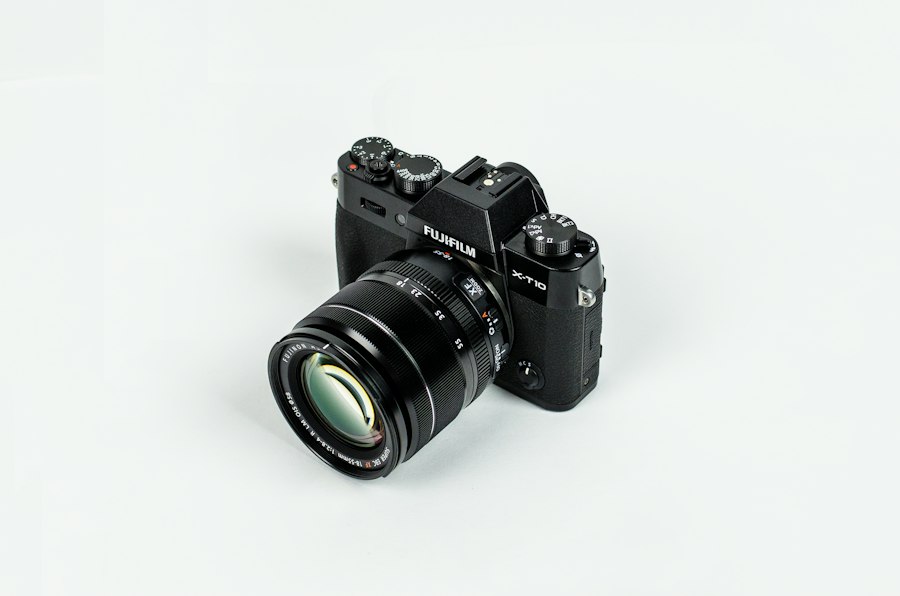
The progression of camera technology, from early photographic plates to sophisticated digital sensors, has dramatically expanded our ability to capture and analyze the universe. Each technological leap has brought new capabilities and revealed previously unseen aspects of the cosmos.
Early Astrophotography: The Age of Photographic Plates
In the early days of astrophotography, glass photographic plates were used as the recording medium. These plates were coated with a light-sensitive emulsion. While groundbreaking for their time, they had significant limitations. Their sensitivity was relatively low, requiring very long exposure times. They were also prone to physical damage and distortion, and the process of developing and analyzing them was labor-intensive. Despite these challenges, photographic plates allowed astronomers to capture images of nebulae, galaxies, and stars, laying the foundation for many astronomical discoveries. The faintness of many objects meant that only the brightest and most accessible celestial bodies could be effectively imaged.
The Rise of Digital Sensors: CCD and CMOS
The advent of digital sensors, particularly Charge-Coupled Devices (CCDs) and later Complementary Metal-Oxide-Semiconductor (CMOS) sensors, revolutionized astrophotography. These electronic detectors convert photons directly into digital signals, offering significantly higher sensitivity, a wider dynamic range, and the ability to image in color. Digital data is also much easier to process, store, and analyze. CCDs, initially dominant in scientific imaging, are known for their low noise and high quantum efficiency. CMOS sensors, now prevalent in consumer electronics and increasingly in scientific applications, offer faster readout speeds and lower power consumption. The ability to capture more light with less noise has allowed astronomers to probe fainter and more distant objects than ever before.
Advanced Imaging Techniques: Stacking and Processing
Modern digital astrophotography relies heavily on image stacking and processing techniques. Stacking involves combining multiple images of the same object, taken over time. This process significantly reduces noise and enhances faint details, bringing out structures that would be invisible in a single exposure. Advanced processing software allows for precise control over contrast, color balance, and sharpening, enabling astronomers to reveal the full beauty and complexity of celestial objects. Techniques like dithering (slightly shifting the telescope between exposures) are used to remove satellite trails and cosmic ray hits, further improving image quality. The raw data from cameras can be transformed into stunning visual representations of the universe.
When exploring the differences between a camera and the human eye in the context of space observation, it’s fascinating to consider how each perceives the vastness of the universe. While cameras can capture images with incredible detail and can be adjusted for various lighting conditions, the human eye offers a unique ability to perceive depth and motion. For a deeper understanding of this topic, you can read more in this insightful article on the science behind our vision and technology at Freaky Science. This comparison highlights the strengths and limitations of both systems in the awe-inspiring environment of space.
The Future of Cosmic Vision: Bridging the Gap
| Aspect | Camera | Human Eye |
|---|---|---|
| Field of View | Can be adjusted | Wide, but limited |
| Resolution | Measured in megapixels | High resolution |
| Low Light Sensitivity | Varies based on camera type | High sensitivity |
| Adaptability | Can be modified for different conditions | Adapts to various light levels |
| Color Perception | Depends on camera settings | Perceives a wide range of colors |
The ongoing advancements in camera technology, coupled with our ever-deepening understanding of light and its interactions with matter, promise to further blur the lines between what the human eye can perceive and what our instruments can capture.
The Pursuit of Higher Sensitivity and Wider Fields of View
Future astronomical cameras will undoubtedly push the boundaries of sensitivity even further, allowing us to detect ever fainter and more distant objects. This will enable the discovery of new classes of celestial bodies and the detailed study of the early universe. Simultaneously, there is a push for wider fields of view, allowing telescopes to capture larger swathes of the sky in a single observation. This will accelerate the pace of surveys and the discovery of rare phenomena. Imagine cameras that can capture entire galaxies in single images, or detect the faint whispers of exoplanet atmospheres with unprecedented detail.
Enhanced Spectral Capabilities and Multi-Wavelength Astronomy
The development of more advanced multi-spectral and hyperspectral imaging techniques will allow us to gather even more information about the composition and physical processes of celestial objects. Observing the universe simultaneously across numerous wavelengths will provide a more holistic understanding of cosmic phenomena. This will involve cameras sensitive to a wider range of the electromagnetic spectrum, from gamma rays to radio waves, often integrated into single instruments or coordinated observation campaigns. This multi-wavelength approach is crucial for understanding complex phenomena like active galactic nuclei and supernova remnants.
Artificial Intelligence and Machine Learning in Data Analysis
Artificial intelligence (AI) and machine learning (ML) are poised to play an increasingly significant role in processing and interpreting the vast amounts of data generated by astronomical cameras. AI algorithms can identify patterns, classify celestial objects, and even predict future astronomical events with remarkable accuracy. This will accelerate the pace of discovery and help astronomers sift through the ever-increasing deluge of data. AI can also be used to optimize image processing, remove artifacts, and even reconstruct missing data, leading to more accurate and insightful scientific results.
The Enduring Value of Human Observation
Despite the astonishing advancements in camera technology, the human element in astronomy will likely never become obsolete. The intuitive understanding, the capacity for serendipitous discovery, and the sheer wonder inspired by direct observation will continue to be vital. The brain’s ability to synthesize complex visual information, to make creative leaps, and to appreciate the aesthetic beauty of the cosmos will always complement the objective data provided by cameras. The future of capturing space will likely involve a seamless integration of human intuition and technological prowess, where the camera extends our vision and the human mind interprets the universe revealed. The synergy between the two will continue to drive our exploration of the cosmos for generations to come.

The Space Photos Are Real—But Your Eyes Would See This
FAQs
1. How does the camera compare to the human eye in space?
The camera and the human eye perceive space differently. Cameras can capture a wider range of light and detail, while the human eye has a wider field of view and can adapt to different lighting conditions.
2. What are the advantages of using a camera in space exploration?
Cameras can capture high-resolution images and videos of space, allowing scientists and researchers to study celestial bodies in great detail. They can also be equipped with specialized filters and sensors to capture specific wavelengths of light.
3. What are the limitations of using a camera in space exploration?
Cameras can be affected by radiation, extreme temperatures, and other harsh conditions in space. They also require regular maintenance and calibration to ensure accurate and reliable performance.
4. How does the human eye perceive space differently from a camera?
The human eye has a wider field of view and can perceive depth and motion in a way that cameras cannot. It also has the ability to adapt to different lighting conditions, allowing astronauts to see both bright stars and dimly lit objects in space.
5. Can cameras and the human eye work together in space exploration?
Yes, cameras and the human eye can complement each other in space exploration. Cameras can capture detailed images and videos for analysis, while astronauts can use their vision to observe and experience space firsthand.