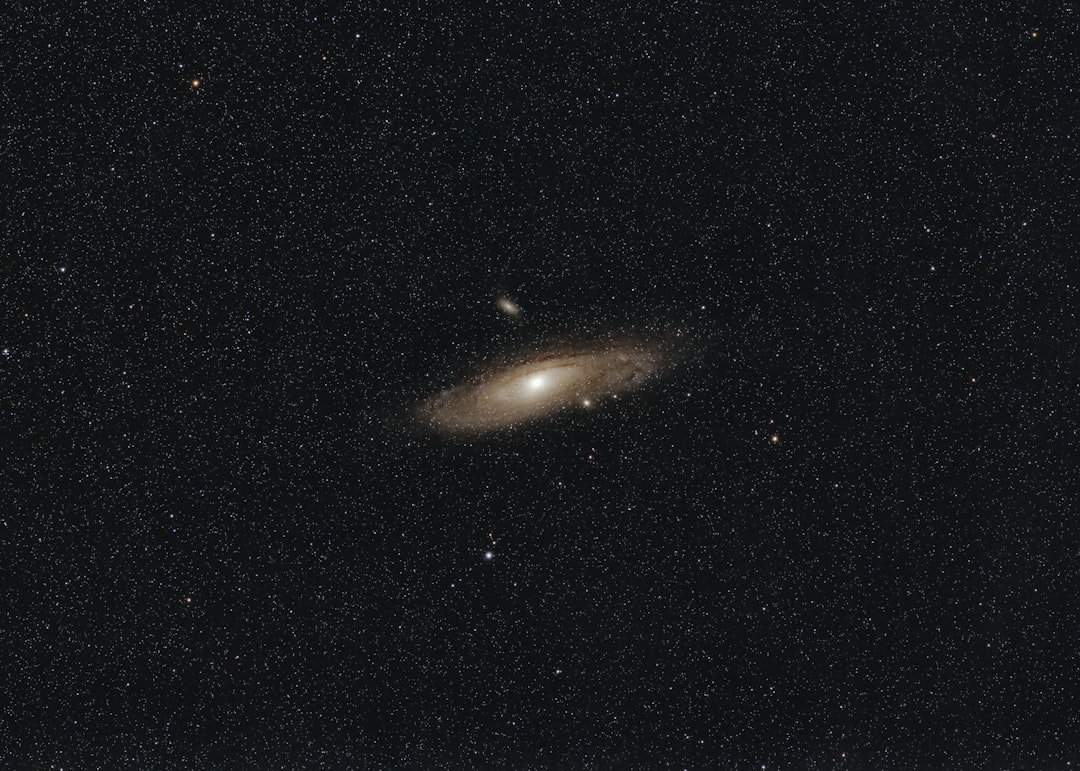
The Andromeda Galaxy, a celestial beacon in our night sky, beckons with an undeniable allure. Often perceived as a faint, ethereal smudge, it represents a cosmic neighbour, a vast island of stars just beyond our own Milky Way. Yet, the true nature of Andromeda, particularly its immense scale, often eludes casual observation. The human eye, accustomed to terrestrial distances and familiar objects, struggles to grasp the sheer magnitude of this spiral galaxy. This article aims to demystify the illusion of size that surrounds Andromeda, delving into the scientific understanding that reveals its colossal proportions and the psychological factors that contribute to our perception.
From Earth, Andromeda appears as a modest oval of light. Its apparent size in the sky is deceptive, leading many to underestimate its true dimensions. This is a common phenomenon in astronomy, where the vastness of space dictates that even the most colossal objects can appear small due to their immense distances.
Distant Majesty: The Apparent Size
When observing Andromeda through a telescope or even with keen naked eyes under dark skies, its visibility is undeniable. However, its apparent size in the sky is remarkably small. For instance, the full Moon, a familiar and relatively close celestial body, occupies a significant portion of our view. Andromeda, on the other hand, appears as a fraction of that. This stark contrast in apparent size, despite Andromeda’s objectively greater physical dimensions, is the root of much of the illusion. It’s crucial to understand that apparent size is a function of both actual size and distance. In the case of Andromeda, the immense distance plays a dominant role in its seemingly diminutive appearance.
The Naked Eye Illusion
Under ideal viewing conditions, away from the pervasive light pollution of urban environments, Andromeda is visible to the naked eye as a fuzzy patch. This fuzzy appearance itself contributes to the illusion. The light from billions of stars, smeared across the vastness of space, blends together to create a diffuse glow. This lack of sharp detail prevents our brains from extrapolating its true form and scale, akin to viewing a distant forest where individual trees are indistinguishable, and only the overall shape of the woodland is perceived. The Milky Way, our own galaxy, also appears as a band of light, but its familiarity and closer proximity contribute to a different, though still incomplete, sense of scale.
Telescopic Revelation: Expanding the View
While the naked eye offers a glimpse, it is through the lens of a telescope that Andromeda’s true grandeur begins to unfold. Even modest telescopes can resolve Andromeda into a distinct disk, revealing hints of its spiral structure. Larger, more powerful instruments peel back further layers of detail, showcasing star clusters, nebulae, and the intricate arms of the galaxy. It is during these telescopic observations that the disconnect between its visual representation and its actual physical size becomes most apparent. The sheer number of stars resolved, the vastness of the galactic disk, and the subtle but undeniable spiral patterns all hint at a scale far beyond what the naked eye suggests.
The Andromeda Galaxy, our closest galactic neighbor, often appears larger in photographs than it does to the naked eye due to various factors such as exposure time and image processing techniques. For a deeper understanding of this phenomenon, you can explore the article that delves into the science behind astronomical photography and how it enhances our perception of celestial objects. To read more about this topic, visit this article.
The Cosmic Yardstick: Measuring Andromeda’s True Size
Understanding the true size of Andromeda requires employing sophisticated astronomical techniques and relying on a complex interplay of physics and observation. Scientists utilize various methods to estimate the distances to galaxies and, subsequently, their physical dimensions.
Parallax and Standard Candles: Gauging Distance
The most fundamental method for measuring distances in astronomy is parallax. For nearby stars, astronomers measure the apparent shift in their position as Earth orbits the Sun. However, Andromeda is too distant for stellar parallax to be effective. For such vast distances, astronomers rely on “standard candles” – celestial objects with known intrinsic brightness.
Cepheid Variables: Cosmic Beacons
One of the most crucial standard candles are Cepheid variable stars. These stars pulsate at a rate directly proportional to their luminosity. By measuring their pulsation period, astronomers can determine their absolute brightness. Comparing this absolute brightness to their apparent brightness as seen from Earth allows for a calculation of their distance. Andromeda hosts a significant population of Cepheid variables, making it a crucial target for distance measurements. The painstaking observation and analysis of these stars have provided astronomers with a robust estimate of Andromeda’s distance, approximately 2.5 million light-years away. This distance is the bedrock upon which all subsequent size estimations are built.
Type Ia Supernovae: Explosive Indicators
Another vital class of standard candles are Type Ia supernovae. These are powerful stellar explosions that occur when a white dwarf star accretes enough mass from a companion star to exceed a critical limit, triggering a runaway nuclear fusion reaction. Because these supernovae reach a remarkably consistent peak luminosity, they serve as incredibly bright and distant standard candles. Their ability to be observed across vast cosmic distances has further solidified our understanding of Andromeda’s distance and, by extension, its size.
Angular Size and Distance: The Geometric Equation
Once the distance to Andromeda is established, its physical size can be calculated using its angular size in the sky. Angular size is the apparent size of an object as measured by the angle it subtends in the observer’s field of view. Astronomers can accurately measure Andromeda’s angular diameter. With the distance ($D$) and angular diameter ($\theta$, usually measured in radians), the physical diameter ($S$) can be calculated using a simple geometric formula: $S = D \times \theta$. Even a small angular diameter, when multiplied by the immense distance to Andromeda, results in an astronomically large physical size.
The Milky Way Comparison: A Galaxy of Giants
To truly grasp Andromeda’s scale, it is helpful to compare it to our own Milky Way galaxy. For a long time, it was believed that the Milky Way was significantly larger than Andromeda. However, more recent observations and refined measurements suggest that the two galaxies are more comparable in size, with Andromeda potentially being even slightly more massive.
Mass Estimates: Unveiling the Stellar Count
Estimating the mass of a galaxy is a complex undertaking, involving the observation of the motion of stars and gas within it. By observing how quickly stars orbit the galactic center, astronomers can infer the total mass enclosed within that orbit. Andromeda is estimated to contain roughly one trillion stars, a number that dwarfs our everyday comprehension. The Milky Way, in comparison, is thought to harbor between 100 and 400 billion stars. This staggering difference in stellar population directly translates to a difference in physical size.
Diameter Comparisons: Stretching Across Space
The estimated diameter of Andromeda is roughly 220,000 light-years across. This means that light, traveling at its incredible speed, would take over 200,000 years to traverse the galaxy from one end to the other. The Milky Way’s diameter is generally estimated to be around 100,000 to 180,000 light-years. This means that Andromeda is not merely a neighbour; it is a colossal entity, potentially larger than our own cosmic home.
Beyond the Visual: Understanding Andromeda’s Structure
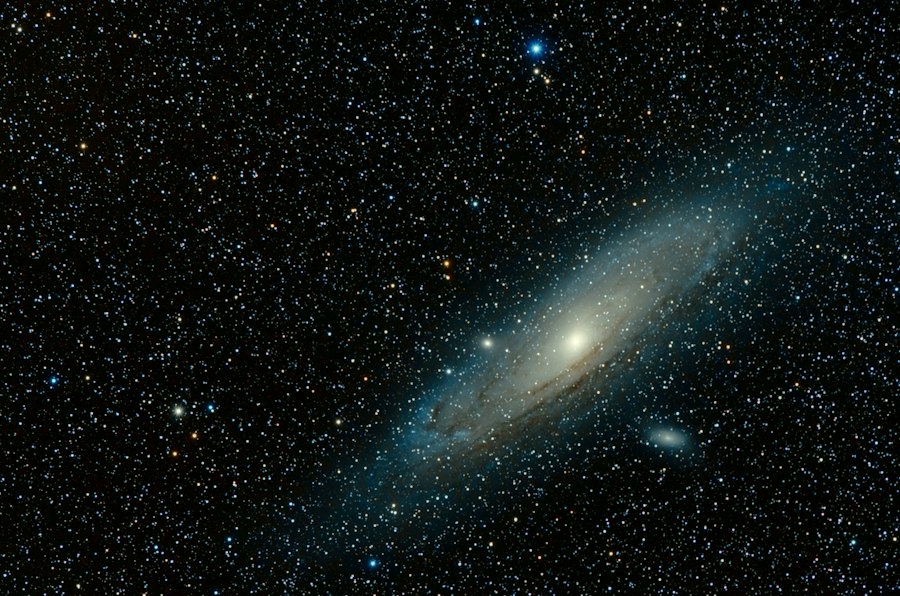
The illusion of size is not solely about distance; it is also about appreciating the complex and intricate structures that constitute Andromeda. From its luminous core to its sprawling spiral arms, each component contributes to its overall immensity.
The Galactic Bulge: A Densely Packed Heart
At the center of Andromeda lies a massive, spherical bulge of stars. This region is densely packed with older, redder stars, creating a bright and prominent core. The sheer concentration of stars in this bulge contributes significantly to Andromeda’s overall mass and its gravitational influence. The luminosity emanating from this central region is immense, a testament to the billions of stars packed into a relatively small volume.
Stellar Populations in the Bulge
The stars within Andromeda’s bulge are predominantly older, having formed early in the galaxy’s history. Their redder hue is indicative of their cooler surface temperatures. The dynamics of these stars, their orbits and interactions, provide valuable clues about the formation and evolution of the galactic core. Studying this region allows astronomers to understand the foundational elements of Andromeda’s structure.
Black Hole at the Core
At the very heart of Andromeda’s bulge lies a supermassive black hole, estimated to be millions of times the mass of our Sun. While invisible itself, its immense gravitational pull influences the orbits of stars in the central region, providing indirect evidence of its presence and contributing to the overall mass distribution of the galactic core.
The Grand Spiral Arms: Cosmic Ribbons of Light
The most striking visual feature of Andromeda, even in its less detailed naked-eye appearance, are its spiral arms. These vast, sweeping structures are composed of younger stars, gas, and dust, and are the birthplaces of new stars. The sheer scale of these arms, stretching outwards from the galactic center, is a key component of Andromeda’s immense size.
Star Formation Regions
Within the spiral arms, regions of dense gas and dust are actively collapsing under gravity, leading to the formation of new stars. These nebulae glow brightly, illuminating the arms and providing evidence of ongoing stellar creation. The distribution and intensity of these star-forming regions give a visual cue to the vastness of the arms themselves.
Dust Lanes and Interstellar Medium
The spiral arms are also characterized by prominent dust lanes, dark ribbons of obscuring material that run through the brighter stellar populations. These dust lanes are composed of elements heavier than hydrogen and helium, and they play a crucial role in the process of star formation by shielding collapsing gas clouds from external radiation. The presence and extent of these dust lanes further emphasize the complex and vast nature of the spiral structure.
The Halo: An Invisible Expanse
Beyond the visible disk of stars and gas lies the galactic halo, a vast, spherical region that extends far beyond the visible boundaries of the galaxy. This halo is thought to be dominated by dark matter, an enigmatic substance that does not interact with light and is therefore invisible. However, its gravitational influence is undeniable, shaping the dynamics of the visible galaxy and contributing significantly to its total mass.
Dark Matter’s Dominance
Current cosmological models suggest that dark matter constitutes the vast majority of a galaxy’s mass. While its composition remains a mystery, its gravitational pull is essential for holding galaxies together. The halo of Andromeda, therefore, represents a far larger structure than its visible components alone would suggest, extending its influence and immense size far beyond what our eyes can perceive.
Globular Clusters: Ancient Relics
The halo also contains numerous globular clusters, dense, spherical collections of hundreds of thousands of ancient stars. These clusters are thought to be some of the oldest components of a galaxy, remnants from its early formation. Their distribution within the halo further defines the outer reaches of Andromeda’s gravitational influence and its vast, encompassing structure.
The Psychological Impact: Why Size Deceives Us
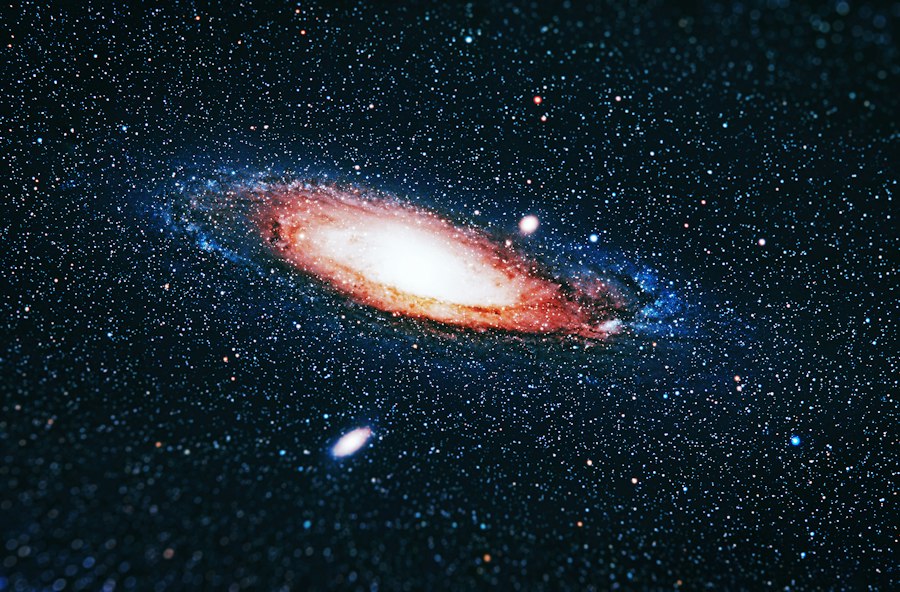
Our perception of size is not solely dictated by objective measurements. Psychological factors, including our experiences with terrestrial objects and the limitations of our sensory input, play a significant role in how we interpret astronomical scales.
Familiarity and Scale: The Terrestrial Bias
Humans are inherently grounded in terrestrial experiences. We are accustomed to objects of a certain size and at relatively close distances. A car, a house, a mountain – these are all objects whose dimensions we can readily comprehend and relate to. When confronted with astronomical scales, our ingrained sense of proportion is challenged. The concept of a galaxy containing billions of stars and spanning hundreds of thousands of light-years is so far removed from our daily lives that it becomes difficult to truly internalize.
The Limitation of Sensory Input
Our senses, particularly our vision, are optimized for perceiving objects within a limited range of distances and luminosities. While Andromeda is a substantial object, its light has traveled for millions of years, and it is spread across a vast area. This diffuse and distant light challenges our visual system’s ability to resolve fine details and extrapolate overall size. We are essentially looking at a vastly diminished signal from an immense original source.
The Abstract Nature of Astronomical Units
The units used in astronomy, such as light-years, are themselves abstract. A light-year represents the distance light travels in one year, a concept that is difficult to visualize. Multiplying this already abstract unit by millions to describe the distance to Andromeda, and then by hundreds of thousands to describe its diameter, further disconnects us from a tangible understanding of its size. Our brains struggle to create concrete mental images for such vast and abstract quantities.
The Power of Analogy and Representation
To overcome this perceptual barrier, astronomers often resort to analogies and visual representations. Comparing Andromeda to familiar objects, even with the inherent limitations of such comparisons, can help bridge the gap. For instance, describing Andromeda as being thousands of times larger than our solar system, or comparing its diameter to the distance between Earth and the Sun multiplied many times over, provides more relatable anchors for understanding its scale.
The Andromeda Galaxy often appears larger in photographs than it does to the naked eye, a phenomenon that can be attributed to the techniques used in astrophotography and the long exposure times that capture more light. For a deeper understanding of this captivating subject, you can explore a related article on the science behind celestial imaging. This article provides insights into how various factors, such as camera settings and image processing, contribute to the stunning visuals we see. To learn more about these fascinating techniques, check out this article.
The Ever-Expanding Universe: Andromeda’s Cosmic Journey
| Reason | Explanation |
|---|---|
| Distance | Andromeda is 2.537 million light-years away, making it appear larger due to its distance from Earth. |
| Size | Andromeda is larger than the Milky Way, with a diameter of about 220,000 light-years, contributing to its apparent size in photographs. |
| Photographic Techniques | Photographers often use long exposure times and specialized equipment to capture the details of Andromeda, making it appear larger in photographs. |
Andromeda is not a static entity. It is part of a dynamic and evolving universe, and its own journey is one of constant change and interaction, further emphasizing its vastness within the grand cosmic tapestry.
The Andromeda-Milky Way Collision: A Future Embrace
Perhaps the most compelling testament to Andromeda’s immense scale and its future is its inevitable collision with our own Milky Way galaxy. In approximately 4.5 billion years, these two colossal spiral galaxies will merge to form a single, larger elliptical galaxy. This event, while astronomically distant from our perspective, underscores the sheer mass and gravitational power of Andromeda. The forces involved in such a merger are immense, a clear indication of the galaxies’ prodigious sizes.
Gravitational Interactions
The gravitational pull of Andromeda is already influencing the movement of nearby galaxies, including our own. The two galaxies are currently moving towards each other at a speed of approximately 110 kilometers per second. This reciprocal gravitational dance is a direct consequence of their substantial masses and vast scales.
The Merger Process
The merger itself will be a spectacular cosmic event, a slow-motion ballet of billions of stars. While direct stellar collisions are rare due to the vast distances between stars, the gravitational tides generated by the interacting galaxies will dramatically reshape both systems. The eventual single galaxy, sometimes nicknamed “Milkomeda,” will be a testament to the combined immensity of its progenitors.
Andromeda’s Satellite Galaxies: A Gravitational Domain
Andromeda is not alone in its cosmic neighborhood. It is the gravitational anchor for a collection of smaller satellite galaxies, including M32 and M110, which orbit around it. The presence of these satellites further emphasizes Andromeda’s dominant gravitational influence and its expansive reach. The intricate dynamics of these satellite galaxies, their orbits and interactions, provide yet another layer of understanding to Andromeda’s immense scale and its role within its local group of galaxies.
The Local Group: A Galactic Neighborhood
Andromeda is a key member of the Local Group, a collection of over 50 galaxies, most of which are dwarf galaxies. While our Milky Way is also a prominent member, Andromeda is the largest galaxy in the Local Group. Its size and mass make it a dominant gravitational force within this cosmic neighborhood, influencing the motion and distribution of other galaxies. Understanding Andromeda’s place within the Local Group further contextualizes its immense scale within a broader cosmic framework.
In conclusion, the illusion of Andromeda’s size is a powerful testament to the disconnect between our everyday perceptions and the unfathomable scales of the cosmos. While it may appear as a faint smudge in the night sky, scientific observation and understanding reveal it to be a colossal galaxy, a titan of the universe. Its true dimensions, measured in hundreds of thousands of light-years and containing trillions of stars, challenge our imaginations and invite us to marvel at the sheer immensity of the universe we inhabit. The ongoing study of Andromeda continues to push the boundaries of our knowledge, reminding us that even the most familiar celestial objects hold profound mysteries and awe-inspiring grandeur.

The Space Photos Are Real—But Your Eyes Would See This
FAQs
1. Why does Andromeda look bigger in photographs?
Andromeda appears larger in photographs due to the long exposure times and the use of telescopes or telephoto lenses, which can capture more light and detail than the human eye.
2. Is Andromeda actually bigger in photographs than in real life?
No, Andromeda is not physically larger in photographs than in real life. The apparent size of Andromeda in photographs is a result of the techniques and equipment used to capture the image.
3. What causes Andromeda to appear larger in long exposure photographs?
Long exposure times allow more light to be captured, resulting in a brighter and more detailed image of Andromeda. This can create the illusion of Andromeda appearing larger in the photograph.
4. Can Andromeda be seen with the naked eye?
Yes, Andromeda can be seen with the naked eye under dark, clear skies. It appears as a faint, fuzzy patch of light and is the farthest object visible to the naked eye.
5. How far away is Andromeda from Earth?
Andromeda is approximately 2.537 million light-years away from Earth, making it the closest spiral galaxy to the Milky Way.