The question, “Can your foot melt ice?” might seem whimsical, a curious musing born from a cold winter day or perhaps a children’s book. However, delving into the scientific principles behind heat transfer and human physiology reveals a nuanced and surprisingly complex answer. While a human foot, in its typical state, is unlikely to melt a significant amount of ice in a practical timeframe, the underlying mechanisms by which it could contribute to ice melting are undeniable. This exploration will dissect the factors involved, from the temperature of the foot itself to the properties of ice and the environment, and consider the biological processes that generate the heat in the first place.
Before directly addressing the capabilities of a human foot, it’s crucial to understand the fundamental science of melting. Ice, in its solid state, possesses a specific crystalline structure. For this structure to break down and transition into a liquid (water), it requires energy in the form of heat. This energy is absorbed from the surroundings, raising the temperature of the ice molecules until they overcome their intermolecular forces and can move more freely. The temperature at which this transition occurs under standard atmospheric pressure is 0 degrees Celsius (32 degrees Fahrenheit), known as the melting point.
Conduction: The Direct Transfer of Heat
The most direct way heat can be transferred from a foot to ice is through conduction. Conduction is the process by which heat energy is passed from one particle to another through direct contact. When a warmer object touches a colder object, the faster-moving particles in the warmer object collide with the slower-moving particles in the colder object, transferring kinetic energy. In the context of a foot and ice, this means that the heat present in the foot’s tissues will be transferred to the surface of the ice upon contact.
Thermal Conductivity: A Measure of Heat Flow
The rate at which heat is conducted depends on the thermal conductivity of the materials involved. Thermal conductivity is a material’s ability to conduct heat. Materials with high thermal conductivity, like metals, transfer heat rapidly, while materials with low thermal conductivity, such as wood or foam, act as insulators, slowing down heat transfer. Human tissues, while not as conductive as metals, do possess some capacity for heat conduction. This means that heat from the core of the body will inevitably be conducted outwards to the surface of the foot.
Convection: Heat Transfer Through Fluid Movement
While conduction is the primary mechanism for heat transfer upon direct contact, convection can also play a role, especially if there is any moisture involved. Convection is the transfer of heat by the movement of fluids (liquids or gases). If the ice begins to melt, forming a layer of water, this water can then be heated by the foot and move away, carrying the heat with it. This creates a continuous circulation of heat. Similarly, if there’s any air movement around the foot and ice, this can also contribute to convective heat transfer, either warming or cooling the surface.
Radiation: The Silent Heat Exchange
Heat can also be transferred through radiation, which is the emission of electromagnetic waves. All objects above absolute zero emit thermal radiation. A warmer object will radiate more heat than a colder object. Therefore, a human foot, being warmer than ice, will emit infrared radiation, some of which will be absorbed by the ice, contributing to its melting. While this is a less significant factor in direct contact scenarios compared to conduction, it’s an ever-present form of heat exchange.
If you’re curious about the fascinating science behind how certain materials can affect ice, you might find this article on Freaky Science intriguing. It explores the various methods and substances that can be used to melt ice effectively, including the surprising role of temperature and pressure. To learn more about this topic, check out the article here: Freaky Science.
The Human Foot: A Biological Heat Generator
The human foot is not merely a passive surface; it is an active component of a complex biological system that generates heat. This heat is a byproduct of metabolic processes occurring within the body’s cells. Understanding these processes is key to appreciating how a foot can produce the energy necessary for melting.
Metabolism: The Engine of Life and Heat
At the cellular level, metabolism encompasses all the chemical processes that occur within a living organism to maintain life. These processes, such as cellular respiration, involve the breakdown of nutrients (like glucose) to produce energy in the form of ATP (adenosine triphosphate). A significant portion of this energy is released as heat. This heat is essential for maintaining the body’s core temperature, which is typically around 37 degrees Celsius (98.6 degrees Fahrenheit).
Basal Metabolic Rate (BMR): The Baseline Heat Production
Even at rest, the body is continuously generating heat to maintain essential functions. This is known as the basal metabolic rate (BMR). The BMR accounts for a substantial portion of the total daily energy expenditure and, consequently, heat production. The feet, being extremities, receive blood flow that carries metabolic heat from the core of the body.
Blood Circulation: The Heat Delivery System
The circulatory system plays a vital role in distributing heat throughout the body. Blood, warmed by the body’s core, is pumped to the extremities, including the feet. This blood carries metabolic heat to the skin’s surface. The rate of blood flow to the feet can be regulated by the body in response to temperature. In cold environments, blood flow to the extremities is often reduced to conserve heat for vital organs. Conversely, in warmer conditions, blood flow increases to dissipate heat.
Vasodilation and Vasoconstriction: Regulating Foot Temperature
The blood vessels in the feet can widen (vasodilate) or narrow (vasoconstrict) to control blood flow and, therefore, heat loss. When the body needs to conserve heat, these vessels constrict, reducing the amount of warm blood reaching the skin’s surface. When the body needs to dissipate heat, they dilate, allowing more warm blood to flow to the skin. This physiological regulation directly impacts the temperature of the foot’s surface and its potential to transfer heat to ice.
Factors Influencing a Foot’s Ice-Melting Potential

The theoretical capacity of a foot to melt ice is influenced by a multitude of factors. These can be broadly categorized into the properties of the foot itself, the characteristics of the ice, and the surrounding environmental conditions. A simplistic “yes” or “no” answer is insufficient without considering these variables.
Foot Temperature: The Driving Force
The most significant factor determining a foot’s ice-melting potential is its temperature. A foot that is warm, particularly one that has been actively exercising and is therefore generating more metabolic heat, will have a higher surface temperature than a cold, resting foot. The greater the temperature difference between the foot and the ice, the faster the rate of heat transfer.
The Impact of External Warming
If a foot is placed in a warm environment before coming into contact with ice, its temperature will increase, thereby enhancing its melting capability. Conversely, if a foot has been exposed to extreme cold, its temperature will be significantly reduced, hindering any melting.
The Area of Contact: Maximizing Heat Transfer
The surface area of contact between the foot and the ice is crucial. A larger contact area allows for more direct heat transfer through conduction. If only a small part of the foot touches the ice, the melting effect will be localized and less significant. Spreading the foot over a larger surface of ice will maximize the potential for heat exchange.
Pressure and Foot Shape
While not as dominant as temperature or contact area, the pressure exerted by the foot can also play a minor role. Increased pressure can lead to better contact between the foot and the ice, potentially improving heat transfer. The natural shape of the foot, with its curves and contours, will also influence the uniformity of contact.
The Ice: Its Properties and Behavior
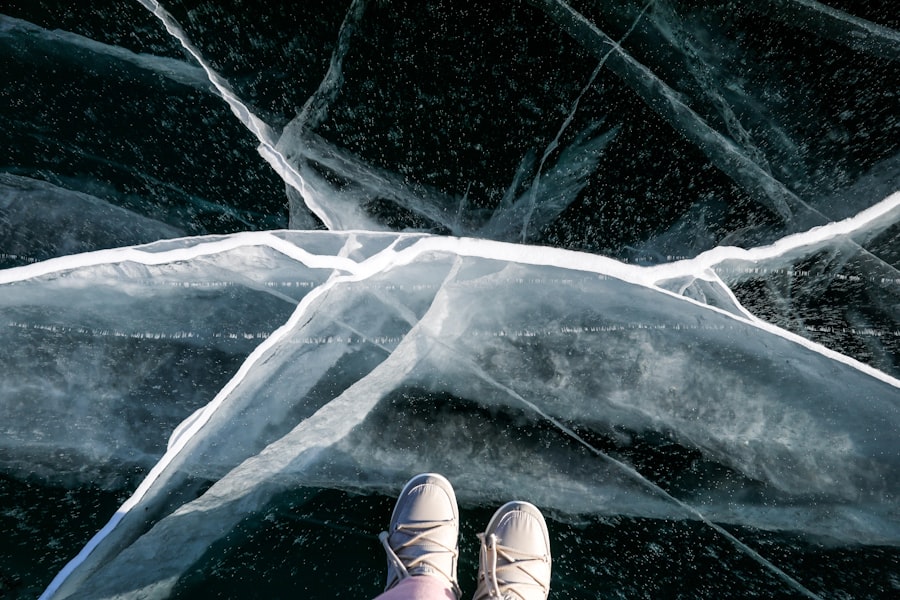
The ice itself is not a passive participant in the melting process. Its physical properties and the conditions it is in will significantly affect how quickly or slowly it melts when exposed to heat.
Ice Temperature and Purity: Subtle but Significant
While the melting point of pure ice is 0°C, real-world ice often contains impurities. These impurities can slightly alter the melting point, making it either lower or higher depending on the nature of the impurity. Furthermore, if the ice is already at a temperature below 0°C (i.e., it is frozen water with a temperature below its melting point), it will first need to warm up to 0°C before it can begin to melt. This initial warming phase requires additional heat input.
The Sublimation Factor: Ice to Vapor
In very cold and dry conditions, ice can also undergo sublimation, directly transitioning from a solid to a gas (water vapor) without passing through the liquid phase. While this is less common in direct contact scenarios with a warm foot, it highlights that ice can lose mass through processes other than melting.
Ice Mass and Thickness: The Thermal Inertia
The amount of ice present is a critical factor. A small ice cube will melt much faster than a large block of ice when subjected to the same heat source. This is due to the concept of thermal inertia. A larger mass of ice requires more energy to raise its temperature to the melting point and then to convert it to liquid water. Similarly, thicker ice will take longer to melt than thinner ice.
Surface Area to Volume Ratio: Affecting Melting Rate
The surface area to volume ratio of the ice also influences its melting rate. Smaller pieces of ice, with a higher surface area relative to their volume, will melt more quickly because more of their mass is exposed to the heat source.
If you’re curious about the fascinating science behind how your foot can melt ice, you might find this article particularly interesting. It explores the thermal properties of human feet and how they interact with cold surfaces. For more insights, check out this related article on the topic here. Understanding these concepts can deepen your appreciation for the remarkable capabilities of the human body in various environments.
Can Your Foot Melt Ice? A Practical Perspective
| Temperature of foot | Effect on ice |
|---|---|
| Above freezing | Melts ice |
| Below freezing | Does not melt ice |
So, can your foot melt ice? The scientific answer is a resounding “yes, under specific circumstances, to a limited extent.” However, the practical implications are far less dramatic than the question might initially suggest.
The “Melted By a Foot” Ice Cube: A Glimpse of Possibility
Imagine a single ice cube placed on a warm surface, and then a warm foot is placed on top of it. The foot, with its inherent body heat, will transfer thermal energy to the ice cube. Over time, this energy will raise the ice cube’s temperature to its melting point and then provide the latent heat of fusion needed to convert it into liquid water. This process is observable, especially with smaller ice cubes and a sufficiently warm foot. The ice cube will indeed melt.
The Limitations of Human Heat Output
However, the amount of heat a human foot can generate and transfer is limited. The human body is designed to maintain a stable core temperature, not to act as a powerful heating element. While metabolic processes produce heat, a significant portion of this heat is distributed throughout the body or lost to the environment. The surface temperature of the foot, even when warm, is still relatively low compared to heating devices.
The Time Factor: A Slow and Steady Process
Melting a substantial amount of ice with just a foot would require an extended period of direct contact. The rate of melting would be slow and incremental. It’s unlikely that a foot could melt a significant volume of ice, such as a block of ice or a thick layer of snow, in any practical amount of time. The energy required to melt a substantial amount of ice is considerable, and the human foot’s heat output is not sufficient to achieve this rapidly.
Beyond Direct Contact: Indirect Effects
While direct contact is the most obvious way a foot might melt ice, there are also indirect effects to consider. For instance, if a person walks on icy surfaces, their body heat can slightly warm the ice beneath their shoes. This slight warming might, in conjunction with other factors like friction and pressure, contribute to a very minor degree of melting, making the surface slightly less slippery. However, this is more about reducing the ice’s integrity rather than actively melting it.
The Foot as a Temporary Warmth Source
In survival situations, a warm foot could be used to provide temporary warmth to a small amount of ice, perhaps to melt enough water for drinking. This would be a deliberate and focused application of the foot’s heat-generating capabilities.
In conclusion, while the human foot possesses the fundamental ability to generate heat through metabolic processes and transfer this heat via conduction, convection, and radiation, its practical capacity to melt ice is limited by the relatively low temperature of its surface and the finite rate of heat transfer. A single ice cube might succumb to a warm foot over time, but larger quantities of ice would prove a far more formidable challenge, requiring prolonged contact and yielding a slow, almost imperceptible, transformation. The question, therefore, is not so much about if a foot can melt ice, but rather about the extent and efficiency with which it can achieve this feat.

Why Ice Is Slippery Is Stranger Than You Think
FAQs
1. Can your foot melt ice?
No, the human body does not produce enough heat to melt ice. The average body temperature is around 98.6 degrees Fahrenheit, which is not hot enough to melt ice.
2. Why does ice melt when you step on it with your foot?
When you step on ice, the pressure from your body weight causes the ice to melt slightly at the point of contact. This creates a thin layer of water between the ice and your foot, reducing the friction and allowing you to walk on the ice.
3. What are some tips for walking on ice safely?
To walk on ice safely, wear shoes with good traction, take slow and deliberate steps, and try to walk on areas that have been treated with salt or sand. It’s also important to keep your center of gravity over your feet and to avoid sudden movements.
4. Can wearing thick socks or insulated boots help prevent slipping on ice?
While wearing thick socks or insulated boots can help keep your feet warm, they do not necessarily provide better traction on ice. It’s more important to wear shoes with good traction and to walk carefully on icy surfaces.
5. What should I do if I slip on ice and fall?
If you slip on ice and fall, try to relax and avoid using your hands to break your fall, as this can lead to wrist injuries. Instead, tuck your chin and roll with the fall to distribute the impact. If you are injured, seek medical attention as soon as possible.