You’ve probably found yourself in this situation: you’re out and about, your phone’s battery is dwindling, or you’re in an area with a notoriously spotty internet connection. Naturally, your immediate thought might be, “Can my phone even tell me where I am if I don’t have an internet connection?” It’s a fair question, and one that delves into the fascinating mechanics of how your smartphone navigates the world. The answer, as you’ll discover, is a resounding “yes,” but with some important caveats and a spectrum of capabilities.
Your phone’s ability to locate itself isn’t solely dependent on the internet. In fact, some of its most fundamental and reliable location services operate entirely offline. To truly understand this, we need to break down the different technologies at play and how they interact, or don’t interact, with your internet connection. So, let’s embark on a journey to explore the possibilities of phone location working without the internet, from the basic to the more advanced.
When you think of phone location, the first technology that likely springs to mind is GPS. And for good reason – it’s the cornerstone of much of our location-based technology. The beauty of GPS is its inherent independence from any terrestrial network, including your cellular data or Wi-Fi.
How GPS Signals Work
Global Positioning System (GPS) is a satellite-based navigation system. It’s comprised of a constellation of satellites orbiting the Earth, each broadcasting precise timing signals and its own location. Your smartphone, equipped with a GPS receiver, listens for these signals. To determine your position, your phone needs to “see” at least four GPS satellites.
Triangulation: The Core Principle
The process your phone uses is a form of triangulation, or more accurately, trilateration. Each satellite’s signal contains information about when the signal was sent and the satellite’s orbital position. By measuring the time it takes for the signal to reach your phone from multiple satellites, your phone can calculate the distance to each of those satellites. With the distances to at least four satellites, your phone can then pinpoint its exact location in three dimensions (latitude, longitude, and altitude).
No Internet Required for Basic GPS Functionality
The crucial point here is that this entire process – receiving satellite signals, calculating distances, and determining your coordinates – happens within your phone. It doesn’t require sending any data back to a server or downloading any information from the internet. The satellites are broadcasting their signals constantly, and your phone is passively receiving them. Therefore, even if you’re deep in the wilderness with absolutely no cell signal or Wi-Fi, your GPS receiver can still function and provide you with your precise location. This is why many dedicated GPS devices, like those used in hiking or marine navigation, don’t rely on an internet connection.
Limitations of Standalone GPS
While GPS is incredibly powerful and independent, it’s not without its limitations, particularly when operating without any supplementary data.
Cold Starts and Signal Acquisition Time
One of the most noticeable limitations when your phone hasn’t been used for location services recently, or has been powered off for an extended period, is the “cold start” phenomenon. Without access to the internet, your phone can’t download the Almanac and Ephemeris data. The Almanac provides a general overview of the GPS satellite constellation and their orbits, while the Ephemeris data is precise orbital information for each individual satellite.
The Role of Assistance Data (A-GPS)
This is where Assisted GPS (A-GPS) comes into play. A-GPS uses internet connectivity to download this crucial Almanac and Ephemeris data. This significantly speeds up the time it takes for your GPS receiver to acquire a signal and determine your location – often from several minutes down to mere seconds. Without A-GPS, a cold start can mean waiting a considerably longer time for your phone to lock onto enough satellites to get a fix. So, while basic GPS works offline, its initial startup can be much slower without internet assistance.
Accuracy and Environmental Factors
Even with a strong GPS signal, your location accuracy can be affected by environmental factors.
Signal Obstruction
Tall buildings in urban canyons, dense foliage in forests, or even being indoors can obstruct or reflect GPS signals, leading to reduced accuracy or complete signal loss. This is a physical limitation of radio wave propagation and is independent of your internet connection. However, the absence of internet can prevent your phone from using other, less precise but sometimes more available, location methods to supplement GPS in these scenarios.
If you’re curious about how phone location services can function without an internet connection, you might find the article on Freaky Science insightful. It explores various technologies that enable location tracking, such as GPS and cellular networks, which can operate independently of internet access. For more detailed information, you can read the article here: Freaky Science Article.
Beyond GPS: Other Offline Location Technologies
While GPS is the star player for offline positioning, your phone has a few other tricks up its sleeve that can contribute to location awareness, albeit with varying degrees of precision and independence.
Inertial Navigation Systems (INS)
Some smartphones incorporate Inertial Navigation Systems (INS). These systems use a combination of accelerometers and gyroscopes to track your movement and orientation.
Dead Reckoning: Estimating Position Through Movement
INS relies on a principle called “dead reckoning.” Essentially, if you know your starting position and accurately measure every movement you make from that point, you can continuously estimate your current position. Think of it like walking with your eyes closed – you have a sense of how many steps you’ve taken and in what direction.
Limitations of Dead Reckoning
The primary drawback of INS is its susceptibility to drift. Small errors in the sensors accumulate over time, causing the estimated position to deviate from the actual position. Without an external reference point (like GPS or Wi-Fi triangulation) to periodically correct these errors, the accuracy of dead reckoning degrades rapidly.
Integration with GPS for Enhanced Accuracy
In modern smartphones, INS isn’t typically used as a standalone location system for extended periods. Instead, it’s often integrated with GPS. When GPS signals are weak or temporarily lost, INS can provide a smoother and more continuous location estimate. Once GPS signal strength improves, the INS data is used to correct any accumulated drift. This integration enhances the overall accuracy and responsiveness of location tracking, even if the INS itself doesn’t directly rely on the internet.
Barometer for Altitude Estimation
Another sensor that can contribute to location awareness, particularly in an offline context, is the barometer.
Measuring Atmospheric Pressure
Your smartphone’s barometer measures atmospheric pressure. As you change altitude, the atmospheric pressure changes accordingly – higher altitude means lower pressure.
Offline Altitude Determination
By measuring changes in atmospheric pressure, your phone can estimate your current altitude. This is a valuable piece of information, especially when combined with GPS-derived latitude and longitude, to provide a more complete three-dimensional location fix. Importantly, this process is entirely offline.
Practical Applications and Limitations
While barometric pressure can give you a good indication of your relative altitude changes, its absolute accuracy can be influenced by weather patterns. However, for many applications, like identifying which floor of a building you’re on or tracking elevation changes during a hike, it’s quite effective. This offline altitude data can also be used by certain navigation apps to improve their route plotting and estimated arrival times, even without an internet connection.
The Role of Wi-Fi and Bluetooth in Offline Scenarios

You might be surprised to learn that Wi-Fi and Bluetooth, technologies often associated with internet connectivity, can also play a role in offline location services. However, this is where the distinction between “internet-independent” and “data-dependent” becomes important.
Wi-Fi Triangulation (without direct internet access)
When your phone is searching for Wi-Fi networks, it can detect the unique identifiers (SSIDs) and MAC addresses of nearby routers.
Wi-Fi Positioning Systems (WPS)
Wi-Fi Positioning Systems (WPS) work by comparing the detected Wi-Fi network information to a massive, crowdsourced database of Wi-Fi access points and their known geographic locations. This database is built and maintained by companies like Google and Apple, and it’s updated through the contributions of users who have their location services enabled.
How it Works Offline (with cached data)
Here’s the crucial part for offline use: your phone can cache a significant portion of this Wi-Fi location database locally. When you’re offline, your phone can still scan for nearby Wi-Fi networks and, if it finds them in its cached database, it can use that information to estimate your location. This is particularly useful in urban environments where GPS signals can be weak or unavailable.
Limitations of Offline Wi-Fi Triangulation
The accuracy of this offline Wi-Fi triangulation is heavily dependent on the completeness and recency of the cached database. If you’re in an area with many new Wi-Fi networks that haven’t been added to the database, or if the cached data is outdated, the accuracy will suffer. Furthermore, the initial acquisition of this cached data still requires an internet connection at some point. So, while it works offline, its effectiveness is tied to prior online activity.
Bluetooth Beacons and Proximity Sensing
Bluetooth, particularly Bluetooth Low Energy (BLE), has become increasingly important for indoor and localized positioning.
Indoor Navigation and Proximity
Bluetooth beacons are small, low-power transmitters that broadcast a unique identifier. These beacons can be placed in specific locations, such as in stores, museums, or public transportation hubs.
Offline Proximity Detection
When your phone’s Bluetooth is enabled, it can detect these beacons. By knowing the location of each beacon, your phone can infer your proximity to it. This allows for highly localized positioning, especially indoors where GPS is unreliable. This detection and proximity calculation happen entirely offline.
Applications of Bluetooth Beacons
This technology is used for a variety of applications, such as guiding you through a large airport, providing product information in a retail store, or offering real-time notifications as you approach a point of interest. The crucial aspect here is that the phone doesn’t need an internet connection to detect the beacon’s signal and determine its proximity. The mapping between beacon ID and location is either pre-loaded onto the app or accessible through a cached database.
Hybrid Approaches and Smart Location Services
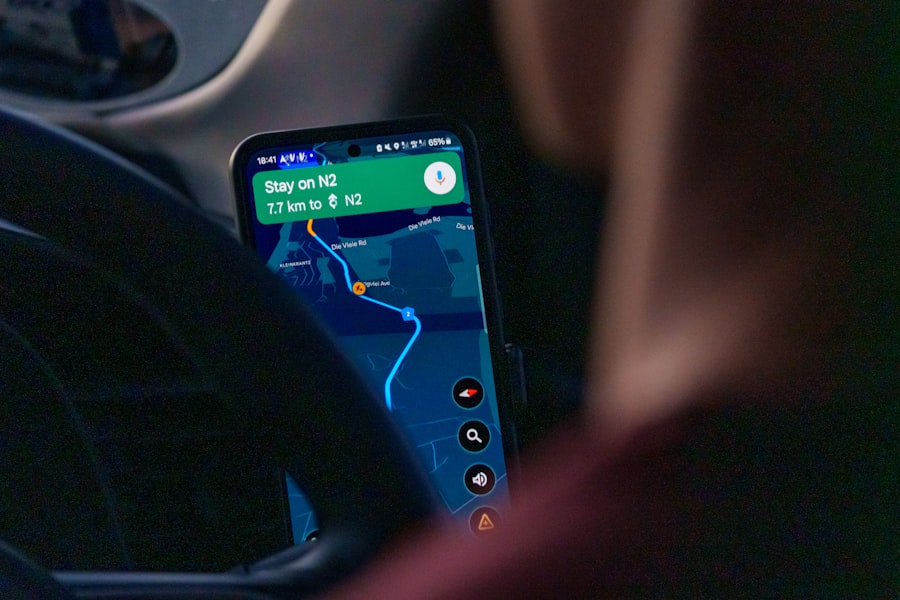
Modern smartphones are incredibly adept at combining multiple location technologies to achieve the best possible accuracy and responsiveness. These “hybrid” approaches often leverage the strengths of each system while mitigating their weaknesses.
Fusing Data for Superior Accuracy
Your phone’s operating system (whether it’s iOS or Android) continuously collects data from various sensors, including GPS, Wi-Fi, cellular towers, and Bluetooth. It then uses sophisticated algorithms to fuse this data together.
Intelligent Sensor Management
This intelligent sensor management means that if GPS is strong, it will be prioritized. If Wi-Fi signals are detected and are known to be accurate in that area, they will be used. If you’re indoors with no GPS, the system might rely on Wi-Fi triangulation or Bluetooth beacons if available.
Offline Functionality in Hybrid Systems
The beauty of these hybrid systems, for our discussion, is that many of these sensor inputs and their associated algorithms can operate without an active internet connection. While the creation and updating of databases (like Wi-Fi locations) might require internet, the processing of locally available data for location estimation can be done offline.
Location Services in Offline Maps
One of the most practical applications of offline location is the use of offline maps. Many navigation apps allow you to download maps of specific regions for offline use.
Pre-Downloaded Map Data
These downloaded maps contain detailed geographical information, including roads, points of interest, and topographical data.
GPS Integration with Offline Maps
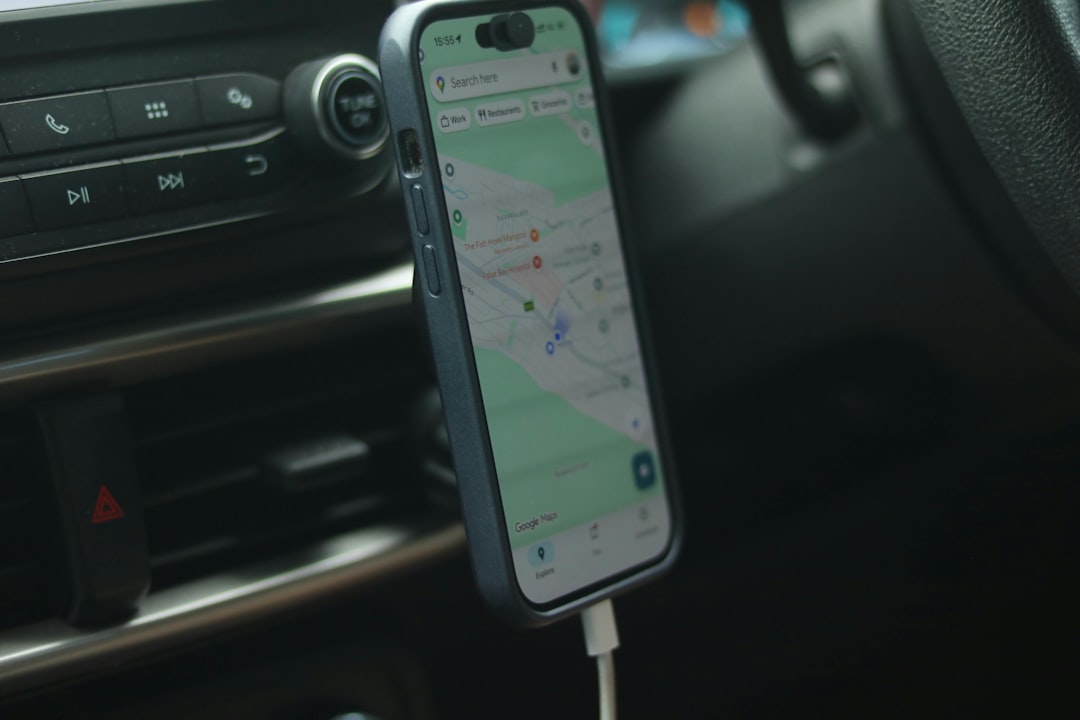
When you’re offline and using an offline map, your phone’s GPS receiver is still active and receiving satellite signals. The navigation app then uses your GPS coordinates to display your current position on the downloaded map. This allows you to navigate, get turn-by-turn directions, and see your location relative to your surroundings, all without an internet connection.
Limitations of Offline Maps
The primary limitation here is the need to have the maps pre-downloaded. If you haven’t downloaded the map for your current location, you won’t have the visual context. Also, real-time traffic information and live updates won’t be available in offline mode. However, for basic navigation and finding your way, it’s an incredibly robust offline solution.
Many people wonder if phone location services can function without an internet connection, and this topic has been explored in various articles. For a deeper understanding of how location tracking works, you can check out this insightful piece on the subject. It explains the different technologies involved and how GPS can still provide accurate positioning even when offline. To learn more about this fascinating topic, visit Freaky Science.
Emergency Services and Location Awareness
| Question | Answer |
|---|---|
| Can phone location work without internet? | Yes, phone location can work without internet using GPS or cell tower triangulation. |
| GPS | Global Positioning System (GPS) can provide location information without internet connection. |
| Cell Tower Triangulation | Cell phone can use nearby cell towers to estimate its location without internet. |
Even in situations where your phone has no internet or cellular service, your location capabilities can still be crucial, particularly for emergency situations.
Enhanced 911 (E911) and Beyond
Many regions have implemented Enhanced 911 (E911) systems that leverage your phone’s location capabilities when you make an emergency call.
Automatic Location Data Transmission
When you dial emergency services, your phone will attempt to provide your location data automatically. This data can come from a combination of GPS, Wi-Fi positioning, and even cellular tower triangulation.
Offline Transmission Capabilities
The critical aspect is that even if you don’t have a full data connection, your phone can still establish a basic cellular connection for voice calls, including emergency calls. In many cases, the E911 system is designed to transmit location data alongside that voice call, even if the data transmission is not a full internet connection. This can happen through dedicated emergency data channels or by using the limited data capabilities of the voice connection.
Importance for Search and Rescue
This ability to provide location data in an offline or low-connectivity environment is vital for search and rescue operations. It significantly reduces the time it takes for emergency responders to locate you, potentially saving lives.
Location in the Absence of All Connectivity
In the most extreme scenarios, where you have absolutely no cellular signal and no Wi-Fi, your phone’s ability to help you be found relies solely on its GPS receiver and any pre-loaded mapping or emergency beaconing capabilities.
GPS as a Lifeline
Your GPS receiver remains your primary tool for determining your position. While you won’t be able to transmit this location to anyone directly, you can use it to navigate yourself to a place where you can get a signal or to reach a known landmark.
Dedicated Satellite Communicators and Personal Locator Beacons (PLBs)
For serious outdoor enthusiasts or those working in remote areas, dedicated satellite communicators and Personal Locator Beacons (PLBs) offer a lifeline. These devices are designed to transmit your GPS location directly to rescue authorities via satellite networks, entirely independent of cellular or internet infrastructure. While not part of your smartphone itself, they highlight the fundamental importance of GPS for location awareness in the most challenging offline environments.
In conclusion, your phone’s ability to locate you without an internet connection is not a myth; it’s a reality powered by a suite of technologies, with GPS leading the charge. While the internet enhances the speed and sometimes the accuracy of location services through A-GPS and comprehensive databases, your phone can still navigate the globe using satellite signals alone. Understanding these offline capabilities empowers you to make informed decisions about how you use your phone and its location features, ensuring you can find your way even when you’re off the beaten path or disconnected from the digital world.
Your Phone Can Still Know Where You Are in Airplane Mode
FAQs
1. Can a phone’s location be tracked without internet?
Yes, a phone’s location can be tracked without internet using GPS and cellular network signals. GPS can provide location information even without an internet connection, and cellular network signals can also be used to triangulate a phone’s location.
2. How does GPS work to track a phone’s location without internet?
GPS (Global Positioning System) uses a network of satellites to determine the location of a device. The device receives signals from multiple satellites and uses this information to calculate its precise location, without the need for an internet connection.
3. Can a phone’s location be tracked without GPS or internet?
Yes, a phone’s location can also be tracked using cellular network signals. Cell towers can triangulate the location of a phone based on the strength of the signal received, allowing for location tracking without the need for GPS or internet.
4. Are there any limitations to tracking a phone’s location without internet?
While GPS and cellular network signals can be used to track a phone’s location without internet, there are limitations to the accuracy of this tracking method. In areas with poor GPS or cellular coverage, the accuracy of location tracking may be reduced.
5. What are some applications of tracking a phone’s location without internet?
Tracking a phone’s location without internet can be useful for various purposes, such as locating lost or stolen devices, monitoring the whereabouts of family members, and providing location-based services in remote areas with limited internet connectivity.