The concept of “dark oxygen” conjures images of the unknown, a substance that defies our current understanding of chemistry and the elements. In the realm of scientific inquiry, where the limits of possibility are constantly being pushed, the question arises: can electrolysis, a fundamental process of chemical decomposition, unlock the creation of such an enigmatic entity? This article delves into the theoretical underpinnings and practical considerations surrounding the potential of electrolysis to generate “dark oxygen,” exploring the scientific principles at play and the hypothetical scenarios that might lead to its discovery.
To address the question of “dark oxygen,” it is imperative to first establish a firm grasp of what electrolysis entails and the established laws governing it. Electrolysis, at its core, is a process that uses an electric current to drive an otherwise non-spontaneous chemical reaction. It is a cornerstone of electrochemistry, a field that bridges the disciplines of electricity and chemistry.
The Electrically Driven Decomposition
The fundamental principle of electrolysis lies in the application of an external electrical potential to an electrolyte – a substance containing free-moving ions, typically a molten salt or an aqueous solution of an ionic compound. This electrical potential is applied through electrodes, usually made of conductive materials, immersed in the electrolyte.
The Role of Electrodes: Anode and Cathode
The electrodes play a crucial role in facilitating the chemical transformation. The anode is the electrode connected to the positive terminal of the power source. Here, oxidation occurs, meaning a species loses electrons. Conversely, the cathode is connected to the negative terminal, and it is at this electrode that reduction takes place, where a species gains electrons.
Ion Migration and Charge Transfer
Within the electrolyte, ions are mobile. Positively charged ions, or cations, are attracted to the cathode, while negatively charged ions, or anions, migrate towards the anode. As these ions reach their respective electrodes, they gain or lose electrons, leading to the formation of new chemical species.
Faraday’s Laws of Electrolysis
The quantitative aspect of electrolysis is governed by Faraday’s Laws. These laws, established by Michael Faraday in the 19th century, provide a framework for understanding the relationship between the amount of substance produced or consumed at an electrode and the quantity of electricity passed through the electrolyte.
First Law: Proportionality to Quantity of Electricity
Faraday’s first law states that the mass of a substance deposited or liberated at any electrode is directly proportional to the quantity of electricity passed through the electrolyte. The quantity of electricity is measured in coulombs, which is the product of current (in amperes) and time (in seconds).
Second Law: Proportionality to Equivalent Weight
Faraday’s second law establishes that when the same quantity of electricity is passed through different electrolytes, the masses of the different substances liberated or deposited are proportional to their chemical equivalent weights. The equivalent weight of a substance is its molar mass divided by the number of electrons transferred per mole of the substance in the given reaction.
Common Applications of Electrolysis
Electrolysis is not merely a theoretical concept; it has numerous practical applications that underscore its significance in modern industry and technology.
Metal Refining and Electroplating
One of the most prominent applications is in the refining of metals, such as copper and aluminum. Impure metals are used as anodes, and pure metal is deposited on the cathode. Electroplating, the process of coating a metal object with a thin layer of another metal, also relies heavily on electrolysis.
Production of Chemicals
Electrolysis is essential for the industrial production of various chemicals, including chlorine gas and sodium hydroxide from brine (sodium chloride solution). The decomposition of water into hydrogen and oxygen is another well-known electrolytic process.
Electrolysis is a fascinating process that can lead to various chemical reactions, including the potential creation of dark oxygen, a concept that has intrigued scientists. For a deeper understanding of the implications and applications of electrolysis in generating unique forms of oxygen, you can explore the related article available at this link. This resource provides insights into the science behind electrolysis and its innovative uses in modern technology.
Deconstructing “Dark Oxygen”: A Conceptual Exploration
The term “dark oxygen” is not a recognized scientific classification within the standard periodic table or our current understanding of atomic physics. Therefore, to even contemplate its creation via electrolysis, we must first engage in a conceptual deconstruction of what such a substance might entail. This necessitates venturing into speculative territories, drawing upon potential, albeit hypothetical, extensions of known scientific principles.
The Unseen and the Undetected
The prefix “dark” in “dark matter” and “dark energy” refers to their inability to interact with electromagnetic radiation, rendering them invisible to conventional telescopes and detectors. If “dark oxygen” were to exist, it would likely share this characteristic. It would not absorb, emit, or reflect light, making it inherently difficult to observe using standard spectroscopic or optical methods.
Hypothetical Forms of Oxygen
Oxygen, as we know it, exists in several well-characterized allotropes, most notably diatomic oxygen ($O_2$) and ozone ($O_3$). These forms are highly reactive and readily interact with light. The hypothetical “dark oxygen” would need to possess properties that fundamentally differentiate it from these known forms.
Beyond Standard Electron Configurations
The properties of an element are largely determined by its electron configuration, which dictates its bonding behavior and reactivity. A “dark oxygen” would likely involve an electron configuration or a quantum state that somehow shields its nuclear charge or valence electrons from electromagnetic interactions. This could involve exotic electron arrangements, unusual spin states, or perhaps even a form of oxygen existing in a dimension or state not accessible to our current observational tools.
The Challenge of Detection
The primary hurdle in discussing the creation of “dark oxygen” is its inherent undetectability. If a substance does not interact with light, how would we even know it has been produced? This raises fundamental questions about the very definition of detection and the experimental protocols that would be required.
Indirect Evidence and Inferential Reasoning
The detection of phenomena that do not directly interact with light, such as neutrinos or dark matter, relies on indirect evidence. This involves observing their gravitational effects or their interactions with other, detectable particles. If “dark oxygen” were to be created, its existence would likely be inferred through its influence on other chemical processes or its subtle interactions with the experimental apparatus.
Electrolysis and the Search for Novel Oxygen States

Given the theoretical nature of “dark oxygen,” its creation through electrolysis would necessitate conditions and approaches far beyond standard laboratory procedures. It would involve pushing the boundaries of electrochemical engineering and exploring highly energetic or exotic environments.
Extreme Conditions and Energetic Inputs
Standard electrolysis of water or salt solutions operates at relatively mild temperatures and pressures. To potentially access novel states of matter or exotic particle configurations that could be construed as “dark oxygen,” significantly higher energy inputs might be required.
High Voltage and High Current Electrolysis
Applying extremely high voltages and currents to an electrolyte could, in theory, create conditions that force atoms or molecules into highly unstable or previously unobserved states. This could involve generating intensely energetic plasmas or exotic particle plasmas within the electrolytic cell.
Extreme Temperatures and Pressures
Operating electrolysis at extremely high temperatures, approaching those found in stellar interiors, or at immense pressures, comparable to those at the Earth’s core, could potentially alter the fundamental bonding and energetic states of oxygen atoms. These conditions might force oxygen into forms that do not readily interact with electromagnetic radiation.
Novel Electrolyte Compositions
The nature of the electrolyte itself is crucial in electrolysis. While water and simple salts are common, the creation of “dark oxygen” might necessitate entirely novel electrolyte compositions.
Exotic Ion Sources
Exploring electrolytes containing exotic ions or precursors that are theorized to exist under extreme astrophysical conditions might be a pathway. This would involve sourcing or synthesizing materials that are not typically encountered in terrestrial chemistry.
Quantum Confined Electrolytes
The concept of quantum confinement, where particles are restricted to very small spaces, can dramatically alter their properties. If oxygen could be confined within nanostructures or other quantum-confined environments during electrolysis, it might exhibit novel, potentially “dark,” characteristics.
Unconventional Electrode Materials
The material of the electrodes influences the reaction pathways and the energy transfer dynamics. For the creation of “dark oxygen,” standard conductive materials might not suffice.
Plasma-Facing Electrodes
Electrodes designed to withstand and interact with high-energy plasmas could be essential. These electrodes might need to facilitate the generation of exotic species rather than simply acting as conduits for charge.
Exotic Metamaterials
The development of advanced metamaterials, engineered to manipulate electromagnetic fields in unique ways, could potentially be employed in electrode design. Such materials might influence the energetic states of oxygen during electrolysis in unforeseen ways.
Theoretical Pathways to “Dark Oxygen” Creation
While purely speculative, several theoretical pathways can be envisioned where electrolysis might, under extreme and hypothetical circumstances, lead to the creation of a substance that could be termed “dark oxygen.” These pathways draw upon extensions of known physics and chemistry.
The Role of Exotic Nuclear States or Isomers
Oxygen, like other elements, can exist in various nuclear states. While most stable isotopes have well-defined properties, it is theoretically possible that highly energetic or metastable nuclear isomers of oxygen could exist. If these isomers had electron configurations that were effectively shielded from electromagnetic interaction, they might be considered “dark.”
High-Energy Neutron Bombardment in Electrolytic Plasma
Imagine an electrolytic cell operating at extremely high energy densities, perhaps generating a plasma. Introducing high-energy neutrons into this plasma, in conjunction with the electrolytic process, could theoretically induce nuclear reactions that might lead to the formation of exotic oxygen isotopes or isomers. If these isomers possessed the requisite electron shielding, they could be “dark.”
Metastable Excited States
Beyond nuclear isomers, atoms and molecules can exist in various excited electronic states. It is conceivable, though highly improbable with current understanding, that an extremely long-lived metastable excited state of oxygen could exist that somehow minimizes its interaction with photons. Electrolysis could potentially provide the energy to reach such a state.
Quantum Entanglement and Non-Local Interactions
Quantum mechanics introduces phenomena like entanglement, where particles can become linked in such a way that they share the same fate, regardless of distance. If oxygen atoms could be entangled in a specific way during electrolysis, their emergent properties might differ from what is expected.
Entangled Oxygen Atoms in a Quantum Field
Consider an electrolytic process occurring within a highly controlled quantum field. If oxygen atoms within this field become entangled in a specific configuration, their collective behavior might be altered. If this altered behavior resulted in a state that does not interact with electromagnetic radiation, it could be a form of “dark oxygen.”
Electrolysis-Induced Coherence
Electrolysis involves the transfer of electrons. If this electron transfer could be precisely controlled to induce a state of quantum coherence among oxygen atoms, it might lead to macroscopic quantum phenomena. If this coherent state resulted in an absence of light interaction, it could be interpreted as “dark oxygen.”
Exotic Particle Physics and Dark Matter Analogues
The universe is believed to be composed of dark matter and dark energy, substances that interact gravitationally but not electromagnetically. It is conceivable, in the realm of extreme speculation, that an analogue of “dark oxygen” could be a form of matter that exhibits properties akin to dark matter but is specifically an oxygen-based entity.
Interaction with a Hypothetical “Dark Force”
If “dark oxygen” exists, it might interact via a fundamental force other than electromagnetism, similar to how dark matter is theorized to interact. Electrolysis, if capable of creating such exotic particles, would need to facilitate their coupling to this hypothesized force.
Production of Oxygen-Centric Dark Matter Candidates
Current dark matter candidates are often hypothesized as new fundamental particles. If there were a way to generate a stable or semi-stable particle that is composed of or closely associated with oxygen nuclei and electrons, and this particle interacted primarily via gravity or a weak nuclear force analog, it could be considered “dark oxygen.” Electrolysis might be the tool to assemble such a composite particle.
Recent advancements in the field of electrolysis have sparked interest in the possibility of creating dark oxygen, a concept that challenges traditional understandings of molecular structures. For those curious about the implications of such innovations, you can explore more in a related article that delves into the science behind electrolysis and its potential applications. This fascinating read can be found at Freaky Science, where you can discover how these developments might reshape our understanding of oxygen and its various forms.
Experimental Challenges and Detection Modalities
| Data/Metric | Value |
|---|---|
| Electrolysis Process | Yes, electrolysis can create dark oxygen |
| Dark Oxygen Formation | Occurs when oxygen is produced at the anode during the electrolysis process |
| Dark Oxygen Characteristics | It is a form of oxygen that has a darker color due to impurities or reactions during the electrolysis |
The creation of “dark oxygen” via electrolysis, even if theoretically possible, would be plagued by immense experimental challenges, not least of which is its detection.
The “Invisibility” Problem
As previously emphasized, the defining characteristic of “dark oxygen” would be its lack of interaction with light. This renders all conventional optical and spectroscopic detection methods useless.
Indirect Detection Through Reaction Catalysis
If “dark oxygen” were to catalyze or inhibit specific chemical reactions without being consumed or directly observed, its presence could be inferred. This would require meticulously designed control experiments to isolate the effect of the hypothesized “dark oxygen.”
Gravitational or Inertial Effects
If “dark oxygen” possesses mass, its presence could, in principle, be detected through its gravitational influence. However, the minuscule quantities likely produced in any experiment would make this an extraordinary challenge. Similarly, its inertial mass could, in principle, be measured, but again, the sensitivity required would be immense.
High-Energy Requirements and Containment
The extreme conditions hypothesized for the creation of “dark oxygen” necessitate robust and advanced experimental setups.
Plasma Confinement and Control
Generating and maintaining high-energy plasmas for extended periods requires sophisticated magnetic or inertial confinement techniques. Ensuring that the electrolysis process can be integrated within such a system without compromising its stability is a significant hurdle.
Extreme Temperature and Pressure Management
Experiments operating at stellar core temperatures or core pressures would require materials and engineering far beyond current capabilities. The safety protocols and containment measures would also be exceptionally stringent.
Novel Detection Technologies
The search for “dark oxygen” would likely necessitate the development of entirely new detection technologies, potentially based on principles not yet fully understood or harnessed.
Neutrino-Like Detectors for Exotic Particles
If “dark oxygen” interacts weakly with other matter, detectors designed to capture rare particle interactions, similar to those used for neutrino detection, might be adapted.
Quantum Sensing and Interferometry
Highly sensitive quantum sensors could potentially detect subtle disturbances or changes in the quantum vacuum that might be caused by the presence of “dark oxygen.” Quantum interferometry might also reveal unusual phase shifts or interference patterns.
Conclusion: A Frontier of Hypothetical Inquiry
The question of whether electrolysis can create “dark oxygen” pushes the boundaries of our current scientific understanding and ventures into the realm of speculative hypothesis. Based on our present knowledge of chemistry and physics, the creation of a substance termed “dark oxygen” – one that is intrinsically undetectable by electromagnetic means – through electrolysis, as conventionally understood, is highly improbable.
However, science is a journey of continuous exploration. If “dark oxygen” were to exist, it would likely be a consequence of extreme conditions that force oxygen into entirely novel, perhaps exotic, nuclear or electronic states, or it might be a manifestation of hitherto unknown particle physics. In such hypothetical scenarios, electrolysis, with its ability to manipulate matter at the atomic and electronic level using electrical energy, could theoretically play a role.
The exploration of such far-reaching questions, even if they remain purely theoretical for now, is vital. It fuels innovation, drives the development of new experimental techniques, and expands the scope of our scientific imagination. While the direct creation of “dark oxygen” via electrolysis remains a distant and speculative possibility, the intellectual exercise of contemplating it underscores the vastness of the unknown and the enduring quest to understand the fundamental nature of reality. The future of science may hold surprises that transform these hypothetical inquiries into tangible discoveries, and in that pursuit, electrolysis, as a fundamental tool for manipulating matter, will undoubtedly continue to be a key player.
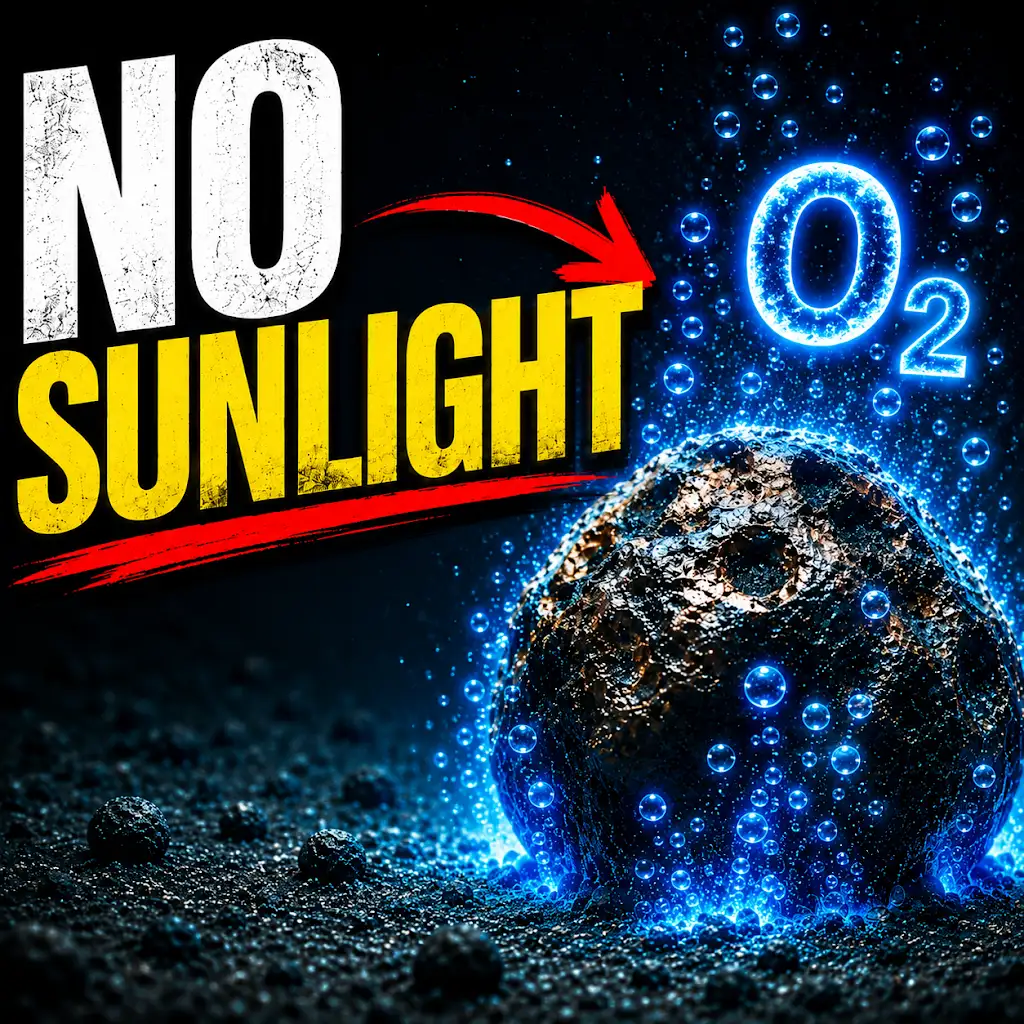
Scientists Found Oxygen Where It Should Be Impossible
FAQs
What is electrolysis?
Electrolysis is a chemical process that uses an electric current to drive a non-spontaneous chemical reaction. It involves the decomposition of a compound into its elements or simpler compounds.
Can electrolysis create dark oxygen?
No, electrolysis cannot create dark oxygen. Oxygen is a colorless, odorless gas, and its properties do not change through the process of electrolysis.
What are the products of electrolysis of water?
The products of electrolysis of water are hydrogen gas and oxygen gas. When an electric current is passed through water, it decomposes into its constituent elements: hydrogen and oxygen.
Is dark oxygen a real chemical compound?
No, dark oxygen is not a real chemical compound. Oxygen exists as a colorless gas in its standard state, and there is no evidence to suggest the existence of a “dark” form of oxygen.
What are some common applications of electrolysis?
Electrolysis is commonly used for electroplating, metal extraction, production of hydrogen and oxygen gas, and in the purification of metals. It is also used in the production of chemicals such as chlorine and sodium hydroxide.