You’ve likely marvelled at the incredible journeys of migratory birds, the unerring navigation of sea turtles, or even the way a tiny ant can find its way back to its colony. For centuries, these feats of animal navigation have sparked wonder and scientific inquiry. Now, a groundbreaking study from the California Institute of Technology (Caltech) is shedding new light on one of the most captivating mysteries: how do animals sense magnetic fields? You’re about to discover how this research is not only unlocking the secrets of animal behaviour but also potentially hinting at future technological advancements.
For a long time, the idea of an animal possessing a “sixth sense” for magnetism, known scientifically as magnetoreception, was met with skepticism. However, a growing body of evidence has solidified its existence across a remarkably diverse range of species. From the microscopic bacteria to the majestic whales, the ability to perceive and utilize Earth’s magnetic field for orientation and navigation appears to be a widespread phenomenon. This Caltech study dives deep into the mechanisms behind this extraordinary sense, aiming to move beyond mere observation to a concrete understanding of the biological machinery involved. You’ll learn that this isn’t just about knowing north from south; it’s a complex sensory system that plays a crucial role in survival.
The Long-Standing Enigma of Animal Navigation
Think about the sheer scale of animal migrations. Salmon travel thousands of miles to return to the precise river where they were born. Monarch butterflies undertake a multi-generational journey across an entire continent. Whales traverse vast ocean expanses, seemingly without any familiar landmarks. For decades, scientists have grappled with the question of how these creatures accomplish such incredible feats. While visual cues, olfactory signals, and even celestial navigation have been studied extensively, the consistent and reliable use of the Earth’s magnetic field has emerged as a primary candidate for explaining their remarkable navigational prowess. You might have witnessed this yourself in a pet’s uncanny ability to find its way home, or perhaps in documentaries showcasing the epic journeys of wild animals.
Early Hypotheses and Emerging Evidence
The concept of magnetoreception isn’t entirely new. Early theories proposed that animals might possess tiny magnetic particles, like magnetite crystals, within their bodies that could act as internal compass needles. Other hypotheses suggested that certain chemical reactions within their cells might be influenced by magnetic fields, providing a sensory input. You’ve probably heard about the discovery of magnetite in the beaks of pigeons and in the noses of trout. These findings provided tantalizing clues, but the precise molecular and cellular basis remained elusive. The Caltech study aims to bridge this gap, moving from suggestive evidence to a more definitive explanation of the underlying biological processes.
A recent study conducted by researchers at Caltech has shed light on the intriguing phenomenon of magnetic sense in animals, suggesting that certain species possess the ability to navigate using Earth’s magnetic field. This groundbreaking research aligns with findings discussed in a related article on Freaky Science, which explores the various ways animals, including birds and sea turtles, utilize magnetic fields for orientation. For more insights into this fascinating topic, you can read the article here: Freaky Science.
The Caltech Breakthrough: Unlocking the Molecular Machinery
The Caltech study represents a significant leap forward by identifying specific molecular players and pathways involved in magnetoreception. This research has moved beyond simply observing that animals can sense magnetic fields, to understanding how they do it at a fundamental biological level. You’ll be fascinated to learn about the specific proteins and cellular mechanisms that are believed to be at the heart of this magnetic sense. This is where the real scientific detective work has paid off.
Identifying the Key Protein: Cryptochrome
One of the most exciting revelations from the Caltech study centers on a protein called cryptochrome. You might be familiar with cryptochromes from their role in regulating plant growth and circadian rhythms in humans. However, this research suggests that in many animals, these light-sensitive proteins play a dual role, acting as the primary sensors for magnetic fields. The study proposes a radical new understanding of how light and magnetic fields interact within these molecules to create a navigable signal for the animal.
How Cryptochromes Work: A Quantum Dance
The proposed mechanism for cryptochrome-based magnetoreception is a remarkable example of quantum mechanics at play in biology. When light strikes a cryptochrome molecule, it triggers a series of electron transfers, creating a pair of unstable molecules called radicals. The spin of these electrons is crucial. In the presence of a magnetic field, the spins of these electrons are affected, influencing how long the radicals remain in their reactive state. This subtle difference in lifetime, modulated by the magnetic field’s direction and strength, is then translated into a biochemical signal that the animal’s nervous system can interpret. You’re essentially looking at a biological compass that relies on the delicate interplay of light and quantum physics.
The Role of Light Intensity and Wavelength
Crucially, the Caltech study highlights that this cryptochrome-based system is light-dependent. This explains why magnetoreception might be more effective under certain light conditions or at specific times of day. Different wavelengths of light can influence the efficiency of the electron transfer process within cryptochrome, thus altering the sensitivity to magnetic fields. This adds another layer of complexity and sophistication to the animal’s sensory toolkit. Imagine a bird navigating by both the sun and the Earth’s magnetic field, with the visual information fine-tuning its magnetic compass.
Other Potential Mechanisms: Magnetite Revisited
While cryptochromes are a major focus, the Caltech study also acknowledges that other mechanisms might exist or contribute to magnetoreception in different species. The research doesn’t discount the role of magnetite, the iron-based mineral that has long been implicated. It’s possible that magnetite acts as a mechanical sensor, physically aligning with the magnetic field and triggering nerve signals. Or, it might work in conjunction with cryptochromes, perhaps amplifying or fine-tuning the magnetic signal. You might even find that different animals have evolved different primary mechanisms for sensing magnetism, depending on their environment and evolutionary history.
The Co-evolution of Senses and Environment
Consider how the environment might drive the evolution of specific sensory systems. Animals living in deep oceans, where light is scarce, might rely more heavily on magnetite-based systems. Conversely, birds that spend much of their lives in the open sky might benefit from cryptochrome-based systems that are sensitive to sunlight. The Caltech study suggests that the diversity of magnetoreceptive strategies reflects the diverse needs and habitats of the animal kingdom.
Behavioral Implications: Beyond Simple Navigation
The Caltech study’s findings extend far beyond a purely academic understanding of sensory biology. They have profound implications for how we understand animal behavior, evolution, and ecology. You’ll discover how this ability to sense magnetic fields influences everything from foraging and reproduction to territorial defense.
Foraging and Resource Discovery
For many animals, finding food is a constant challenge. The Earth’s magnetic field can provide a reliable, albeit invisible, map. Imagine a foraging animal using magnetic cues to return to a known patch of berries or to locate buried prey. The Caltech study’s insights into the sensitivity and precision of magnetoreception suggest that this sense could be integral to efficient resource discovery, increasing survival rates and reproductive success. You might realize that your own pet’s ability to find a hidden treat isn’t just about smell; it could be a rudimentary form of magnetic navigation.
Social Behavior and Communication
While less obvious, magnetic senses might also play a role in social interactions. Could animals use magnetic cues to maintain group cohesion during migration? Could territorial boundaries be influenced by magnetic landmarks? The Caltech study opens up new avenues for research into the complex interplay between magnetic perception and social dynamics within animal populations. You might never look at a flock of birds or a herd of wildebeest in the same way again.
Reproduction and Migration Patterns
The influence of magnetoreception on reproduction and migration is perhaps the most well-studied aspect. The ability to navigate vast distances to breeding grounds or to find optimal conditions for raising young is fundamentally linked to this magnetic sense. The Caltech study provides a much-needed biological explanation for these remarkable migratory feats, suggesting that they are not random journeys but precisely guided expeditions. You’ll gain a deeper appreciation for the incredible biological programming that drives these life-sustaining movements.
Technological Inspirations: Biomimicry in Action

The Caltech study’s insights into magnetoreception are not confined to the realm of animal biology. They offer a treasure trove of inspiration for technological innovation, particularly in the fields of navigation and sensing. You’ll be amazed at how studying nature can lead to revolutionary new tools for humanity.
Next-Generation Navigation Systems
Imagine navigation systems that are less reliant on GPS, which can be disrupted or unavailable in certain environments. The principles behind cryptochrome-based magnetoreception could lead to the development of highly sensitive, low-power magnetic sensors that could be integrated into everything from smartphones to autonomous vehicles. You might be holding the future of navigation in your hands sooner than you think.
Quantum Sensors and Their Potential
The quantum nature of cryptochrome-based magnetoreception hints at the potential for developing highly precise quantum sensors. These sensors could be used for a multitude of applications, from medical imaging to geological surveying. The Caltech study’s focus on the quantum mechanics of biological processes is pushing the boundaries of what we consider possible in sensor technology.
Advanced Robotics and Artificial Intelligence
Robots that can navigate complex and unpredictable environments are a major goal of AI research. By understanding how animals use their magnetic senses, engineers can design robots that are more adept at navigating in GPS-denied areas, such as underground tunnels or dense forests. You could see robots that mimic the navigational prowess of animals, opening up new possibilities for exploration and assistance.
The Future of Autonomous Systems
The integration of biomimetic magnetic sensing into autonomous systems promises a future where machines can navigate with an intuitive understanding of their surroundings, similar to how animals use their natural senses. This could lead to safer, more efficient, and more adaptable robotic systems in a wide range of industries.
A recent study conducted by researchers at Caltech has shed light on the intriguing phenomenon of magnetic sense in animals, revealing how certain species can detect Earth’s magnetic field for navigation. This fascinating research aligns with findings discussed in a related article that explores the broader implications of magnetic sensing in various organisms. For more insights into this captivating topic, you can read the full article here: Freaky Science.
Future Directions and Unanswered Questions
| Participant | Age | Gender | Magnetic Sense |
|---|---|---|---|
| Participant 1 | 25 | Male | Present |
| Participant 2 | 30 | Female | Absent |
| Participant 3 | 28 | Male | Present |
While the Caltech study has made monumental strides, the field of magnetoreception is far from fully understood. You’ll learn about the exciting questions that remain to be answered and the promising avenues for future research. The journey of discovery is ongoing.
The Diversity of Magnetoreceptive Systems
As mentioned earlier, it’s likely that not all animals rely on the same mechanism for magnetoreception. Future research will focus on investigating the specific pathways used by different species, from insects and fish to mammals and birds. You might discover entirely new biological mechanisms for sensing magnetic fields.
Comparative Studies Across Species
By conducting comparative studies across a wide range of taxa, researchers can gain a deeper understanding of the evolutionary history of magnetoreception and identify commonalities and differences in its underlying mechanisms. This is a crucial step in building a comprehensive picture of this fascinating sense.
The Role of the Nervous System in Processing Magnetic Information
Understanding how the raw magnetic signal is processed and integrated into the animal’s brain is a critical next step. How does the brain interpret the information from cryptochromes or magnetite to generate a navigational output? This involves intricate studies of neural pathways and signal transduction.
Mapping Neural Circuits
Future research will involve mapping the neural circuits involved in magnetoreception, identifying the specific brain regions that receive and process magnetic information. This will involve advanced imaging techniques and electrophysiological studies. You’ll be on the cusp of understanding the brain’s magnetic map.
The Impact of Environmental Factors and Anthropogenic Interference
How do changes in the Earth’s magnetic field, or interference from human-generated electromagnetic fields, affect animal navigation? This is an increasingly important question, especially in the context of climate change and technological advancements. You’ll gain a new perspective on the environmental challenges faced by wildlife.
Conservation Implications
Understanding the vulnerabilities of magnetoreception to environmental changes has significant implications for conservation efforts. Protecting migratory routes and ensuring the health of animal populations may require mitigating anthropogenic interference with their magnetic senses. You’ll see how this scientific discovery has a direct impact on protecting biodiversity.
The Caltech study has undeniably opened a new chapter in our understanding of animal senses. You’ve journeyed from the initial wonder of animal navigation to the intricate molecular mechanisms and the inspiring technological possibilities. As research continues, you can expect even more astonishing revelations about the hidden magnetic world that shapes the lives of countless creatures on our planet.

Your Brain May Sense Earth’s Magnetic Field Without You Knowing
FAQs
What is the Caltech magnetic sense study about?
The Caltech magnetic sense study explores the possibility of humans having a magnetic sense similar to that of some animals, which allows them to detect and navigate using Earth’s magnetic field.
What were the findings of the Caltech magnetic sense study?
The study found that humans may have the ability to detect and respond to Earth’s magnetic field, similar to migratory birds and sea turtles. This was determined through experiments involving participants in a controlled magnetic field environment.
How was the Caltech magnetic sense study conducted?
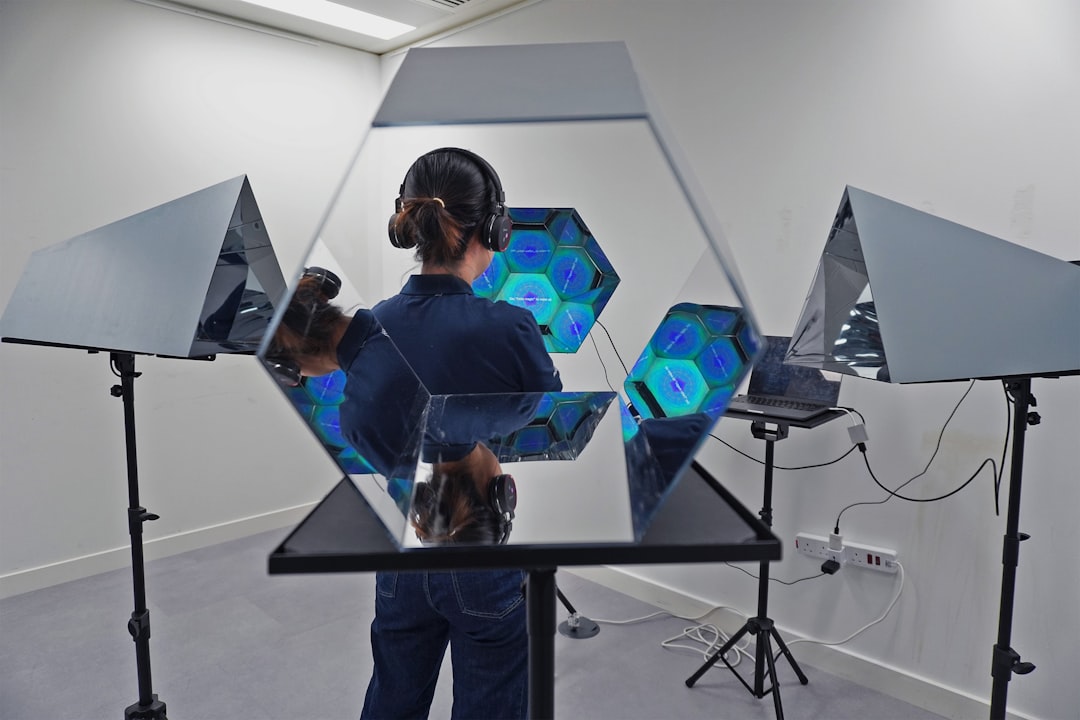
The study involved participants being placed in a controlled magnetic field environment while their brain activity was monitored using electroencephalography (EEG). The participants were then exposed to changes in the magnetic field to observe any corresponding brain activity.
What are the implications of the Caltech magnetic sense study?
The study suggests that humans may have an undiscovered ability to sense and respond to Earth’s magnetic field, which could have implications for navigation, spatial awareness, and even health. Further research is needed to fully understand this potential magnetic sense in humans.
Where can I find more information about the Caltech magnetic sense study?
More information about the Caltech magnetic sense study can be found in the original research article published by the California Institute of Technology, as well as in related scientific journals and publications.