The Earth’s crust is a dynamic entity, constantly sculpted by immense forces emanating from deep within the planet and from the relentless pull of celestial bodies. These forces manifest as stress, which acts upon rock masses, leading to deformation. Understanding how rocks respond to this stress is fundamental to comprehending a vast array of geological phenomena, from the formation of towering mountain ranges to the subtle warping of the landscape. This deformation, broadly speaking, can be categorized into two primary modes: brittle and ductile. The distinction between these behaviors hinges on a complex interplay of factors, including temperature, pressure, rock type, and the rate at which stress is applied. Grasping this fundamental difference is not merely an academic exercise; it is crucial for geologists, engineers, and anyone seeking to understand the forces that shape our planet.
Before delving into the specifics of brittle and ductile behavior, it is essential to establish a foundational understanding of the forces and responses involved.
Understanding Stress
Stress, in geological terms, refers to the force applied per unit area on a rock body. It is the agent of change, the driving force behind any deformation. Geologists commonly identify three principal types of stress:
Compressive Stress
This type of stress involves the pushing together of rock masses. Imagine two tectonic plates colliding; the forces they exert on each other are compressive. In the context of deformation, compression tends to shorten and thicken the rock unit. This is a dominant force in the formation of mountain belts, where large crustal blocks are squeezed and uplifted.
Tensional Stress
Conversely, tensional stress involves the pulling apart of rock masses. This occurs, for example, at divergent plate boundaries where the crust is being stretched and thinned. Tensional stress typically leads to lengthening and thinning of the affected rock. Rift valleys and oceanic trenches are classic examples of geological features formed under tensional stress.
Shear Stress
Shear stress arises when forces act parallel to a surface but in opposite directions. Think of sliding two decks of cards past each other. This type of stress causes rocks to slide past one another, leading to slippage and fracturing. Transform faults, where tectonic plates grind past each other horizontally, are prime examples of environments dominated by shear stress.
The Response: Strain
Strain is the measure of deformation that occurs within a rock body in response to stress. It is the resulting change in shape, volume, or orientation. Geologists quantify strain to understand the magnitude and type of deformation that has taken place.
Elastic Strain
Elastic strain is a temporary deformation that is fully recoverable once the stress is removed. Imagine stretching a rubber band; it deforms, but when you release it, it snaps back to its original shape. Rocks, under low stress conditions, exhibit elastic behavior. The atoms within the rock are slightly displaced from their equilibrium positions, but they return to their original configuration when the force is gone.
Permanent Strain
Permanent strain, as the name suggests, is deformation that is not recovered when the stress is removed. This is the realm of both brittle and ductile deformation. The rock has undergone a fundamental change in its structure that cannot be undone.
In the study of geological processes, understanding the differences between brittle and ductile rock deformation is crucial for interpreting the behavior of Earth’s crust under stress. For a more in-depth exploration of this topic, you can refer to a related article that discusses various aspects of rock mechanics and deformation processes. To learn more, visit this article, which provides valuable insights into the characteristics and implications of both brittle and ductile deformation in geological formations.
Brittle Deformation: The Fractured Response
Brittle deformation is characterized by the fracturing or breaking of rock. Under sufficient stress, the bonds holding the mineral grains together are overcome, leading to the formation of discrete cracks and faults. This type of deformation typically occurs under conditions of relatively low temperature and pressure, and often at shallow depths within the Earth’s crust.
The Role of Low Temperatures and Pressures
At the surface and in the upper crust, temperatures and pressures are generally lower. These conditions limit the ability of mineral grains to move past each other or to flow. Instead, the rocks behave rigidly. When stress exceeds the rock’s elastic limit under these conditions, the bonds break, resulting in fracture. The kinetic energy of the atoms is not high enough to facilitate pervasive plastic flow. Think of trying to bend a dry twig; it will snap rather than bend.
Key Characteristics of Brittle Deformation
Brittle deformation leaves distinct geological signatures that are readily identifiable.
Fractures and Joints
Fractures are planar cracks within a rock. When no significant movement occurs along the fracture, they are often referred to as joints. Joints can form due to a variety of stresses, including cooling, unloading (reduction in overlying pressure), or tectonic forces. They are ubiquitous in many rock formations and can significantly influence weathering and erosion patterns.
Faults
Faults are fractures along which there has been significant displacement or movement of the rock masses. This movement can be vertical, horizontal, or a combination of both, depending on the type of stress. Faults are the primary structures responsible for earthquakes, as the sudden release of energy during fault slip generates seismic waves.
Normal Faults
These faults occur under tensional stress, where the hanging wall (the block of rock above the fault plane) moves down relative to the footwall (the block of rock below the fault plane). This results in the extension and thinning of the crust.
Reverse Faults and Thrust Faults
These faults occur under compressive stress. In a reverse fault, the hanging wall moves up relative to the footwall. A thrust fault is a low-angle reverse fault, where large slabs of rock are pushed over one another, often resulting in significant crustal shortening and thickening.
Strike-Slip Faults
These faults are characterized by horizontal movement of the blocks on either side of the fault plane. They are associated with shear stress and are responsible for features like the San Andreas Fault in California.
Examples of Brittle Deformation in the Field
Observing the effects of brittle deformation is commonplace in geological fieldwork.
Mountain Ranges
While mountain building involves complex processes, the uplift and fracturing of rock masses are integral to their formation. Faults and joints are evident in the exposed rock faces of many mountain ranges, testifying to the immense compressional forces that have shaped them.
Fault Scarps
A fault scarp is a step-like feature on the ground surface that marks the intersection of a fault with the Earth’s surface. These scarps are direct visual evidence of past earthquakes and fault movement.
Sedimentary Basins
Even in seemingly stable areas, brittle deformation can occur. Sedimentary basins, formed by the subsidence of the Earth’s crust, are often bounded by faults. The down-dropped blocks create areas where sediments accumulate.
Ductile Deformation: The Flowing Response
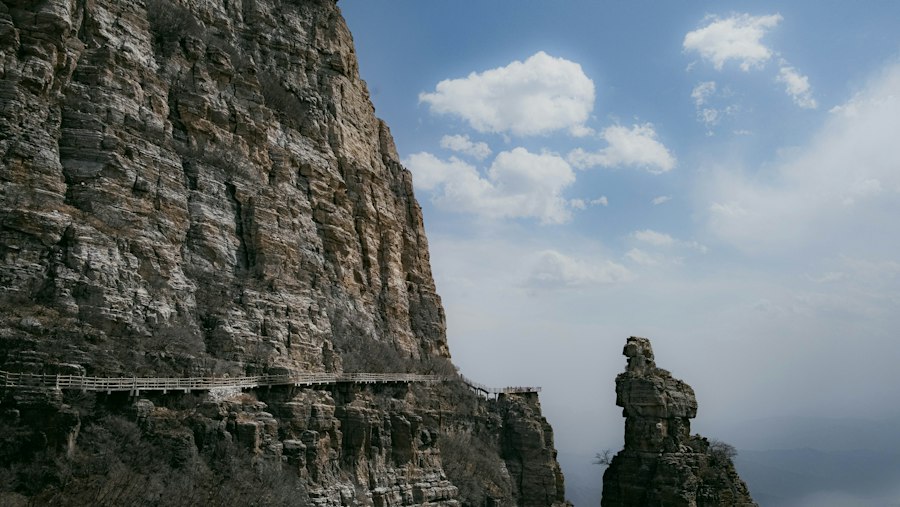
In contrast to brittle deformation, ductile deformation involves the flow or bending of rock without fracturing. This type of deformation occurs under conditions of higher temperature and pressure, typically at greater depths within the Earth’s crust and in the upper mantle. These conditions allow mineral grains to move past each other through mechanisms like diffusion and dislocation glide, allowing the rock to deform plastically.
The Influence of High Temperatures and Pressures
As one descends into the Earth, both temperature and pressure increase significantly. These elevated conditions have a profound impact on rock behavior.
Increased Atomic Mobility
Higher temperatures provide the atoms within the rock with more kinetic energy, making them more mobile. This increased mobility facilitates the movement of atoms and defects within the crystal lattice of minerals, allowing them to slide past one another.
Confining Pressure and Strength
High confining pressure effectively “supports” the rock, preventing it from fracturing. Under immense pressure, even strong rocks can exhibit ductile behavior, essentially flowing around obstacles rather than breaking. Imagine trying to break a fully inflated balloon; it is much more resistant to tearing than an uninflated one.
Mechanisms of Ductile Deformation
Several microscopic and macroscopic mechanisms contribute to ductile deformation.
Plastic Flow
This is the fundamental process of ductile deformation, where rock material moves and deforms without breaking. It is akin to how a very viscous liquid might flow under pressure.
Crystal Plasticity
Within individual mineral grains, ductile deformation occurs through crystal plasticity. This involves the movement of dislocations (line defects within the crystal lattice) which allows planes of atoms to slip past each other. This requires specific crystallographic planes and directions for slip.
Diffusion Creep
At very high temperatures, atoms can migrate through the crystal lattice or along grain boundaries, leading to a gradual deformation. This process, known as diffusion creep, is particularly important at very low stress levels over long geological timescales.
Recrystallization and Grain Growth
Under conditions of high temperature and pressure, new, strain-free mineral grains can form, and existing grains can grow. This process helps to accommodate deformation by reducing internal stress and can lead to changes in the size and shape of mineral grains.
Geological Structures Formed by Ductile Deformation
Ductile deformation results in a different suite of geological structures compared to brittle deformation.
Folds
Folds are wave-like bends in rock layers that form under compressive stress. They are the hallmark of ductile deformation and are indicative of significant strain.
Anticlines
These are upwardly convex folds, with the oldest rocks in the core.
Synclines
These are downwardly concave folds, with the youngest rocks in the core.
Monoclines
These are step-like folds where rock layers are tilted in a single direction.
Sheath Folds
These are complex, three-dimensional folds that wrap around a more rigid core, often formed in regions of intense shear.
Flow Structures
In some ductilely deformed rocks, such as certain metamorphic rocks, evidence of flow can be preserved. This can include aligned mineral grains that indicate the direction of movement.
Examples of Ductile Deformation in the Field
The evidence for ductile deformation is often found in deeply buried or highly metamorphosed rocks.
Folded Strata in Mountain Cores
The cores of many ancient mountain ranges, exposed by erosion, reveal intensely folded sedimentary and metamorphic rock layers. These folds are a testament to the immense compressional forces that acted over long periods.
Metamorphic Rocks
Many metamorphic rocks, formed deep within the Earth, exhibit features indicative of ductile deformation, such as foliation (parallel alignment of mineral grains) and lineation.
Salt Domes
In sedimentary basins where thick layers of salt exist, the buoyancy of the salt and the confining pressure can cause it to flow upwards, forming salt domes. This flow is a form of ductile deformation.
Factors Influencing Brittle vs. Ductile Behavior

The transition from brittle to ductile deformation is not a sharp boundary but rather a spectrum. Several critical factors dictate which behavior will dominate.
Temperature
As discussed, temperature is a primary control. Higher temperatures increase atomic mobility and weaken mineral bonds, promoting ductile flow. Conversely, lower temperatures increase rock strength and favor brittle fracture.
Pressure
Confining pressure plays a crucial role in preventing fracture. High pressures essentially “hold the rock together,” making it more difficult for cracks to propagate. Under high pressure, rocks are more likely to deform plastically. Low confining pressure allows fractures to form and propagate more easily.
Strain Rate
The speed at which stress is applied also influences deformation style.
High Strain Rates
At high strain rates, rocks have less time to respond through ductile mechanisms like diffusion or plastic flow. Consequently, they are more likely to behave in a brittle manner, fracturing before they can significantly deform plastically. Earthquakes, which occur rapidly, are often the result of brittle failure.
Low Strain Rates
At low strain rates, rocks have ample time to adjust their structure and deform ductily. Processes like diffusion creep and slow plastic flow can occur over geological timescales, leading to the formation of folds and other ductile structures.
Rock Type and Mineralogy
Different rock types possess different inherent strengths and deformation characteristics.
Inherently Brittle Rocks
Rocks composed of minerals with strong, tightly bonded crystal structures, such as quartz-rich sandstones, tend to be more brittle. Their bonds are harder to break.
Inherently Ductile Rocks
Rocks with weaker mineral bonds or minerals that are prone to slip, such as some clay minerals or those found in high-grade metamorphic environments, may exhibit more ductile behavior.
Presence of Fluids
The presence of pore fluids can significantly influence rock strength and deformation. Fluids can lubricate grain boundaries, reduce the effective normal stress across fractures, and facilitate chemical reactions that promote recrystallization, all of which can promote ductile deformation. Conversely, in some cases, fluids can weaken rocks, leading to brittle failure.
Understanding the differences between brittle and ductile rock deformation is crucial for geologists and engineers alike, as it influences everything from earthquake predictions to the stability of structures built on or within the Earth’s crust. For a deeper exploration of this topic, you can refer to a related article that discusses the various factors affecting rock behavior under stress. This article provides valuable insights into how temperature, pressure, and rock composition play significant roles in determining whether a rock will fracture or flow. To learn more about these fascinating geological processes, visit this informative resource.
The Brittle-Ductile Transition Zone
| Aspect | Brittle Deformation | Ductile Deformation |
|---|---|---|
| Definition | Fracturing or breaking of rock under stress | Permanent bending or flowing of rock without fracturing |
| Temperature Range | Low to moderate (typically below 300°C) | Moderate to high (typically above 300°C) |
| Pressure Range | Low to moderate pressure | High pressure |
| Strain Rate | High strain rate | Low strain rate |
| Rock Behavior | Sudden failure, cracks, faults, and joints | Flow, folding, and stretching of rock layers |
| Common Structures | Faults, fractures, joints | Folds, foliations, lineations |
| Energy Release | Rapid release (e.g., earthquakes) | Gradual energy dissipation |
| Depth in Earth’s Crust | Shallow crust (0-15 km) | Deeper crust (15-40+ km) |
| Examples of Rocks | Granite, sandstone at surface conditions | Shale, schist, gneiss under metamorphic conditions |
The interplay of these factors creates a “brittle-ductile transition zone” within the Earth’s crust.
Depth as a Primary Indicator
Generally, at shallow depths, rocks tend to be brittle due to lower temperatures and pressures. As depth increases, temperatures and pressures rise, leading to a transition to ductile behavior. This transition is not uniform across the Earth and can vary depending on tectonic setting and lithology.
Implications for Seismicity
The brittle-ductile transition zone is of significant importance for understanding earthquakes. Earthquakes typically occur in the brittle upper crust where rocks can fracture and release stored elastic energy. Below this zone, in the ductile regime, deformation occurs more gradually, and large earthquakes are less common. However, extremely large earthquakes can involve rupture that extends from the brittle into the ductile regime.
The Role of the Asthenosphere
The asthenosphere, a partially molten layer in the upper mantle, is a prime example of a ductilely deforming region. Its low viscosity allows for the slow, continuous movement of tectonic plates.
The Significance of Understanding Rock Deformation
The ability to distinguish between brittle and ductile deformation is paramount for a wide range of scientific and practical applications.
Plate Tectonics and Mountain Building
The grand narratives of plate tectonics and mountain building are written in the language of rock deformation. Brittle faulting and fracturing contribute to the uplift and fragmentation of crustal blocks, while ductile folding and flow contribute to the thickening and reshaping of mountain cores.
Resource Exploration
Understanding how rocks deform is crucial for the exploration and extraction of valuable resources.
Hydrocarbon Reservoirs
The formation of traps that can hold oil and gas often involves faulting (brittle deformation) or folding (ductile deformation). Identifying these structures is key to successful exploration.
Mineral Deposits
Many mineral deposits are associated with fault zones or areas of intense deformation where fluids have been channeled.
Geotechnical Engineering
For civil engineers, understanding rock behavior is critical for the safety and stability of structures built on or within the Earth.
Tunneling and Excavation
Predicting how rock will behave when excavated is vital for designing stable tunnels, mines, and foundations. Brittle rocks may require different support systems than ductile rocks.
Dam Construction
The stability of dam foundations is heavily influenced by the underlying rock structure and its susceptibility to brittle or ductile deformation.
Seismic Hazard Assessment
By studying fault systems and the history of earthquakes, geologists can assess the seismic hazard of a region. Understanding the brittle nature of the upper crust is fundamental to this assessment.
Paleontology and Paleoenvironmental Reconstruction
The way rocks deform can preserve clues about past environments and events. For instance, the type of folding or faulting in a sedimentary sequence can provide insights into the tectonic forces that were active during its deposition and subsequent history.
Conclusion: A Dynamic Earth Revealed
The Earth’s crust is a testament to the power of deformation. Brittle fracture and ductile flow are the two primary languages through which rocks express the immense forces that act upon them. The distinction between these modes of deformation, governed by temperature, pressure, strain rate, and rock type, is not a simple dichotomy but a complex continuum. From the jagged peaks of mountain ranges, etched by brittle faulting, to the smoothly flowing salt domes and the deeply folded rocks of continental cores, the landscape tells a story of constant transformation. Recognizing the signatures of brittle and ductile deformation allows us to unravel the intricate processes of plate tectonics, understand the formation of Earth’s valuable resources, ensure the safety of our engineered structures, and ultimately, gain a profound appreciation for the dynamic and ever-changing nature of our planet. The ongoing study of rock deformation continues to illuminate the hidden forces that shape our world, providing essential knowledge for navigating the challenges and opportunities presented by our geologically active Earth.

We Drilled 12 KM Into Earth—Then the Rock Started Bending
FAQs
What is the difference between brittle and ductile rock deformation?
Brittle rock deformation occurs when rocks break or fracture under stress, while ductile rock deformation involves rocks bending or flowing without breaking.
What factors influence whether rock deformation is brittle or ductile?
Factors such as temperature, pressure, strain rate, and rock composition can influence whether rock deformation will be brittle or ductile.
Which type of rock deformation is more common near the Earth’s surface?
Brittle rock deformation is more common near the Earth’s surface, where rocks are under lower temperatures and pressures.
How does the type of rock deformation affect the type of geological structures formed?
Brittle deformation tends to form faults, joints, and fractures, while ductile deformation leads to folds, foliations, and shear zones in rocks.
Can rocks exhibit both brittle and ductile deformation?
Yes, rocks can exhibit both brittle and ductile deformation depending on the conditions they are subjected to, such as changes in temperature, pressure, or strain rate.