Blue LED chip phosphor failure is a real thing, and it basically means the light-emitting part of your LED bulb or fixture is degrading over time, causing it to dim or change color. It’s not usually a sudden “pop” and darkness, but more of a gradual decline. The good news is, understanding why it happens can help you make better choices when buying and even potentially extend the life of your existing lights.
The Heart of the Problem: What’s Happening Inside an LED?
So, how does an LED actually produce light, and where does the phosphor come into play? It’s a bit more complex than just a simple filament glowing. Think of it as a multi-step process.
The Basic LED: Generating Blue Light
At its core, a white LED doesn’t inherently produce white light. It starts with a semiconductor chip, typically made of gallium nitride (GaN). When you pass an electric current through this chip, it emits blue light. This is the fundamental emission from the LED itself. It’s a very efficient process, but raw blue light isn’t what we typically want for general illumination.
The Phosphor’s Role: Transforming Blue into White
This is where the magic, or sometimes the failure, happens. To get white light, that raw blue light needs to be converted. This is done using a phosphor coating applied to the blue LED chip. Phosphors are materials that absorb light at one wavelength and re-emit it at a different, longer wavelength. In white LEDs, the blue light from the chip excites the phosphor, causing it to glow. Different types of phosphors are used, but commonly, they emit yellow light. When you mix the blue light from the LED with the yellow light from the phosphor, our eyes perceive it as white light. The exact blend of blue and yellow determines the “color temperature” of the white light (warm white, cool white, etc.).
The YAG Phosphor and Its Limitations
The most common type of phosphor used for this conversion is YAG:Ce (Yttrium Aluminum Garnet doped with Cerium). It’s effective and relatively inexpensive. However, YAG phosphors have a crucial limitation: they are sensitive to heat. While LEDs are generally more energy-efficient and produce less heat than incandescent bulbs, the phosphor itself can still get quite hot during operation. This heat, combined with the high energy of the blue light photons, can lead to the degradation of the phosphor material.
Recent studies have highlighted the challenges associated with blue LED chip phosphor failure, which can significantly impact the performance and longevity of LED lighting solutions. For a deeper understanding of this issue and its implications on the industry, you can refer to a related article that discusses the underlying causes and potential solutions. To explore this topic further, visit this article.
Unpacking the Causes of Phosphor Degradation
If phosphor failure is a thing, what exactly makes it happen? It’s not usually a single culprit, but a combination of factors that wear down the phosphor over time.
Heat Stress: The Primary Culprit
As mentioned, heat is the biggest enemy of YAG phosphors. Even though LEDs are efficient, the phosphor layer can reach temperatures of 100-150°C or even higher in some poorly designed fixtures. Prolonged exposure to these elevated temperatures causes the phosphor particles to degrade. This can manifest as:
- Sintering: The phosphor particles can fuse together, reducing their efficiency in converting blue light.
- Chemical Reactions: The high temperatures can induce slow chemical reactions within the phosphor material, altering its composition and its light-emitting properties.
- Loss of Luminescence: The fundamental ability of the phosphor to emit light diminishes over time due to these thermal stresses.
Blue Light Intensity and Photon Bombardment
It’s not just the heat; the very light that the phosphor is supposed to convert can also contribute to its demise. The blue photons emitted by the LED chip are energetic. When these photons bombard the phosphor particles repeatedly over thousands of hours, they can cause subtle structural damage at a molecular level. This “photon bombardment” effect, while less significant than heat in most cases, still plays a role in the long-term degradation of the phosphor’s luminescent properties.
Encapsulation Material Degradation
The phosphor isn’t just sitting there exposed. It’s typically mixed into a silicone or epoxy resin and then encapsulated around the LED chip. The quality and longevity of this encapsulating material are also critical. Over time, these organic materials can also degrade due to heat and UV exposure (even though the primary light is blue, some UV can be present or generated). As the encapsulant breaks down, it can become discolored, opaque, or brittle, which can:
- Block or Scatter Light: A degraded encapsulant can prevent the light from reaching the phosphor effectively or scatter the emitted light in unintended ways, reducing brightness and color quality.
- Trap Heat: A failing encapsulant might not dissipate heat as well, leading to higher operating temperatures for the phosphor.
Manufacturing Inconsistencies and Impurities
Not all LEDs are created equal, and manufacturing processes can introduce variations.
- Phosphor Density and Distribution: If the phosphor isn’t uniformly distributed or if there are voids in the coating, certain areas might experience higher stress or less efficient light conversion.
- Impurities: Trace amounts of impurities in the phosphor material or the encapsulant can accelerate degradation reactions, especially when exposed to heat and light.
- Chip Quality: The quality of the underlying blue LED chip itself can indirectly affect phosphor life. If the chip has an uneven emission pattern or higher than expected junction temperatures, it can lead to localized overheating of the phosphor.
The Visible Signs: How Phosphor Failure Manifests
So, how do you actually see that your LED light is suffering from phosphor failure? It’s usually a gradual process, so you might not notice it immediately.
Color Shift: The Most Common Indicator
The most prevalent sign of phosphor degradation is a noticeable shift in the color of the light. As the phosphor ages, its ability to emit yellow light diminishes, and the spectral balance changes.
- Cooler Appearance: Often, the light will start to look “cooler” or bluer than it did when it was new. This is because the yellow component of the white light is becoming weaker, leaving more of the original blue light to dominate.
- Greenish or Purplish Hue: In some cases, the degradation can lead to a less desirable shift towards greenish or even purplish tones, depending on the specific phosphors used and how they degrade. This is especially noticeable when comparing an aging bulb to a new one of the same model.
Dimming and Loss of Brightness
Another hallmark of phosphor failure is a gradual decrease in the light’s intensity, or lumen output. As the phosphor’s luminescent efficiency drops, it converts less of the blue light into visible light.
- Subtle Decline: This dimming is usually not dramatic. You might not realize it’s happening until you put a new bulb next to an old one and see the stark difference.
- Unevenness in Fixtures: In fixtures with multiple LED chips, one chip might degrade faster than others, leading to a mottled or uneven light output across the fixture.
Changes in Beam Pattern or Hotspots
While less common, severe degradation or inconsistencies in phosphor coating can sometimes affect how the light is distributed.
- Loss of Uniformity: The light might appear less uniform, with brighter or dimmer spots within the beam.
- Beam Spread Alteration: The intended beam spread of the fixture could subtly change as light is absorbed or scattered differently by the degraded phosphor.
Solutions and Mitigation: What Can Be Done?
When phosphor failure occurs, it’s generally irreversible for that specific LED chip. However, there are strategies to address the issue, both for manufacturers and consumers.
For Manufacturers: Designing for Longevity
The responsibility for preventing phosphor failure largely lies with the manufacturers. They employ various techniques to minimize its impact:
- High-Temperature Phosphors: Research and development into phosphors that are more resistant to heat and higher energy photons is ongoing. While YAG is common, newer phosphor formulations are being introduced that offer better stability.
- Optimized Thermal Management: This is crucial. Manufacturers need to design fixtures and bulbs with effective heat sinks and airflow to keep the LED chip and phosphor within safe operating temperature ranges. This involves careful selection of materials and enclosure designs.
- Quality Encapsulation Materials: Using high-quality, UV-stable silicones or epoxies that can withstand heat and light exposure without degrading is essential.
- Improved Manufacturing Processes: Tighter controls on phosphor density, distribution, and purity during manufacturing can ensure more consistent performance and longevity.
- Lower Current or Power Operation: Designing LEDs to run at lower power densities, even if it means slightly lower initial lumen output, can significantly extend their lifespan by reducing the thermal and photon stress on the phosphor.
For Consumers: Making Informed Choices and Extending Life
While you can’t fix a failed phosphor, you can make choices to mitigate its impact and potentially prolong the life of your lighting.
- Opt for Reputable Brands: Established brands often invest more in R&D, quality control, and better thermal management in their products, leading to more durable LEDs.
- Check Specifications (When Possible): Look for information regarding lumen maintenance (e.g., L70 rating, which indicates the time until the light output drops to 70% of its initial level). While not always readily available, it’s a good indicator of expected lifespan.
- Ensure Good Ventilation: If you’re installing LED fixtures, make sure they have adequate airflow and aren’t enclosed in a way that traps heat. For example, don’t install recessed downlights in a poorly ventilated ceiling cavity without proper insulation and airflow considerations.
- Avoid Overdriving: If you’re using dimmable LEDs, use them with compatible dimmers. Running them at full power unnecessarily can contribute to heat buildup.
- Understand “Cheap” Can Be Costly: While tempting, extremely low-priced LEDs might cut corners on materials and design, leading to premature failure. Consider the total cost of ownership – a slightly more expensive, longer-lasting bulb can be cheaper in the long run.
- Replace as a Set: If you have a fixture with multiple bulbs and one starts to fail, it’s often best to replace them all. This ensures uniform light color and brightness.
Recent studies have highlighted the challenges associated with blue LED chip phosphor failure, which can significantly impact the performance and longevity of LED lighting systems. For a deeper understanding of this issue, you can explore a related article that discusses the underlying causes and potential solutions. This insightful piece sheds light on the advancements in phosphor technology and how they can mitigate such failures. To read more about it, visit this article.
The Future of LED Phosphors: Towards Greater Durability
| Parameter | Description | Typical Values | Impact on Blue LED Chip Phosphor |
|---|---|---|---|
| Operating Temperature (°C) | Temperature at which the LED chip operates | 25 – 150 | Higher temperatures accelerate phosphor degradation and failure |
| Forward Current (mA) | Current passing through the LED chip | 20 – 350 | Excessive current increases heat, leading to phosphor breakdown |
| Phosphor Conversion Efficiency (%) | Efficiency of converting blue light to desired wavelength | 70 – 90 | Decreases over time due to phosphor degradation |
| Luminous Flux Degradation (%) | Reduction in light output over time | 10 – 30 (after 1000 hours) | Indicates phosphor failure and reduced LED performance |
| Thermal Resistance (°C/W) | Resistance to heat flow from junction to ambient | 5 – 15 | Higher values cause increased junction temperature, accelerating phosphor failure |
| Phosphor Layer Thickness (µm) | Thickness of the phosphor coating on the LED chip | 10 – 50 | Too thin leads to insufficient conversion; too thick causes heat buildup |
| Blue LED Chip Lifetime (hours) | Expected operational lifetime before significant failure | 20,000 – 50,000 | Phosphor failure reduces effective lifetime |
The LED industry is constantly evolving, and research into improving phosphor technology is a key area of focus. The goal is to create lighting that is not only energy-efficient but also lasts for a very long time without significant degradation.
Beyond YAG: Exploring New Materials
Scientists are actively developing and utilizing alternative phosphor materials that offer better performance under stress.
- Quantum Dots (QDs): While not technically phosphors in the traditional sense, quantum dots can be used to convert blue light into other colors. They are known for their excellent color purity and stability, potentially offering a more robust solution. However, cost and integration challenges are still being addressed.
- Silicate and Aluminate Phosphors: These newer generations of phosphors are being engineered for improved thermal stability and resistance to photo-degradation compared to traditional YAG. They can offer broader color rendering and better lumen maintenance at elevated temperatures.
- Nanophosphors: Working with phosphors at the nanoscale can alter their optical and thermal properties, potentially leading to enhanced durability.
Enhanced Thermal Management Innovations
Beyond material science, advancements in how LEDs are designed to manage heat are crucial.
- Improved Heat Sink Designs: New materials and intricate geometries for heat sinks allow for more efficient dissipation of heat away from the LED chip and phosphor.
- Direct Thermal Paths: Designs that create a more direct path for heat to escape the system are being implemented.
- Advanced Cooling Technologies: For high-power applications, active cooling solutions (though less common in typical consumer lighting) are being explored.
Shifting to Remote Phosphor Technology
A significant trend is the move towards “remote phosphor” designs. In these setups, the phosphor is not directly on the LED chip.
- Separation of Heat Sources: The blue LED chip is placed some distance away from the phosphor layer. This means the phosphor is not subjected to the direct heat generated by the LED junction.
- More Uniform Light: The light from the blue LEDs is directed onto a larger phosphor-coated surface, which can lead to a more uniform light output and better color mixing.
- Increased Lifespan: By decoupling the phosphor from the heat source, this design significantly reduces thermal stress, leading to much longer phosphor life and consistent color. This is a key technology in many higher-end LED fixtures and streetlights.
Understanding phosphor failure is less about diagnosing a specific fault and more about appreciating the intricate engineering that goes into producing the light we use every day. By being aware of the causes and looking for well-designed products, you can make more informed decisions and enjoy your LED lighting for longer.
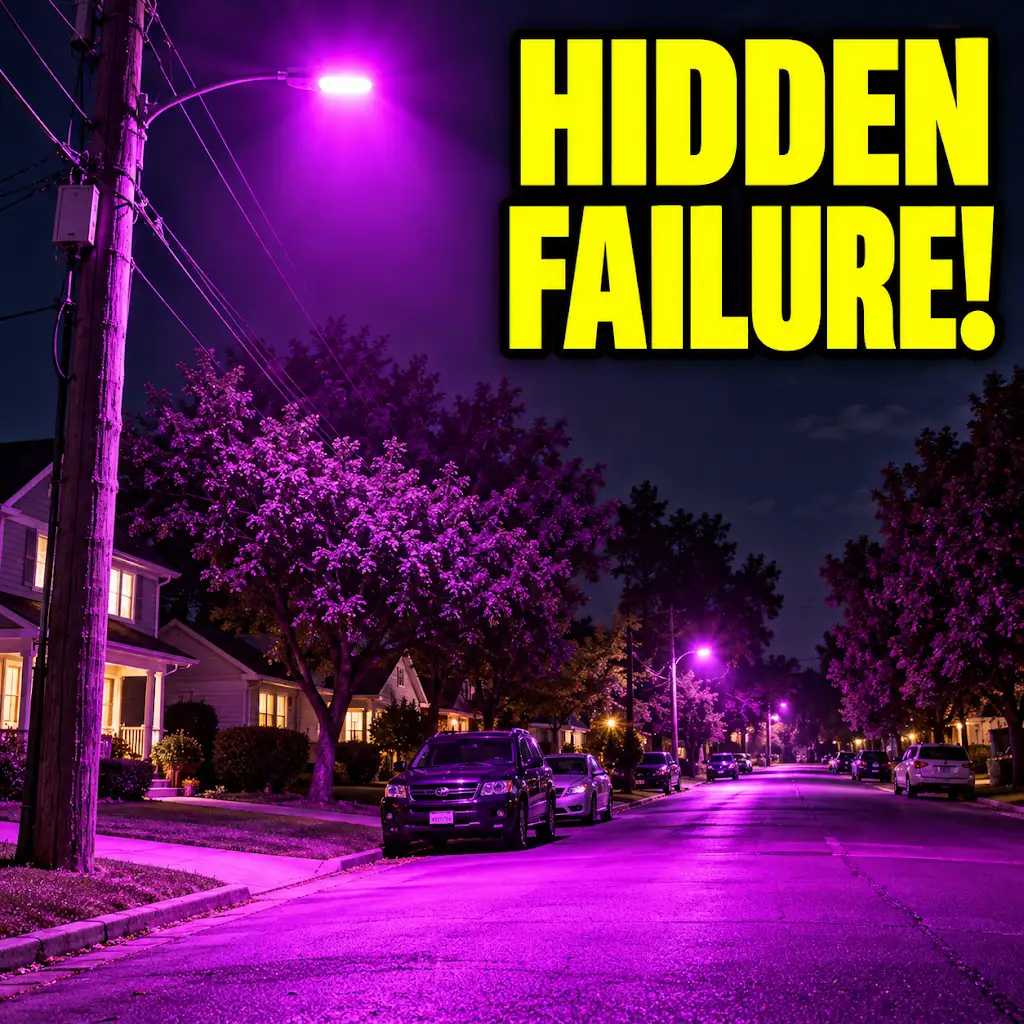
Why The Streetlights Are Turning Purple
FAQs
What causes blue LED chip phosphor failure?
Blue LED chip phosphor failure can be caused by various factors such as high operating temperatures, humidity, overdriving the LED, and poor quality materials.
How can one identify blue LED chip phosphor failure?
Signs of blue LED chip phosphor failure include a decrease in brightness, color shift, flickering, or complete LED failure. Visual inspection and testing can help confirm the issue.
Can blue LED chip phosphor failure be repaired?
In some cases, blue LED chip phosphor failure can be repaired by replacing the phosphor material or the entire LED chip. However, it is often more cost-effective to replace the LED altogether.
What are the consequences of blue LED chip phosphor failure?
Blue LED chip phosphor failure can lead to reduced light output, color inconsistency, and ultimately, complete LED malfunction. This can impact the performance and lifespan of the lighting fixture.
How can blue LED chip phosphor failure be prevented?
To prevent blue LED chip phosphor failure, it is important to operate LEDs within their specified parameters, maintain proper thermal management, avoid overdriving the LEDs, and use high-quality components from reputable manufacturers.