The abyss, a realm of perpetual darkness and crushing pressure, holds secrets that defy imagination. Among its most captivating enigmas are the bioluminescent wonders, creatures that generate their own light in the inky blackness. This ancient biological phenomenon, evolved over millions of years, transforms the deep sea into a canvas of living constellations, a silent, ethereal ballet of light and shadow. From the fleeting flickers of microscopic plankton to the majestic glow of colossal squid, bioluminescence is a testament to life’s extraordinary adaptability and its ingenious solutions to survival in one of Earth’s most extreme environments.
At the heart of every glow lies a remarkable biochemical process. Bioluminescence is not a single reaction but a family of diverse chemical pathways, all ultimately leading to the emission of light. The fundamental ingredients typically involve a light-emitting molecule called luciferin and an enzyme, luciferase, which catalyzes the oxidation of luciferin. This oxidation releases energy, which is then converted into visible light, a phenomenon known as chemiluminescence. However, the specifics of these molecules and their reactions vary significantly across different species, leading to a dazzling array of colors and patterns.
Luciferins: The Light-Bearing Molecules
The term “luciferin” is a broad classification, encompassing a variety of chemical structures that serve as the substrate for light emission. In many marine organisms, particularly crustaceans and cephalopods, the luciferin belongs to a class of compounds that are chemically similar to coelenterazine. Coelenterazine-based bioluminescence is widespread in the ocean, found in jellyfish, comb jellies, deep-sea fish, and even some bacteria. The structure of coelenterazine, with its characteristic fused ring system, allows it to undergo oxidative reactions that produce photons.
In other groups, such as certain bacteria and some deep-sea fish, the luciferin might be a flavin derivative. These compounds, when oxidized, also emit light, though often with different spectral characteristics. The diversity of luciferins underscores the independent evolution of bioluminescence in different lineages, a testament to its adaptive significance. The synthesis of these molecules is often a complex process, with some organisms acquiring them through their diet and others producing them endogenously.
Luciferases: The Catalytic Architects of Light
Luciferases, the enzyme partners in this luminous dance, are equally diverse. While their function – catalyzing the oxidation of luciferin – is consistent, their amino acid sequences and three-dimensional structures vary considerably. This structural diversity influences the efficiency of the reaction, the wavelength of light emitted, and the stability of the enzyme. Some luciferases are highly specific, interacting with only one type of luciferin, while others may have broader substrate specificity.
The interaction between luciferin and luciferase is often triggered by specific environmental cues or internal physiological signals. This allows the organism to control its light production, turning it on and off as needed. In some cases, the luciferase might be produced continuously, with the organism storing luciferin for later use. In other instances, both components might be synthesized and released simultaneously upon stimulation. The study of these enzymes provides invaluable insights into protein evolution and enzyme kinetics, with potential applications in biotechnology and medical imaging.
The Role of Oxygen and Cofactors
Oxygen is almost universally required for bioluminescent reactions. It acts as the oxidizing agent, enabling the luciferin to release its stored energy. Without sufficient oxygen, the light-producing reaction cannot occur. This dependency highlights the intimate connection between bioluminescence and the respiratory processes of marine organisms.
Beyond oxygen, other cofactors can play a crucial role. Calcium ions (Ca²⁺) are often involved, particularly in organisms with photoproteins, which are stable complexes of luciferin and a protein that already contains oxygen. In these cases, the binding of calcium ions triggers a conformational change that initiates the bioluminescent reaction. Magnesium ions (Mg²⁺) have also been implicated in some bioluminescent systems, further showcasing the intricate biochemical machinery involved. Understanding these cofactor requirements is essential for replicating bioluminescent phenomena in laboratory settings and for deciphering the precise regulatory mechanisms in vivo.
Bioluminescent deep sea creatures are fascinating organisms that have evolved to produce light in the dark depths of the ocean, serving various purposes such as attracting prey or communicating with mates. For those interested in exploring this captivating topic further, you can read a related article that delves into the science behind bioluminescence and its role in the marine ecosystem. Check it out here: Freaky Science.
Diversity in the Dark: Bioluminescent Organisms of the Deep
The deep sea is not a monolithic environment; it comprises a gradient of light penetration, from the twilight zone where faint sunlight filters through, to the aphotic zone, where absolute darkness reigns. Across these different depths, a breathtaking array of life forms has evolved to harness the power of bioluminescence, each with unique adaptations and purposes.
The Epipelagic and Mesopelagic Zones: A Realm of Flickering Lights
Even in the upper layers of the ocean, where some light penetrates, bioluminescence plays a significant role. In the epipelagic zone (0-200 meters) and the mesopelagic zone (200-1,000 meters), often referred to as the “twilight zone,” many organisms use bioluminescence for communication, camouflage, and predation. Here, the faint sunlight can be exploited by predators to silhouette prey against the brighter surface waters. To counter this, many mesopelagic creatures possess counter-illumination, a form of camouflage where they produce light from their ventral surfaces, matching the intensity and color of the downwelling light, thus rendering them invisible from below.
Numerous species of fish, squid, and crustaceans inhabit these zones, exhibiting a remarkable range of bioluminescent displays. The hatchetfish, for instance, are known for their ventral photophores that facilitate counter-illumination. The bristlemouths, the most abundant vertebrates in the ocean by number, also possess numerous photophores used for signaling and attracting prey. Even seemingly simple organisms like dinoflagellates, microscopic plankton, can create spectacular displays of light when disturbed, often seen as shimmering waves or glowing trails in the water.
The Bathyal and Abyssal Zones: Pioneers of Perpetual Night
As depth increases, sunlight completely disappears, and the environment becomes dominated by perpetual darkness and extreme pressure. In the bathyal zone (1,000-4,000 meters) and the abyssal zone (4,000-6,000 meters), bioluminescence becomes not just a tool but a primary means of interaction and survival. Here, organisms have evolved highly sophisticated light-producing organs and strategies.
Many deep-sea anglerfish, for instance, are renowned for their bioluminescent lures, modified fins that dangle in front of their mouths, attracting unsuspecting prey in the darkness. The intensity and pattern of these lures can be varied, acting as a complex signaling mechanism. Similarly, the vampire squid, despite its fearsome name, uses bioluminescent ink and glowing mucus to disorient predators.
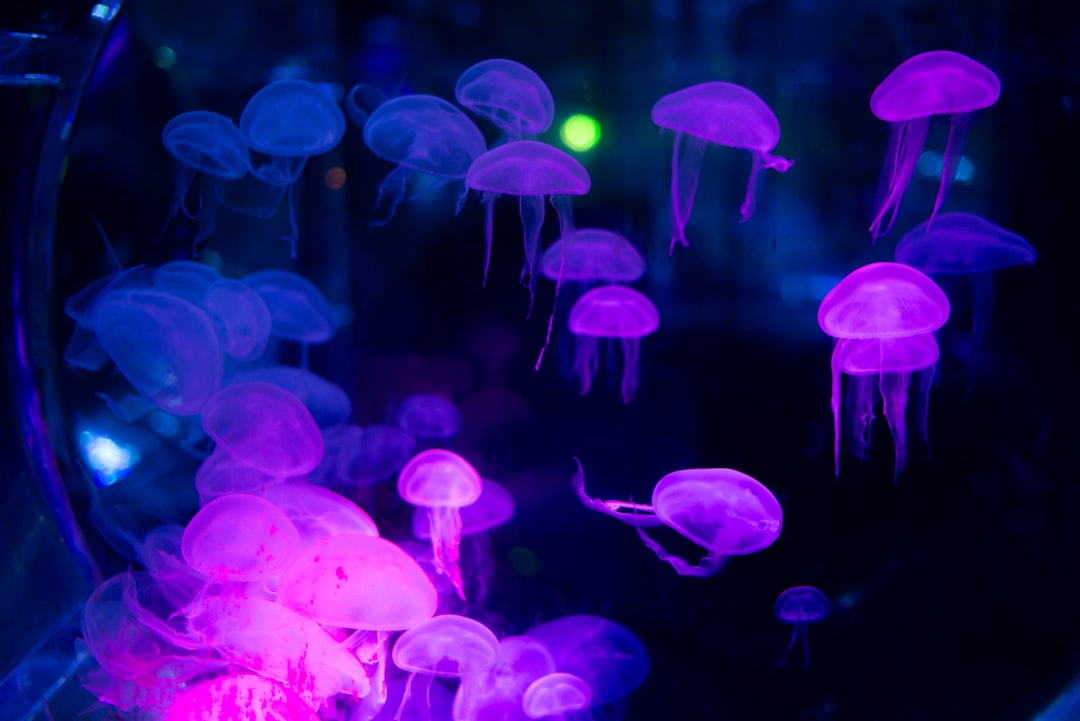
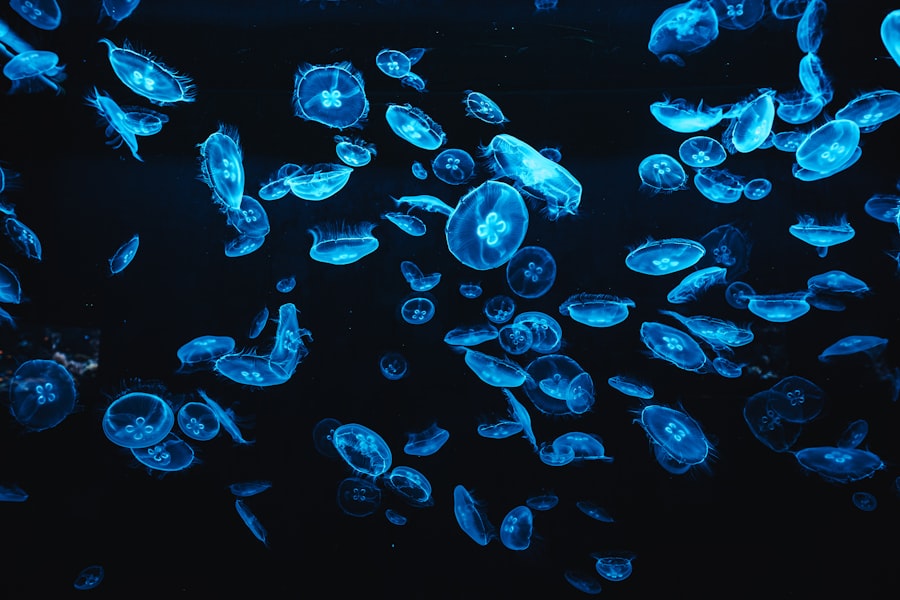
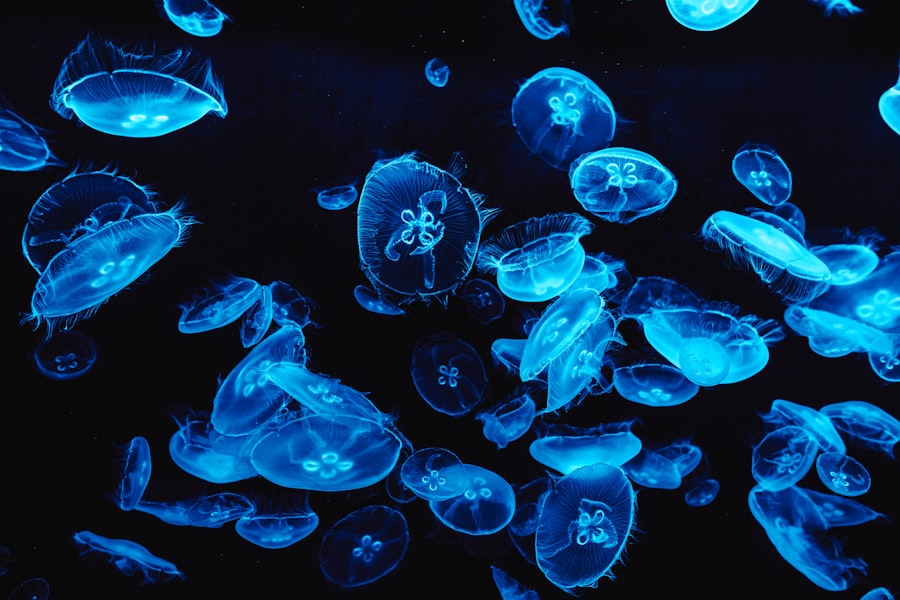
Jellyfish and comb jellies, often gelatinous and transparent, can produce mesmerizing light shows. Some comb jellies, like Ctenophora, refract light to create iridescent displays, while others possess photophores that emit pulsating flashes of light. These displays can be used for defense, attracting mates, or even luring prey. The sheer diversity of bioluminescent patterns – from steady glows to rapid flashes, from blues and greens to rarer reds – reflects the myriad ways life has adapted to thrive in the absence of sunlight.
The Hadal Zone: Lights in the Deepest Trenches
Even in the hadal zone, the deepest trenches of the ocean, where pressures are immense and temperatures near freezing, life persists, and with it, bioluminescence. While less studied due to the extreme difficulty of access, research in these trenches has revealed some surprising bioluminescent inhabitants. Certain amphipods and polychaete worms found in the Mariana Trench have been observed to produce light. The precise functions of bioluminescence in these extreme environments are still largely unknown, but it is theorized to play roles in communication, predator deterrence, or even attracting mates in the vast, crushing darkness. The discovery of bioluminescent life in the hadal zone pushes the boundaries of our understanding of life’s resilience and adaptability.
Functions of the Luminous Displays: More Than Just a Pretty Glow
Bioluminescence in the deep sea is not merely a passive emission of light; it is a dynamic and purposeful tool employed by organisms for a multitude of critical functions. These functions are as diverse as the creatures that produce them, reflecting the selective pressures of a lightless environment.
Communication and Mating: A Luminous Language
In the vast, dark expanse of the deep sea, visual communication is paramount, and bioluminescence provides the primary means for this exchange. Many species use specific patterns, flashes, and colors of light to signal to potential mates. The timing and rhythm of these displays can convey species identity, sex, and readiness to reproduce. For example, certain species of ostracods, tiny crustaceans, engage in elaborate courtship rituals involving synchronized bioluminescent flashes.
The vampire squid, Vampyroteuthis infernalis, releases clouds of bioluminescent mucus to startle predators, but also uses flashes to communicate with potential mates. The precise nature of these luminous signals can be species-specific, acting as a “private channel” of communication in an environment where other sensory cues are limited. The study of these bioluminescent signals is akin to deciphering an alien language, revealing intricate social behaviors and reproductive strategies.
Predation and Prey Attraction: The Lure of Light
Bioluminescence is also a potent weapon in the arsenal of deep-sea predators. The iconic anglerfish employs its luminous esca, a modified fin ray tipped with light-producing bacteria, to lure unsuspecting prey into striking distance. The light mimics small bioluminescent organisms, drawing in curious fish and invertebrates.
Other predators use light to startle and disorient their prey. When threatened, some squid and shrimp release clouds of bioluminescent particles, creating a dazzling distraction that allows them to escape. Certain fish might use bioluminescent flashes to momentarily stun or mesmerize their targets before attacking. The evolutionary arms race between predator and prey is vividly displayed in the sophisticated use of light for hunting.
Defense Mechanisms: Illuminating Escape Routes
For many deep-sea inhabitants, bioluminescence serves as a crucial defense mechanism, a way to ward off or escape from predators. Counter-illumination, as mentioned earlier, is a prime example, rendering prey invisible to predators lurking below by mimicking the faint downwelling light.
Other organisms employ a “burglar alarm” effect. When a small organism is attacked by a predator, it may flash brightly, attracting a larger predator to the scene. The larger predator may then consume the original attacker, allowing the smaller, bioluminescent organism to escape. This complex ecological interaction highlights the intricate web of relationships in the deep sea.
Some creatures, like the firefly squid, can eject a luminous cloud of ink, similar to how terrestrial squid use opaque ink. This luminous distraction can confuse and temporarily blind a pursuing predator, giving the squid precious seconds to flee. The diversity of defensive strategies underscores the pervasive threat of predation in the deep sea and the innovative ways life has evolved to survive it.
Illumination and Vision: Seeing in the Dark
While the primary source of light is absent, some deep-sea organisms produce their own light not for communication or defense, but for direct illumination, akin to a biological flashlight. Certain deep-sea fish, particularly those with large eyes, possess photophores near their eyes that can emit beams of light. These beams can be used to scan the surrounding environment, search for prey, or even identify potential mates.
The evolution of specialized eyes capable of detecting these faint bioluminescent signals is another remarkable adaptation. Many deep-sea fish have large, tubular eyes that are highly sensitive to blue and green light, the colors that travel farthest in seawater. The interplay between light production and specialized vision is a testament to the sophisticated sensory adaptations that have arisen in the deep sea. The ability to generate and perceive light allows these creatures to navigate, hunt, and interact in an environment that would otherwise be completely opaque.
Bioluminescence in Human Endeavors: From Science to Art
The captivating glow of deep-sea organisms has long intrigued humans, inspiring awe and wonder. Beyond their intrinsic biological significance, these luminous wonders have found a surprising array of applications in scientific research, biotechnology, and even artistic expression.
Scientific Research and Biotechnology: Illuminating Discoveries
The study of bioluminescence has revolutionized various fields of scientific inquiry. Luciferases, particularly those from fireflies and marine organisms, are widely used as reporter genes in molecular biology. These enzymes can be attached to genes of interest, and their light-producing activity can be used to track gene expression, monitor cellular processes, and identify the presence of specific molecules. This non-invasive technique allows researchers to visualize biological events in real-time, accelerating discoveries in genetics, disease research, and drug development.
The discovery of green fluorescent protein (GFP) from the jellyfish Aequorea victoria was a groundbreaking moment. GFP and its variants have become indispensable tools in cell biology and neuroscience, allowing researchers to visualize cellular structures, track protein movement, and monitor neuronal activity. The ability to label and observe living cells and tissues with such precision has led to Nobel Prizes and numerous scientific breakthroughs.
Furthermore, bioluminescent bacteria are being explored for environmental monitoring, such as detecting pollutants in water or assessing the health of ecosystems. Their light output can change in response to specific environmental stressors, providing a sensitive and early warning system. The potential applications of bioluminescence in diagnostics, therapeutics, and environmental science continue to expand, highlighting the immense value of these natural phenomena.
Art and Aesthetics: A Living Light Show
The sheer beauty of bioluminescence has also inspired artists and creators. The ephemeral glow of plankton blooms, the ethereal dance of bioluminescent jellyfish, and the eerie allure of deep-sea creatures have been captured in photography, film, and even live art installations. Museums and aquariums often feature exhibits showcasing bioluminescent organisms, allowing the public to experience the magic firsthand.
The way these organisms create light has also influenced design and fashion, with artists drawing inspiration from the vibrant colors and intricate patterns of their luminous displays. The concept of “living light” challenges our traditional understanding of illumination and opens up new avenues for creative expression. From the subtle shimmer of a deep-sea shrimp to the dramatic flashes of a squid, bioluminescence offers a unique palette of natural light that continues to fascinate and inspire. The wonder it evokes is a powerful reminder of the extraordinary beauty and ingenuity found in the natural world, even in its most inaccessible realms.
Future Potential: Unlocking More Luminescent Secrets
As our understanding of bioluminescent mechanisms deepens, so too does the anticipation of future innovations. Researchers are continuously exploring new sources of bioluminescent enzymes and molecules from diverse marine organisms, seeking to enhance their efficiency, alter their emission wavelengths, and broaden their applications. The development of novel biosensors, more sensitive diagnostic tools, and even sustainable lighting solutions are all within the realm of possibility. The continued exploration of the deep sea, with its vast and largely unknown biodiversity, promises to unveil even more bioluminescent wonders, further enriching our scientific knowledge and technological capabilities. The journey into the luminous depths of the ocean is far from over, and the secrets it holds are poised to illuminate our future.
Bioluminescent deep sea creatures have long fascinated scientists and enthusiasts alike, showcasing nature’s incredible ability to produce light in the darkest depths of the ocean. These organisms, ranging from glowing jellyfish to radiant anglerfish, utilize bioluminescence for various purposes, including attracting prey and communication. For those interested in exploring more about the wonders of bioluminescence, a related article can be found at Freaky Science, which delves into the science behind these mesmerizing phenomena and their ecological significance.
Challenges and Conservation: Protecting the Luminous Abyss
| Species | Depth Range (m) | Bioluminescent Organ | Bioluminescent Function |
|---|---|---|---|
| Vampire Squid | 600-900 | Photophores | Camouflage and communication |
| Anglerfish | 200-2000 | Esca | Attract prey |
| Glowing Jellyfish | 0-7000 | Photoprotein | Defense and prey attraction |
| Firefly Squid | 200-300 | Photophores | Communication and mating |
Despite the profound beauty and scientific importance of deep-sea bioluminescence, the environments that harbor these wonders face significant threats. The very remoteness that protects them also makes them vulnerable to human activities, demanding careful consideration and proactive conservation efforts.
Threats to the Deep-Sea Ecosystem
The increasing exploration and exploitation of deep-sea resources pose a direct threat to bioluminescent organisms and their habitats. Deep-sea mining, for example, involves the extraction of minerals from the ocean floor, which can cause widespread destruction of delicate ecosystems. The physical disturbance of the seabed, the release of sediment plumes, and the potential for chemical pollution can have devastating consequences for sessile and slow-moving bioluminescent species.
Fishing practices, particularly bottom trawling, can also inadvertently destroy deep-sea habitats and their inhabitants. The massive nets used in trawling can scrape the ocean floor, damaging sponge gardens, coral reefs, and other vital structures that support a diverse array of life, including bioluminescent organisms. Noise pollution from shipping and seismic surveys can also interfere with the communication and navigation of marine animals, including those that rely on bioluminescent signals.
Climate change, with its associated ocean warming, acidification, and deoxygenation, also presents a significant challenge. These changes can alter the distribution and survival rates of many species, potentially impacting the intricate food webs that underpin bioluminescent communities. The decline in oxygen levels, in particular, can affect the ability of many organisms to perform the oxidative reactions necessary for bioluminescence.
The Importance of Deep-Sea Conservation
Conserving the deep-sea bioluminescent wonders is not just about protecting individual species; it is about safeguarding entire ecosystems and the vital roles they play in the global ocean. The deep sea is a significant carbon sink, and its health is crucial for regulating our planet’s climate. Furthermore, the unique biodiversity of the deep sea holds immense potential for scientific discovery and the development of novel biotechnologies.
Establishing and effectively managing marine protected areas (MPAs) in the deep sea is a critical step towards conservation. These areas can provide refuges for vulnerable species and allow ecosystems to recover from human impacts. However, defining and enforcing MPAs in the vastness of the deep sea presents unique challenges, requiring international cooperation and innovative monitoring techniques.
Promoting sustainable practices in deep-sea industries is also paramount. This includes developing and implementing best practices for deep-sea mining and fishing that minimize environmental impact. The precautionary principle, which advocates for avoiding action when scientific certainty is lacking but potential for harm is high, should guide decision-making regarding deep-sea resource exploitation.
Research and Monitoring: Illuminating the Path Forward
Continued research and monitoring are essential for understanding the health of deep-sea bioluminescent populations and the ecosystems they inhabit. Advanced technologies, such as remotely operated vehicles (ROVs) and autonomous underwater vehicles (AUVs), equipped with sensitive cameras and sensors, are crucial for exploring and documenting these remote environments.
Citizen science initiatives, where the public can contribute to data collection and raise awareness, can also play a vital role. Educating the public about the importance of deep-sea conservation and the remarkable adaptations of bioluminescent organisms can foster a sense of stewardship and support for conservation efforts. By shining a light on these often-overlooked ecosystems, we can work towards ensuring the continued existence of these extraordinary bioluminescent wonders for generations to come. The darkness of the abyss need not be a place of loss, but a testament to life’s enduring resilience and a frontier of wonder yet to be fully understood and protected.

The Deeper You Go, the Less Life Looks Like Life
FAQs
What are bioluminescent deep sea creatures?
Bioluminescent deep sea creatures are organisms that have the ability to produce light through a chemical reaction within their bodies. This light production is used for a variety of purposes, including communication, attracting prey, and camouflage.
Where are bioluminescent deep sea creatures found?
Bioluminescent deep sea creatures are found in the deep ocean, typically below 200 meters. They can be found in all of the world’s oceans, from the Arctic to the Antarctic, and are especially abundant in the mesopelagic and bathypelagic zones.
How do bioluminescent deep sea creatures produce light?
Bioluminescent deep sea creatures produce light through a chemical reaction involving a light-emitting molecule called luciferin and an enzyme called luciferase. When luciferin reacts with oxygen in the presence of luciferase, it produces light. This process is highly efficient and does not produce heat, making it ideal for use in the cold, dark depths of the ocean.
What are some examples of bioluminescent deep sea creatures?
Some examples of bioluminescent deep sea creatures include anglerfish, jellyfish, flashlight fish, and certain species of squid and octopus. These organisms use their bioluminescence for a variety of purposes, such as attracting mates, luring prey, and deterring predators.
Why do bioluminescent deep sea creatures glow?
Bioluminescent deep sea creatures glow for a variety of reasons, including communication, attracting prey, confusing predators, and camouflage. The ability to produce light gives these organisms a unique advantage in the dark, deep ocean environment, allowing them to thrive in conditions where visibility is limited.