
The vast expanse of space has always captivated human curiosity. From the shimmering nebulae to the enigmatic black holes, the cosmos presents an endless frontier of wonder and scientific pursuit. For those seeking to explore these celestial marvels without leaving the comfort of their homes, YouTube has become an invaluable repository of knowledge and breathtaking visuals. The platform boasts an astounding collection of space documentaries, ranging from in-depth explorations of planetary science to philosophical musings on humanity’s place in the universe. This article delves into some of the best space documentaries available on YouTube, offering viewers a gateway to understanding and appreciating the wonders that lie beyond our atmosphere.
Journey Through the Solar System
The solar system, our immediate cosmic neighborhood, is a treasure trove of diverse celestial bodies, each with its unique story to tell. YouTube offers a plethora of documentaries that meticulously explore the Sun, its planets, moons, asteroids, and comets, providing a comprehensive and engaging educational experience. These visual journeys are often enhanced by stunning CGI reconstructions and expert commentary, making complex scientific concepts accessible to a wide audience.
Unveiling the Inner Planets
The terrestrial planets – Mercury, Venus, Earth, and Mars – hold particular fascination due to their rocky composition and potential for past or present life. Documentaries often begin with Mercury, the smallest and closest planet to the Sun, highlighting its extreme temperature fluctuations and scarred surface. Venus, Earth’s shrouded twin, is explored with its runaway greenhouse effect and hellish surface conditions. The focus then naturally shifts to Earth, our unique blue marble, examining its complex geological processes, atmospheric phenomena, and the incredible diversity of life it harbors. Mars, the “Red Planet,” is a perpetual subject of interest, with documentaries detailing past missions, the ongoing search for water and life, and the ambitious plans for future human exploration. These explorations often utilize data from probes and rovers, bringing viewers face-to-face with alien landscapes and geological formations that hint at the planet’s dynamic history.
Exploring the Gas Giants and Beyond
Venturing further out, the gas giants – Jupiter and Saturn – present a spectacle of immense storms, powerful magnetic fields, and intricate ring systems. Documentaries on Jupiter often focus on the Great Red Spot, a storm larger than Earth, and the planet’s numerous moons, including Io with its volcanic activity and Europa with its subsurface ocean, a prime candidate for extraterrestrial life. Saturn, renowned for its magnificent rings, is explored in detail, with discussions on their composition, origin, and the delicate gravitational balance that maintains them. The documentaries also delve into the moons of Saturn, such as Titan with its methane lakes and atmosphere, and Enceladus with its geysers hinting at a subsurface ocean. Beyond the gas giants lie the ice giants, Uranus and Neptune, less explored but equally captivating. Their tilted axes, unique atmospheric compositions, and distant, enigmatic moons are brought to life through detailed visual representations and scientific analysis. The Kuiper Belt, home to dwarf planets like Pluto, and the Oort Cloud, a theoretical spherical shell of icy objects, are also often featured, expanding the scope of our solar system’s dominion.
If you’re looking to explore the wonders of the universe through captivating visuals and insightful narratives, you might find the article on the best space documentaries on YouTube particularly interesting. This resource highlights a variety of films that delve into topics ranging from black holes to the mysteries of dark matter. For more information, check out the article here: Best Space Documentaries on YouTube.
Delving into the Cosmic Tapestry
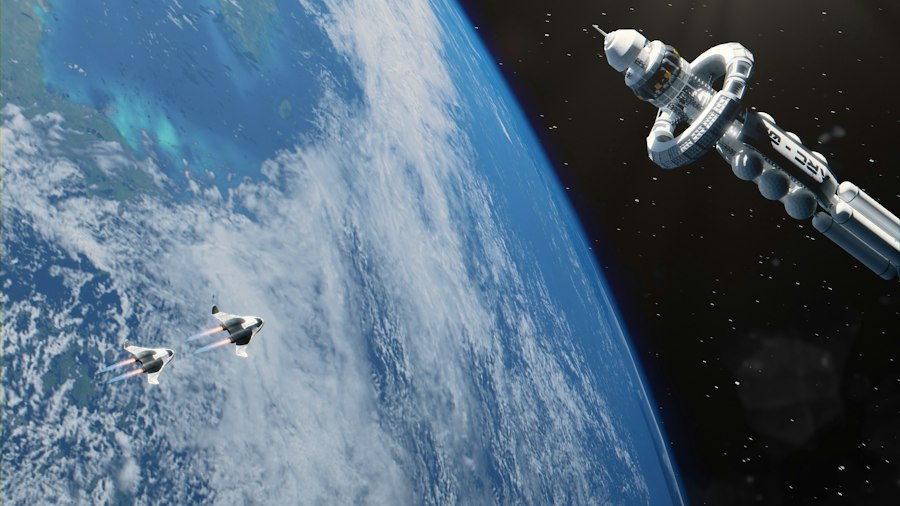
Beyond our solar system lies the true immensity of the universe, a realm of stars, galaxies, nebulae, and black holes, each a subject of profound scientific inquiry and awe-inspiring beauty. YouTube channels dedicated to astronomy and space exploration offer a wealth of documentaries that unravel the mysteries of these cosmic phenomena.
The Lives and Deaths of Stars
Stars, the fundamental building blocks of galaxies, are central to many space documentaries. Viewers can learn about the stellar lifecycle, from the birth of stars in vast interstellar clouds of gas and dust to their eventual demise. The formation of stars is often depicted through stunning visualizations of nebulae, the majestic stellar nurseries. The main sequence phase, where stars like our Sun spend the majority of their lives fusing hydrogen into helium, is explained. The documentaries then explore the dramatic endings for stars: red giants, white dwarfs, supernovae, neutron stars, and the ultimate enigma, black holes. The intricate processes of nucleosynthesis, where heavier elements are forged within stars, are often highlighted, underscoring the fact that we are literally made of stardust. The life cycles of different types of stars – from small, long-lived red dwarfs to massive, short-lived supergiants – are contrasted, providing a comprehensive understanding of stellar evolution.
Galaxies and the Large-Scale Structure of the Universe
Galaxies, the colossal collections of stars, gas, dust, and dark matter, are the grand architectures of the cosmos. Documentaries often take viewers on a tour of our own Milky Way, exploring its spiral structure, the supermassive black hole at its center, and our Sun’s position within it. The exploration then expands to other galaxies, showcasing the breathtaking diversity of galactic forms – spiral, elliptical, and irregular. The collisions and mergers of galaxies, violent cosmic events that reshape the universe, are frequently depicted. The documentaries also address the large-scale structure of the universe, explaining the cosmic web – the filamentary distribution of galaxies and galaxy clusters separated by vast voids. Concepts like dark matter and dark energy, which collectively constitute the vast majority of the universe’s mass-energy content, are explained, often with visualizations that attempt to convey their elusive nature and profound influence on cosmic evolution. The cosmic microwave background radiation, a relic of the Big Bang, is also a frequent topic, offering a glimpse into the universe’s earliest moments.
The Quest for Extraterrestrial Life
The question of whether we are alone in the universe has fueled scientific inquiry and popular imagination for centuries. YouTube documentaries dedicated to the search for extraterrestrial intelligence (SETI) and the study of exoplanets offer compelling insights into this ongoing quest.
Exoplanets: Worlds Beyond Our Sun
The discovery of exoplanets – planets orbiting stars other than our Sun – has revolutionized our understanding of planetary systems. Documentaries explore the methods used to detect these distant worlds, such as the transit method and radial velocity technique. Viewers can learn about the incredible diversity of exoplanets discovered, from hot Jupiters to super-Earths and potentially habitable rocky planets. The focus is often on exoplanets located within their star’s habitable zone, the region where liquid water could exist on a planet’s surface, a key ingredient for life as we know it. The search for biosignatures – indicators of biological activity – in the atmospheres of exoplanets is a particularly exciting area of exploration, with documentaries explaining the challenges and potential breakthroughs in this field. The concept of the “pale blue dot” is often revisited, contemplating the possibility of other Earth-like worlds teeming with life.
SETI and the Search for Intelligent Signals
The Search for Extraterrestrial Intelligence (SETI) is a scientific endeavor aimed at detecting signs of intelligent life beyond Earth. Documentaries on SETI delve into the history of the search, from early radio astronomy projects to modern-day initiatives utilizing advanced telescopes and data analysis techniques. The Drake Equation, a probabilistic argument used to estimate the number of active, communicative extraterrestrial civilizations in the Milky Way galaxy, is often discussed. The documentaries also explore the challenges of interstellar communication, the vast distances involved, and the philosophical implications of making contact. The Fermi Paradox, which questions why, if extraterrestrial civilizations exist, we haven’t detected any signs of them, is a recurring theme, prompting reflection on the rarity of life, the longevity of civilizations, or potential barriers to interstellar travel and communication. The possibility of discovering technological artifacts or unique signals is explored, highlighting the ongoing efforts to listen to the cosmos.
Humanity’s Reach for the Stars
Beyond observation and theoretical exploration, humanity has actively sought to venture into space, a testament to our innate drive for discovery and our technological prowess. YouTube documentaries chronicle the history of spaceflight, the monumental achievements of space agencies, and the future ambitions of space exploration.
The Space Race and the Dawn of Human Exploration
The space race, a 20th-century competition between the United States and the Soviet Union, is a foundational chapter in space exploration history. Documentaries vividly recount the pivotal moments of this era, from the launch of Sputnik to Yuri Gagarin’s historic flight and Neil Armstrong’s first steps on the Moon. The engineering marvels, the intense political motivations, and the personal sacrifices of the astronauts are brought to life, offering a gripping narrative of human ambition and technological innovation. The development of rockets, spacecraft, and life support systems are detailed, showcasing the incredible scientific and engineering challenges overcome. The emotional impact of these achievements on a global scale is also explored, underscoring the unifying power of shared human triumphs.
Modern Space Exploration and Future Endeavors
Today, space exploration continues with renewed vigor, driven by both scientific curiosity and commercial interests. Documentaries highlight the ongoing work of NASA, ESA, Roscosmos, and emerging private spaceflight companies. The International Space Station (ISS) is a prime example of international collaboration in space, serving as a unique laboratory for scientific research and a stepping stone for future missions. The Mars rovers, the James Webb Space Telescope, and probes exploring the outer solar system are all subjects of fascinating documentaries, showcasing the cutting edge of our understanding and capabilities. The future of space exploration is a particularly captivating topic, with documentaries discussing ambitious plans for returning to the Moon, establishing a sustainable human presence on Mars, asteroid mining, and the potential for interstellar travel in the distant future. The ethical considerations, the economic implications, and the philosophical questions surrounding humanity’s expansion into the cosmos are also often explored, painting a comprehensive picture of our evolving relationship with space.
If you’re looking to explore the wonders of the universe through captivating visuals and insightful narratives, you might find the article on the best space documentaries on YouTube particularly interesting. It highlights a variety of films that delve into topics ranging from black holes to the possibility of extraterrestrial life. For more information, check out this related article that showcases some of the most engaging documentaries available online.
The Philosophical and Existential Dimensions of Space
| Documentary Title | Channel | Duration | Views (Millions) | Release Year | Rating (out of 5) |
|---|---|---|---|---|---|
| The Farthest: Voyager in Space | National Geographic | 1h 33m | 12.5 | 2017 | 4.8 |
| Cosmos: A Spacetime Odyssey | Cosmos | 45m (per episode) | 15.2 | 2014 | 4.9 |
| Journey to the Edge of the Universe | Discovery Channel | 1h 20m | 8.7 | 2008 | 4.6 |
| Hubble: Thirty Years of Discovery | NASA | 1h 10m | 6.3 | 2020 | 4.7 |
| Black Holes: The Edge of All We Know | BBC Earth | 1h 30m | 5.9 | 2020 | 4.5 |
Space documentaries are not solely about scientific facts and technological achievements; they often delve into the profound philosophical and existential questions that arise from our contemplation of the universe. These narratives encourage viewers to reflect on humanity’s place in the cosmos, our origins, and our ultimate destiny.
Our Cosmic Origins and the Search for Meaning
Many documentaries explore the Big Bang theory, the prevailing cosmological model for the universe’s origin, tracing the evolution of matter, energy, and the fundamental forces that shaped the cosmos. The formation of stars and galaxies is presented not just as a scientific process but as the cosmic genesis from which everything, including ourselves, has emerged. This leads to profound reflections on our shared cosmic heritage. The concept of “cosmic evolution” is explored, highlighting how the universe has transformed over billions of years, giving rise to increasing complexity. The question of why the universe exists, or whether it has a purpose, is often posed, even if not directly answered. The awe and wonder inspired by the sheer scale and complexity of the universe often lead to introspection about our own significance and the search for meaning in our lives.
Humanity’s Future Among the Stars
The exploration of space inevitably leads to discussions about humanity’s long-term future. Documentaries examine the challenges and opportunities of becoming a multi-planetary species, considering the potential for human settlements on other celestial bodies. The importance of space exploration for the survival of our species, in the face of potential terrestrial catastrophes, is often highlighted. The ethical considerations of colonizing other worlds, the potential impact on any nascent extraterrestrial life, and the establishment of new societies are all topics that these documentaries explore. The aspiration to venture beyond our solar system, while currently in its nascent stages, is a powerful theme that underscores our species’ enduring drive to explore the unknown and expand our horizons, pushing the boundaries of what is possible and imagining a future where humanity’s story is written across the stars.
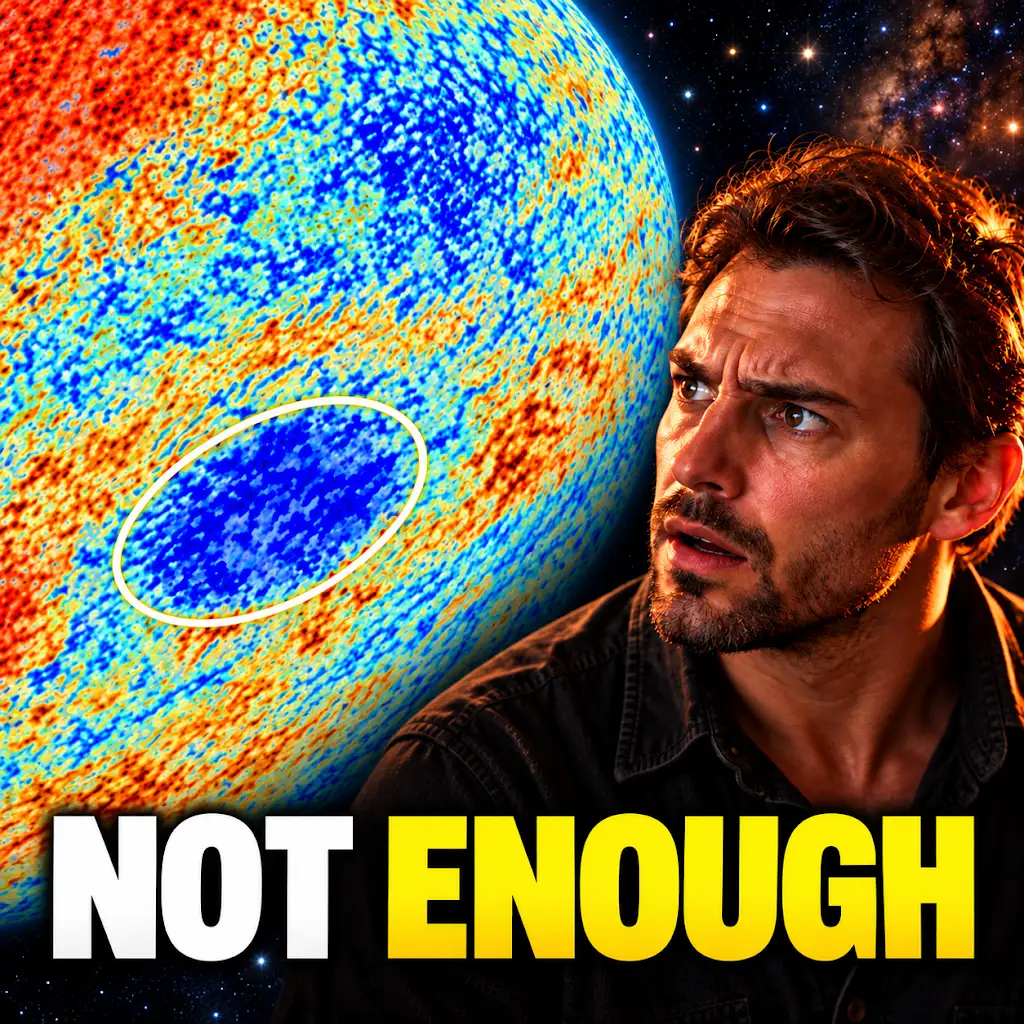
The Universe’s Cold Spot Has an Explanation. It’s Not Enough.
FAQs
What are some of the best space documentaries available on YouTube?
Some of the best space documentaries available on YouTube include “The Universe” series, “Cosmos: A Spacetime Odyssey,” “Into the Universe with Stephen Hawking,” “The Farthest: Voyager in Space,” and “Apollo 11: The Untold Story.”
Are these space documentaries free to watch on YouTube?
Yes, the space documentaries mentioned in the article are free to watch on YouTube. However, some documentaries may have ads that you need to watch.
Can I trust the information presented in these space documentaries?
Most of the space documentaries mentioned in the article are produced by reputable sources such as National Geographic, PBS, BBC, and NASA. While some documentaries may include speculative or theoretical content, the information presented is generally based on scientific research and findings.
Are these space documentaries suitable for all ages?
Many of the space documentaries mentioned in the article are suitable for all ages, but some documentaries may contain complex scientific concepts that younger viewers may not fully understand. Parents should preview the documentaries to determine if they are appropriate for their children.
How can I access these space documentaries on YouTube?
To access the space documentaries mentioned in the article, simply search for the titles on YouTube’s search bar. You can also find curated playlists or channels dedicated to space documentaries for easy access to a variety of content.