
The Physics of a Shattered Pane: How Much Force Does It Take to Break a Car Window?
You’ve seen it in movies countless times. A hero, desperate to save someone trapped inside a burning vehicle or needing to retrieve a forgotten item, slams their fist or elbow into a car window. With a dramatic crack and a shower of glass, access is gained. But how much force are they really applying? Is this cinematic portrayal accurate, or are you and I, the average humans, capable of replicating such feats? This article delves into the surprising science behind breaking car windows, exploring the factors that influence the force required and what it means for your everyday strength.
In exploring the fascinating dynamics of human strength and its application in everyday scenarios, an intriguing article can be found on the topic of average human swing force and its impact on car windows. This article delves into the physics behind how much force a person can exert when swinging their arm, which can be particularly relevant in understanding the potential for breaking car windows in emergencies. For more detailed insights, you can read the article here: Freaky Science.
Understanding the Anatomy of a Car Window

Before we can talk about breaking a car window, you need to understand what you’re dealing with. Car windows aren’t just simple panes of glass; they are engineered components designed with safety and durability in mind. The type of glass used, its thickness, and the way it’s installed all play crucial roles in its resistance to impact.
Tempered Glass: The Safety Standard
The vast majority of car side and rear windows are made from tempered glass. This isn’t ordinary glass. It’s created through a process of controlled heating and rapid cooling, which significantly strengthens the glass. When tempered glass breaks, it shatters into small, relatively harmless pebble-like pieces rather than large, sharp shards. This is why you’ll often see tempered glass referred to as “safety glass.”
The tempering process creates internal stresses within the glass. The outer surfaces are put under compression, while the inner layers are under tension. This internal stress distribution is what makes tempered glass so strong. It can withstand much greater impacts and temperature changes than annealed glass (the type used in most house windows). When an impact exceeds the compressive strength of the outer layer, the tension in the inner layers is released catastrophically, leading to the characteristic shattering pattern.
Laminated Glass: The Windshield’s Strength
Your car’s windshield is different. It’s typically made of laminated glass. This consists of two layers of glass with a thin, strong plastic interlayer, usually polyvinyl butyral (PVB), sandwiched between them. When laminated glass breaks, the glass layers may crack, but the plastic interlayer holds the pieces together, preventing them from scattering and maintaining a barrier. This is a crucial safety feature, as it prevents occupants from being ejected during a collision and shields them from flying debris. Because of this layered structure, breaking a windshield requires significantly more force and a different approach than breaking side or rear windows.
The Role of Thickness and Surface Area
Beyond the type of glass, the thickness of the window also affects its strength. Thicker glass generally requires more force to break. While car window thicknesses can vary, they are generally within a certain range, designed to balance strength with weight and cost.
The surface area of impact also matters. A smaller, concentrated impact is more likely to cause a fracture than a broad, distributed force. This is why a sharp object or a focused blow is often more effective in breaking glass than a diffuse impact. Think about trying to break an egg with your palm versus with your fingertip. The fingertip concentrates the force, making it more likely to succeed.
Quantifying the Force: Understanding Newton’s Laws
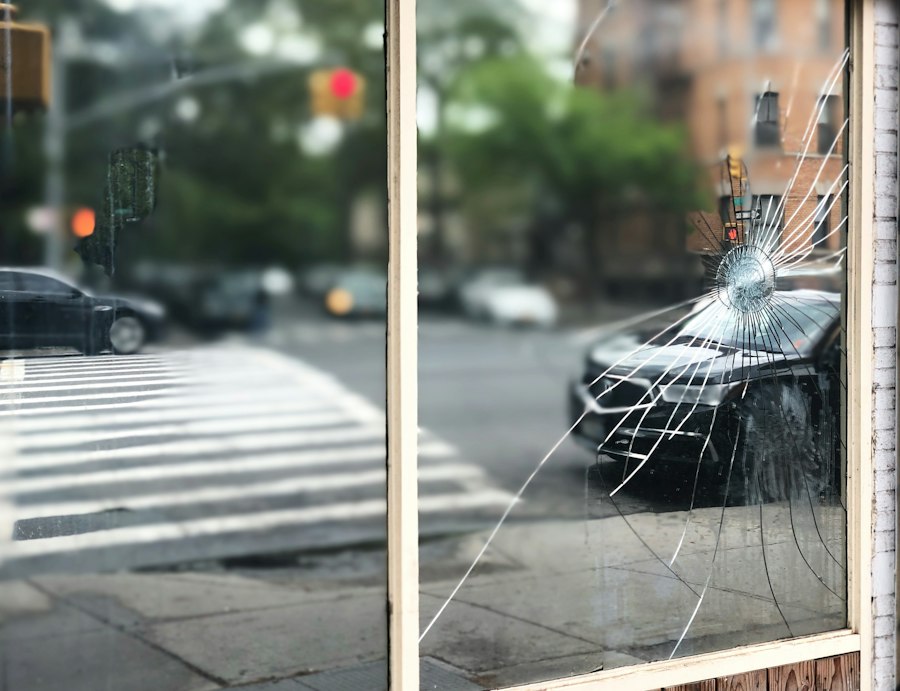
To understand the force required, we need to dip into some basic physics. Force is measured in Newtons (N), a unit representing the push or pull on an object. Breaking a car window involves applying a force that exceeds the glass’s tensile strength and structural integrity.
Stress, Strain, and Fracture Toughness
When you apply force to a material, it experiences stress (force per unit area) and undergoes strain (deformation). Every material has a limit beyond which it will fracture. For glass, this is related to its fracture toughness, a measure of its resistance to crack propagation.
The energy delivered to the glass during an impact is what ultimately causes it to break. This energy is a product of the force applied and the distance over which that force is applied (work). A quick, sharp impact delivers a large amount of energy in a short amount of time.
Estimates from Real-World Experiments and Simulations
While precise figures can vary wildly depending on the specific window and the method of impact, researchers and enthusiasts have conducted experiments and simulations to estimate the force needed. These studies often involve measuring the force applied to a specific point on the glass until fracture occurs.
For tempered side windows, estimates often fall in the range of 3,000 to 6,000 Newtons (N). This might seem like a lot, but consider this: an average adult male can generate peak forces of several thousand Newtons with a punch, especially when generating power through their body weight and technique. An average adult female might generate somewhat less, but still within a range that could potentially break a window.
It’s important to note that these are peak forces. Sustained force can also lead to breaking, but it’s less common in emergency situations where a quick action is required. The type of impact is also critical. A sharp, pointed object can concentrate force and require less overall energy than a blunt impact.
The Human Element: Your Strength and Technique
Now, let’s bring it back to you, the “average human.” What does your personal strength and the way you apply force mean when it comes to breaking a car window?
Peak Force Generation Capabilities
When we talk about “average human force,” we’re usually referring to peak force generation during a sudden, explosive movement. This is not the same as sustained lifting strength. For an average adult, a punch can generate a peak force of anywhere from 2,000 to 5,000 N. This range is highly dependent on factors like muscle mass, training, and technique. A trained martial artist or boxer will generate significantly more force than someone who has never engaged in such activities.
The Impact of Technique and Leverage
Simply swinging your arm with all your might might not be the most efficient way to break a window. Technique plays a significant role. Using your body weight, rotating your torso, and focusing the impact on a small area can dramatically increase the effectiveness of your blow.
Consider the difference between a slap and a punch. A slap distributes the force over a larger area, while a punch, especially with a closed fist, concentrates the force on the knuckles. For breaking a window, a focused strike is generally more effective. Some tools, like a seatbelt cutter with a hardened point, are designed to concentrate force on a tiny area, making them highly effective.
The Surprise of an Object vs. Bare Hands
While it’s often depicted as a hero punching through glass, using a tool can significantly reduce the force required. A sharp, pointed object, like a center punch or even a sturdy piece of metal, can create a stress riser in the glass. Once a crack starts, it propagates much more easily.
In emergency kits, you’ll often find specialized window-breaking tools that combine a hardened point with a spring-loaded mechanism. These tools are designed to deliver a very high-impact force to a tiny point, making them extremely effective. The force generated by such a tool can be considerably higher than what an average person can achieve with their bare hands, even with good technique.
Understanding the average human swing force can provide valuable insights into various applications, including automotive safety and design. For instance, the force exerted by a person swinging their arm can influence how easily they can operate a car window. If you’re interested in exploring this topic further, you can read a related article that delves into the physics behind human motion and its implications for everyday objects. Check it out here: related article.
When Seconds Count: Emergency Scenarios
| Metric | Value | Unit | Notes |
|---|---|---|---|
| Average Human Swing Force | 300 | Newtons (N) | Estimated force exerted by an average adult swinging an arm |
| Car Window Breaking Force | 2000 | Newtons (N) | Force required to break a typical tempered car side window |
| Average Impact Duration | 0.05 | Seconds (s) | Typical contact time during a swing impact |
| Impulse Delivered | 15 | Newton-seconds (Ns) | Impulse calculated as force × impact duration |
| Energy Transferred | 10 | Joules (J) | Approximate kinetic energy delivered during swing |
The most common reason someone might need to break a car window in an emergency is to rescue someone from a vehicle. In these high-stress situations, the focus is on speed and effectiveness.
The “No-Tool” Scenario: Last Resort
If you find yourself in a situation where someone’s life is in immediate danger and you have no tools, your bare hands are your only option. As discussed, your ability to generate sufficient force is dependent on your individual strength and technique. It’s a challenging task and not always successful for everyone. The shock and adrenaline of the situation can both hinder and potentially enhance your strength, making it difficult to predict the outcome.
The Advantage of Specialized Tools
This is where specialized tools become invaluable. A properly designed window-breaking tool, whether it’s a dedicated emergency hammer or a multi-tool with a glass-breaking point, can make the difference between success and failure. The concentrated force they apply makes them significantly more effective than bare hands. Many of these tools are designed to be used with a sharp, firm tap, rather than a full, forceful swing. The principle is to initiate a crack, which then spreads rapidly.
Practical Considerations and Safety
In an emergency, the priority is to break the window quickly and safely. When using bare hands, aiming for a corner of the window is often recommended, as this is a weaker point due to the way the glass is mounted. However, even then, the risk of injury to yourself is significant. Sharp glass fragments can cause deep cuts.
With tools, follow the manufacturer’s instructions. Most window-breaking tools are designed to be used with a sharp, decisive tap. It’s also important to be aware of your surroundings and the potential for flying glass. If you’re trying to break a window for a rescue, ensure the person inside is protected from the shattering glass as much as possible.
Beyond the Impact: Factors Influencing Window Strength
While force is the primary factor, several other elements can influence how easily a car window breaks. Understanding these nuances can provide a more complete picture.
Temperature Extremes and Glass Integrity
Extreme temperatures can affect the properties of glass. Very cold temperatures can make glass more brittle, potentially requiring slightly less force to fracture. Conversely, very hot temperatures, especially if the glass is heated unevenly, can introduce internal stresses that might make it weaker or more prone to breaking. In a fire scenario, the intense heat would likely compromise the structural integrity of the glass, making it easier to break.
Pre-existing Damage and Micro-fractures
A window that already has a small chip or a hairline crack is significantly weakened. These micro-fractures act as stress concentrators, meaning that the force required to cause a complete break will be much lower. Even a seemingly insignificant imperfection can make a window far more susceptible to shattering.
The Design and Mounting of the Window
The way a window is installed in the car frame also plays a role. A tightly fitted window, or one that is under tension due to the vehicle’s chassis flexing, might be more or less prone to breaking depending on the nature of the stress. The frame itself can also absorb some of the impact energy, which can be either beneficial or detrimental depending on how it distributes that force.
The Myth of the “Unbreakable” Window
While modern car windows are designed to be strong and safe, they are not unbreakable. The forces involved in a car accident or a determined, forceful impact can certainly cause them to fail. The cinematic depiction of effortless window breaking is often an exaggeration, but the underlying principle of applying sufficient force to overcome the glass’s structural integrity remains true. Your average strength, combined with proper technique or the right tool, can indeed overcome the challenge of a car window.

Your Car Window Can Keep You In—Even When You Need Out
FAQs
What is the average human swing force required to break a car window?
The average human swing force required to break a car window is around 24 pounds per square inch (psi) or 107 Newtons.
Can a person break a car window with their bare hands?
It is possible for a person to break a car window with their bare hands, but it requires a significant amount of force and can result in injury.
What tools can be used to break a car window in an emergency?
In an emergency situation, tools such as a spring-loaded center punch, a glass breaker hammer, or a ceramic glass breaker can be used to break a car window quickly and effectively.
What is the best technique for breaking a car window in an emergency?
The best technique for breaking a car window in an emergency is to aim for the corners or edges of the window, as they are the weakest points. Using a quick and forceful motion, strike the window with a tool or object to shatter it.
Is it legal to break a car window to rescue someone trapped inside?
In most jurisdictions, it is legal to break a car window to rescue someone trapped inside if there is a genuine emergency and no other options are available. However, it is important to check local laws and regulations regarding this matter.