
The night sky, a canvas of inky black, rarely reveals its deepest secrets to those dwelling in the humdrum of average latitudes. Usually, the ethereal dance of the aurora borealis and australis is reserved for the polar regions, a celestial ballet performed for a select, frigid audience. However, the phenomenon of auroras appearing at significantly lower latitudes is not an anomaly in the conventional sense; rather, it is a testament to the Earth’s dynamic magnetic field, specifically when it undergoes what scientists term a magnetic excursion. This article delves into the science behind these rare and spectacular displays, exploring the underlying magnetic field behavior and the atmospheric conditions that conspire to paint the skies in hues rarely seen by the majority of humanity.
The Earth’s magnetic field is more than just a compass needle’s guide; it’s a fundamental shield that protects our planet from the relentless onslaught of charged particles emanating from the Sun, known as the solar wind. This magnetic field is generated deep within the Earth’s core, a molten dynamo of iron and nickel.
The Geodynamo: A Planetary Powerhouse
The Core’s Inner Workings
The molten outer core acts like a gigantic, turbulent fluid. As this electrically conductive material moves, it generates electric currents, which in turn create the Earth’s magnetic field. This process is known as the geodynamo. It’s a process that, while largely consistent, is not entirely stable, leading to fascinating phenomena like magnetic field reversals and excursions. Think of it as a colossal, slow-motion churning machine, constantly producing and reconfiguring its output.
Field Lines: Invisible Pathways
The Earth’s magnetic field can be visualized as a series of invisible lines of force, originating near the South Magnetic Pole and extending out into space, curving back to the North Magnetic Pole. These field lines are denser and more concentrated at the poles, which is why auroras are typically observed in those regions. When charged particles from the Sun encounter these field lines, they are guided towards the poles.
The Solar Wind: A Constant Stream
Charged Particles in Motion
The Sun is a star of immense power, constantly emitting a stream of charged particles, primarily electrons and protons. This stream, the solar wind, travels at incredibly high speeds, carrying with it magnetic fields from the Sun itself. While a constant phenomenon, the intensity and speed of the solar wind can fluctuate significantly.
Coronal Mass Ejections: Solar Storms
Occasionally, the Sun experiences more violent outbursts known as Coronal Mass Ejections (CMEs) and solar flares. These events release vast quantities of plasma and magnetic energy into space, significantly intensifying the solar wind and posing a potential threat to Earth’s technological infrastructure. These are the interplanetary equivalent of a sudden, powerful gust of wind that can buffet the planet’s defenses.
Recent studies have shown that auroras, typically associated with polar regions, can also occur at low latitudes during periods of magnetic excursion. This phenomenon is particularly fascinating as it challenges our understanding of geomagnetic activity and its effects on the Earth’s atmosphere. For more insights on this topic, you can read the related article at Freaky Science, which explores the implications of these low-latitude auroras and their connection to solar activity and magnetic field fluctuations.
Auroras: The Atmospheric Light Show
The auroras, or aurora borealis in the Northern Hemisphere and aurora australis in the Southern Hemisphere, are the visible manifestation of the interaction between charged particles from the Sun and the Earth’s upper atmosphere. The colors of the aurora are determined by the type of atmospheric gas being excited and the altitude at which the collision occurs.
The Mechanism of Light Production
Collisions and Excitation
When high-energy charged particles from the solar wind are channeled by the Earth’s magnetic field lines towards the poles, they collide with atoms and molecules in the upper atmosphere (the ionosphere). These collisions transfer energy, exciting the atmospheric particles to higher energy states.
Releasing Energy as Light
As these excited particles return to their ground state, they release the excess energy in the form of photons, which are particles of light. This emission of light is what we perceive as the aurora. The different colors we see are a result of the specific gases involved: oxygen typically produces green and red light, while nitrogen contributes blue and purple hues.
Altitude and Color Correlation
Green auroras are the most common and are produced by oxygen atoms at altitudes of about 100 to 300 kilometers. Red auroras are seen at higher altitudes, above 300 kilometers, where oxygen is less dense. Blue and purple auroras are caused by nitrogen molecules at lower altitudes, typically below 100 kilometers.
Magnetic Excursions: A Wobble in the Field
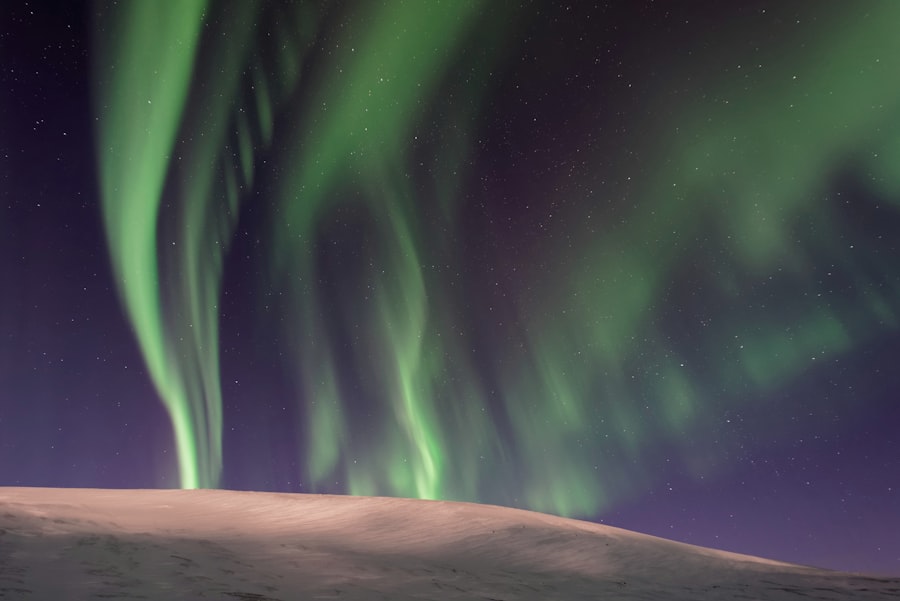
A magnetic excursion is a significant, but temporary, deviation of the Earth’s magnetic field from its normal dipole (bar magnet-like) configuration. During an excursion, the magnetic poles can wander significantly, and the field strength can weaken considerably. Crucially, during certain stages of an excursion, the magnetic field can become multipolar, meaning it has multiple north and south poles scattered across the globe.
Detecting Earth’s Magnetic Past
Paleomagnetism: Reading the Rocks
Scientists study Earth’s past magnetic field by examining the magnetic signatures preserved in rocks. When volcanic rocks cool, or when sediments settle, magnetic minerals within them align themselves with the Earth’s magnetic field at that time. This preserved magnetism, known as paleomagnetism, acts like a geological time capsule, recording the direction and intensity of the field over millions of years.
Magnetic Reversals and Excursions in the Archives
By studying rock layers from different geological periods, scientists can map out the history of Earth’s magnetic field. This record shows a long history of periodic magnetic field reversals, where the North and South magnetic poles swap places. Included within this record are also instances of magnetic excursions, which are shorter-lived and less complete deviations from the main dipole field. These are like brief, erratic scribbles on the continuous narrative of reversals.
The Link to Geomagnetic Activity
The periods of magnetic excursions are often associated with heightened geomagnetic activity. The weakened and complex magnetic field offers less protection against the solar wind, allowing more charged particles to penetrate deeper into the atmosphere.
Auroras at Low Latitudes: A Sign of Magnetic Disruption
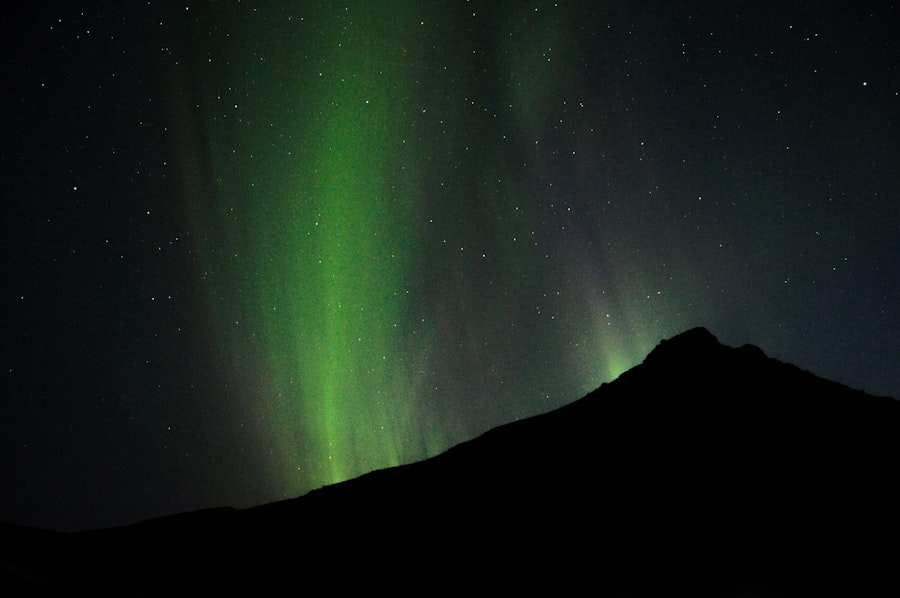
The occurrence of auroras at low latitudes is a strong indicator that the Earth’s magnetic field is not behaving in its usual, stable manner. Typically, the Earth’s magnetic field lines are tightly bound, deflecting the vast majority of solar particles towards the poles. However, during a magnetic excursion, the field can become weakened and more complex, allowing particles to penetrate the atmosphere at lower latitudes.
The Role of Magnetic Field Weakening
Reduced Deflection Capability
During an excursion, the overall strength of the Earth’s dipole field can decrease significantly. This weakened shield is less effective at deflecting the high-energy particles of the solar wind. Imagine a shield that has taken a heavy blow and is no longer able to deflect incoming projectiles as efficiently.
Increased Particle Penetration
With a weaker and more complex magnetic field, charged particles from the Sun can penetrate the atmosphere at lower latitudes than they normally would. Instead of being solely guided to the polar regions, they can gain entry pathways into the atmosphere over a much broader geographical area.
The Magnetic Field’s Complexity During Excursions
Multipolar Field States
During certain phases of a magnetic excursion, the Earth’s magnetic field can break down from its usual dipole structure into a more complex, multipolar configuration. This means that instead of a single north and south magnetic pole, multiple poles can emerge. This fragmented magnetic landscape provides more entry points for solar particles.
Anomalous Field Strengths and Directions
Within a multipolar field, there can be regions where the magnetic field is particularly weak or even points in unusual directions. These anomalies act as highways for charged particles to descend into the atmosphere, leading to auroral displays far from the geomagnetic poles.
Recent studies have shown that auroras can occur at low latitudes during periods of magnetic excursion, a phenomenon that has intrigued scientists and enthusiasts alike. For those interested in exploring this topic further, an insightful article can be found at Freaky Science, where the implications of these magnetic shifts on auroral activity are discussed in detail. Understanding these occurrences not only enhances our knowledge of Earth’s magnetic field but also sheds light on the potential effects on satellite communications and power grids.
The Spectacle and Its Implications
| Metric | Description | Typical Value | Notes |
|---|---|---|---|
| Latitude Range | Geographic latitudes where auroras are observed during magnetic excursions | 10° to 40° | Significantly lower than usual auroral oval latitudes |
| Magnetic Field Intensity | Earth’s magnetic field strength during excursion events | 10% to 50% of normal field strength | Reduced field allows charged particles to penetrate lower latitudes |
| Auroral Frequency | Occurrence rate of auroras at low latitudes during excursions | Increased by 2-5 times | Compared to non-excursion periods |
| Auroral Intensity | Brightness and energy of auroras observed | Moderate to strong | Often visible to naked eye at low latitudes |
| Duration of Excursion | Time span of magnetic excursion events | 1,000 to 10,000 years | Varies by specific excursion event |
| Particle Precipitation | Flux of charged particles entering atmosphere | Elevated levels | Leads to enhanced auroral activity |
When auroras are observed at low latitudes, it signifies a particularly potent geomagnetic storm has occurred, interacting with a weakened or compromised magnetic field. This conjunction of events creates a breathtaking celestial display that has captivated observers, but it also carries implications for our planet.
A Rare Celestial Phenomenon
Witnessing the Unseen
For inhabitants of tropical or temperate regions, auroras are often relegated to tales of the far north or south, or to images captured by satellites and polar explorers. When the aurora graces these lower latitudes, it is a profoundly rare and often unexpected event, a glimpse into the dynamic processes that shape our planet. The sky, usually predictable, becomes an unpredictable canvas.
Historical Accounts and Modern Observations
Throughout history, there have been sporadic accounts of auroral sightings at low latitudes, often attributed to divine portents or unusual atmospheric conditions. Modern scientific understanding, aided by sophisticated monitoring of space weather and Earth’s magnetic field, now allows us to connect these displays to specific geomagnetic events and the underlying behavior of the magnetic field.
Implications for Technology and Society
Geomagnetic Storms and Infrastructure
While a magnetic excursion itself is a geological phenomenon operating on timescales of thousands of years, the auroras observed at low latitudes are often the result of intense geomagnetic storms. These storms can have significant impacts on our technologically dependent society. They can disrupt satellite operations, interfere with radio communications, and even induce damaging currents in power grids. The spectacular light show is a visible reminder of the powerful forces at play in our space environment.
Understanding Our Magnetic Future
The study of magnetic excursions and the auroras they can produce is crucial for understanding the long-term evolution of Earth’s magnetic field. While a full reversal is a slow process, excursions offer insights into the more turbulent periods of magnetic change. By studying these events, scientists can refine models of the geodynamo and better predict future magnetic field behavior, thereby improving our preparedness for potential geomagnetic hazards. The aurora at low latitudes, therefore, is not just a beautiful light show; it is a cosmic whisper, a reminder of the profound forces that govern our planet and the delicate balance of our magnetic shield.

WARNING: Earth’s Core Is Now Rotating Backwards
FAQs
What are auroras and how do they typically form?
Auroras are natural light displays predominantly seen in high-latitude regions near the Arctic and Antarctic. They form when charged particles from the solar wind interact with Earth’s magnetic field and collide with gases in the upper atmosphere, causing these gases to emit light.
What is a magnetic excursion and how does it affect Earth’s magnetic field?
A magnetic excursion is a temporary and partial reversal or significant deviation of Earth’s magnetic field from its usual orientation. During an excursion, the magnetic field weakens and becomes more complex, which can alter how charged particles are guided toward the poles.
Why do auroras sometimes appear at low latitudes during magnetic excursions?
During magnetic excursions, the weakened and distorted magnetic field allows charged solar particles to penetrate deeper into Earth’s atmosphere at lower latitudes than usual. This can cause auroras to be visible much farther from the poles, including regions that rarely experience them.
How often do magnetic excursions occur and how long do they last?
Magnetic excursions occur irregularly, roughly every several tens of thousands to hundreds of thousands of years. They typically last from a few hundred to a few thousand years before the magnetic field returns to its normal configuration.
Can auroras at low latitudes during magnetic excursions impact human technology?
Yes, auroras at low latitudes indicate increased geomagnetic activity, which can disrupt satellite operations, communication systems, and power grids. The unusual location of auroras during magnetic excursions may expose regions unaccustomed to such effects to potential technological disturbances.