
The Artemis II mission represents a pivotal moment in humanity’s ambitious journey back to the Moon. Following the uncrewed success of Artemis I, which tested the foundational systems of the Space Launch System (SLS) rocket and the Orion spacecraft, Artemis II is poised to carry humans on a lunar trajectory for the first time in over fifty years. This mission is not merely a symbolic return; it is a crucial step in validating the integrated performance of the Orion spacecraft with its life support systems, navigation, and other critical hardware under the rigors of a crewed deep-space flight. It is a testament to renewed international collaboration and a bold stride towards establishing a sustainable human presence beyond Earth.
The Artemis program, spearheaded by NASA, is designed to achieve a long-term human presence on the Moon and, ultimately, to enable human missions to Mars. Artemis II is the second of these planned missions, directly following Artemis I. The success of Artemis I, launched in November 2022, was instrumental in proving the SLS rocket’s capability to launch the Orion spacecraft and its ability to perform critical deep-space maneuvers. Artemis I sent Orion on a journey around the Moon, testing its heat shield during atmospheric re-entry and validating its life support systems in a simulated deep-space environment. However, Artemis I did not carry a crew. This distinction is paramount for Artemis II, as it will be the first time humans venture beyond low-Earth orbit since the Apollo era.
Artemis I: The Uncrewed Precursor
Artemis I was a monumental achievement in itself. Its primary objective was to demonstrate the performance of the Space Launch System (SLS) rocket and the Orion spacecraft in an operational lunar mission profile. The uncrewed flight allowed NASA to gather extensive data on the rocket’s launch, the spacecraft’s systems in the harsh environment of space, and the precise trajectory needed for a lunar flyby. This data was crucial for validating complex engineering assumptions and ensuring the safety of future crewed missions. The successful splashdown of Orion in the Pacific Ocean marked the culmination of years of development and testing, paving the way for the next, more ambitious phase.
The Human Element: What Artemis II Adds
The addition of a human crew to the Artemis II mission fundamentally transforms its purpose and complexity. While Artemis I tested the hardware, Artemis II will test the hardware and the human element in concert. This involves ensuring that the life support systems can sustain astronauts for the duration of the mission, that navigation and communication systems are reliable under crewed operation, and that the overall mission profile is safe and executable for human beings. The psychological and physiological effects of deep-space travel will also be indirectly assessed through the astronauts’ experiences and the performance of the systems they rely on.
The upcoming Artemis II mission marks a significant step in NASA’s efforts to return humans to the Moon, and for those interested in learning more about this historic endeavor, a related article can be found at Freaky Science. This article delves into the details of the mission, including its objectives, the technology involved, and the implications for future lunar exploration. As Artemis II prepares to pave the way for sustainable human presence on the Moon, understanding its intricacies will provide valuable insights into the future of space exploration.
The Artemis II Mission Profile: A Lunar Ballet
The Artemis II mission is meticulously planned to accomplish specific objectives that will inform future lunar landings and deeper space exploration. It is not a landing mission, but rather a circumlunar journey, meaning the spacecraft will orbit the Moon. This trajectory is specifically chosen to test the spacecraft’s systems under extended deep-space conditions and to prepare for the more complex maneuvers required for future lunar landings. The mission profile is a carefully choreographed dance between the SLS rocket, the Orion spacecraft, and the four-person crew, all synchronized to achieve specific scientific and technological goals.
The Trajectory: A Grand Tour Around the Moon
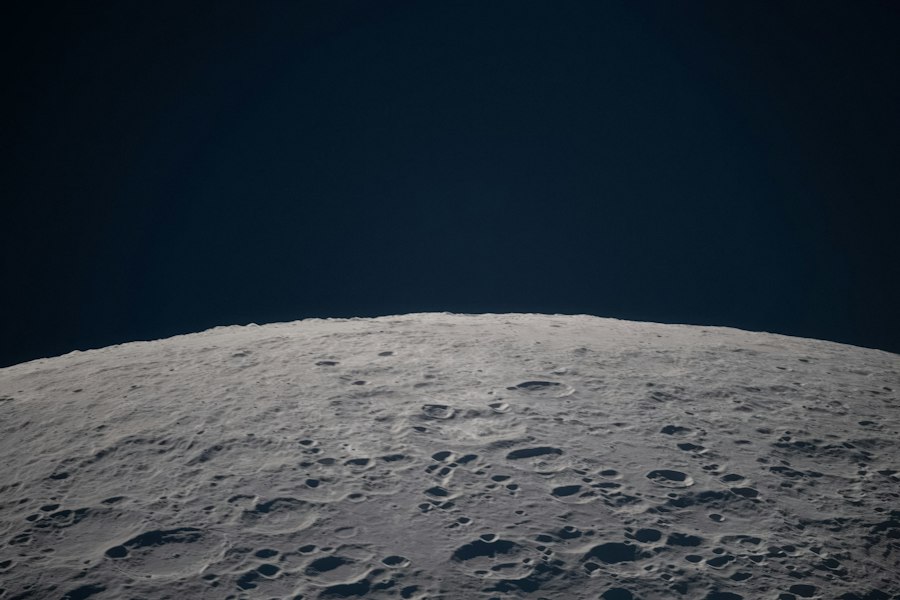
The Artemis II mission will embark on a unique trajectory that will take the Orion spacecraft further into space than any human has traveled before. After launching from Kennedy Space Center on Florida’s east coast, the SLS rocket will propel Orion into Earth orbit. From there, the spacecraft will perform a series of maneuvers, including a propulsive burn by the Interim Cryogenic Propulsion Stage (ICPS) that will send it on a trajectory towards the Moon. Instead of a direct, short lunar flyby, Artemis II will follow a trajectory that takes it on a much wider loop around the Moon, reaching a distance of approximately 6,400 miles (over 10,000 kilometers) beyond the far side of the Moon. This extended excursion is designed to test Orion’s systems, including its communication capabilities when it is out of direct line-of-sight with Earth, and to provide a unique opportunity for Earth observation. The return journey will involve a critical de-orbit burn to set Orion on its course back to Earth for a splashdown in the Pacific Ocean.
Mission Duration and Key Milestones
The Artemis II mission is currently slated to last approximately ten days. This duration is carefully selected to allow for sufficient testing of all critical systems under the stresses of deep space and lunar proximity. Key milestones will include the successful launch and translunar injection, the lunar flyby and distant retrograde orbit insertion (or a similar extended trajectory), critical communications tests when the spacecraft is on the far side of the Moon, and the successful re-entry and splashdown of the Orion capsule. Each of these stages represents a significant engineering and operational challenge, and their successful execution will be a testament to the program’s readiness for future missions.
The Orion Spacecraft: A Vital Habitation Module

The Orion spacecraft is the cornerstone of the Artemis program, designed to carry astronauts safely to the Moon and back. For Artemis II, it will be the home for its four-person crew for the duration of their ten-day journey. The spacecraft comprises two main modules: the Crew Module and the Service Module. The Crew Module is where the astronauts will live and work, equipped with life support systems, navigation controls, and living quarters. The Service Module, provided by the European Space Agency (ESA), provides the propulsion, power, and environmental control systems necessary for the mission. Artemis II represents the first crewed flight of this highly advanced spacecraft, and its performance will be meticulously monitored.
The Crew Module: A Home in Deep Space
The Crew Module is the most visible part of Orion and is where the astronauts will spend their time. It features a state-of-the-art cockpit designed for intuitive control and monitoring of the spacecraft’s systems. The internal environment is carefully regulated to provide breathable air, stable temperatures, and protection from radiation. Unlike previous spacecraft designed for Earth orbit, Orion is built to withstand the harsher conditions of deep space, including higher levels of radiation and extreme temperature fluctuations. The seating arrangements and living space are designed to accommodate four astronauts for an extended period, allowing for research, communication with Earth, and the overall management of the mission.
The European Service Module (ESM): The Powerhouse
The European Service Module is an indispensable component of Orion, providing the critical resources needed for deep-space travel. It houses the main propulsion system, which is used for lunar orbit insertion, trajectory corrections, and the de-orbit burn for returning to Earth. The ESM also contains the spacecraft’s electrical power system, water and oxygen supplies, and thermal control systems. It is a marvel of engineering, integrating advanced technologies to ensure the crew’s survival and the mission’s success. The collaboration with ESA on the ESM highlights the international nature of the Artemis program and the pooling of global expertise.
The Artemis II Crew: A Diverse and Experienced Team
The selection of the Artemis II crew is a testament to the rigorous standards and extensive experience required for human spaceflight beyond Earth orbit. The four astronauts chosen represent a diverse range of backgrounds and expertise, bringing together pilots, engineers, and scientists. This crew will be responsible for operating the Orion spacecraft, conducting scientific observations, and providing invaluable feedback on the performance of the systems. Their journey will not only be a scientific endeavor but also a historic one, marking a new chapter in human exploration.
Commander Reid Wiseman: Leading the Mission
Commander Reid Wiseman is an experienced NASA astronaut with a distinguished career in naval aviation and spaceflight. His previous mission to the International Space Station (ISS) provided him with extensive experience in spacecraft operations and living in space. As commander of Artemis II, Wiseman will be responsible for the overall safety and execution of the mission, making critical decisions and leading the crew through the complex maneuvers of the lunar flyby. His leadership will be crucial in navigating the challenges of this unprecedented voyage.
Pilot Victor Glover: Navigating the Lunar Path
Pilot Victor Glover is another seasoned astronaut with a background as a naval aviator and fighter pilot. His previous assignment as pilot of SpaceX Crew-1 to the ISS provided him with hands-on experience with modern spacecraft systems. In Artemis II, Glover will be instrumental in piloting the Orion spacecraft, executing precision maneuvers, and ensuring the spacecraft remains on its intended trajectory. His expertise in flight control will be vital for the success of the mission’s complex flight plan.
Mission Specialists Christina Koch and Jeremy Hansen: The Scientific and Technical Backbone
Mission Specialists Christina Koch and Jeremy Hansen bring a wealth of scientific and technical knowledge to the Artemis II crew. Koch, a veteran of long-duration ISS missions, has a background in electrical engineering and physics, and has conducted numerous scientific experiments in space. Hansen, a Canadian astronaut from the Canadian Space Agency (CSA), brings a unique perspective and expertise in operational roles. Together, they will be responsible for operating scientific instruments, conducting experiments, and providing crucial technical support throughout the mission. Their diverse skillsets will ensure that the scientific objectives of Artemis II are met and that the crew can effectively troubleshoot any technical issues that may arise.
As excitement builds for the upcoming Artemis II mission, many are eager to learn more about the details of this historic lunar return. A related article that delves into the intricacies of the mission can be found at Freaky Science, where readers can explore the objectives, technology, and potential impact of Artemis II on future lunar exploration. This mission marks a significant step in humanity’s journey back to the Moon, paving the way for sustainable exploration and eventual missions to Mars.
The Significance of Artemis II: A Stepping Stone to the Future
| Metric | Details |
|---|---|
| Mission Name | Artemis II |
| Mission Type | Crewed Lunar Flyby |
| Launch Vehicle | Space Launch System (SLS) Block 1 |
| Crew Size | 4 astronauts |
| Mission Duration | Approximately 10 days |
| Distance from Earth | Approximately 450,000 km (lunar flyby distance) |
| Return Trajectory | Free-return trajectory around the Moon |
| Key Objectives | Test Orion spacecraft systems, validate crew operations, and demonstrate lunar return capabilities |
| Re-entry Speed | Approximately 11 km/s (lunar return velocity) |
| Landing Site | Pacific Ocean splashdown |
Artemis II is far more than just a repeat of Apollo. It is a vital stepping stone in a much larger, more ambitious program with the ultimate goal of establishing a sustained human presence on the Moon and venturing to Mars. The data and experience gained from this mission will be instrumental in refining technologies, operational procedures, and understanding the human factors involved in long-duration deep-space travel. It represents a renewed commitment to human space exploration and a powerful symbol of human ingenuity and perseverance.
Paving the Way for Lunar Landings
The successful completion of Artemis II will validate the Orion spacecraft and the SLS rocket for crewed lunar missions. This validation is essential for the subsequent Artemis III mission, which aims to land the first woman and the next man on the lunar surface. Artemis II will provide the critical flight data and operational experience needed to ensure the safety and success of these more complex landing operations. It is the necessary precursor to touching lunar soil once again.
Inspiring the Next Generation of Explorers
Beyond its scientific and technological objectives, Artemis II carries a profound inspirational value. By sending humans back to the vicinity of the Moon, it reignites the spirit of exploration and captures the imagination of people worldwide. This mission serves as a powerful reminder of what humanity can achieve when we set ambitious goals and collaborate to overcome challenges. It is expected to inspire a new generation of scientists, engineers, and astronauts to pursue careers in STEM fields and to dream of venturing further into the cosmos. The return of humans to deep space is a beacon of hope and a testament to our enduring curiosity.

There’s Only One Safe Way Back to Earth From the Moon
FAQs
What is Artemis II lunar return mission?
Artemis II is a planned mission by NASA as part of the Artemis program to return humans to the Moon. It is set to be the first crewed mission to orbit the Moon since Apollo 17 in 1972.
When is the Artemis II lunar return mission scheduled to take place?
Artemis II is currently scheduled for launch in 2023. The exact date may be subject to change depending on various factors such as technical readiness and funding.
What is the purpose of the Artemis II lunar return mission?
The primary goal of Artemis II is to test the Orion spacecraft and the Space Launch System (SLS) rocket in a crewed mission around the Moon. This mission will help pave the way for future crewed missions to the lunar surface.
How many astronauts will be on board the Artemis II mission?
Artemis II is planned to have a crew of four astronauts. These astronauts will orbit the Moon for several days before returning to Earth.
What are the key differences between Artemis II and the Apollo missions?
Unlike the Apollo missions, which landed astronauts on the Moon, Artemis II will be a mission to orbit the Moon without landing. Additionally, Artemis II will utilize modern technology and advancements in space exploration compared to the Apollo era.