
Architected Materials: Designing with Purpose
The field of materials science has long been driven by the discovery and refinement of natural and synthetic substances, focusing on their inherent properties. However, a paradigm shift is underway, moving beyond simply utilizing what nature provides or what current processes can create to actively designing materials with unprecedented control over their structure and function. This burgeoning field, known as architected materials, represents a fundamental departure from traditional approaches. Instead of relying solely on the atomic or molecular composition of a substance, architected materials leverage precise control over the material’s structure at multiple length scales, from the nanoscale to the macroscale, to dictate its macroscopic behavior. This intentional, hierarchical structuring allows for the creation of materials with tailor-made properties that are often unattainable through conventional means. The promise of architected materials lies in their ability to solve complex engineering challenges and unlock entirely new technological possibilities.
The concept of designing materials with specific structures is not entirely new. Nature itself offers a rich tapestry of examples, showcasing how intricate architectures can lead to remarkable properties. Think of the lightweight yet strong structure of bone, the water-repellent surface of a lotus leaf, or the efficient vibration damping of a woodpecker’s skull. These natural systems, honed over millennia of evolution, demonstrate the power of hierarchical organization. Architected materials draw inspiration from these biological marvels, seeking to replicate and even surpass their performance through deliberate engineering.
Biomimicry: Learning from Nature’s Blueprints
Biomimicry, the practice of emulating nature’s designs and processes, has been a crucial driver in the evolution of architected materials. Researchers meticulously study the structural arrangements found in biological materials to understand the underlying principles that grant them their unique capabilities. For instance, the layered structure of nacre (mother-of-pearl), composed of microscopic ceramic platelets and organic binders, exhibits exceptional toughness due to its ability to deflect cracks. By understanding this mechanism, scientists can design synthetic composites that mimic this architecture to achieve similar damage tolerance. Similarly, the porous structure of wood, with its interconnected network of cells, provides both strength and lightness. Replicating such porous architectures in synthetic materials can lead to lightweight structural components for aerospace and automotive applications.
The Role of Advanced Manufacturing
The advent of advanced manufacturing techniques has been instrumental in bringing the concept of architected materials from theoretical possibility to tangible reality. Traditional manufacturing methods often struggle to achieve the fine-scale precision required to build complex, three-dimensional structures. However, technologies like 3D printing (additive manufacturing), electron beam lithography, and focused ion beam milling enable the precise deposition and manipulation of matter at increasingly smaller scales.
Additive Manufacturing: Building Layer by Layer
3D printing, in particular, has revolutionized the creation of architected materials. By building objects layer by layer from digital designs, additive manufacturing allows for the realization of intricate internal geometries and complex interconnected structures that are impossible to achieve with subtractive or formative manufacturing processes. This capability is fundamental to creating materials with designed porosity, lattice structures, and other hierarchical arrangements. Different 3D printing technologies, such as stereolithography (SLA), selective laser sintering (SLS), and fused deposition modeling (FDM), offer varying resolutions and material compatibility, expanding the possibilities for architected material design.
Nanofabrication Techniques: Precision at the Atomic Scale
For structures requiring even greater precision, nanofabrication techniques come into play. Electron beam lithography and focused ion beam milling allow for the manipulation of matter at the nanoscale, enabling the creation of structures with features on the order of nanometers. These techniques are essential for designing materials with properties dictated by quantum mechanical effects or for creating highly ordered nanoscale architectures that influence light-matter interactions or catalytic activity.
Architected materials, which are engineered to have specific properties and functionalities, are gaining attention in various fields, including engineering and design. For a deeper understanding of this innovative topic, you can explore a related article that delves into the principles and applications of architected materials. This article provides valuable insights and examples that illustrate how these materials are revolutionizing industries. To read more, visit this article.
Designing Properties: Beyond Composition
The core innovation of architected materials lies in the ability to decouple a material’s properties from its base composition. Traditionally, to achieve a certain property, one would select a material known to possess that property or develop new alloys and compounds. Architected materials, however, achieve desired properties by meticulously designing the architecture of the material, regardless of the underlying constituent materials. This opens up a vast design space, allowing for unprecedented control and optimization.
Mechanical Properties: Strength, Stiffness, and Toughness
One of the most significant areas where architected materials are making an impact is in the realm of mechanical properties. By controlling the geometry and arrangement of the constituent material, engineers can create structures that are exceptionally strong, stiff, or tough, often while being remarkably lightweight.
Lattice Structures: Optimized for Performance
Lattice structures, such as Kelvin cells, octet trusses, and gyroids, are prime examples of architected materials designed for mechanical performance. These periodic or stochastic arrangements of interconnected struts and nodes create materials with high stiffness-to-weight ratios and excellent energy absorption capabilities. The specific geometry of the lattice can be tuned to optimize for tensile strength, compressive strength, or impact resistance. For example, lattice structures can be designed to absorb significant amounts of energy during impact, making them ideal for protective gear and vehicle components.
Cellular Structures: Tailoring Porosity and Density
Cellular materials, characterized by their porous structure, offer another avenue for property design. By controlling the size, shape, and distribution of the pores, engineers can precisely tailor the density, stiffness, and thermal conductivity of the material. Open-cell foams, for instance, can be designed for sound absorption and thermal insulation, while closed-cell foams can provide buoyancy and impact protection. The interconnectedness of the cells and the thickness of the cell walls are critical parameters in dictating the overall mechanical response.
Hierarchical Architectures: Multi-Scale Optimization
The ultimate expression of architected material design involves hierarchical architectures, where structural features are organized at multiple length scales. By combining nanoscale features within microscale lattices, which are then assembled into macroscale components, materials can be engineered to exhibit a synergistic combination of properties. This multi-scale design approach allows for the optimization of properties that are influenced by phenomena occurring at different dimensions, leading to materials with superior overall performance.
Thermal and Electrical Properties: Control and Functionality
The precise control over structure offered by architected materials also extends to their thermal and electrical properties. This opens up possibilities for creating materials with tailored heat dissipation, thermal insulation, or electrical conductivity.
Thermal Management: Efficient Heat Transfer and Insulation
Architected materials can be designed to either promote or impede heat transfer. Highly conductive lattice structures can be used for efficient heat sinks in electronic devices, drawing heat away from critical components. Conversely, porous cellular structures with trapped air pockets can serve as excellent thermal insulators, reducing heat loss or gain. The pore size and connectivity play a crucial role in determining the thermal conductivity of these materials.
Electrical Conductivity and Insulation: Tailored Pathways
The electrical properties of architected materials can be manipulated by designing pathways for electron flow. Conductive struts in a lattice structure can create efficient electrical conduits, while insulating materials can be used to create barriers or to encapsulate conductive elements. This allows for the creation of custom electrodes, components for energy storage devices, and electromagnetic shielding.
Architected materials are a fascinating area of study that combines engineering and design to create innovative structures with unique properties. For those interested in exploring this topic further, a related article can be found at Freaky Science, which delves into the latest advancements and applications of these materials in various fields. This resource provides valuable insights into how architected materials are revolutionizing industries and enhancing performance in ways previously thought impossible.
Beyond Conventional Properties: Emergent Functionalities
Perhaps the most exciting aspect of architected materials is their potential to unlock entirely new functionalities that are not typically associated with conventional materials. By exploiting intricate structures, researchers are creating materials that can respond to stimuli, self-heal, or exhibit novel optical properties.
Responsive Materials: Adapting to Environments
Architected materials can be designed to change their properties in response to external stimuli such as temperature, light, or mechanical stress. For example, materials with embedded shape memory alloys or piezoelectric components can be architected to deform or generate electricity in response to specific triggers. This opens up applications in adaptive structures, soft robotics, and smart sensors.
Self-Healing Materials: Extending Lifespan and Reliability
The concept of self-healing materials, inspired by biological repair mechanisms, is a promising area for architected materials. By incorporating microcapsules containing healing agents within a porous architected structure, damaged sections of the material can be repaired automatically when cracks form, extending the lifespan and reliability of components.
Metamaterials: Manipulating Waves and Light
Metamaterials, a specific class of architected materials, exhibit properties not found in naturally occurring substances. These materials derive their properties from their meticulously engineered structures, which are often smaller than the wavelength of the electromagnetic radiation they interact with. This allows for unprecedented control over phenomena like negative refractive index, cloaking, and super-resolution imaging.
Applications Across Industries: Transforming Possibilities
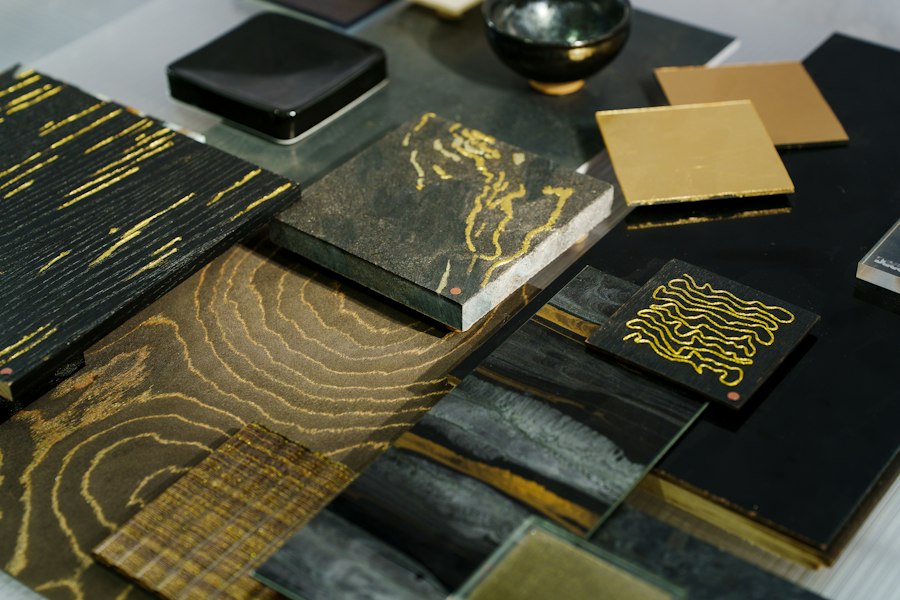
The unique capabilities of architected materials are poised to revolutionize numerous industries, from aerospace and automotive to healthcare and energy. Their ability to deliver enhanced performance, reduced weight, and novel functionalities makes them ideal candidates for addressing some of the most pressing technological challenges.
Aerospace and Automotive: Lightweighting and Enhanced Safety
The demand for lighter, stronger, and more fuel-efficient vehicles in both aerospace and automotive sectors makes architected materials a natural fit.
Structural Components: Reducing Weight, Increasing Strength
3D printed lattice structures can replace heavier, conventionally manufactured components in aircraft and cars, leading to significant weight reductions and improved fuel economy. These architected parts can be optimized for specific load-bearing requirements, ensuring structural integrity while minimizing material usage.
Impact Absorption and Vibration Damping: Enhancing Safety and Comfort
The inherent energy absorption capabilities of architected cellular and lattice structures make them excellent candidates for enhancing safety in vehicles. They can be used in crumple zones, chassis components, and protective interiors to dissipate impact energy, reducing injury risks. Furthermore, their tunable damping properties can improve ride comfort by minimizing vibrations.
Healthcare: Advancing Medical Devices and Therapies
The precision and biocompatibility potential of architected materials offer exciting opportunities in the healthcare sector.
Implants and Prosthetics: Tailored Biocompatibility and Functionality
Architected materials can be designed to mimic the porous structure of bone, promoting osseointegration and improving the longevity of orthopedic implants. Their customizable mechanical properties can also be tailored to match the surrounding tissues, reducing stress shielding and improving patient comfort for prosthetics.
Drug Delivery Systems: Targeted and Controlled Release
The intricate pore networks within architected materials can be utilized for sophisticated drug delivery systems. Drugs can be encapsulated within these structures and released in a controlled manner over time or in response to specific physiological cues, leading to more effective and targeted therapies.
Tissue Engineering Scaffolds: Promoting Cell Growth and Regeneration
Architected scaffolds can provide a three-dimensional framework that mimics the extracellular matrix, guiding cell growth and promoting tissue regeneration. Their tunable pore sizes and surface chemistries can be optimized to encourage specific cell types to adhere, proliferate, and differentiate.
Energy: Efficiency and Storage Solutions
Architected materials hold significant promise for improving energy efficiency and developing next-generation energy storage solutions.
Catalytic Converters and Filters: Enhanced Surface Area and Reactivity
The high surface area-to-volume ratio of architected materials, particularly porous structures, makes them ideal for catalytic applications. They can be designed to maximize the efficiency of catalytic converters in reducing emissions or for advanced filtration systems.
Battery and Supercapacitor Components: Improved Performance and Longevity
Architected electrode structures can significantly enhance the performance of batteries and supercapacitors. Their intricate designs can increase the active surface area for electrochemical reactions, leading to higher energy and power densities, as well as improved charging rates and cycle life.
Other Emerging Applications: Expanding Horizons
The versatility of architected materials extends to a multitude of other fields.
Acoustics and Soundproofing: Customized Sound Control
The ability to precisely control pore size and connectivity allows for the creation of architected materials with tailored acoustic properties, leading to advanced soundproofing solutions for buildings and vehicles.
Sensing and Actuation: Integrated Smart Systems
Architected materials can be designed to integrate sensing and actuating capabilities, paving the way for self-aware and self-regulating systems in various applications, from smart textiles to advanced robotics.
Challenges and the Future of Architected Materials

Despite the immense potential, the widespread adoption of architected materials faces several challenges. However, ongoing research and technological advancements are steadily addressing these hurdles, paving the way for a future where materials are not just discovered but intentionally designed for purpose.
Scalability and Cost-Effectiveness: From Lab to Industry
One of the primary challenges is the scalability of manufacturing processes. While laboratory-scale fabrication techniques can produce highly intricate architectures, scaling these processes to industrial levels while maintaining cost-effectiveness remains a significant hurdle. Developing robust and efficient manufacturing methods that can produce large quantities of architected materials is crucial for their widespread commercialization.
Material Selection and Multi-Material Printing: Expanding the Palette
The choice of constituent materials and the ability to print with multiple materials simultaneously are also critical considerations. While many current applications focus on single materials, the future of architected materials likely involves combining different materials within a single structure to achieve synergistic properties. Advances in multi-material 3D printing are essential for realizing this potential.
Characterization and Simulation: Understanding Complex Behavior
The complex, multi-scale nature of architected materials necessitates advanced characterization techniques and sophisticated simulation tools. Understanding the relationship between structure, processing, and performance requires a deep dive into the material’s behavior at various length scales. Developing accurate predictive models and efficient simulation methods will be key to accelerating the design and optimization process.
Standardization and Certification: Ensuring Reliability and Trust
As architected materials move towards critical applications, the establishment of industry standards and rigorous certification processes will be essential. This will ensure the reliability, safety, and performance of these novel materials, fostering trust among designers, manufacturers, and end-users.
The Road Ahead: A Future of Designed Functionality
The journey of architected materials is far from over. As research progresses and manufacturing technologies continue to evolve, we can anticipate an era where materials are not merely passive components but active participants in complex systems, designed with unparalleled precision and purpose. The ability to engineer materials from the ground up, dictating their structure to achieve specific functionalities, holds the key to unlocking a new generation of technologies that can address some of humanity’s most pressing challenges and usher in an era of unprecedented innovation. The intentional design of matter, at all scales, is no longer a distant dream but a rapidly unfolding reality, promising a future shaped by materials that are as intelligent and adaptable as the problems they are created to solve.

Pull Harder… and This Material Suddenly Gets Shorter
FAQs
What are architected materials?
Architected materials are materials that are designed at the micro or nano scale to have specific mechanical, thermal, or electromagnetic properties. They are engineered to have unique structures that provide them with desired characteristics.
How are architected materials different from traditional materials?
Architected materials differ from traditional materials in that they are designed with specific structures at the micro or nano scale, whereas traditional materials have more random or uniform structures. This allows architected materials to exhibit properties that are not found in nature.
What are some applications of architected materials?
Architected materials have a wide range of applications, including in aerospace, automotive, biomedical, and energy industries. They can be used to create lightweight yet strong structures, improve energy efficiency, enhance thermal insulation, and enable new technologies such as 3D printing.
How are architected materials fabricated?
Architected materials can be fabricated using a variety of techniques, such as 3D printing, laser cutting, and chemical etching. These methods allow for precise control over the material’s structure and properties, enabling engineers to tailor them for specific applications.
What are the benefits of using architected materials?
Some benefits of using architected materials include improved performance, reduced weight, increased strength, enhanced energy efficiency, and the ability to create complex shapes and structures that would be difficult or impossible to achieve with traditional materials.