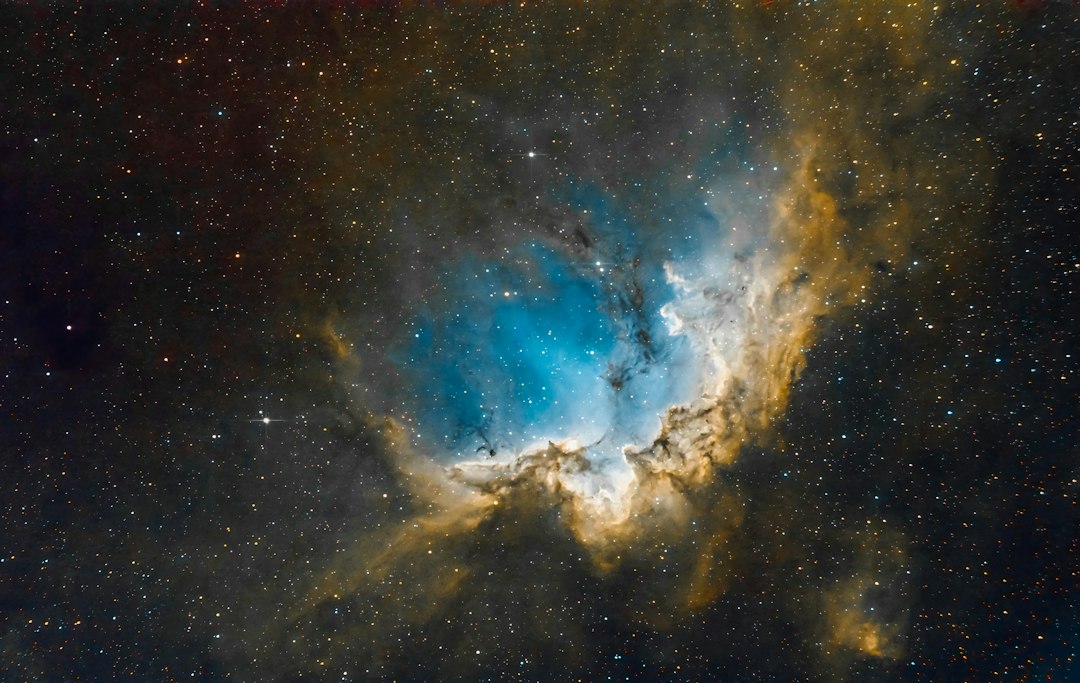
Approaching a nebula is an experience that transcends mere astronomical observation. It is a journey into the heart of cosmic creation and destruction, a descent into celestial artistry painted with gas and dust, illuminated by the fires of nascent stars. As a spacecraft, or indeed, as a hypothetical observer, draws nearer to these ethereal clouds, a cascade of phenomena unfolds, transforming the view from a distant, hazy smudge to a breathtaking, intricate tapestry of light and matter.
From the light-years away, nebulae appear as diffuse, often softly colored smudges against the velvet black of space. They are the celestial brushstrokes of astronomers, often named for their resemblances to earthly objects: the Orion Nebula, the Eagle Nebula with its Pillars of Creation, the Crab Nebula, a spectral remnant of a stellar explosion. But as the approach begins, these distant visions undergo a dramatic metamorphosis. The faint glow intensifies, resolving into distinct structures and intricate details that were previously invisible. The perceived colors, influenced by the ionization and emission of various gases, become more vibrant and pronounced. What appeared as a uniform cloud can reveal itself to be a complex, multi-layered entity, with areas of intense brightness and shadowy voids.
The Veil Lifts: Revealing Intricate Structures
As a spacecraft ventures closer, the opaque nature of some nebulae begins to dissipate, revealing the underlying complexity. The seemingly uniform gas clouds resolve into delicate filaments, wispy tendrils, and intricate webs of interstellar matter. The density variations within the nebula become apparent, with some regions appearing almost transparent, allowing glimpses of the stars beyond, while others are incredibly opaque, forming colossal dark clouds. These structures are not static; they are dynamic, constantly sculpted by stellar winds, gravitational forces, and shockwaves. The Pillars of Creation, for instance, appear as solid, imposing structures from afar, but upon closer inspection, they are revealed to be vast, eroding columns of denser gas and dust, actively being ablated by the intense radiation from nearby massive stars. The observer will notice how these structures are not uniform in their texture, exhibiting a granular quality at extreme proximity, hinting at the fundamental building blocks of interstellar matter.
Filaments and Threads: The Delicate Workings of Gravity and Stellar Winds
The most striking visual transformation upon approach is the emergence of intricate filamentary structures. These are not random occurrences but the result of powerful forces at play. Stellar winds, streams of charged particles emanating from young, massive stars, collide with the surrounding nebula, compressing and shaping the gas and dust into these ethereal strands. Gravitational forces also play a crucial role, pulling matter together and creating denser regions that can eventually collapse to form new stars. The filaments can vary in thickness, from microscopic threads to colossal structures stretching for light-years. Their arrangement is often dictated by the magnetic fields within the nebula, which act as invisible scaffolding, guiding the flow of matter. Observing these filaments up close reveals a mesmerizing interplay of light and shadow, where the intense illumination from embedded stars highlights the density variations within these delicate cosmic arteries.
Dark Nebulae: Opaque Walls of Cosmic Dust
While emission nebulae blaze with light, other nebulae, known as dark nebulae, appear as profound voids. These are dense clouds of interstellar dust and gas that absorb and scatter the light from background stars, effectively creating silhouettes. As an observer approaches a dark nebula, its immense scale and obscuring power become palpable. The edges of these cosmic shadows can be incredibly sharp and defined, or they can fade gradually into the surrounding interstellar medium. The dust within these nebulae is not uniformly distributed; it can form clumps and knots, creating intricate patterns within the darkness. From afar, a dark nebula might appear as a simple black patch, but up close, it reveals itself as a three-dimensional entity, with layers of dust that can obscure objects deep within its interior. These dark nebulae are not mere absences of light; they are active regions where new stars are often born, hidden from direct view by the very dust that defines them.
The Symphony of Light: Colors and Intensities
The colors we perceive in nebulae are a direct result of the chemical composition of the gas and the energy sources illuminating them. As an observer gets closer, the intensity of these colors becomes overwhelming, and subtle nuances become apparent. The vibrant reds often associated with nebulae are typically due to the emission of hydrogen alpha radiation, energized by nearby hot stars. Greens can indicate the presence of ionized oxygen, while blues often arise from the reflection of starlight off dust particles. Up close, these colors do not blend uniformly but form distinct bands, pockets, and gradients, revealing the localized conditions within the nebula. Areas with higher concentrations of specific elements or exposed to more intense radiation will exhibit correspondingly stronger and purer hues.
Emission Lines: Signatures of Excited Gases
The characteristic colors of emission nebulae are not inherent to the gas itself but are produced when the gas is excited by energetic radiation, typically from hot, young stars. As an observer approaches these regions, the emission lines become more pronounced. The observer can discern distinct wavelengths of light being emitted, each corresponding to a specific element transitioning from an excited state to a lower energy state. For example, the intense red of a hydrogen nebula is a specific emission line, as is the green of doubly ionized oxygen. Up close, these emission lines can be seen to be concentrated in specific areas, indicating the localized presence of these elements and the intensity of the ionizing radiation. This allows for a detailed spectroscopic analysis of the nebula, revealing its elemental composition with unprecedented precision.
Reflection Nebulae: Scattering Starlight
Reflection nebulae, in contrast to emission nebulae, do not produce their own light but reflect the light of nearby stars. As an observer draws closer to a reflection nebula, the apparent brightness of the scattered starlight increases dramatically. The observer can see how the dust particles within the nebula scatter specific wavelengths of light more effectively than others, leading to the characteristic blue hues often observed in these nebulae. The dust itself can vary in size and composition, leading to subtle variations in the color and intensity of the reflected light. The observer might notice how the light is not uniformly scattered but follows patterns dictated by the distribution of dust and the direction of the illuminating stars, creating a dynamic and ever-shifting interplay of light and shadow.
If you’re curious about the fascinating phenomena that occur when approaching a nebula, you might want to check out a related article that delves deeper into the subject. This article explores the incredible beauty and complexity of nebulae, as well as the potential dangers and scientific opportunities that arise from getting closer to these cosmic wonders. For more insights, visit this link to learn more about the mysteries of nebulae and their impact on our understanding of the universe.
The Cosmic Crucible: Stellar Birth and Death
Nebulae are not static celestial bodies; they are dynamic environments where the grand cycles of stellar evolution are actively playing out. Approaching a nebula often means venturing into regions of active star formation or witnessing the remnants of stellar cataclysms. These processes profoundly influence the visual appearance and physical characteristics of the nebula.
Stellar Nurseries: Where Stars Are Born
Many nebulae are known as stellar nurseries, vast clouds of gas and dust where new stars are being forged. As an observer gets closer to these regions, the signs of stellar formation become increasingly evident. The initial faint glow of the nebula resolves into discrete knots and clumps of matter, where gravitational collapse is underway. These collapsing regions, known as protostars, begin to heat up and emit radiation, becoming visible as nascent stars. The observer will witness the immense scale of these processes, with protostars embedded within vast clouds, some still shrouded in dust, others just beginning to emerge. The presence of young, massive stars, often the most luminous objects in the nebula, will be undeniable, their powerful stellar winds and intense radiation shaping the surrounding gas.
Protostars: The Embryonic Stages of Stars
The closest one gets to a stellar nursery, the more the subtle indications of star formation become apparent. Protostars, the embryonic stages of stars, are often hidden within dense cocoons of gas and dust. However, as the observer approaches, infrared telescopes can penetrate these veils, revealing the heat signatures of these forming suns. The observer might see accretion disks, swirling disks of gas and dust feeding the growing protostar, and bipolar outflows, jets of material ejected from the poles of the protostar, carving channels through the surrounding nebula. These outflows are powerful indicators of ongoing stellar birth, sculpting the nebular material and influencing the formation of other stars in the vicinity. The sheer number of these protostellar objects, often clustered together, highlights the efficient nature of star formation within these nebulae.
Young Stellar Clusters: A Gathering of Newly Formed Suns
As the observer continues their approach into a star-forming nebula, the scattered protostars eventually coalesce into visible young stellar clusters. These are collections of newly formed stars, still relatively close to each other, illuminating their parent nebula with their combined light. The observer can see the different spectral types of these young stars, from the hot, massive O and B stars to cooler, less luminous M dwarfs. The intense radiation from the massive stars will be actively ionizing the surrounding gas, creating distinct emission regions and shock fronts. The gravitational influence of these clusters will also be apparent, drawing in and shaping the remaining nebular material, potentially triggering further star formation. The dynamic interaction between these young stars and their nebular environment is a key feature visible only upon close approach.
Stellar Remnants: The Aftermath of Stellar Life
Other nebulae are the ghostly remnants of stars that have reached the end of their lives. These can be planetary nebulae, formed by the expulsion of outer layers from dying low-to-intermediate mass stars, or supernova remnants, the explosive aftermath of massive stars. Approaching these nebulae reveals the intricate, often beautiful, structures created by these powerful stellar events.
Planetary Nebulae: Ethereal Shells of Expelled Gas
Planetary nebulae, despite their name, have nothing to do with planets. They are the elegant, often colorful, shells of gas and dust ejected by dying stars. As an observer gets closer, the intricate shapes and internal structures of these nebulae become apparent. The central white dwarf star, the exposed core of the former star, emits intense ultraviolet radiation that ionizes the expelled gas, causing it to glow. The observer might see complex patterns, rings, lobes, and even bipolar outflows, all shaped by the interaction of the stellar wind with the expelled material and the residual magnetic fields of the dying star. The colors can be exceptionally vibrant, with distinct regions of emission from different elements, painting a vivid picture of the final stages of a star’s life. The fine details of the ionization fronts and the shock waves propagating through the nebular shell are only truly appreciated at close range.
Supernova Remnants: Cosmic Explosions Etched in Gas
Supernova remnants are the sprawling, turbulent aftermaths of the catastrophic explosions of massive stars. Approaching these nebulae reveals a chaotic yet awe-inspiring spectacle. The shockwaves from the supernova blast continue to expand outwards, colliding with and compressing the interstellar medium. This interaction creates intricate filamentary structures, often appearing as ragged edges and wispy tendrils. The colors are a mixture of emission from ionized gases, such as oxygen and sulfur, and the synchrotron radiation produced by high-energy electrons spiraling in magnetic fields. The observer will see vast shells of expanding material, interspersed with cooler, denser knots of gas that may eventually collapse to form new stars. The sheer scale and destructive power of the supernova event are palpable, etched into the very fabric of the remnant. The detailed structure of the shock fronts and the distribution of high-energy particles are features that become incredibly detailed upon close observation.
The Physical Environment: Temperature, Density, and Radiation
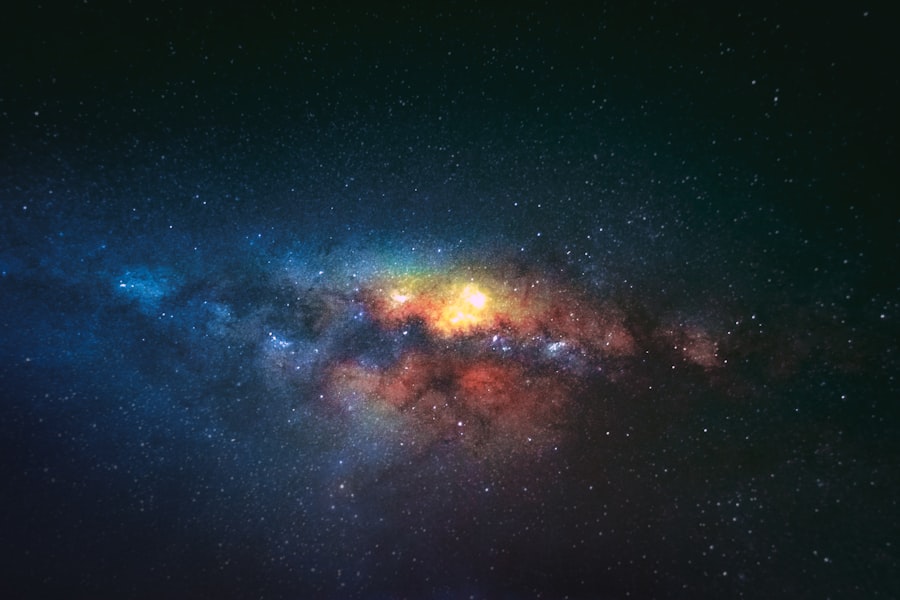
Beyond the visual spectacle, approaching a nebula brings the observer into a drastically different physical environment. The conditions within these cosmic clouds are extreme, characterized by vast temperature ranges, varying densities, and intense radiation fields.
Extreme Temperatures: From Near Absolute Zero to Millions of Degrees
The temperature within a nebula can vary wildly depending on its type and location. In dense, dark molecular clouds, the temperature can be as low as 10 Kelvin (-263 degrees Celsius), close to absolute zero. These frigid conditions are ideal for the formation of molecules, the building blocks of life. As an observer moves closer to regions of active star formation, the temperature can rapidly increase due to the heat radiated by young stars. In emission nebulae, where hot stars ionize the gas, temperatures can reach tens of thousands of degrees Celsius. In the case of supernova remnants, the shockwaves can heat the gas to millions of degrees. Understanding these temperature gradients is crucial for comprehending the physical processes occurring within the nebula.
Molecular Clouds: The Cold Hearts of Star Formation
The coldest and densest regions of nebulae are the molecular clouds. Here, temperatures hover just above absolute zero, allowing complex molecules like water, carbon monoxide, and even organic compounds to form. As an observer approaches these regions, the lack of visible light and the overwhelming presence of dust are the dominant features. However, specialized instruments can detect the faint radio and infrared emissions from these molecules. The density, while low by terrestrial standards, is significantly higher than the surrounding interstellar medium, providing the necessary conditions for gravitational collapse and the eventual birth of stars. The observer will witness how these dense cores are the cradles of future stellar systems, a stark contrast to the more energetic regions of the nebula.
Ionized Regions: The Fiery Breath of Hot Stars
In contrast to the frigid molecular clouds, the regions surrounding hot, massive stars within nebulae are intensely ionized. The powerful ultraviolet radiation from these stars strips electrons from atoms, creating a plasma. As an observer ventures into these areas, they will experience significantly higher temperatures, measured in tens of thousands of degrees Celsius. These ionized regions are characterized by their vibrant emission of light, as the excited atoms recombine and emit photons. The observer will see distinct boundaries between these hot, ionized zones and the cooler, more neutral gas, often sculpted by the stellar winds emanating from the central stars. The energy density in these regions is immense, a direct consequence of the powerful stellar engines at play.
Density Variations: From Near Vacuum to Cosmic Walls
The density of matter within a nebula is not uniform. It can range from near vacuum in the diffuse interstellar medium to incredibly dense pockets within molecular clouds. Approaching a nebula means traversing these vast density gradients. The observer will notice how the visual opacity of the nebula increases with density, with thicker regions effectively blocking out light. These density variations are crucial for star formation, as denser regions are more prone to gravitational collapse.
Diffuse Interstellar Medium: The Thin Atmosphere of Space
The vast regions surrounding nebulae are characterized by the diffuse interstellar medium, a near-vacuum with extremely low densities. As an observer begins their approach, they are moving from this almost empty space into increasingly denser regions. The transition is gradual, and the observer might first notice subtle changes in the background light or the presence of faint, wispy structures. This diffuse medium, while seemingly empty, plays a crucial role in the overall evolution of nebulae, providing the raw material for star formation and influencing the propagation of shockwaves.
Dense Cores and Molecular Clouds: The Seeds of Stars
The densest parts of nebulae are the molecular clouds and their embedded dense cores. As an observer enters these regions, the visual experience changes dramatically. The increased density of dust and gas makes the nebula appear opaque, obscuring the stars within. These cores are the sites where gravity is strong enough to overcome the outward pressure of the gas, leading to gravitational collapse and the formation of protostars. The observer will witness how these dense regions are not uniform but are often riddled with filaments and clumps, each a potential birthplace for a new star. The sheer concentration of matter here is staggering, a stark contrast to the near-vacuum of the surrounding space.
Intense Radiation Fields: The Hazards and Drivers of Nebulae
Nebulae are often bathed in intense radiation fields, emanating from young, massive stars or the energetic events that created them. Approaching these regions necessitates understanding and mitigating the potential hazards posed by this radiation.
Ultraviolet Radiation: The Ionizing Power of Young Stars
The most significant source of radiation within many nebulae is the intense ultraviolet radiation emitted by hot, young stars. This radiation has the power to ionize atoms, breaking them apart and creating plasmas. As an observer gets closer to these stars, the UV flux increases dramatically, posing a significant hazard to unprotected instruments and any hypothetical biological entities. However, this same radiation is also the driving force behind the visible light emitted by emission nebulae, exciting the gas and causing it to glow. The observer will see how the boundaries of these ionized regions are directly dictated by the strength and range of the UV radiation from the central stars.
Cosmic Rays and High-Energy Particles: The Unseen Forces
Beyond ultraviolet radiation, nebulae can also be permeated by cosmic rays and other high-energy particles. These originate from various sources, including supernovae and active galactic nuclei, and can travel vast distances. While less directly visible, their presence has significant effects on the chemistry and physics of the nebula. Approaching a nebula can mean entering regions with higher fluxes of these energetic particles, which can cause damage to sensitive equipment and influence the ionization balance of the gas. In the case of supernova remnants, the synchrotron radiation produced by high-energy electrons in magnetic fields is a significant component of the observable emissions, a direct consequence of these energetic particle populations.
The Dance of Gravity and Stellar Winds: Sculpting the Cosmic Landscape
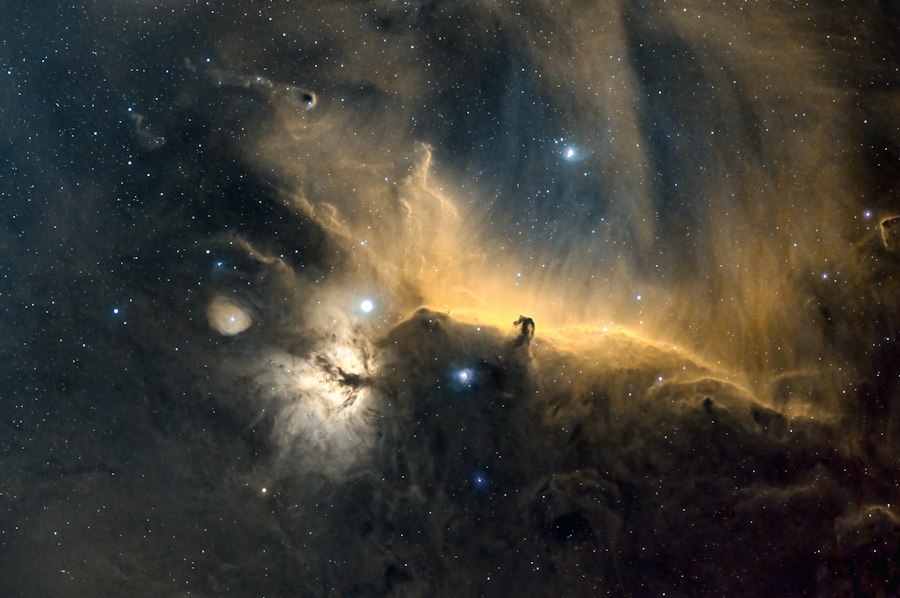
The intricate structures observed within nebulae are not accidental. They are the result of a constant, dynamic interplay between the relentless pull of gravity and the outward push of stellar winds. As an observer draws closer, the forces shaping these cosmic landscapes become undeniably apparent.
Gravitational Collapse: The Genesis of Stars
Gravity is the fundamental force responsible for the formation of stars within nebulae. In regions where matter becomes sufficiently dense, gravity overcomes the internal pressure and begins to pull the gas and dust inwards. Approaching a nebula means entering regions where this process is actively occurring. The observer will see how gravity is drawing matter into clumps and filaments, concentrating it into dense cores that will eventually ignite as stars. The larger the mass of a clump, the stronger its gravitational pull, leading to the formation of more massive stars. This gravitational collapse is a slow, inexorable process, but its effects are evident in the accumulation of matter and the initiation of heating within these regions.
Accretion Disks and Outflows: Feeding the Nascent Suns
As matter collapses under gravity, it often forms accretion disks around nascent stars. These swirling disks feed the growing protostar, while also generating powerful bipolar outflows of gas that blast outwards from the star’s poles. Approaching a region of active star formation will reveal these phenomena in vivid detail. The observer will see the shimmering disks of gas and dust, illuminated by the light of the protostar, and the dramatic jets of material carving paths through the surrounding nebula. These outflows are crucial for regulating star formation, expelling excess material and preventing the protostar from growing too large. The scale and power of these outflows are breathtaking to witness up close.
Stellar Winds: The Sculpting Breath of Stars
Young, massive stars are powerful emitters of stellar winds, streams of charged particles that flow outwards at high speeds. As an observer gets closer to these stars within a nebula, the impact of these winds becomes increasingly evident. Stellar winds collide with the surrounding nebular material, compressing it and creating shock fronts. They can carve out cavities, sculpt intricate filaments, and even trigger further star formation by compressing nearby gas clouds. The observer will see how the nebular structures are not static but are actively being shaped and eroded by these powerful stellar gusts, creating a dynamic and ever-changing cosmic landscape.
Shock Fronts: The Visible Boundaries of Interaction
The collision between stellar winds and the surrounding nebular gas creates visible shock fronts. These are regions where the gas is rapidly compressed and heated, causing it to emit light. Approaching a nebula with active stellar winds will reveal these shock fronts as bright, often curved or filamentary, structures. The observer might see bow shocks, where the stellar wind pushes against the nebular material, or ionization fronts, where the intense radiation from the star ionizes the gas. The intricate patterns and dynamics of these shock fronts are a testament to the powerful forces at play within the nebula.
Cavities and Bubbles: The Erosion of Nebular Matter
The relentless pressure of stellar winds can also create vast cavities and bubbles within nebulae. As the wind expands outwards, it pushes the nebular gas away, forming hollow regions. Approaching these features will reveal the immense scale of these stellar-driven erosion processes. The observer might see shell-like structures of compressed gas surrounding these cavities, or diffuse, tenuous material filling the bubble. These cavities can influence the distribution of gas and dust within the nebula, and can even be sites where new stars eventually form after the initial intense stellar activity subsides.
Exploring the mysteries of the universe often leads to fascinating questions about celestial phenomena, such as what happens if you get closer to a nebula. The vibrant clouds of gas and dust that make up these stellar nurseries are not only beautiful but also hold secrets about the formation of stars and planets. For a deeper understanding of the effects of proximity to these cosmic structures, you can read more in this insightful article on Freaky Science, which delves into the intriguing dynamics of nebulae and their impact on surrounding space.
The Unseen World: Magnetic Fields and Neutrinos
| Distance from Nebula | Effect |
|---|---|
| Very Close | Increased radiation exposure |
| Close | Distortion of electromagnetic signals |
| Medium | Enhanced visibility of nebula’s colors and patterns |
| Far | Minimal impact on spacecraft and equipment |
While visual observations are spectacular, approaching a nebula also brings us into closer contact with phenomena that are not directly visible but are crucial to understanding its nature. Magnetic fields and neutrinos, though unseen, play significant roles in the processes occurring within these cosmic clouds.
Magnetic Fields: The Invisible Scaffolding
Interstellar magnetic fields are present throughout nebulae and play a crucial role in shaping their structures and influencing the flow of matter. While invisible to the naked eye, their presence can be inferred through various observations. Approaching a nebula, sensitive instruments can detect the alignment of dust grains within the magnetic field, and the polarization of starlight passing through it. Magnetic fields can channel the flow of ionized gas, creating filaments and guiding the collapse of matter during star formation. They can also act as barriers, preventing the collapse of some regions while allowing others to condense. The observer will come to appreciate how these invisible lines of force are as integral to the nebula’s structure as the gas and dust themselves.
Magnetic Alignment of Dust: Tracing the Field Lines
Dust grains within nebulae, when exposed to magnetic fields, tend to align themselves along the field lines. As an observer approaches a nebula, techniques like polarimetry can detect the degree of this alignment, providing a map of the magnetic field’s direction and strength. This reveals how the magnetic field acts as an invisible scaffolding, dictating the distribution of matter and influencing the formation of structures like filaments and molecular clouds. The observer will see how the magnetic field lines often trace the intricate pathways of gas and dust, guiding their flow and shaping the nebula’s overall architecture.
Magnetic Pressure and Support: Influencing Collapse
Magnetic fields exert a pressure that can resist the gravitational collapse of gas and dust. In some regions of a nebula, this magnetic pressure can be strong enough to prevent star formation, while in others, where gravity is dominant, it can be overcome. Approaching these regions allows for the study of this delicate balance. The observer will understand how the magnetic field can influence the rate and efficiency of star formation, acting as both a barrier and a guide. The interplay between magnetic forces and gravitational forces is a fundamental aspect of nebular dynamics that becomes clearer with closer observation.
Neutrinos: Messengers from the Stellar Core
Neutrinos are ghostly subatomic particles produced in nuclear reactions within stars. They interact very weakly with matter, allowing them to escape from stellar cores unimpeded. While not directly observable in the same way as light, their detection can provide invaluable information about the processes occurring within nebulae. Approaching a nebula that contains active star formation means being in proximity to potential neutrino sources.
Detecting Neutrino Fluxes: Insights into Stellar Processes
Advanced neutrino detectors can sense the faint signals of these elusive particles. By studying the neutrino flux emanating from a star-forming region within a nebula, astronomers can gain insights into the nuclear processes occurring within the cores of nascent stars. This can help to confirm models of stellar evolution and the physics of star formation. While direct observation of neutrinos within the nebula itself is challenging, understanding their production in the embedded stars provides a complementary perspective to visual observations, revealing the unseen energetic heart of these cosmic nurseries.
Supernova Neutrinos: Echoes of Stellar Cataclysm
In nebulae that are supernova remnants, neutrinos produced during the supernova explosion itself can still be detected. These neutrinos arrive milliseconds before the light from the explosion, offering a crucial early warning and providing direct evidence of the cataclysmic event. While the nebula itself might have long since dispersed the immediate light, the lingering neutrino signature offers a unique insight into the explosive death of a star. Approaching a supernova remnant with advanced neutrino detection capabilities could, in theory, offer a chance to study these remnants of stellar demise.
The Journey’s End: Transformation and the Cycle of Cosmic Matter
The ultimate outcome of approaching a nebula is a profound transformation in understanding. The distant, ethereal wisps of gas and dust resolve into a dynamic, complex, and active cosmic environment. The journey culminates not just in observation, but in an appreciation of the grand cycle of cosmic matter – from birth to death and back again.
A Deeper Understanding of Stellar Evolution
By venturing closer to nebulae, astronomers gain an unparalleled opportunity to study the processes of stellar evolution in unprecedented detail. Observing the birth of stars in nurseries, the life of stars illuminating nebulae, and the remnants of stars that form these celestial clouds provides a comprehensive picture of the stellar life cycle. Approaching these regions allows for the direct observation of the physical conditions, chemical compositions, and dynamic interactions that drive these processes, leading to a refinement of our understanding of how stars are born, live, and die. The observer leaves with a much richer comprehension of the profound influence stars have on the universe.
From Protostars to Main Sequence: Witnessing the Ignition
The journey into a star-forming nebula allows for direct observation of the transition from protostellar stages to the main sequence. As protostars gather mass and their internal temperatures and pressures rise, they eventually reach the point of nuclear fusion, igniting as true stars. Approaching these regions provides visual confirmation of this critical ignition point, observing the dramatic increase in luminosity and the onset of stable energy production. The observer can witness the very moment a star is truly born, a monumental event in the cosmic tapestry.
The Cosmic Recycling: Nebulae as Building Blocks of Future Worlds
Nebulae are not just endpoints of stellar evolution; they are also the fundamental building blocks for future generations of stars and planetary systems. The gas and dust that make up nebulae contain the elements forged in the hearts of stars and dispersed by supernovae. As an observer approaches these regions, they are witnessing the raw material from which new worlds will eventually be formed. The elements heavier than hydrogen and helium, essential for the formation of planets and life, are all present within these cosmic clouds.
Dust Grains: The Seeds of Planets
The dust grains within nebulae, often microscopic, are the primordial seeds from which planets coalesce. Approaching these regions allows for the detailed study of these dust grains, their composition, and their size distribution. Scientists can observe how these grains clump together, sticking to one another under gentle forces, beginning the long process of accretion that will eventually lead to the formation of planetesimals and, subsequently, planets. The observer is essentially witnessing the very first steps in the creation of new solar systems.
A New Perspective on Our Place in the Cosmos
The ultimate reward of approaching a nebula is a profound shift in perspective on humanity’s place in the vast expanse of the universe. These celestial clouds, born from the ashes of stars and serving as cradles for new ones, are a stark reminder of the interconnectedness of all matter. They underscore the fact that the elements that make up our planet, our bodies, and our very existence were forged in the hearts of stars that lived and died eons ago. The journey into a nebula, whether through a telescope or a hypothetical spacecraft, is a journey that connects us to the grand cosmic narrative, revealing that we are, quite literally, stardust. The experience instills a sense of awe and wonder, a deep appreciation for the cyclical nature of the universe and our own humble, yet significant, role within it.
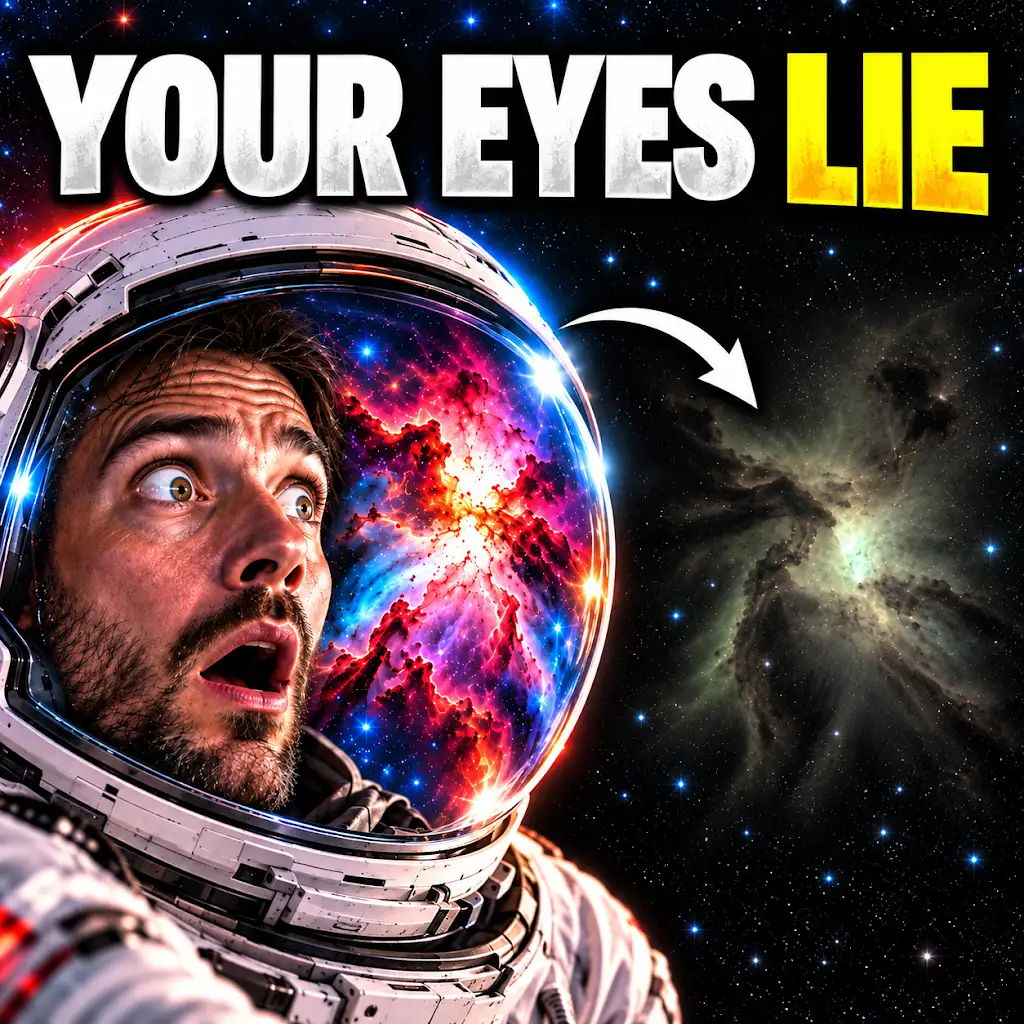
The Space Photos Are Real—But Your Eyes Would See This
FAQs
1. What is a nebula?
A nebula is a cloud of gas and dust in outer space, often illuminated by nearby stars. They are often considered to be the birthplace of stars and planets.
2. What happens if you get closer to a nebula?
If you were to get closer to a nebula, you would likely experience an increase in radiation and cosmic rays. The gas and dust in a nebula can also obscure visibility, making it difficult to see beyond a certain point.
3. Can you land on a nebula?
No, you cannot land on a nebula. Nebulae are vast, diffuse regions of space, and are not solid objects. They are made up of gas and dust, and do not have a solid surface to land on.
4. Are there any dangers associated with getting closer to a nebula?
One of the main dangers of getting closer to a nebula is the increased exposure to radiation and cosmic rays. Additionally, the gas and dust in a nebula can pose a hazard to spacecraft and equipment.
5. What are some of the most famous nebulae in our galaxy?
Some of the most famous nebulae in our galaxy include the Orion Nebula, the Crab Nebula, the Helix Nebula, and the Eagle Nebula. These nebulae are known for their striking visual appearance and their significance in the study of star formation and stellar evolution.