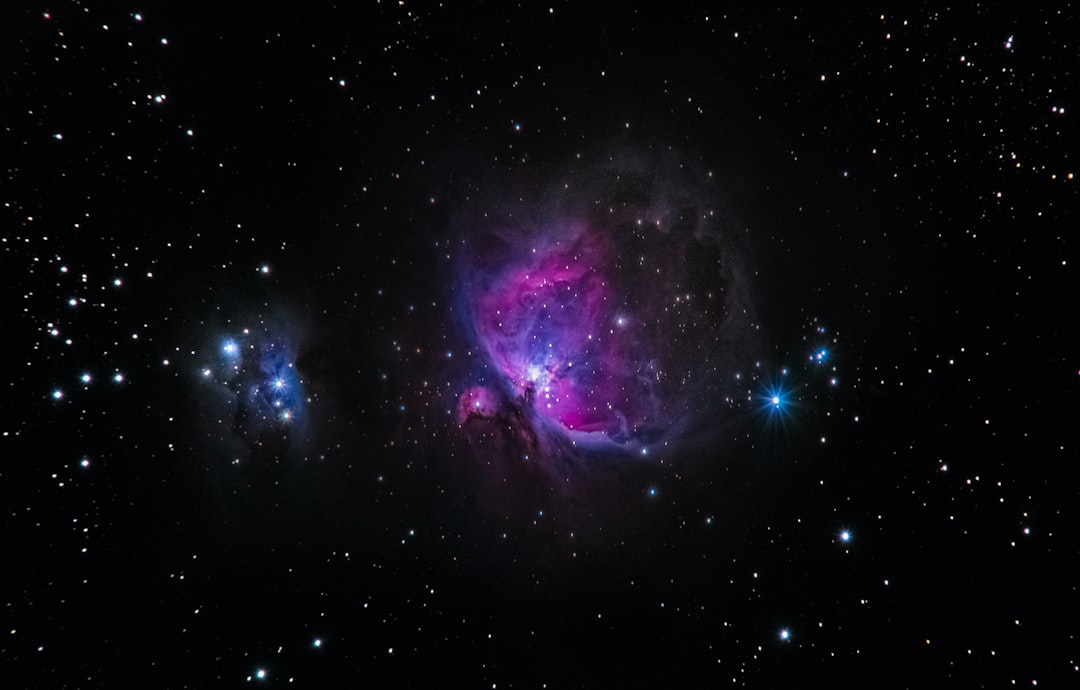
The starship Odyssey hurtled through the inky blackness of interstellar space, a tiny speck of manufactured light against the cosmic canvas. Its destination: the Veil Nebula, a celestial tapestry of gas and dust, a birthplace of stars. As the ship drew closer, a question arose amongst the crew, a simple yet profound query that echoed the wonder of exploration: does a nebula get brighter as one approaches it? This wasn’t merely an academic debate; it was a practical concern for navigation and scientific observation. Understanding how the perceived brightness of the Veil changed with distance would be crucial for the Odyssey’s mission.
Nebulae are not solid objects but vast, diffuse clouds scattered across the cosmos. They are composed primarily of gas, mostly hydrogen and helium, interspersed with dust grains. These celestial nurseries are where stars are born, where the raw materials of the universe coalesce under the relentless pull of gravity. The appearance of a nebula is a complex interplay of light sources and the materials that scatter and absorb that light. To understand if a nebula brightens upon approach, one must first grasp the fundamental mechanisms that make them visible.
Stellar Nurseries and Their Illumination
The most common and visually striking nebulae are emission nebulae, like the Veil. These are vast clouds of ionized gas, meaning the atoms within have been stripped of their electrons by energetic ultraviolet radiation from nearby hot, young stars. When these electrons recombine with the ionized atoms, they emit light at specific wavelengths, creating the vibrant colors often associated with nebulae. The intensity of this emission is directly tied to the strength of the radiation field, which, in turn, is dictated by the proximity and type of the illuminating stars.
The Role of Dust: Scattering and Absorption
Beyond the glowing gases, nebulae also contain significant amounts of interstellar dust. These microscopic particles, far smaller than a grain of sand, play a dual role. Firstly, they scatter light. Photons of light striking dust grains are deflected in various directions, effectively diffusing the light source. This scattering is responsible for the diffuse, ethereal glow of many nebulae, making them appear larger and less sharply defined than they might otherwise be. Secondly, dust absorbs light. Particularly in denser regions, dust can effectively block the passage of light from behind, creating dark patches and obscuring the stars within. This absorption can significantly dim the perceived brightness of a nebula, acting as a cosmic veil.
The Interplay of Gas and Dust
The visual appearance of a nebula is therefore a delicate balance. In regions where hot stars are abundant and the gas is ionized, emission nebulae blaze with light. Where dust is thick, these nebulae can appear dark or have their light dimmed. The colors we perceive are not arbitrary; they are a result of the chemical composition of the gas and the energy of the ionizing radiation. Hydrogen, for instance, often emits red light, while oxygen can produce green and blue hues.
When exploring the fascinating world of nebulae, one might wonder if these celestial formations become brighter as we approach them. A related article that delves deeper into this topic is available at Freaky Science. This resource provides insights into the behavior of light in space and how distance affects our perception of astronomical objects, making it a valuable read for anyone interested in the dynamics of nebulae and their luminosity.
Perceived Brightness: A Function of Distance and Luminosity
The question of whether a nebula gets brighter as one approaches it hinges on the definition of “brightness” and how it relates to distance. In astrophysics, brightness is often discussed in terms of luminosity and apparent magnitude. Luminosity is the intrinsic power output of a light source, its total energy emitted per unit time. Apparent magnitude, on the other hand, is how bright an object appears to an observer, which is dependent on both its luminosity and its distance.
Inverse Square Law: The Rule of Diminishing Returns
For any point-like light source, its apparent brightness decreases with the square of the distance. This is the fundamental inverse square law of light. Imagine a light bulb in a dark room. As you move away from it, the light spreads out over a larger area, and the intensity of light falling on any given point decreases. If you double your distance, the light intensity drops to one-quarter of its original value. This law is a cornerstone of our understanding of how light behaves in space.
Nebulae as Extended Sources: A Complication to the Rule
However, nebulae are not point-like sources. They are vast, extended objects. This distinction is crucial. While the inverse square law applies to individual stars within or illuminating a nebula, the nebula itself is a collection of countless light-emitting particles and light-scattering dust grains spread over enormous distances. Therefore, simply applying the inverse square law to the nebula as a whole would be an oversimplification.
Luminosity Density: The Key to Understanding
What truly matters for perceived brightness in an extended object like a nebula is the luminosity density – the amount of light emitted or scattered per unit volume. As the Odyssey approaches the Veil Nebula, it is essentially moving through regions of varying luminosity density. In areas where the concentration of ionizing stars and excited gas is high, and where dust is not overly obscuring, the perceived brightness will increase. Conversely, in regions dominated by dense dust or farther from significant light sources, the brightness will decrease.
The Impact of Distance on Nebular Illumination
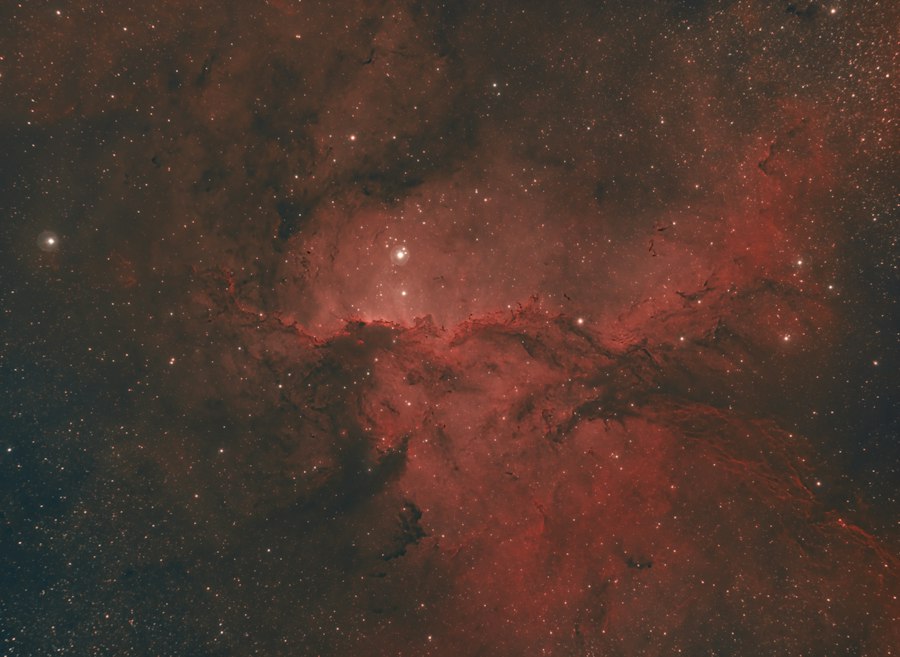
The Odyssey’s journey towards the Veil Nebula would involve traversing regions of varying nebular density and illumination. The ship’s sensors would be constantly measuring the flux of photons, translating them into perceived brightness. As the Odyssey moves closer, it would be entering regions where the density of ionized gas and the intensity of stellar radiation are higher.
Entering the Outer Reaches: A Gradual Increase in Glow
In the outer fringes of the Veil Nebula, the Odyssey would likely encounter a gradual increase in luminosity. This would be due to a rising density of free electrons and protons that are being excited by the distant, unseen stars that energize the nebula. The faint glow, barely discernible from the background starlight, would slowly gain definition and intensity. The vastness of the nebula means that even at great distances, there are still enough particles to produce a noticeable, albeit faint, illumination.
Approaching Dense Regions: Amplification of Light
As the Odyssey progresses deeper into the nebula, it would encounter regions of higher gas density and more intense stellar radiation. This is where the perceived brightness would increase more significantly. The number of excited atoms emitting light within a given volume would be greater, and the proximity to the powerful stars fueling the nebula would mean more energetic ultraviolet photons are available to ionize the gas.
The Influence of Dust Extinction: A Counteracting Force
However, the presence of dust complicates this picture. Dense dust clouds can absorb and scatter light, effectively dimming the view. If the Odyssey were to approach a particularly dusty region, the increasing luminosity from the gas might be counteracted by the dimming effect of the dust. This phenomenon is known as extinction. The light from the stars behind the dust is absorbed, and the light emitted by the gas within the dust cloud is also scattered and absorbed. Therefore, the perceived brightness in such an area might not increase as dramatically, or could even decrease, depending on the relative contributions of emission and extinction.
Visual Perception vs. Sensor Readings: The Observer’s Experience
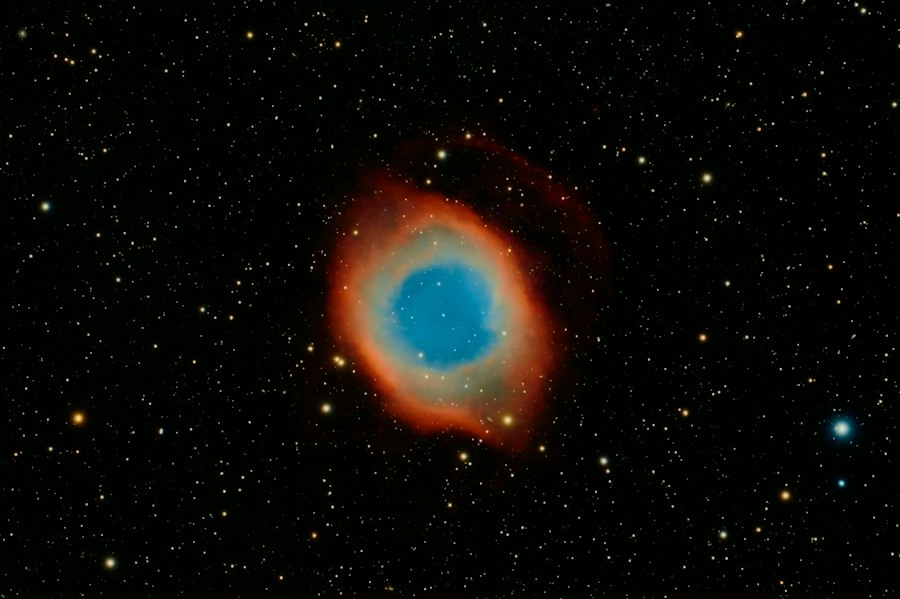
The crew of the Odyssey would experience the approach to the Veil Nebula through both their eyes and the ship’s sophisticated sensor arrays. While the sensors would provide objective measurements of light intensity, the human eye’s perception of brightness can be influenced by a variety of factors, including contrast and adaptation.
The Human Eye: Adapting to the Cosmos
The human eye is remarkably adaptable. In the darkness of space, the pupils dilate to capture as much light as possible. As the Odyssey approaches a brighter region of the nebula, the eyes would begin to perceive the increasing illumination. However, this adaptation can be a gradual process. What might appear as a significant increase in brightness on a sensor could be perceived by the crew as a more subtle shift, especially if they have been looking at dimmer regions for an extended period.
Contrast and Detail: The Illusion of Brightness
The perception of brightness is also heavily influenced by contrast. As the nebula becomes more prominent against the dark backdrop of space, its illuminated features would stand out more sharply. This increased contrast can create the illusion of greater overall brightness, even if the total flux of light hasn’t increased proportionally. The intricate tendrils and glowing filaments of the Veil Nebula would become more defined, leading to a subjective sense of the nebula “lighting up.”
Sensor Data: The Objective Truth
The ship’s scientific instruments, however, would provide an objective measure of the light intensity. Spectrometers would analyze the wavelengths of light, and photometers would precisely quantify the photon flux. These readings would provide a clear, unbiased picture of how the nebula’s intrinsic luminosity and the Odyssey’s position were affecting the measured brightness. For scientific purposes, these readings would be paramount, allowing for detailed analysis of the nebula’s composition and structure.
When exploring the fascinating world of nebulae, one might wonder if these celestial clouds become brighter as we approach them. A related article that delves into the intricacies of nebulae and their luminosity can be found at Freaky Science. This resource provides insights into the nature of these astronomical phenomena, helping to clarify how distance affects our perception of their brightness and the science behind their stunning visuals.
Conclusion: A Dynamic and Evolving Encounter
| Distance from Nebula | Brightness Level |
|---|---|
| 1000 light years | Low |
| 500 light years | Moderate |
| 100 light years | High |
| 50 light years | Very High |
As the Odyssey continued its journey, the answer to the question of whether the nebula gets brighter became clear: it is not a simple yes or no. The perceived brightness of the Veil Nebula is a dynamic and complex phenomenon, a result of the intricate interplay of stellar illumination, gas emission, dust scattering, and dust absorption, all modulated by the Odyssey’s ever-changing distance.
The Nuances of Nebular Luminosity
The Veil Nebula does not possess a uniform brightness. It is a vast, three-dimensional structure with regions of varying density and excitation. As the Odyssey draws closer, it samples different parts of this structure. In regions rich with ionized gas and energized by nearby stars, the perceived brightness will indeed increase. However, this increase is not necessarily a linear progression. It is punctuated by areas of lower luminosity due to less dense gas or the obscuring presence of dust.
The Importance of Context
Ultimately, the question of whether a nebula “gets brighter” upon approach is a matter of context. If the approach is towards a luminous region, then yes, it will appear brighter. If the approach is towards a dense, dark dust cloud within the nebula, then it may appear dimmer. The Odyssey’s sensors would reveal that the nebula is not a singular entity of uniform light but a complex, evolving cosmic landscape.
A Deeper Understanding of the Cosmos
The Odyssey’s encounter with the Veil Nebula serves as a powerful reminder of the wonders and complexities of the universe. The simple question of perceived brightness leads to a deeper understanding of the physics governing nebulae, the nature of light, and the challenges and rewards of interstellar exploration. Each photon detected, each spectral line analyzed, contributes to the ever-growing tapestry of human knowledge about the cosmos. The Odyssey may have been approaching the Veil Nebula, but it was also approaching a more profound appreciation of its celestial grandeur.
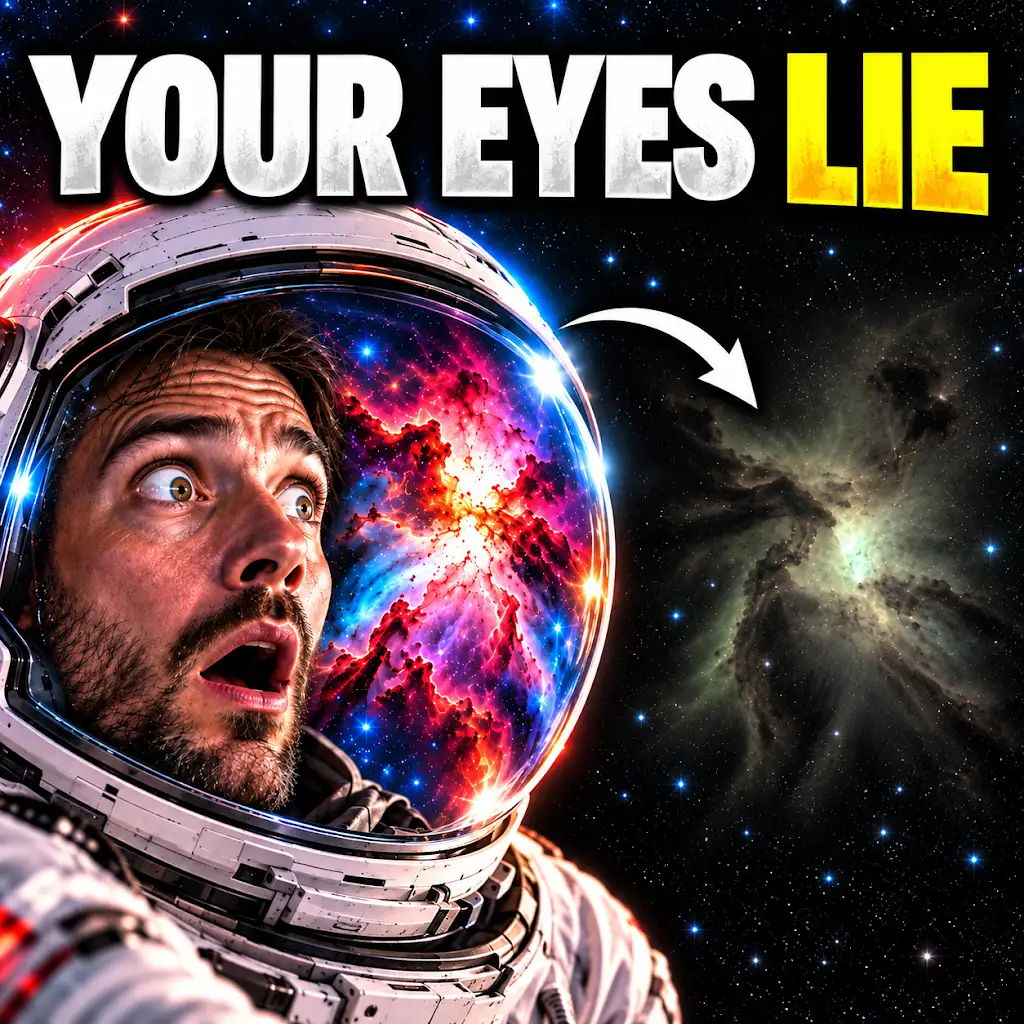
The Space Photos Are Real—But Your Eyes Would See This
FAQs
1. What is a nebula?
A nebula is a cloud of gas and dust in outer space, visible either as an indistinct bright patch or as a dark silhouette against other luminous matter.
2. Does a nebula get brighter when you get closer?
No, a nebula does not get brighter when you get closer. The brightness of a nebula is determined by the amount of light it reflects or emits, and getting closer to a nebula does not change its intrinsic brightness.
3. What causes the brightness of a nebula?
The brightness of a nebula is caused by the light emitted by nearby stars or by the reflection of light from nearby stars. The gas and dust in a nebula can scatter and reflect the light from these stars, creating the appearance of brightness.
4. Can the appearance of a nebula change as you get closer to it?
Yes, the appearance of a nebula can change as you get closer to it. Different parts of the nebula may become more visible, and details such as colors and structures may become more apparent as you approach the nebula.
5. Are there different types of nebulae with varying brightness?
Yes, there are different types of nebulae with varying brightness. For example, emission nebulae are often bright due to the ionization of the gas within them, while reflection nebulae are bright due to the reflection of nearby stars. Additionally, planetary nebulae can vary in brightness depending on their stage of evolution.