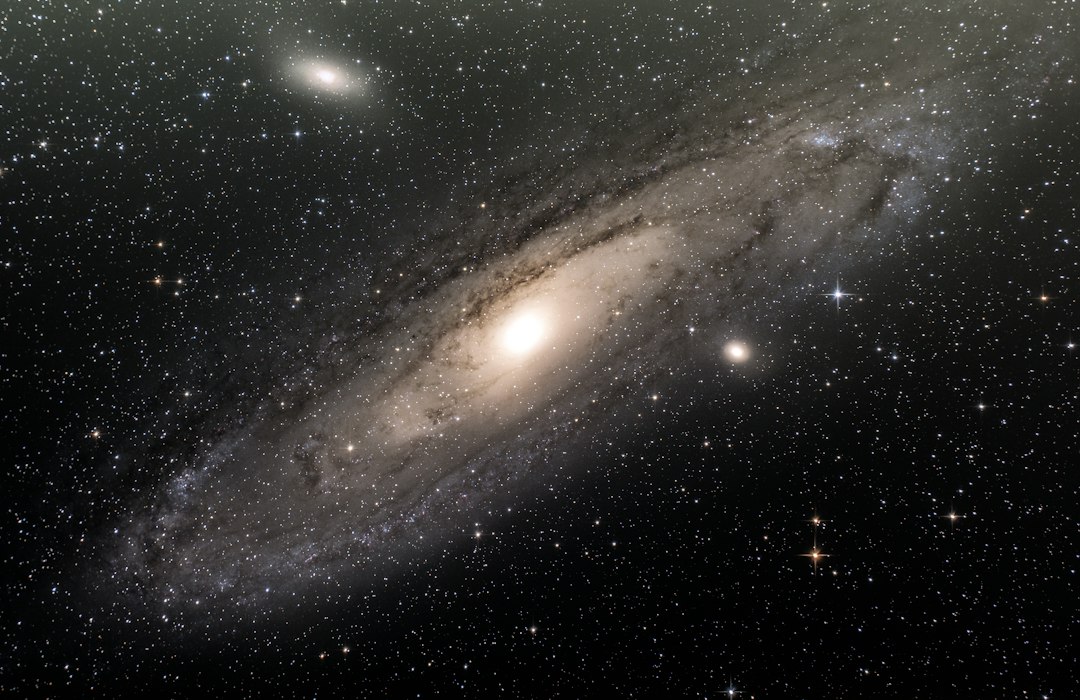
The Andromeda Galaxy, a celestial marvel, presents a fascinating dichotomy in how it is perceived by the human eye and captured by the lens of a camera. What appears as a faint, ghostly smudge to the naked eye transforms into a breathtaking panorama of cosmic artistry when viewed through photographic techniques. This disparity highlights not only the limitations of our biological vision but also the immense power of astrophotography in revealing the universe’s hidden splendors.
Introduction to Andromeda (M31)
The Andromeda Galaxy, officially designated Messier 31 (M31) and sometimes referred to as the Great Andromeda Nebula, is the closest spiral galaxy to our own Milky Way. Located approximately 2.537 million light-years away in the constellation Andromeda, it is a true titan of the local group of galaxies, dwarfing our own in terms of sheer size and stellar population. While its immense distance renders it invisible to the unaided eye as anything more than a modest glow, it holds a special place in astronomical history and continues to be a subject of intense study and awe. Its sheer scale, estimated to contain a trillion stars, more than double that of the Milky Way, underscores its significance as a cosmic neighbor. The galaxy’s bright core is a dense concentration of stars, hinting at the energetic processes occurring within its central regions, likely including a supermassive black hole.
Historical Observations and Discovery
The earliest recorded observation of Andromeda dates back to 964 AD by the Persian astronomer Abd al-Rahman al-Sufi, who described it as a “small cloud.” Later, in the 17th century, Simon Marius, a German astronomer, independently observed it and referred to it as a “cloudy spot.” It wasn’t until the 18th century that Charles Messier cataloged it as M31, a designation that persists today. However, the true nature of Andromeda as a galaxy outside our own Milky Way remained a subject of debate for centuries. It was not until Edwin Hubble’s groundbreaking work in the early 20th century, specifically his observations of Cepheid variable stars within Andromeda, that its extragalactic nature was definitively proven. Hubble’s meticulous measurements established that Andromeda was not a nebula within our galaxy but a vast stellar system lying far beyond our cosmic island. This revelation fundamentally altered humanity’s understanding of the universe, expanding its perceived boundaries exponentially.
The Andromeda Galaxy’s Physical Characteristics
Andromeda is a majestic spiral galaxy, similar in structure to our Milky Way but significantly larger. Its diameter is estimated to be around 220,000 light-years, more than twice the size of the Milky Way. It boasts a prominent bulge at its center, surrounded by a disk containing spiral arms rich in gas, dust, and young, blue stars. Beyond the visible disk lies a vast halo of older stars and dark matter. Its total mass is estimated to be around 1.5 trillion solar masses. The galaxy is also known to possess at least two smaller satellite galaxies: M32 and M110, which orbit Andromeda, much like our own Milky Way is orbited by the Magellanic Clouds. These satellite galaxies are thought to be remnants of past galactic collisions or mergers, contributing to Andromeda’s complex structure. The interaction between Andromeda and its satellites is a dynamic process that shapes the evolution of all involved.
Andromeda’s Future Collision with the Milky Way
One of the most astonishing aspects of Andromeda is its inevitable cosmic rendezvous with our own Milky Way. The two galaxies are currently hurtling towards each other at a speed of approximately 110 kilometers per second (68 miles per second). Scientists predict that in about 4.5 billion years, Andromeda and the Milky Way will begin to merge, creating a larger, elliptical galaxy. This collision will not involve stars directly impacting each other due to the vast distances between them, but it will dramatically reshape both galaxies, distorting their structures and potentially triggering intense bursts of star formation. The resulting galaxy has been colloquially nicknamed “Milkomeda.” This future event serves as a powerful reminder of the dynamic and ever-changing nature of the cosmos.
For those interested in the differences between observing the Andromeda Galaxy with the naked eye versus through a photograph, a related article can provide further insights into this fascinating topic. You can explore more about the visual contrasts and the techniques used in astrophotography by visiting this link: Freaky Science. This resource delves into the science behind how we perceive celestial objects and the advancements in photography that enhance our understanding of the universe.
The Naked Eye View: A Subtle Spectacle
Apparent Magnitude and Visibility
The apparent magnitude of the Andromeda Galaxy is a respectable +3.4. While this might sound bright, in astronomical terms, it places it within the category of objects that can be seen with the naked eye under dark skies. However, “visible” is a subjective term. For most observers, especially those in light-polluted urban environments, Andromeda will remain stubbornly invisible. Even in relatively dark locations, it manifests as a faint, elongated patch of light, often described as a ghostly smudge or a cotton ball. Its low surface brightness, meaning the light is spread out over a relatively large area, makes it a challenging target for our limited photoreceptors. The eye’s ability to detect faint objects is significantly hampered by the lack of detail and color.
Locating Andromeda in the Night Sky
Despite its subtle appearance, Andromeda can be located with a bit of practice and knowledge of the night sky. It resides in the constellation of Andromeda, which is conveniently located near the prominent constellation of Cassiopeia, the “W” or “M” shaped asterism. One method of finding it is to use the Great Square of Pegasus as a starting point. By extending the line of the square’s western side and following it upwards into Andromeda, one can locate the galaxy. Alternatively, one can find Polaris, the North Star, and then locate Cassiopeia. Andromeda lies roughly between the ‘M’ of Cassiopeia and the ‘S’ shape formed by a portion of Andromeda. Under extremely dark, moonless nights, away from any artificial light, the faint glow of Andromeda becomes a tangible presence, a humbling reminder of the universe’s vastness.
The Experience of Seeing Andromeda with the Naked Eye
The experience of observing Andromeda with the naked eye is one of quiet contemplation and wonder. It is not a spectacular, dazzling display, but rather a subtle hint of the cosmic grandeur that lies beyond our immediate reach. The faintness of the object demands patience and a keen eye. There’s a sense of discovery in pinpointing it amidst the sea of stars. For many, it is the first extragalactic object they can claim to have seen with their own eyes, a personal connection to the universe beyond our solar system. It evokes a feeling of insignificance yet also profound connection to the vast cosmic tapestry. The faintness encourages an appreciation for the limitations of our vision and the need for tools to unlock deeper celestial secrets.
Factors Affecting Naked Eye Visibility
Several factors significantly impact the ability to see Andromeda with the naked eye. Light pollution is the most significant obstacle, with artificial lights washing out the faint glow of the galaxy. Even moderate light pollution can render it invisible. Observing from a truly dark site, such as a rural area or a designated dark sky preserve, is crucial. The phase of the moon also plays a vital role; a full moon will make observing faint objects like Andromeda impossible. Clear skies, free from clouds and atmospheric haze, are also essential. Furthermore, an observer’s eyesight and acclimatization to the dark are important. Allowing your eyes to fully adapt to the darkness, which can take 20-30 minutes, will significantly enhance your ability to detect faint objects. Binoculars, even small ones, can dramatically improve the view, revealing a more defined oval shape.
Astrophotography: Unveiling the Galaxy’s Majesty
The Power of Long Exposures and Sensitive Sensors
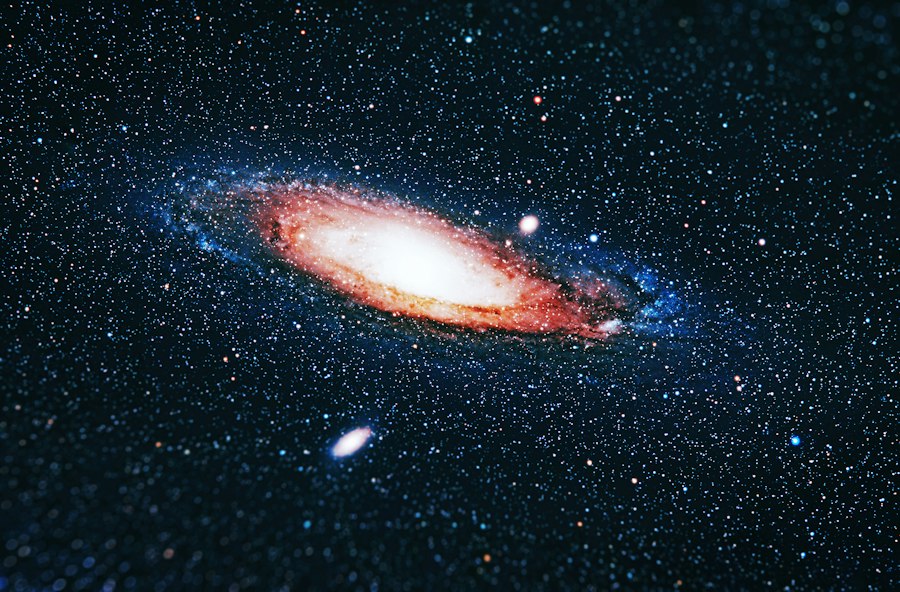
Astrophotography is the key that unlocks the true beauty of the Andromeda Galaxy. Unlike the human eye, which can only gather light for a fraction of a second, camera sensors, especially those in modern digital cameras and dedicated astronomical imagers, can collect light over extended periods, often minutes or even hours. This is achieved through long exposure photography. By keeping the shutter open for a prolonged duration, the camera sensor accumulates photons from even the faintest celestial objects. This process effectively amplifies the light, bringing out details that are utterly invisible to the naked eye. The sensitivity of modern CMOS and CCD sensors in capturing subtle light signals is far superior to that of our retinal rods.
Capturing Andromeda’s Spiral Arms and Dust Lanes
Through long exposures and sophisticated processing techniques, astrophotography reveals Andromeda’s magnificent spiral arms, intricate dust lanes, and the vibrant colors of star-forming regions. These features are completely lost to the naked eye due to the galaxy’s low surface brightness and the limitations of human color perception at such faint light levels. Photographs can resolve the delicate tendrils of gas and dust that wind through the galaxy’s disk, obscuring brighter stars and creating a mesmerizing, textured appearance. The vibrant blues of young, hot stars and the reddish hues of glowing hydrogen gas in nebulae become apparent, painting a picture of a dynamic and active galactic environment. The sheer detail captured in a well-executed Andromeda photograph is a testament to the power of accumulating light over time.
Color and Detail Beyond Human Perception
The colors seen in astrophotographs of Andromeda are a result of the specific wavelengths of light emitted by different celestial objects and processed through various filters. Hydrogen alpha light, for instance, appears reddish, while young, hot stars emit strongly in the blue spectrum. Astrophotographers often use specialized filters that isolate these specific wavelengths, allowing them to enhance the visibility of nebulae and stellar populations. These colors are largely beyond the capabilities of the human eye to perceive at such low light levels. Our eyes are primarily designed for daytime vision and struggle to differentiate subtle color variations in very faint light. Astrophotography, therefore, effectively provides us with a “super-vision” for the cosmos, revealing hues and textures that would otherwise remain hidden.
Techniques for Astrophotography of Andromeda
Capturing a stunning image of Andromeda involves more than just pointing a camera at the sky. Several techniques are employed to achieve the best results.
Wide-Field Imaging
This technique uses a camera with a wider lens to capture a broader expanse of the night sky, often including Andromeda within a larger celestial context. This can showcase its relationship with surrounding constellations and other deep-sky objects. Wide-field images are excellent for capturing the overall structure and grandeur of the galaxy within its cosmic neighborhood. They often highlight the relative positions of Andromeda, M32, and M110, offering a more comprehensive view of the local group’s dynamics.
Deep-Sky Imaging with Telescopes
For more detailed and resolution-rich images, astronomers and astrophotographers use telescopes. This allows for higher magnification, enabling the capture of finer details within Andromeda’s structure, such as individual star clusters and intricate dust clouds. Telescopic imaging often involves guiding the telescope precisely to track the apparent movement of celestial objects across the sky due to Earth’s rotation. This ensures that the stars in the image remain sharp points of light rather than streaks.
Stacking and Processing
One of the most crucial aspects of modern astrophotography is image stacking and processing. Multiple images of the same object are taken and then aligned and combined using specialized software. This process significantly reduces noise (random variations in the image signal) and enhances the signal-to-noise ratio, bringing out faint details. Post-processing, including adjusting levels, curves, and color balance, is then used to bring out the full aesthetic potential of the captured data, revealing the galaxy’s true splendor. This iterative process of acquisition and refinement is what transforms raw data into breathtaking cosmic art.
The Contrast: What We See vs. What We Capture
The Sensory Limitation of the Human Eye
The human eye, a marvel of biological engineering for its intended purpose, is fundamentally limited when it comes to observing faint, distant celestial objects. Its dynamic range, the ability to perceive both very bright and very dim objects simultaneously, is relatively poor compared to digital sensors. Furthermore, the eye’s sensitivity to light is drastically reduced in low-light conditions, and color perception diminishes significantly. The speed at which our eyes process light also prevents us from accumulating enough photons from faint objects to resolve them in detail. This inherent limitation means that what we perceive directly from the night sky is a mere shadow of the universe’s true visual richness.
The Photographic Revelation of Structure and Detail
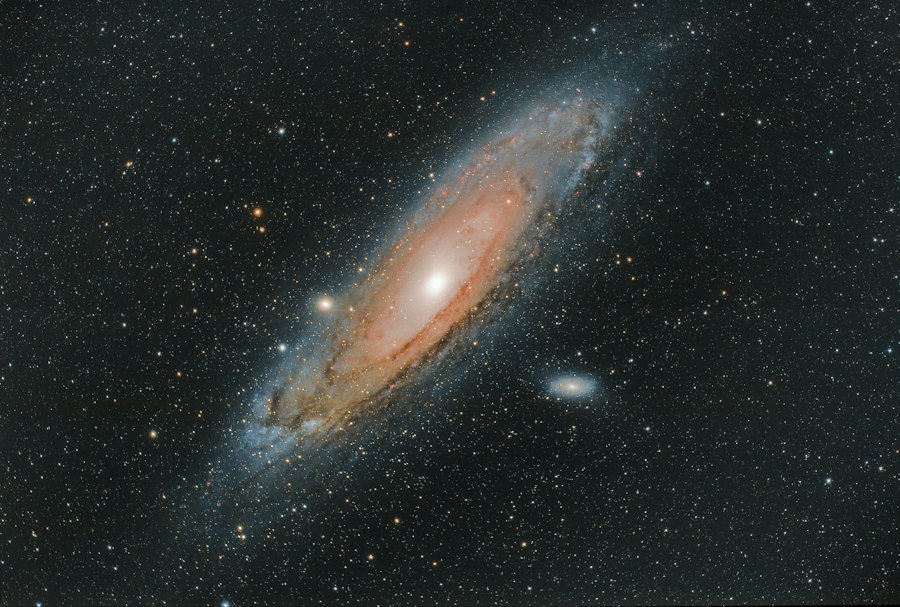
In stark contrast, astrophotography overcomes these limitations through technological advancements. Long exposures allow for the accumulation of vast amounts of light, revealing structures and details that are simply invisible to the naked eye. The spiral arms, which appear as a faint, amorphous glow to us, are resolved into distinct, swirling patterns in photographs. The dark lanes of interstellar dust, which scatter and absorb light, become prominent features, adding depth and texture to the image. The subtle variations in color, indicative of different stellar populations and gas clouds, are brought to life, transforming a faint smudge into a vibrant cosmic entity.
The Psychological Impact of the Discrepancy
The vast difference between the naked-eye view of Andromeda and its photographic representation has a profound psychological impact. It fosters a sense of awe and wonder, highlighting the power of human ingenuity and scientific endeavor. Seeing a photograph of Andromeda can inspire curiosity and a deeper appreciation for astronomy. It can also lead to a realization of how much more there is to the universe than what our senses alone can perceive. This discrepancy underscores the importance of scientific instruments and the continuous quest to expand our understanding of the cosmos. The transition from seeing a faint patch of light to a fully realized galaxy can be a deeply moving experience, sparking a lifelong interest in the stars.
Bridging the Gap: Binoculars and Small Telescopes
While astrophotography offers the most dramatic transformation, even accessible tools like binoculars and small amateur telescopes can significantly bridge the gap between the naked-eye view and the photographic revelation of Andromeda. Binoculars can reveal the oval shape of the galaxy more clearly and sometimes hint at the presence of its brightest satellite, M32. Small telescopes can resolve more of the galaxy’s shape, revealing a more defined disk and sometimes even distinguishing the brighter core from the surrounding halo. These instruments offer a tangible step in appreciating the subtle grandeur of Andromeda, preparing the observer for the even more astonishing details revealed by advanced astrophotography.
When exploring the differences between viewing the Andromeda Galaxy with the naked eye and through photographs, one might find it interesting to read a related article that delves deeper into the subject. This article discusses various techniques for capturing celestial objects and how these methods enhance our understanding of the universe. For more insights, you can check out this fascinating article that provides a comprehensive overview of astrophotography and its impact on amateur astronomy.
The Artistic and Scientific Value of Andromeda Imagery
| Metrics | Naked Eye | Photograph |
|---|---|---|
| Apparent Magnitude | 3.44 | 3.44 |
| Distance from Earth | 2.537 million light years | 2.537 million light years |
| Size | Approximately 3.4° | Approximately 3.4° |
| Details | Appears as a faint smudge | Shows spiral arms and dust lanes |
Andromeda as a Muse for Artists
The captivating images of the Andromeda Galaxy have transcended the realm of science and inspired artists across various disciplines. Photographers, painters, and digital artists are drawn to its majestic spiral form, its vastness, and the inherent mystery it represents. The swirling arms, the subtle colors, and the immense scale of Andromeda provide a rich palette for artistic interpretation. Its depiction in art can evoke feelings of cosmic wonder, human insignificance, and the boundless beauty of the universe. The contrast between the faint smudge seen by the naked eye and the vibrant, detailed photographs serves as a constant source of artistic fascination.
Scientific Insights Derived from Photographs
Beyond their aesthetic appeal, photographic images of Andromeda are invaluable scientific tools. They allow astronomers to study the galaxy’s structure, composition, and evolution in intricate detail. By analyzing the distribution of stars, gas, and dust, scientists can learn about star formation rates, the presence and distribution of dark matter, and the processes of galactic mergers. The detailed images also provide crucial data for studying the motion of stars within the galaxy and the dynamics of its satellite galaxies. Furthermore, the comparison of Andromeda’s structure and evolution with other galaxies helps to build a broader understanding of cosmic architecture and the fundamental laws that govern the universe.
The Role of Astrophotography in Public Outreach
Astrophotography plays a crucial role in public outreach and education about astronomy. Stunning images of celestial objects like Andromeda capture the imagination and make the universe more accessible and relatable to a wider audience. These images spark curiosity, inspire learning, and foster a greater appreciation for science. By showcasing the beauty and complexity of the cosmos, astrophotography helps to demystify astronomy and engage the public in the wonders of space exploration and scientific discovery. The accessibility of these images through various media platforms ensures that the awe-inspiring nature of Andromeda can be shared far and wide, transcending the limitations of physical observation.
Understanding Our Place in the Cosmos
Ultimately, the study and depiction of Andromeda, both through direct observation and photographic representation, contribute to our understanding of our place in the vast cosmos. Seeing this neighboring galaxy, so similar yet so grand, reminds us that our Milky Way is just one of billions of galaxies in the universe. The knowledge that Andromeda is on a collision course with our own galaxy also provides a unique perspective on the dynamic and ever-evolving nature of the universe. The contrast between the faintness of its naked-eye appearance and the breathtaking detail captured by cameras underscores the ongoing interplay between human perception and scientific advancement in unraveling the universe’s mysteries.
The Future of Andromeda: Mergers and Evolution
The Cosmic Dance Towards Collision
The Andromeda Galaxy and the Milky Way are locked in a gravitational embrace, a slow, inexorable dance that will culminate in a spectacular cosmic merger. For billions of years, these two galactic titans have been drawn towards each other, their paths dictated by the universal force of gravity. While the immediate future will see the galaxies draw closer, the most dramatic changes will occur over eons. The journey is not a sudden event but a gradual process of gravitational attraction and interaction. This long-term celestial ballet serves as a testament to the vast timescales involved in cosmic evolution.
The Galactic Merger: A Dramatic Transformation
In approximately 4.5 billion years, the Andromeda Galaxy will begin to merge with the Milky Way. This process will not be a head-on collision of stars, as the distances between stars are immense. Instead, the gravitational forces will distort the spiral structures of both galaxies, pulling them into a chaotic embrace. The gas and dust within the galaxies will compress, triggering massive bursts of star formation. The once familiar spiral shapes will likely be smoothed out, eventually forming a single, larger elliptical galaxy. This new entity, often referred to as “Milkomeda,” will be a profoundly different celestial body from the two that preceded it. The transformation will be so profound that the original galactic identities will be all but erased.
The Long-Term Evolution of Milkomeda
Following the merger, the newly formed elliptical galaxy, Milkomeda, will continue to evolve over billions of years. The intense star formation triggered by the merger will gradually subside as the available gas is consumed. The galaxy will likely settle into a more quiescent state, characterized by older stellar populations. The gravitational interactions with other galaxies in the local group will continue to shape its destiny, potentially leading to further mergers or the stripping of stars. The study of Andromeda’s future merger provides a valuable opportunity to understand the life cycles of galaxies and the ultimate fate of galactic systems within the universe.
Implications for Our Solar System
The future merger of Andromeda and the Milky Way will have significant implications for our own solar system, though not in the immediate sense of annihilation. The Sun will likely be flung into a different orbit within the newly formed galaxy, potentially further out or closer to the galactic center. While the exact fate of Earth is difficult to predict with certainty, it is unlikely to be directly destroyed by a stellar collision. However, the dramatically altered galactic environment, including increased radiation and gravitational perturbations, could render Earth uninhabitable over such vast timescales. The merging event serves as a profound reminder of the impermanence of our current galactic neighborhood and the dynamic nature of the universe in which we reside.

The Space Photos Are Real—But Your Eyes Would See This
FAQs
What is the Andromeda Galaxy?
The Andromeda Galaxy, also known as Messier 31, M31, or NGC 224, is a spiral galaxy located about 2.537 million light-years from Earth. It is the nearest spiral galaxy to the Milky Way and is visible to the naked eye from Earth.
Can the Andromeda Galaxy be seen with the naked eye?
Yes, the Andromeda Galaxy can be seen with the naked eye from Earth under dark, clear skies. It appears as a faint, hazy patch of light in the constellation Andromeda.
How does the Andromeda Galaxy appear in photographs?
In photographs, the Andromeda Galaxy appears as a distinct spiral structure with a bright central bulge and spiral arms extending outward. The galaxy’s overall shape and structure can be captured in detail using long-exposure photography.
What is the difference between viewing the Andromeda Galaxy with the naked eye and in a photograph?
When viewed with the naked eye, the Andromeda Galaxy appears as a faint, blurry patch of light. In contrast, photographs of the galaxy reveal its intricate spiral structure and provide a clearer, more detailed view of its features.
What equipment is needed to photograph the Andromeda Galaxy?
To photograph the Andromeda Galaxy, a camera with manual settings, a tripod, and a telephoto lens or telescope with tracking capabilities are typically used. Long-exposure photography is often employed to capture the galaxy’s faint light and reveal its detailed structure.