The captivating phenomenon of instant water freezing, often dubbed the “amazing supercooling water experiment,” offers a visually stunning demonstration of fundamental physics. It’s a spectacle that consistently elicits gasps of astonishment and sparks curiosity about the seemingly magical transformation of liquid into solid ice in mere moments. This article delves into the science behind this remarkable event, exploring the conditions required, the underlying principles, and the captivating visual appeal that makes it such a popular demonstration.
The Marvel of Supercooling: A Prelude to Instant Freezing
Supercooling, also known as undercooling, is the process of lowering the temperature of a liquid or gas below its freezing point without it becoming a solid. For water, this theoretical freezing point is 0 degrees Celsius (32 degrees Fahrenheit) at standard atmospheric pressure. However, in everyday experience, water exposed to temperatures below this point will typically freeze. The reason supercooling is possible lies in the crucial role of nucleation.
The Absence of Nucleation Sites
Water molecules are constantly in motion, even at temperatures below their freezing point. For ice crystals to form, these molecules need a starting point, a template or “seed,” upon which to arrange themselves into the ordered crystalline structure of ice. These essential starting points are called nucleation sites. These can be microscopic impurities within the water, such as dust particles, dissolved minerals, or even imperfections on the surface of the container. In a perfectly pure and smooth container, water can be cooled significantly below 0°C without freezing because there are no readily available nucleation sites for the ice crystals to begin forming.
The Critical Threshold for Freezing
When water is supercooled, it exists in a metastable state. This means it is not truly stable and is poised to change into a more stable state (solid ice) if disturbed. The degree of supercooling that water can withstand varies, but under ideal laboratory conditions, it can be cooled to temperatures as low as -40°C (-40°F) before spontaneous freezing is almost guaranteed. However, for the dramatic instant freeze demonstration, achieving a moderate level of supercooling, typically between -5°C and -10°C (23°F to 14°F), is sufficient and more reliably achieved outside of highly controlled lab environments.
Factors Influencing Supercooling
Several factors influence the ability of water to supercool. The purity of the water is paramount. Tap water, with its dissolved minerals and potential microscopic contaminants, is less likely to supercool effectively compared to distilled or deionized water. The surface of the container also plays a role. Smooth, clean surfaces are less likely to provide nucleation sites. Additionally, the method of cooling is important. Gradual cooling, minimizing disturbances, is more conducive to supercooling. Rapid cooling can sometimes induce spontaneous nucleation.
In exploring the fascinating phenomenon of supercooling water, you might find the article on Freaky Science particularly insightful. It delves into various experiments and the science behind supercooling, providing a comprehensive overview of the topic. For more detailed information, you can check out the article here: Freaky Science Supercooling Water Experiment.
The Trigger: Initiating the Instant Freeze
The magic of the instant supercooling water experiment lies in the sudden and dramatic transition from liquid to solid. This transformation is not spontaneous; it requires a trigger to overcome the metastable state and initiate the nucleation process. The act of triggering the freeze is what makes the experiment so visually striking and reproducible for demonstrations.
The Power of Physical Disturbance
The most common and effective trigger for supercooled water is a physical disturbance. This can take various forms, each serving the same fundamental purpose: to introduce nucleation sites or provide the energy needed for molecules to begin organizing into ice. Simply dropping a small ice crystal into the supercooled water is a classic method. The ice crystal itself provides a perfect nucleation site for the surrounding supercooled water molecules to attach to and begin forming more ice.
The Ripple Effect: Crystal Growth Propagation
Once a nucleation site is established, the freezing process propagates rapidly through the supercooled liquid. The initial ice crystal acts as a seed, and as more water molecules come into contact with its growing surface, they quickly arrange themselves into the crystalline lattice of ice. This chain reaction, where the formation of ice encourages further ice formation, is responsible for the speed at which the entire volume of water solidifies. It’s akin to a domino effect, but on a molecular level, with ice crystals forming and expanding outwards.
Alternative Triggering Mechanisms
While introducing an ice crystal is a common method, other physical disturbances can also work. Gently tapping the container, particularly the side or bottom, can dislodge molecules from the container walls, creating temporary nucleation sites. Dropping a small, rough object like a grain of salt or sugar can also serve as a nucleation point. The key is to provide a surface or impact that allows the water molecules to overcome their energetic barrier to ice formation. The less disturbance, the longer the water remains supercooled.
The Visual Spectacle: A Freeze-Frame Moment
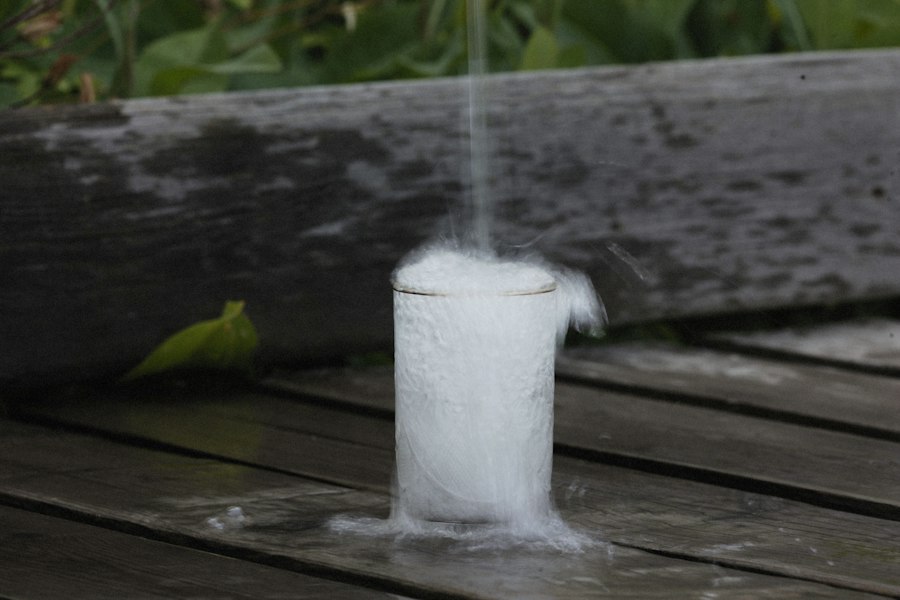
The instant freezing of supercooled water is not just a scientific curiosity; it is a visual spectacle that captivates audiences of all ages. The rapid transformation from a clear liquid to a solid block of ice is a powerful demonstration of the underlying physics at play, offering a tangible and memorable learning experience.
From Clear Liquid to Solid Ice
The visual appeal of the experiment lies in the stark contrast between the initial state and the final state. Viewers observe a seemingly normal bottle or glass of clear water. Then, with a simple trigger, the water appears to solidify from a specific point, rapidly spreading the ice crystals throughout the liquid. The process can be so swift that it seems almost instantaneous, as if the water has been frozen in a single “freeze-frame” moment. This visual speed is what often leads to exclamations of amazement.
The Role of the Container and Ice Formation Patterns
The way the ice forms can also be visually interesting. Depending on the trigger and the shape of the container, the ice crystals might grow in specific patterns. Sometimes, delicate dendritic structures, resembling snowflakes, can be observed forming. In other cases, the ice might grow more uniformly, creating a solid block. The clarity of the ice can also vary, with supercooled pure water often forming remarkably clear ice, further enhancing the visual impact.
Creating a Lasting Impression
The sensory experience of witnessing this experiment is potent. The visual transformation is accompanied by a sense of wonder and often a desire to understand “how” it happens. For educators, this visual impact is invaluable for sparking interest in science and encouraging further exploration of concepts like phase transitions, molecular behavior, and the importance of nucleation. The memory of watching water freeze instantly can linger long after the demonstration is over.
Practical Applications and Scientific Significance
While the instant supercooling water experiment is a popular demonstration, the underlying principles of supercooling and controlled nucleation have significant practical applications across various industries and scientific fields. Understanding and manipulating these phenomena is crucial for processes ranging from food preservation to the development of advanced materials.
Food Preservation and Cryogenics
The ability to freeze liquids quickly and controllably is vital in food preservation. Rapid freezing, often achieved through techniques that minimize ice crystal formation (which can damage cell structures), helps maintain the quality and texture of frozen foods. In cryogenics, the study of extremely low temperatures, supercooling plays a role in preserving biological samples, organs for transplantation, and even in the development of technologies for space exploration where rapid temperature changes are encountered.
Weather Phenomena and Cloud Formation
On a larger, natural scale, supercooling is a fundamental aspect of atmospheric science. Clouds often contain supercooled water droplets, especially at altitudes where temperatures are well below freezing. These droplets remain liquid due to a lack of nucleation sites in the atmosphere. The interaction of these supercooled droplets with ice crystals or other nucleation sources is what leads to the formation of precipitation, such as snow and hail. Understanding supercooling is therefore crucial for weather forecasting and climate modeling.
Material Science and Engineering
In material science, the controlled formation of crystalline structures is often paramount. Supercooling can be used in the fabrication of certain glasses and alloys where a specific crystalline or amorphous structure is desired. The ability to precisely control the nucleation and growth of crystals can lead to materials with unique properties. For example, in the production of specialized polymers or ceramics, carefully managed cooling rates and nucleation processes are essential for achieving desired strength, flexibility, or other functional characteristics.
In exploring the fascinating phenomenon of supercooling water, you might find it interesting to read about other intriguing scientific experiments that challenge our understanding of physics. A related article discusses various experiments that demonstrate the principles of supercooling and the unique properties of water when subjected to specific conditions. You can check it out for more insights on this captivating topic at Freaky Science.
Reproducing the Magic: Tips for a Successful Experiment
| Parameter | Value | Unit | Notes |
|---|---|---|---|
| Initial Water Temperature | 25 | °C | Room temperature before cooling |
| Cooling Temperature | -5 | °C | Temperature at which water remains liquid (supercooled) |
| Cooling Rate | 1 | °C/min | Rate of temperature decrease |
| Volume of Water | 100 | mL | Sample size used in experiment |
| Freezing Point | 0 | °C | Normal freezing point of water |
| Time to Freeze After Disturbance | 5 | seconds | Time taken for water to crystallize after triggering |
| Observation | Clear liquid | – | Water remains liquid below freezing point until disturbed |
While the instant supercooling water experiment appears simple, achieving consistent and dramatic results requires attention to detail and an understanding of the critical factors involved. With a few key considerations, anyone can replicate this captivating demonstration.
Selecting the Right Water and Container
The purity of the water is paramount. For the best results, use distilled or deionized water. Tap water, with its dissolved impurities, is more likely to freeze prematurely. The container should also be clean and smooth. Glass bottles or beakers are excellent choices, especially those with a smooth interior surface. Avoid containers with scratches or rough patches, as these can act as nucleation sites. Thoroughly washing and rinsing the container will help remove any lingering contaminants.
The Cooling Process: Patience is Key
The cooling process is arguably the most crucial step. Place the sealed bottle or container of water in a freezer set to a temperature between -5°C and -10°C (23°F to 14°F). Avoid placing it directly against the back of the freezer, where temperatures can be significantly colder and more likely to cause premature freezing. It is best to place it on a shelf in the main cooling compartment. The duration of cooling will vary depending on the freezer and the volume of water, but typically 1.5 to 2 hours is sufficient to achieve the desired supercooling. Avoid over-cooling, as this increases the risk of spontaneous freezing before you are ready to demonstrate.
The Art of the Trigger: Gentle but Effective
Once the water is sufficiently chilled, it’s time for the trigger. Gently remove the bottle from the freezer. For the classic demonstration, a small ice crystal is ideal. You can obtain this by slightly cracking a piece of ice or by having a small amount of pre-made ice ready. Carefully open the bottle and drop the ice crystal into the supercooled water. Alternatively, tapping the bottle firmly on a hard surface or dropping a rough object like a salt grain can also initiate the freeze. Observe closely as the ice crystals rapidly propagate through the liquid, transforming it into a solid. Practice the trigger beforehand to ensure a smooth and dramatic presentation. The experiment can also be set up with multiple bottles, allowing for a continuous demonstration. The key is to handle the supercooled water with care, minimizing any unnecessary vibrations or shocks until you are ready to initiate the freeze.
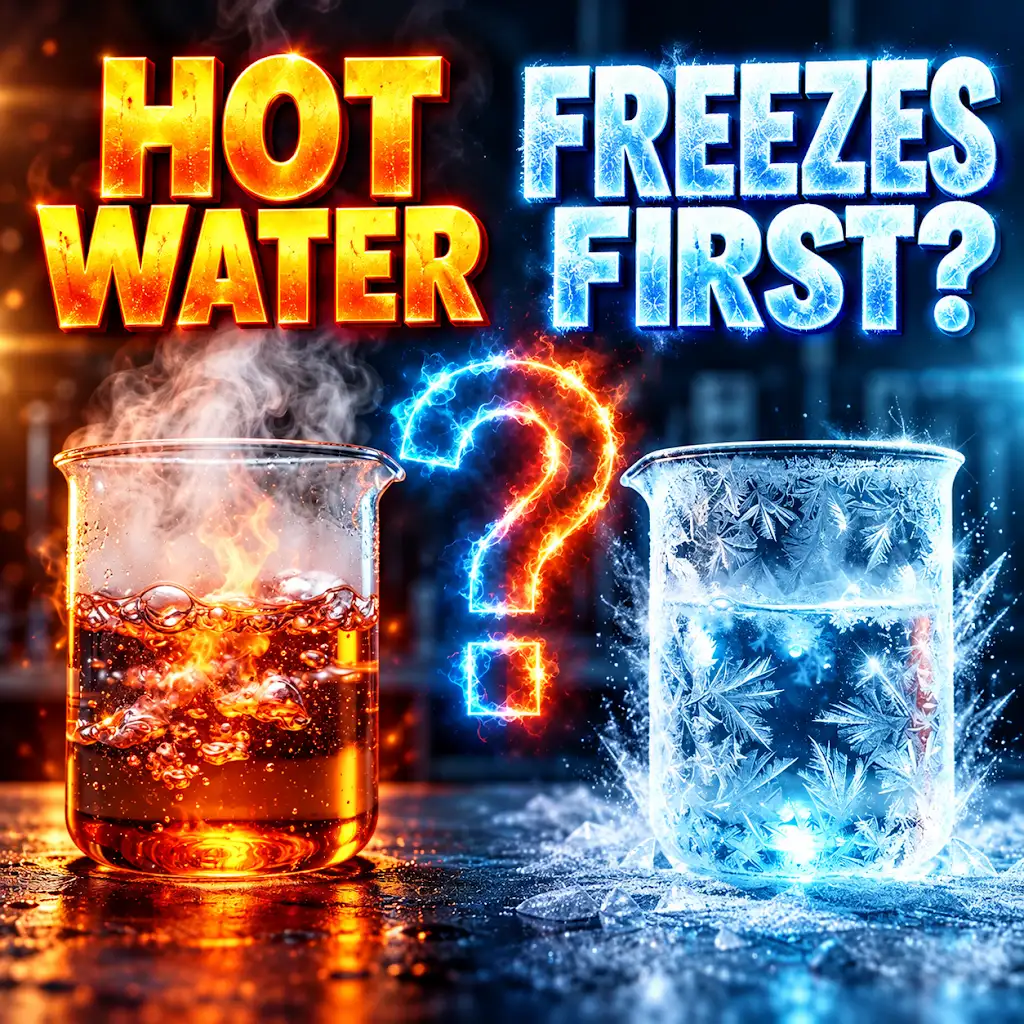
Why Hot Water Freezes Faster Than Cold (The Mpemba Effect)
FAQs
What is supercooling water?
Supercooling water is the process of cooling liquid water below its freezing point without it turning into ice.
How can you supercool water at home?
To supercool water at home, you can place a bottle of purified water in the freezer for a specific amount of time and then carefully remove it without disturbing it to prevent ice crystals from forming.
What happens when supercooled water is disturbed?
When supercooled water is disturbed or agitated, it can instantly freeze into ice due to the introduction of nucleation sites that promote the formation of ice crystals.
Is supercooling water safe to drink?
Supercooling water does not change its chemical composition, so it is safe to drink as long as it is not contaminated during the supercooling process.
What are some applications of supercooling water?
Supercooling water has applications in cryopreservation, food preservation, and scientific experiments to study the properties of supercooled liquids.