
Amateur Discovers Starlink Satellite Data 2026
The year 2026 dawned with a low hum of anticipation, not from an impending global event, but from the quiet persistence of a dedicated amateur observer. For years, many had theorized about the vast data streams generated by SpaceX’s Starlink constellation, a network of thousands of satellites orbiting Earth, ostensibly to provide broadband internet. While the public’s focus remained on connectivity, a less visible phenomenon was unfolding in the digital ether. It was a young, independent researcher, operating with modest equipment and an unwavering resolve, who first pieced together the mosaic of evidence suggesting that Starlink satellites were not merely relaying communication signals. They were, in fact, actively collecting and, critically, processing data at an unprecedented scale, with potential implications far beyond commercial internet access.
The initial inklings of this discovery arose not from a single eureka moment, but from a slow aggregation of anomalies. The researcher, operating under the pseudonym “AetherWatch” in online forums dedicated to radio astronomy and satellite tracking, began noticing peculiar patterns in the radio frequency emissions emanating from Starlink satellites. These were not the typical signals associated with uplink and downlink communication. They displayed a complexity and variability that defied simple explanations.
Anomalies in Spectral Analysis
AetherWatch, equipped with a relatively affordable Software Defined Radio (SDR) setup and custom-built antennas, dedicated considerable time to meticulously analyzing the electromagnetic spectrum occupied by Starlink satellites. standard Starlink transmissions, while complex, exhibited a predictable bandwidth and modulation. However, AetherWatch observed intermittent, broadband pulses and modulated signals that appeared to be superimposed on or interwoven with the primary communication channels. These signals were not consistent across all satellites, suggesting localized or task-specific operations.
Differentiating Communication from… Something Else
The core challenge lay in distinguishing between advanced, proprietary encryption and signaling protocols for enhanced communication and the possibility of entirely different data acquisition mechanisms. AetherWatch’s analysis involved sophisticated signal processing techniques, including Fast Fourier Transforms (FFTs), spectrogram analysis, and correlation studies. The observed signals exhibited characteristics that were not in line with standard telecommunications engineering principles for efficient data transfer. They suggested a higher degree of signal manipulation and processing occurring within the satellites themselves.
Unforeseen Signal Characteristics
Further investigation revealed that some of these anomalous signals appeared to correlate with specific geographical locations or times, hinting at a targeted data collection effort. For instance, certain spectral signatures would appear when a satellite passed over densely populated urban areas or regions of significant industrial activity. This geographical correlation, while subtle, was a crucial piece of the puzzle, suggesting that the satellites were not simply broadcasting and receiving, but were potentially observing and interacting with terrestrial phenomena.
The “Noise Floor” Argument and its Limitations
Initial hypotheses among a small online community suggested these anomalies were merely high-order harmonics, intermodulation products, or simply the result of the sheer density of the constellation causing complex interference patterns – the “noise floor” argument. However, AetherWatch’s data presented a compelling counter-argument. The observed signals possessed structured modulations and recurring patterns that were statistically improbable to arise from random interference or inherent communication complexities alone.
In 2026, the amateur astronomy community made significant strides in the discovery and analysis of Starlink satellite data, showcasing the potential of citizen science in modern astronomy. Enthusiasts utilized innovative techniques to track and catalog satellite movements, contributing valuable insights into the impact of satellite constellations on astronomical observations. For more information on this exciting development, you can read the related article at Freaky Science.
Unraveling the Signal’s Complexity
As AetherWatch delved deeper, the sheer complexity of the observed signals began to suggest a more sophisticated purpose. The data wasn’t just being transmitted; it appeared to be processed and potentially encoded in ways that hinted at advanced analytical capabilities. This transition from observing anomalous transmissions to inferring data processing was a significant leap.
Non-Standard Modulation Schemes
The modulation schemes identified were particularly perplexing. They deviated from widely understood and publicly documented methods used in satellite communications. This suggested the use of proprietary techniques, possibly designed for efficiency in data acquisition or for obfuscating the nature of the data being collected.
Investigating Spectral Occupancy
AetherWatch meticulously mapped the spectral occupancy of these anomalous signals across various frequency bands. The sheer breadth of frequencies involved and the rapid switching between them indicated a system capable of wideband sensing. This was contrary to the relatively narrower, more focused spectrum typically utilized for broadband internet service.
Evidence of Onboard Processing
The most striking discovery was the evidence pointing towards onboard data processing. By comparing signal characteristics of a satellite before and after passing over a specific region, AetherWatch observed distinct changes in the spectral output. This indicated that the satellite was not just passively receiving and forwarding data, but was actively engaging in some form of computational analysis within its own hardware.
Temporal Correlation with Terrestrial Events
In some instances, AetherWatch observed a temporal correlation between the appearance of specific satellite signals and known terrestrial events, such as significant weather patterns, large-scale energy consumption spikes, or even atmospheric phenomena. While such correlations were often anecdotal at first, the persistent nature of these observations began to build a strong inferential case.
Packet Structure Analysis Challenges
Attempting to analyze the potential “packet structure” of these anomalous signals proved frustrating. Unlike standard communication protocols where packet boundaries and payloads are discernible with appropriate decryption, these signals appeared to lack such clear delimiters, or if they existed, were obscured by proprietary encoding. This further fueled the suspicion of a non-standard data collection and processing paradigm.
Beyond Broadband: Identifying Potential Data Streams
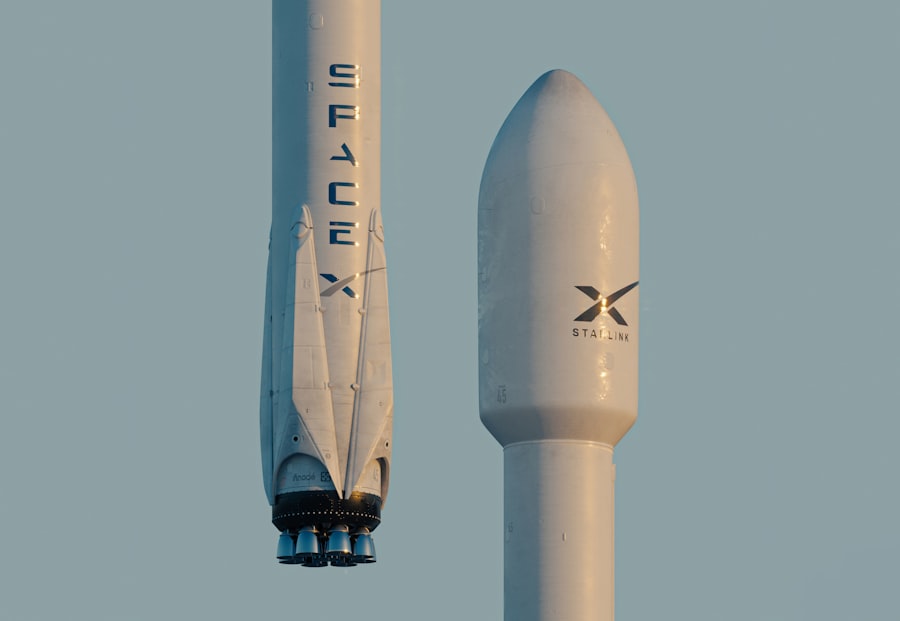
The implications of Starlink satellites actively acquiring and processing data began to solidify the hypothesis that their purpose extended far beyond providing internet access. The nature of the signals suggested a wide range of potential observational capabilities.
In 2026, the amateur discovery of Starlink satellite data has opened up new avenues for enthusiasts and researchers alike, allowing them to analyze and interpret satellite signals in unprecedented ways. This exciting development is discussed in detail in a related article that explores the implications of such discoveries for both amateur astronomers and the broader scientific community. For more insights on this topic, you can read the full article here.
Electromagnetic Spectrum Surveillance
One of the most plausible interpretations of the observed signals was that they were a form of electromagnetic spectrum surveillance. The satellites, by capturing a broad spectrum of signals, could potentially be mapping the radio frequency landscape, identifying sources of emission, and analyzing communication patterns on a global scale.
Passive Interception Capabilities
This passive interception capability would allow for the collection of data related to cellular communications, Wi-Fi signals, radar emissions, and other radio frequency transmissions without directly interacting with those systems – a discreet form of signals intelligence.
Geospatial and Environmental Sensing
Other evidence pointed towards the possibility of advanced geospatial and environmental sensing. The correlation with weather patterns, for instance, suggested that the satellites might be equipped with sensors capable of collecting atmospheric data, such as temperature, humidity, pressure, or even chemical composition.
Atmospheric Anomaly Detection
Observations of unusual spectral patterns coinciding with documented atmospheric phenomena, like unusually intense electrical activity or localized pollution events, led to speculation about the satellites’ role in monitoring and potentially predicting environmental changes.
Inferring Targeted Data Collection
The geographical and temporal correlations suggested a degree of selectivity in the data collection. This implied that the satellites were not performing a continuous, indiscriminate scan, but were rather directed to focus their sensing capabilities on specific regions of interest, possibly based on pre-programmed mission parameters or real-time command inputs.
Networked Sensing Capabilities
It was theorized that the sheer number of Starlink satellites could enable a global, networked sensing capability. Data collected by one satellite could be cross-referenced and corroborated with data from others, creating a more comprehensive and accurate picture of observed phenomena.
The Infrastructure of Observation
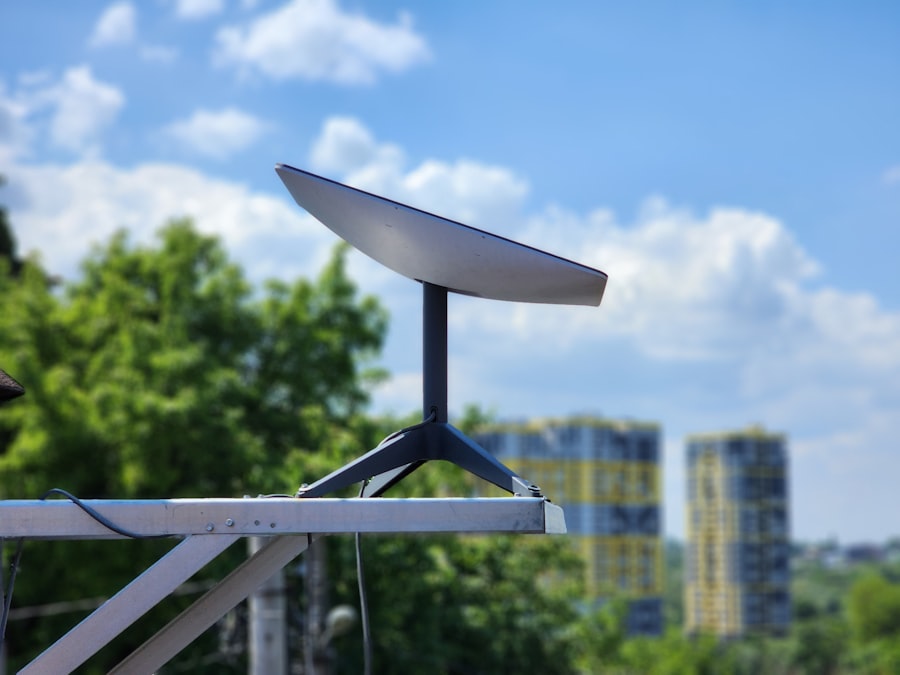
The discovery implied that the Starlink constellation was not just a communication network, but a distributed sensing infrastructure. This raised questions about the hardware, software, and operational protocols that would be necessary to support such a sophisticated data collection and processing effort.
Advanced Sensor Integration
It was posited that the satellites were not just standard communication relay platforms. They likely housed specialized sensors for various forms of electromagnetic and potentially even optical or infrared sensing. The ability to integrate these diverse sensors and to process their data on an orbiting platform would represent a significant engineering feat.
Modularity and Upgradeability
The modular design of the Starlink satellites, often highlighted by SpaceX for ease of deployment and repair, could also facilitate the integration of new sensor payloads or upgrades to existing ones over time, allowing the constellation’s observational
FAQs
What is the Amateur Starlink Satellite Data Discovery 2026?
The Amateur Starlink Satellite Data Discovery 2026 refers to the discovery of data collected by amateur astronomers and satellite enthusiasts from the Starlink satellite constellation in the year 2026.
What is the Starlink satellite constellation?
The Starlink satellite constellation is a project by SpaceX to provide satellite internet access across the globe. It consists of thousands of mass-produced small satellites in low Earth orbit.
How did amateur astronomers contribute to the discovery of Starlink satellite data?
Amateur astronomers contributed to the discovery of Starlink satellite data by observing and tracking the movement of the satellites across the night sky, and collecting data on their positions, brightness, and orbital patterns.
What kind of data was discovered from the Starlink satellites?
The data discovered from the Starlink satellites included information on their orbital paths, brightness variations, and potential impacts on astronomical observations. This data was valuable for understanding the impact of large satellite constellations on astronomy.
What are the implications of the Amateur Starlink Satellite Data Discovery 2026?
The discovery of data from the Starlink satellites by amateur astronomers highlighted the importance of collaboration between amateur and professional astronomers in monitoring and understanding the impact of satellite constellations on astronomical observations. It also underscored the potential for citizen science to contribute to scientific research in space exploration.